The pressure control solenoid is the single most replaced part on a 4T65E, and it is also one of the most misdiagnosed. It controls line pressure, which means a bad one can produce almost any shift complaint: harsh, soft, slipping, delayed, or locked in a single gear. The trouble is that a worn valve body bore produces the exact same symptoms and the exact same codes, so a lot of these solenoids get replaced on vehicles that come back with the same complaint a few months later. This guide covers what the solenoid actually does, the codes and symptoms tied to it, and the two other failure points in the same hydraulic circuit that get blamed on the solenoid when they shouldn't be.
What the pressure control solenoid actually does
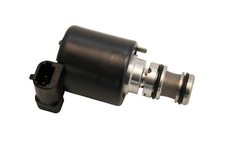
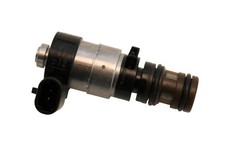
The 4T65E uses a duty-cycled Electronic Pressure Control (EPC) solenoid, also called the Pressure Control Solenoid (PCS), to vary line pressure on command from the PCM instead of relying on a purely mechanical governor circuit. The solenoid itself does not generate line pressure; it bleeds off a signal pressure that acts against the AFL (actuator feed limit) valve and the boost valve in the channel plate, and those valves do the actual regulating. Per Sonnax's technical writeup on the 4T65E channel plate, the AFL valve "regulates line pressure to a maximum of 115 psi," then sends controlled oil on to the EPC solenoid and the 1-2/3-4 shift solenoids. That dependency is the whole reason solenoid symptoms and valve-body symptoms overlap so much on this unit: the solenoid can only be as accurate as the hydraulic signal it's working with.
There is also a hardware split worth knowing before you order a part. Early 4T65E valve bodies use a large-diameter, Holley-style EPC solenoid; GM switched to a smaller Bosch-style solenoid on later production. The two are not interchangeable, so confirm which style is actually in the vehicle before ordering rather than going by model year alone, since the changeover years overlap.
Symptoms and codes tied to the pressure control solenoid
- P0748 — Pressure Control Solenoid A, electrical. This is a true electrical fault: an open or shorted solenoid winding, or a wiring/connector problem in the solenoid circuit. The transmission typically defaults to maximum line pressure or a limp-mode gear when this sets, so expect very firm, harsh shifts or a transmission stuck in a single gear.
- P1811 — Maximum adapt and long shift. This is not an electrical code. The PCM sets it when a shift takes longer than 0.65 second and its adaptive pressure strategy cannot shorten that time by commanding more line pressure, with that condition occurring twice in one drive cycle.
- P0741 — Torque converter clutch slip. Low line rise starves the TCC apply circuit along with the shift circuits, so TCC slip and shift complaints frequently show up together on the same vehicle.
- Harsh or erratic shifts with no code at all. Sediment or varnish inside the solenoid can bind its internal valve mechanically without causing the kind of electrical fault that sets P0748, so the PCM never flags it. This is the case that gets missed on a generic code-only diagnosis.
- Soft shifts, delayed reverse, or low line rise under load. This pattern points away from the solenoid itself and toward a worn boost valve or boost sleeve, covered below.
Root cause #1: the solenoid itself
A genuinely failed solenoid is either an electrical failure (open or shorted winding, which sets P0748) or a mechanically stuck valve caused by sediment, varnish, or debris circulating in old fluid. The mechanical failure is more common on a transmission that has never had a fluid service, since the solenoid's small internal passages are an easy place for contamination to collect. Confirm fluid condition and filter condition before condemning the solenoid on a harsh-shift complaint with no stored code; a filter change and fluid service occasionally resolves what looks like a solenoid problem.
Root cause #2: a worn AFL valve bore
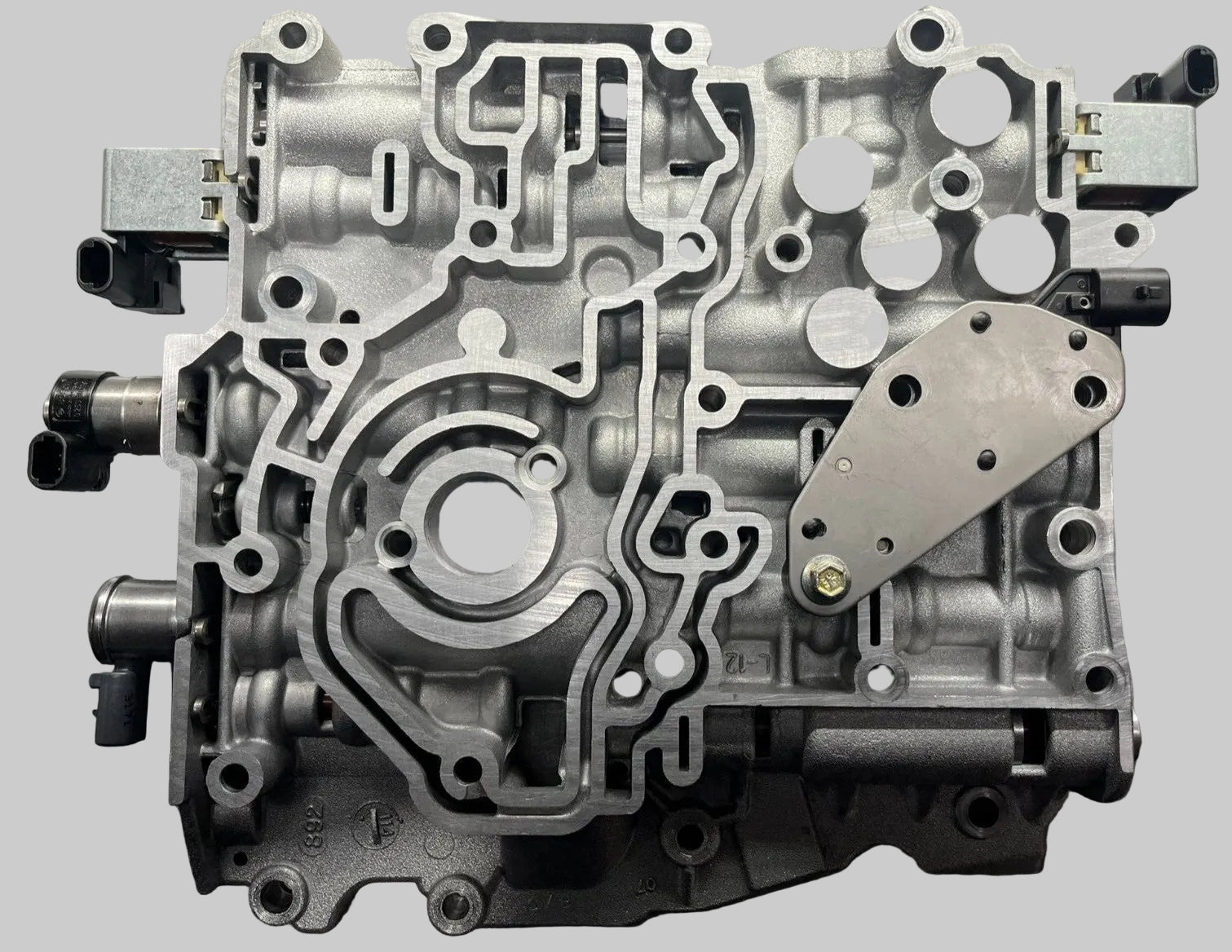
The AFL valve lives in the channel plate, not in the solenoid, and it is the part that actually sets maximum line pressure before the EPC solenoid ever gets involved. Per Sonnax, when the AFL bore wears, "regulated pressure leaks to exhaust, which lowers the pressure and volume of oil to the solenoids." The result is a low-line-rise condition that produces the exact same P1811 and P0741 codes a bad solenoid produces, plus 2nd-gear starts or a loss of 4th gear in more advanced cases. Sonnax's recommended fix is to ream the AFL bore and install an oversize replacement valve and springs to restore the circuit, along with inspecting the axle bearing, axle seal, and pump shaft sleeve while the channel plate is apart. Swapping the solenoid on a worn AFL bore will not fix the complaint, because the solenoid was never the part out of spec.
Root cause #3: a worn boost valve and sleeve
The boost valve circuit is the second hydraulic component downstream of the solenoid that gets blamed on it. The OE boost sleeve assembly uses two steel valves and a steel plug riding inside an aluminum sleeve; as the steel wears the aluminum bore, boost pressure leaks off. According to the Sonnax technical listing for this kit, 4T65E units with this wear pattern "often exhibit such problems as soft upshifts (especially 1-2), delayed Reverse and low line rise" — a noticeably different symptom pattern than the harsh, over-pressured shifts a P0748 electrical fault produces, which is a useful way to tell the two apart in the field. Because the OE boost assembly is not sold separately from a complete valve body, a worn sleeve historically forced a full valve body replacement; Sonnax's boost valve kit (84754-30K) is built to let the original valve body be salvaged instead. Sonnax's 4T65-E valve body layout lists its 84754-30K boost valve kit for exactly that pattern: erratic line pressure, soft upshifts, and low line rise in Forward and Reverse.
A fourth look-alike: worn clutch packs, not the hydraulic circuit at all
Before you condemn any part in the pressure circuit, rule out the clutch packs themselves. The 4T65E has a turbine-speed sensor that lets the PCM directly monitor gear ratio, and per Transmission Digest's technical writeup on this unit, the PCM sets P0730 (incorrect/undefined gear ratio) when it sees excessive slippage in a given gear lasting more than six seconds, and P1811 when the shift time and adaptive pressure response described above are out of range. The article's diagnosis points at excessive clearance in the 2nd and 3rd clutch packs as a primary cause, not the solenoid or the valve body at all, particularly on a unit that has already been rebuilt once. The PCM will increase commanded line pressure to compensate for slipping clutches before it sets a code, so a scan tool's shift-error, shift-time, and transmission-adaptive-pressure (TAP) cell data are what actually point you at which clutch pack is slipping rather than guessing from the code alone.
How to diagnose it on the bench and with a scan tool
- Pull codes first, but don't stop there. P0748 alone means focus on the solenoid and its wiring. P1811 or P0741 alone, with no P0748, means look at the AFL valve and boost valve bores before you touch the solenoid.
- Compare commanded line pressure to actual line pressure on a scan tool. A healthy system tracks commanded pressure closely. A gap between commanded and actual pressure, especially one that grows as the AFL or boost valve bores wear, points at the valve body rather than the solenoid.
- Check TAP (transmission adaptive pressure) cells and shift-error/shift-time parameters. These show which specific shift or clutch application is out of spec, which narrows down a 2nd or 3rd clutch pack clearance problem versus a line-pressure problem.
- Inspect the solenoid screen and bore for sediment when there is no stored code but shifts are harsh or erratic. A clean solenoid bore with a confirmed-good winding resistance shifts suspicion to the channel plate.
- Pull the valve body and inspect the AFL and boost valve bores for scoring or wear if codes and pressure readings point at low line rise with a known-good solenoid installed.
Need parts for this job?
Pressure control solenoids by casting era, boost valve kits, AFL valve kits, and complete valve bodies for the 4T65E, shipped from the USA.
Shop 4T65E parts →Fluid and quick specs
Line pressure problems get worse fast on old or wrong-spec fluid, since the EPC solenoid and the AFL/boost valves are all working against hydraulic friction characteristics that change as ATF breaks down. The 4T65E was originally filled with Dexron-III-era fluid; Dexron-VI is the correct modern service fill. Per SAE International's published GM Dexron-VI global service-fill specification (GMW16444), Dexron-VI is a lighter-viscosity fluid (capped at 6.4 cSt at 100°C) engineered to be back-serviceable into older Dexron-III(H), III, and IIE applications. GM's 2008 Impala owner manual, a 4T65E car, specifies DEXRON-VI and lists an approximate transmission capacity of 7.4 qt (7.0 L), noting that more fluid may be needed when the converter is drained. Always finish at the dipstick, not by count alone.
Shop the part for this fix
If codes and a pressure check point at the solenoid itself rather than the channel plate, CoreTransmissionParts carries the correct OEM-spec replacement by production year.
4T65E EPC Pressure Control Solenoid, 1997-2010 (OEM 24248900)
Matches the EPC/PCS circuit covered above. Confirm early Holley-style versus late Bosch-style fitment before ordering. Sold by CoreTransmissionParts.
View the EPC solenoid on CoreTransmissionParts →FAQ
What codes does a bad 4T65E pressure control solenoid set?
P0748 (Pressure Control Solenoid A electrical) sets when the PCM sees an open or shorted circuit at the solenoid itself. P1811 (maximum adapt and long shift) and P0741 (TCC slip) are not electrical codes; they set when the PCM has already increased commanded line pressure as far as its adaptive strategy allows and the shift or converter clutch still is not responding fast enough. On the 4T65E, P1811 and P0741 are more often caused by a worn AFL valve bore or boost valve than by the solenoid winding itself, which is why swapping the solenoid alone does not always fix it.
Can a dirty pressure control solenoid cause harsh shifts without setting a code?
Yes. The PCM only sets P0748 when it sees an electrical fault in the solenoid's circuit. Sediment or varnish inside the solenoid can bind the internal valve mechanically so it cannot respond to the PWM signal correctly, which produces harsh or erratic shifts and incorrect line pressure with no electrical code at all. This is why a scan tool pressure-command-versus-actual comparison catches problems a generic code scan misses.
Is it the solenoid or the AFL valve bore on a 4T65E?
The AFL (actuator feed limit) valve regulates line pressure to a maximum of 115 psi before sending it on to the EPC solenoid and the 1-2/3-4 shift solenoids. When the AFL bore wears, regulated pressure leaks to exhaust, which lowers both the pressure and the volume of oil reaching the solenoids. That shows up as the same low-line-rise symptoms as a failing solenoid: P1811, TCC slip (P0741), 2nd gear starts, or loss of 4th gear. A worn AFL bore needs reaming and an oversize valve kit; no solenoid, new or used, fixes a leaking bore.
Why does my 4T65E have soft 1-2 upshifts and a delayed reverse engagement?
This specific combination points at the boost valve and sleeve circuit rather than the pressure control solenoid. The OE boost sleeve assembly uses two steel valves riding in an aluminum sleeve, and over time the steel wears the aluminum bore, which lets boost pressure leak off. Less boost pressure means lower line rise under load, which produces soft 1-2 upshifts, delayed reverse, and low line rise even with a perfectly good EPC solenoid installed.
Will replacing the pressure control solenoid fix a P1811 code for good?
Sometimes, but it is one of the more common comebacks on this transmission. If the real cause is a worn AFL bore or boost sleeve, a new solenoid can mask the symptom for a few months by running at the edge of its adaptive range before the code returns. Before replacing the solenoid on a P1811 or P0741 complaint, check actual versus commanded line pressure on a scan tool and inspect the channel plate's AFL and boost valve bores, not just the solenoid itself.
Related guides
- 4T65E shift solenoid symptoms
- 4T65E harsh shift causes
- 4T65E limp mode causes
- 4T65E identification guide
- 4T65E slipping: causes and fix
Sources
- Sonnax, "GM 4T65-E Channel Plate: Common Problems & Solutions," Tech Resource 283 — backs the AFL valve's 115 psi maximum line pressure spec, the effect of AFL bore wear on solenoid oil pressure and volume, the resulting P1811 and P0741 codes, and the ream-and-oversize-valve repair procedure. sonnax.com/tech_resources/283
- Sonnax, "GM 4T65-E Valve Body Layout," Tech Resource 566 — backs the Boost Valve Kit 84754-30K symptom list (erratic line pressure, soft upshifts, low line rise in Forward and Reverse) and the AFL Valve Kit 84596-02K list (code 1811, maximum adapt, poor EPC control, long shifts, 2nd gear starts, TCC piston failure). sonnax.com/tech_resources/566
- General Motors, 2008 Chevrolet Impala Owner Manual (4T65E application) — backs DEXRON-VI as the specified automatic transmission fluid and the approximate 7.4 qt (7.0 L) transmission capacity, with more fluid needed when the converter is drained. GM: 2008 Impala owner manual (PDF)
- Transmission Digest / Wayne Colonna, "The 4T65-E: 'Slip-Sliding Away'" — backs the P0730 and P1811 code definitions, the turbine-speed-sensor-based ratio monitoring unique to this unit, and the 2nd/3rd clutch clearance root cause with its clutch-pack repair approach. transmissiondigest.com/the-4t65-e-slip-sliding-away
- SAE International, "General Motors DEXRON-VI Global Service-Fill Specification," Technical Paper 2006-01-3242 — backs the Dexron-VI viscosity spec (GMW16444, max 6.4 cSt at 100°C) and its back-serviceability into Dexron-III(H), III, and IIE applications. saemobilus.sae.org/papers/2006-01-3242