P0741 on a 4T65E has a nasty habit of outliving every normal fix you throw at it. A new TCC solenoid goes in, the code comes back. A reman valve body goes in, the code comes back. Techs who have chased this one to the end have found that the cause is sometimes not electrical and not even in the valve body at all — it is a parts mix-up from a prior rebuild that restricts oil flow in a place nobody thinks to check twice. Before you start swapping components, it helps to understand what the code is actually measuring and where this transaxle is genuinely prone to failing.
What P0741 Actually Tests For
P0741 is defined as Torque Converter Clutch Circuit Performance or Stuck Off. Functionally, the PCM commands the torque converter clutch to apply, then watches engine speed and transmission input speed for the two to lock together. When the PCM commands lockup and that slip never closes within its allowed window, the code sets. That tells you the lockup did not happen — it does not tell you why. The failure path runs through several parts in series: the PCM's command, the TCC/PWM solenoid that regulates apply pressure, the valve body circuit that routes that pressure to the converter, and the converter clutch itself. A fault anywhere in that chain produces the exact same code, which is why P0741 gets misdiagnosed by parts-cannon more than almost any other TCC fault on this transaxle.
The Parts-Mismatch Trap That Survives Every Normal Fix
ATSG's Mike Souza documented a 4T60-E/4T65-E case in Transmission Digest that shows how far this code can go wrong before the real cause surfaces. A shop called in with a 4T65E that kept setting P0741 after a complete rebuild. By the time ATSG got the call, the technician had already installed two torque converters, two valve bodies complete with new solenoids, and every Sonnax fix available for the unit. He had fitted a new bushing in the drive-sprocket support, checked the converter-bushing contact area for wear, installed new sealing rings on the turbine shaft, and inspected the turbine-shaft O-ring for damage. He reset the TCC shift adapts, monitored the solenoid command voltage during a road test, and watched lockup simply never apply — no engine-speed drop at all, every time. He even timed cooler flow with a gallon container in park and neutral, then bypassed the cooler lines entirely to rule out a restriction there.
None of it mattered, because the actual problem had been introduced during the original rebuild and never caught. The drive-sprocket support installed in the unit was the 4T60-E version, not the correct 4T65-E part. Side by side, the two parts look nearly identical, but the 4T65-E turbine shaft runs about 0.201 inch longer than the 4T60-E shaft in the ramped area where it seats inside the support. With the wrong, shorter support installed over the longer 4T65-E shaft, the mismatch restricted oil flow at the inner ramped area feeding the TCC-apply circuit — not the valve body, not the solenoid, not the converter, but the physical geometry where the turbine shaft meets the drive-sprocket support. That restriction alone was enough to prevent lockup from applying at all, and it survived two full valve body and converter replacements because nobody compared the drive-sprocket support against the original side by side.
The practical takeaway: if a 4T65E has already been rebuilt once and P0741 won't clear no matter what gets replaced, pull the drive-sprocket support and turbine shaft and compare them against a known-correct 4T65-E set before replacing anything else. The 4T60-E and 4T65-E share enough common-looking parts that this mix-up happens at rebuild shops that handle both platforms regularly.
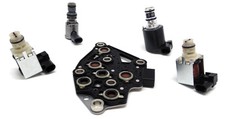
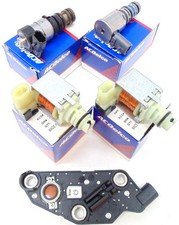
4T65E TCC Solenoid, 1997-2002
A confirmed-bad TCC/PWM solenoid is the cheapest real fix for a stuck-off code — rule it out electrically first, then replace it with the correct part for your build year.
View the 4T65E TCC solenoid →Bore Wear in the Valve Body Causes the Same Code
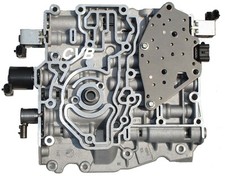
Assuming the unit hasn't been rebuilt with a mismatched part, the most common real-world cause of P0741 on an otherwise-stock 4T65E is wear inside the valve body itself. Sonnax's product documentation for this transaxle describes the TCC apply valve and TCC regulated apply valve oscillating continuously in their cast-aluminum bores as the clutch cycles on and off over the unit's life. That constant motion wears the bore, and once the clearance opens up enough, regulated apply oil and TCC signal (PWM) oil exhaust past the valve instead of building the pressure needed to stroke the converter clutch fully. The listed symptom set for this wear is TCC slip, code P0741, cycling TCC rpm, no lockup at all, lockup that falls out when the transmission is hot, and converter shudder — the same complaints techs describe when they call this a "stuck off" code in the field.
Sonnax sells two different kits addressing this depending on how far the bore has worn. The TCC Apply Valve Kit (part 84754-43K) replaces just the apply valve with a hardcoat-anodized version that has an expandable PTFE seal and an inner spool about 2.5 times longer than the factory spool, adding sealing surface against a bore that is not yet worn too far. If the bore itself is worn beyond what a valve-only fix can seal, Sonnax's TCC Regulated Apply Valve Kit (part 84754-34K) adds a wear-resistant sleeve along with the new valve, letting a worn bore be reamed and resleeved rather than requiring a full case or valve body replacement. Either way, inspecting the apply valve bore for visible wear marks is a standard step any time TCC slip or P0741 shows up on a 4T65E that has not had obvious parts substituted.
Confirm the Solenoid Before You Condemn the Valve Body
Before pulling the valve body, rule the TCC/PWM solenoid out properly, because this transaxle makes it easy to install the wrong one by mistake. Transmission Digest's coverage of this transaxle's TCC solenoid circuitry notes that the TCC solenoid and the PWM solenoid use gray plastic connectors with the same configuration and look nearly identical, but they are not interchangeable. Both solenoids carry two groups of four numbers etched on the can: the first group is the Julian build date, the second is the last four digits of the part number. At the time that reporting was current, the correct OEM number was 24227747 for the 4T65-E TCC solenoid valve specifically, superseding an earlier part number, per GM TSB 02-07-30-039A and its later revision 02-07-30-039F — and that number is explicitly not the same part used on the 4T40/45-E or 4T80-E. Ordering by "TCC solenoid" alone without confirming the exact part number against the casting and build year is how a correct diagnosis still ends up with the wrong part on the shelf.
To test the solenoid itself, unplug the transaxle's external harness connector and measure resistance across the solenoid's terminals with a DVOM, comparing the reading against a known-good solenoid of the same part number rather than guessing at a universal spec, since the TCC and PWM designs on this unit do not share identical winding resistance. A solenoid that reads correctly and still won't let lockup apply on a road test, with the scan tool showing a clean command and zero drop in TCC slip, points the diagnosis back at the valve body apply circuit rather than back at another solenoid swap.
Check Fluid Level and Type Before Chasing Parts
It costs nothing to rule this out first: a low fluid level starves both the converter and the valve body of the pressure needed to fully apply the clutch, and it is one of the simplest things to overlook on a vehicle that's already been in for other transmission work. These transaxles were factory-filled with DEXRON-III, and GM's own service-fill specification has since moved to DEXRON-VI, which GM's engineering paper on the spec describes as developed because DEXRON-VI's performance exceeded what DEXRON-III service-fill fluids offered at the time. Confirm the fluid is filled to the correct level with the correct current-spec fluid before any component gets replaced.
Working Order for a P0741 Diagnosis
- Pull all stored and pending codes, not just P0741. A speed-sensor or TCC-release-switch code changes the diagnosis; P0741 alone with clean sensor data keeps the apply circuit as the leading suspect.
- Check fluid level and condition first. Low or badly worn fluid starves apply pressure and costs nothing to rule out before parts are ordered.
- Confirm the TCC/PWM solenoid electrically with a DVOM against a known-good reading, and verify the exact OEM part number against the build year rather than ordering by description alone.
- If the unit has been rebuilt before, compare the drive-sprocket support and turbine shaft against known-correct 4T65-E parts before replacing anything else; a 4T60-E part substituted during a prior rebuild restricts the TCC-apply oil path and will not clear with a new solenoid or valve body.
- Inspect the TCC apply valve and regulated apply valve bores in the valve body for wear once the solenoid and fluid are confirmed good; this is the most common real-world cause on a unit that hasn't had parts substituted.
Shop 4T65E TCC solenoids, valve bodies, and full rebuild kits — shipped fast from the USA.
Shop 4T65E parts →FAQ
What does code P0741 mean on a 4T65E?
P0741 is Torque Converter Clutch (TCC) Circuit Performance or Stuck Off. The PCM commands the torque converter clutch to lock up and watches for engine speed to drop into step with transmission input speed. When the PCM commands lockup and that slip never closes, it sets P0741. It does not tell you whether the problem is the TCC solenoid, the valve body, the converter itself, or a mechanical oil-flow restriction upstream of all of them.
Why would a rebuilt 4T65E still throw P0741 after a new converter, solenoid, and valve body?
ATSG documented exactly this case on a 4T60-E/4T65-E transaxle: two torque converters, two valve bodies with new solenoids, every known Sonnax fix, new bushings and sealing rings, and the code kept coming back because none of those parts were the problem. The drive-sprocket support installed during the original rebuild was the 4T60-E version instead of the correct 4T65-E part, and the mismatch restricted oil flow in the TCC-apply circuit itself, so no amount of solenoid or valve-body replacement could fix it.
Is P0741 always an electrical problem?
No, and on the 4T65E it usually is not. Sonnax's own product documentation for this transaxle ties P0741 directly to bore wear in the TCC apply valve and TCC regulated apply valve, where the valve oscillates in a cast-aluminum bore until the bore wears enough to let apply oil and PWM signal oil exhaust past it. That drops TCC apply pressure and produces slip and P0741 with the solenoid circuit testing completely normal.
Can low or wrong transmission fluid cause P0741?
A low fluid level is one of the simplest and most overlooked causes of TCC codes, since the converter and valve body both depend on adequate apply pressure to stroke the clutch fully. GM's own service-fill specification moved from DEXRON-III, which these transaxles were originally filled with, to DEXRON-VI, so confirming the fluid meets the current GM spec and is filled to the correct level is a five-minute check worth doing before any parts are ordered.
How do you tell a bad TCC solenoid from a worn valve body apply valve?
Start electrical, not mechanical. Unplug the transaxle harness connector, measure the TCC/PWM solenoid at its terminals with a DVOM, and confirm it against a known-good reading rather than assuming it is bad. The 4T65E's TCC solenoid and PWM solenoid use nearly identical gray connectors and can be swapped by mistake, so confirm the OEM part number before reinstalling or replacing one. If the solenoid checks out electrically and the code persists, the apply valve bore in the valve body is the next and more likely stop.
Shop the 4T65E TCC solenoid at CoreTransmissionParts →
Related 4T65E guides
Sources
- ATSG (Mike Souza), via Transmission Digest — "The Code That Just Wouldn't Go Away," Shift Pointers, April 1, 2008. Backs the full 4T60-E/4T65-E drive-sprocket-support mismatch case: the repairs already attempted (two converters, two valve bodies with new solenoids, all Sonnax fixes), the 0.201-inch turbine-shaft length difference, and the restricted TCC-apply oil flow this caused. transmissiondigest.com
- Sonnax — TCC Apply Valve Kit, part 84754-43K, product page. Backs the converter apply valve bore-wear mechanism, the no-lockup/P0741/falls-out-when-hot/shudder symptom set, and the hardcoat-anodized valve with extended spool as the fix. sonnax.com
- Sonnax — TCC Regulated Apply Valve Kit, part 84754-34K, product page. Backs the regulated-apply-valve bore wear letting apply oil and PWM signal oil exhaust, the TCC-slip/P0741/cycling-rpm symptom set, and the valve-and-sleeve fix for a worn bore. sonnax.com
- Transmission Digest — TCC solenoid diagnostic trainer, February 2007 issue. Backs the TCC/PWM solenoid identification method (etched build-date and part-number codes on nearly identical connectors), OEM part number 24227747 for the 4T65-E specifically, and GM TSB 02-07-30-039A/039F. transmissiondigest.com
- SAE International / General Motors — "General Motors DEXRON-VI Global Service-Fill Specification," SAE Paper 2006-01-3242. Backs DEXRON-VI superseding DEXRON-III as GM's service-fill specification and the performance rationale for the change. saemobilus.sae.org