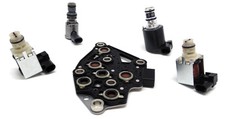
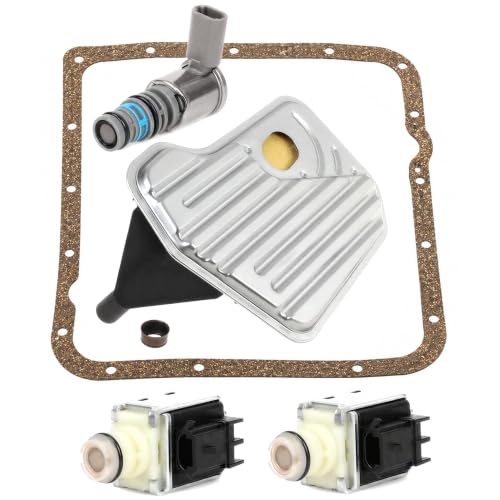
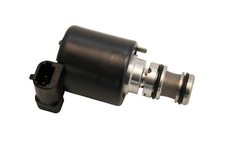
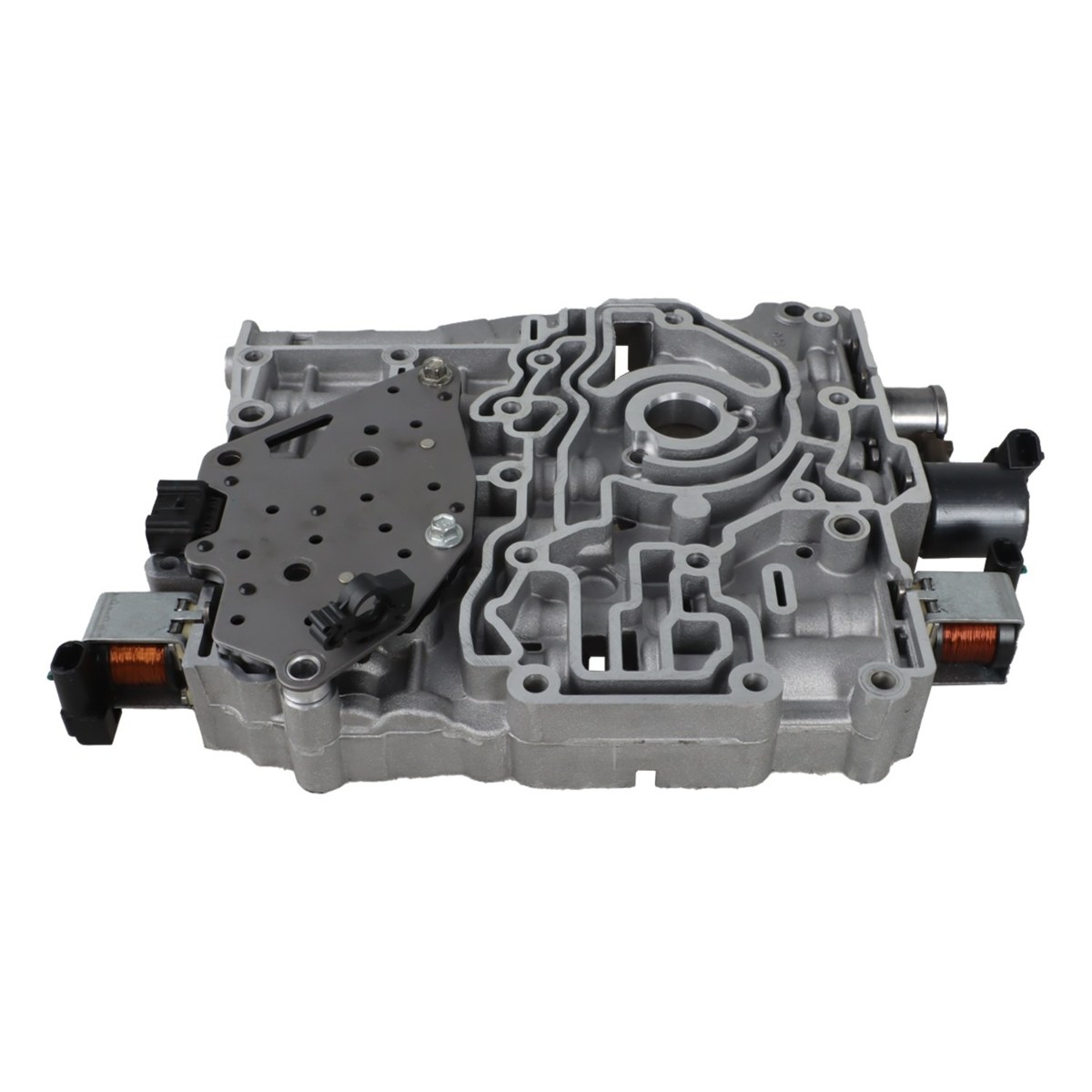
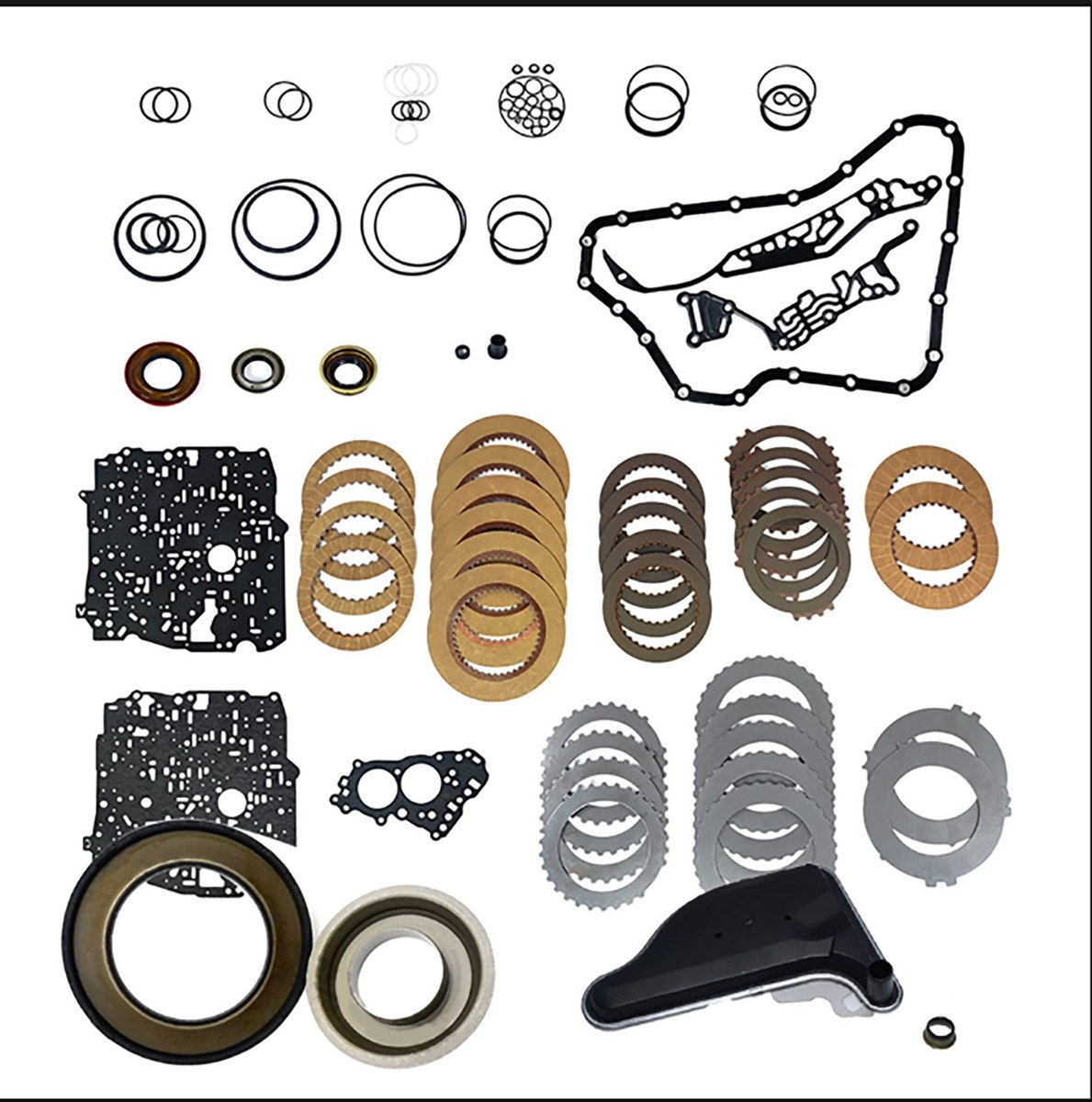
Most people land on this page because a 1997-2002 Buick LeSabre, Century or Regal, Chevrolet Impala or Monte Carlo, Pontiac Grand Prix or Bonneville, or Oldsmobile Intrigue has started to shudder between about 40 and 60 mph, sits a few hundred RPM high at cruise, or has stored a converter clutch code such as P0741. The torque converter clutch (TCC) solenoid is the usual suspect, but on a first-generation 4T65E it rarely fails alone. That is why this listing ships as a full master kit rather than a single coil: one new TCC lockup solenoid, one new pressure control (EPC) solenoid and two new shift solenoids. The product photo also shows the pressure switch plate, and the listing states the kit includes everything pictured. Cross-reference numbers on the listing are 84431G, 84421G, 74418E and 84442G.
What the TCC solenoid does in a 1997-2002 4T65E
The 4T65E came out for 1997 as GM's electronically controlled successor to the 4T60-E. Once the car is warm and cruising in a steady gear, the engine computer pulses the TCC solenoid to send oil to the converter clutch apply circuit, so the engine and turbine turn together instead of slipping through the fluid. The computer then compares engine speed with turbine speed. If the solenoid sticks, its screen plugs, or its seat leaks oil, the clutch slips, the numbers do not match, and a TCC performance code sets. The EPC and shift solenoids sit on the same valve body and share the same feed: Sonnax notes the actuator feed limit (AFL) valve supplies them at up to 115 psi, so a coil that has worn for 20-plus years seldom has healthy neighbors.
Symptoms this kit addresses
- Shudder or a rumble-strip feel at light throttle around 40-60 mph, usually worse when hot
- Converter never locks: higher cruise RPM and lower fuel economy
- P0741 (TCC performance) or a TCC electrical code
- Soft, slow or flared shifts with P1811, which points at pressure control
- Starts in second, or drops out of fourth, which Sonnax ties to AFL bore wear
- Harsh or erratic shifts after the transmission is fully warm
How to confirm it before you buy
Read the codes first and check the fluid level and condition; burnt fluid with clutch material says the problem is deeper than a solenoid. With a scan tool, watch commanded TCC against actual slip speed at a steady 50 mph. If the computer commands lockup and slip stays high, the solenoid, its feed oil or the converter clutch itself is at fault. A P1811 long-shift code can also come from worn 2nd and 3rd clutch packs, as Transmission Digest explains, so a new solenoid set will not cure it on a slipping unit. Our 4T65E shift solenoid symptoms guide and the EPC solenoid diagnosis guide walk through the tests step by step.
Fitment
This kit is listed for the 4T65E from 1997 through 2002, the early design used in GM's mid-size and full-size front-drive cars of that period. GM revised the unit for 2003, and the later parts differ, so a 2003-up car needs the 2003-up 4T65E TCC solenoid master set instead. Before ordering, compare the connectors and the shape of your old solenoids with the photo, or send us your year and VIN and we will confirm the match. You can browse every part for this unit on the 4T65E parts page.
Install notes
- The solenoids are on the valve body under the side cover on the driver's side of the transaxle; on most cars the cover is reached after supporting the engine and lowering the cradle or removing the left wheel and splash shield.
- Fit new O-rings and make sure each solenoid screen is clean and seated; lube O-rings with ATF, never grease.
- Inspect the AFL and TCC regulator valve bores while the valve body is out. A worn bore will keep the new solenoids from controlling pressure; a reconditioned 2000-2002 4T65E valve body is the fix when they are scored.
- Refill with Dexron VI. GM lists about 7.4 quarts for a 4T65E service, more if the converter was drained.
- Clear codes, then drive through several warm lockup cycles at a steady 45-60 mph so the computer relearns shift and lockup feel.
If the fluid is dark and the car also slips on the 2-3 shift, plan on internal work as well; the 4T65E overhaul kit covers the seals and clutches for the same years.