P0756 gets treated like a parts-cannon code more often than almost any other shift solenoid fault on the 4T65E, and that habit gets expensive fast. The name on the scan tool — Shift Solenoid B Performance (Stuck Off) — sounds electrical, so the first move is usually a new solenoid. On this transaxle that is frequently the wrong first move. P0756 is a performance code, not an electrical code, and the distinction changes where you should actually be looking: the valve body, not the solenoid coil.
What P0756 Actually Tests For
Shift Solenoid B (SSB) controls the 2-3 shift on the 4T65E, the same way Shift Solenoid A controls the 1-2 shift. The PCM monitors two separate things on this circuit: whether the solenoid's commanded electrical state can be verified (that is the 2-3 shift solenoid's electrical code, P0758), and whether commanding that state actually produces the correct gear. For the second check, the PCM compares the gear ratio it expects — based on input and output speed sensor data — against the gear ratio it's actually getting after the shift is commanded. When SSB is told to change and the achieved ratio never lines up with the commanded ratio inside the PCM's allowed window, it sets P0756, Shift Solenoid B Performance (Stuck Off), or its companion P0757 (Stuck On) if the opposite failure happens.
That mechanism is the whole reason this code is misdiagnosed so often. A performance code does not mean the solenoid is bad; it means the result of commanding the solenoid didn't happen. The 4T65E was introduced for the 1997 model year as GM's evolution of the 4T60-E platform, carrying the same PCM-controlled shift solenoid and pressure-control solenoid architecture forward with a revised pump and converter, according to SAE International's own engineering paper on the transaxle. That architecture puts the shift solenoids a layer removed from the valve movement they're supposed to cause — the solenoid directs oil, and a separate shift valve in the valve body actually moves to change the hydraulic circuit. P0756 can mean the solenoid failed to direct oil, or it can mean the oil was directed correctly and the valve downstream of it never moved. Those are two different repairs with two different price tags, and the code alone does not tell you which one you have.
Why This Is Usually a Stuck Valve, Not a Bad Solenoid
Sonnax, which has sold replacement valve-body components for this transaxle for years, documents exactly why the 4T65E is prone to the mechanical version of this failure. The factory 2-3 shift valve went through a material change over the transaxle's production run: early valves were uncoated raw aluminum, and Sonnax's own product documentation states plainly that "the non-anodized valves score and seize in the bore," with uncoated aluminum valves especially prone to scoring, scratching, and intermittent sticking as they age. A valve that scores enough to hang up partway through its travel does not report back to the PCM as an electrical fault, because nothing about the circuit is broken — the solenoid fires, the oil moves, and the valve it's supposed to push just doesn't finish moving. The PCM sees a shift that was commanded and never arrived, and it has exactly one code for that condition on the 2-3 side: P0756.
The symptom pattern Sonnax lists for a worn 2-3 shift valve reads almost exactly like a field description of this code: erratic shifts, 2-3 "shuttle" (hunting between 2nd and 3rd), no 3rd gear, no 4th gear, unexpected 2nd-gear starts, and shifts that get worse or better with temperature as the aluminum bore and valve expand at different rates. Sonnax's fix is a drop-in replacement valve, part number 84754-36K, that's hardcoat anodized with annular grooves machined into it; the grooves center the valve in the bore and resist the side-loading that causes hang-up, and the hardcoat finish stops the scoring that starts the whole failure chain on the factory part.
There is a second, related wear point worth checking at the same time: the 2-3 accumulator valve and its sleeve, which regulate line pressure with torque-signal influence and route 2-3 accumulator pressure to control third-clutch apply feel. Sonnax's documentation for its accumulator valve kit (part 84754-53K, GM 4T65-E units only, not for Volvo-sourced applications) notes that wear here lets torque signal, accumulator, or line pressure bleed off, producing both 2-3 shift complaints and, left long enough, burnt clutches. A tech chasing P0756 who finds a clean shift solenoid and a scored 2-3 valve should pull this accumulator valve and sleeve at the same time rather than closing the job after replacing just the shift valve.
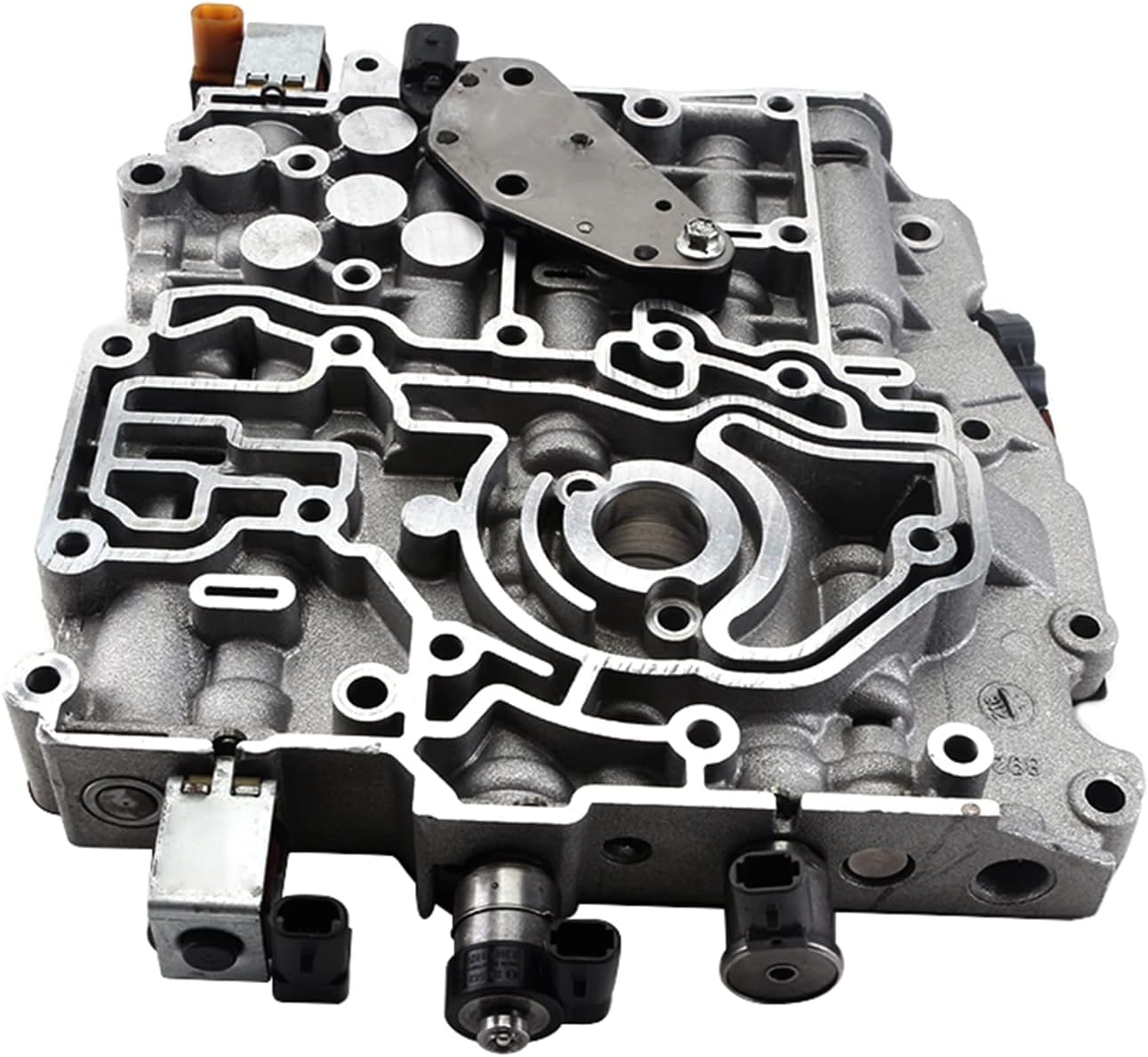
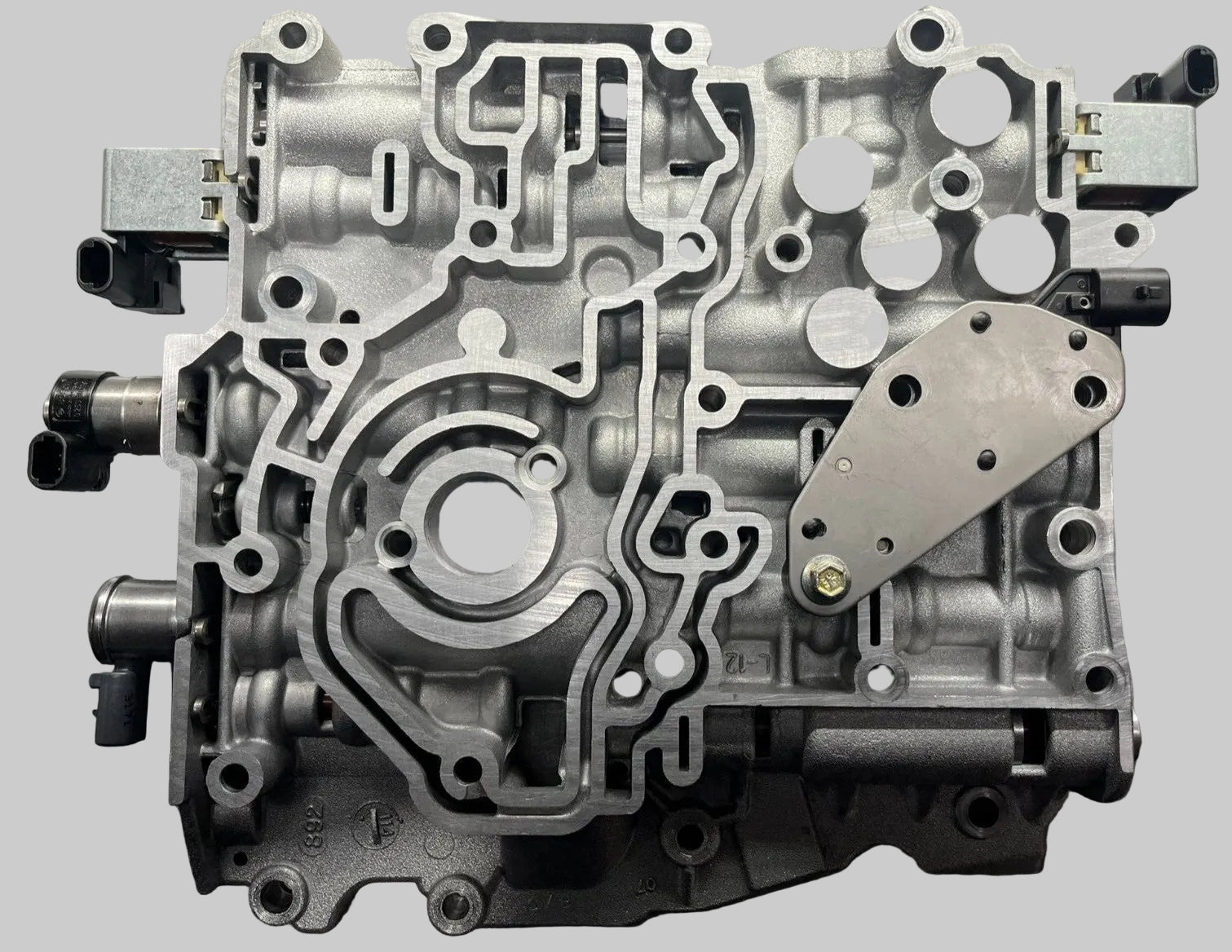
4T65E Transmission Valve Body, GM FWD
A full replacement valve body sidesteps hunting for a scored 2-3 shift valve or worn accumulator bore one component at a time — one part, correct clearances guaranteed, back on the road the same day.
View the 4T65E valve body →Prove the Solenoid Before You Condemn It
Before assuming the valve body is the problem, rule the solenoid out properly — and that means testing it live, not just checking resistance. Transmission Digest's diagnostic trainer Chris Adams documented exactly why static resistance checks miss live faults on this transaxle's companion code, P0753 (Shift Solenoid A Electrical): on a 1998 Oldsmobile Intrigue 3.8L with a 4T65-E, the entire SSA circuit checked a clean 24 ohms from the PCM back to the #26 10-amp transmission fuse, which would normally clear the solenoid circuit of suspicion entirely. Commanding the solenoid on with a scan tool and reading the circuit with an inline ammeter instead of a static ohmmeter told a different story: the solenoid showed as commanded on with zero current flow, which a resistance check alone could never have caught. The root cause turned out to be a harness wire pinched under the air box, invisible to any static test.
The same live-test logic applies directly to SSB and P0756, just pointed at a different possible outcome. Use a scan tool capable of bi-directional control to command SSB on and off while reading actual current draw at the circuit, either with an inline ammeter at the transmission fuse or a comparable load-simulator setup. If the solenoid draws the expected current every time it's commanded, in both directions, you have proven the solenoid coil, the connector, the internal harness, and the PCM driver are all functioning correctly — and a performance code with a clean live electrical test points the diagnosis squarely at the valve body, not back at another solenoid.
Identify the Valve Body Before You Order Parts
The 4T65E's valve body is not one static design across its production run, which matters once you're ready to buy a 2-3 shift valve, an accumulator kit, or a full replacement valve body. Sonnax's own channel-plate identification reference lists at least five distinct separator/channel plate part numbers across the transaxle's life (GM171 through GM175), tied to specific casting numbers and a running design change placed in mid-2002 that added a machined area and tab for a revised 4th-clutch design. Early and late valve bodies also differ in where certain check balls sit and whether a converter drain-back blow-off ball is present at all — putting a plate with that ball onto a case half that never had one creates a lube restriction that causes its own, unrelated failure.
The 2-3 shift valve carries its own fitment line to watch: Sonnax's 84754-36K fits 1994-and-later 4T60-E and standard 4T65-E valve bodies, but it explicitly does not fit 4T65-E units built with the Geartronic or Tapshift manual-shift feature, which use a different valve body internally. Pull the valve body, confirm the casting and the solenoid/shift-feature configuration against the actual part before ordering a drop-in valve or a reman unit, rather than ordering by model year alone.
Working Order for a P0756 Diagnosis
- Scan for every code present, not just P0756. A P0758 stored alongside it changes the diagnosis to electrical; P0756 alone with no electrical code keeps the valve body as the leading suspect.
- Confirm SSB electrically with a live amperage test, not a static resistance check, using bi-directional scan tool control and an inline ammeter.
- Drop the pan and inspect before replacing anything. Fibrous or metallic debris in the pan or filter points at internal wear feeding the valve body; clean fluid with a confirmed-good solenoid points straight at the 2-3 shift valve or accumulator valve bore.
- Identify the valve body casting and solenoid configuration before ordering a shift valve, accumulator kit, or replacement valve body, since Geartronic/Tapshift units and early-versus-late castings are not interchangeable.
- Replace the shift valve and accumulator valve together when either shows wear; they share the same 2-3 shift circuit and a worn accumulator will keep producing shift complaints after a shift-valve-only fix.
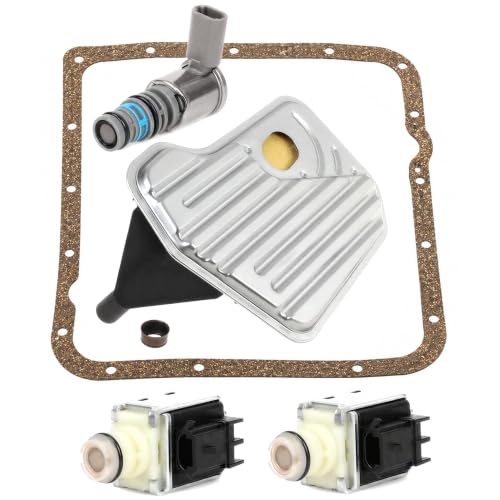
Shop 4T65E valve bodies, shift solenoid and filter kits, and full rebuild kits — shipped fast from the USA.
Shop 4T65E parts →FAQ
What does code P0756 mean on a 4T65E?
P0756 is Shift Solenoid B Performance (Stuck Off). The PCM commanded Shift Solenoid B to change state for the 2-3 shift and then checked the actual gear ratio against input and output speed sensor data; the ratio never matched what was commanded within the allowed time. It is a performance code, not an open or short circuit. The electrical side of SSB can test perfectly fine and the code can still set if the valve that solenoid operates is physically stuck.
How is P0756 different from P0758?
P0758 (Shift Solenoid B Electrical) is a hard electrical fault the PCM detects directly on the circuit: a continuous open, a short to ground, or a short to power. P0756 (Shift Solenoid B Performance) sets with the circuit electrically healthy; the PCM commands the solenoid, verifies the command electrically, and the transmission still does not achieve the commanded gear ratio in time. On a 4T65E that almost always points at the 2-3 shift valve or 2-3 accumulator valve sticking or leaking in the valve body, not the solenoid coil or wiring.
Will a new shift solenoid fix a P0756 code?
Sometimes, but often not by itself. Sonnax's own fitment and symptom documentation for its 2-3 shift valve repair (part 84754-36K) lists the exact symptom set techs see with this code: erratic shifts, 2-3 shuttle, no 3rd, no 4th, 2nd-gear starts, and temperature-sensitive shifting, all traced to the stock valve scoring and seizing in its bore rather than the solenoid failing. Confirm the solenoid circuit electrically first; if it tests clean, the valve body is the next and more likely stop.
How do you tell an electrical fault from a stuck valve without guessing?
Resistance checks on a dead circuit can look perfect and still miss a live fault, which is the exact trap Transmission Digest documented on this transaxle's companion code, P0753. The fix is to test live: use a scan tool with bi-directional control to command the solenoid on, and read actual current draw with an ammeter in the circuit rather than just ohming it out. Current flows at the expected value, the electrical side and the PCM driver are proven good, and a performance code with a clean electrical test shifts the diagnosis to the valve body.
Does every 4T65E use the same 2-3 shift valve part?
No. Sonnax's 84754-36K drop-in 2-3 shift valve fits 1994-and-later 4T60-E and standard 4T65-E valve bodies but explicitly does not fit 4T65-E Geartronic or Tapshift units. The valve body's own separator/channel plate also went through a running design change in mid-2002, with at least five different GM part numbers across early and late castings. Identify the exact valve body casting before ordering a drop-in valve, an accumulator kit, or a replacement valve body.
Shop the 4T65E valve body at CoreTransmissionParts →
Related 4T65E guides
Sources
- Sonnax — 2-3 Shift Valve, part 84754-36K, product page. Backs the uncoated-aluminum valve scoring/seizing cause, the erratic-shift/2-3-shuttle/no-3rd/no-4th/2nd-gear-start/temperature-sensitive symptom set, and the 4T60-E/4T65-E fitment with the Geartronic/Tapshift exclusion. sonnax.com
- Sonnax — 2-3 Accumulator Valve Kit, part 84754-53K, product page. Backs the 2-3 accumulator valve/sleeve wear causing torque-signal and line-pressure bleed-off, the 2-3-shift-complaint and burnt-clutch symptoms, and the GM-4T65-E-only fitment. sonnax.com
- Sonnax — "GM 4T65-E Channel Plate Identification," tech resource. Backs the five-part-number channel/separator plate lineage (GM171-GM175), the mid-2002 running design change for the 4th-clutch update, and the early/late case-side blow-off-ball differences. sonnax.com
- Transmission Digest — "Why Resistance Checks Don't Always Work," by Chris Adams, R&R Tech, March 1, 2011. Backs the live-amperage-versus-static-resistance diagnostic method on this transaxle's P0753 shift solenoid circuit, including the 24-ohm clean resistance reading, the #26 10-amp transmission fuse, and the pinched-harness root cause the resistance check missed. transmissiondigest.com
- SAE International — "General Motors 4T65-E Electronic Four-Speed Automatic Transaxle," Paper 980821. Backs the 4T65E's 1997 introduction as GM's evolution of the 4T60-E platform and its PCM-controlled shift solenoid and pressure-control solenoid architecture. saemobilus.sae.org