Nobody cross-shops these two. A 62TE lives in a Chrysler minivan or a Journey; a 6T70 lives in a Malibu, an Acadia or a Traverse. They do, however, land on the same lift, in the same year range, doing the same job: six forward speeds through a transverse front-drive transaxle behind a V6 in a heavy family vehicle.
So the comparison gets made constantly, usually by somebody deciding which core to build or wondering why the shop that just did their neighbor's Traverse quoted half what they were quoted on a Town and Country. The answer comes down to how each one was designed, and the two took opposite approaches.
The short version
The 62TE is a four-speed with a second gearbox bolted to the back of it. The 6T70 is a clean-sheet six-speed that GM and Ford engineered together.
Chrysler took the 41TE, an architecture dating to the late 1980s Ultradrive, and added an underdrive compounder assembly on the transfer shaft. Per Chrysler's own 62TE service information (source 7), that compounder literally replaces the 41TE transfer shaft, and the case was modified to accept it. GM started from nothing and put the entire gear train in line with the crankshaft centerline instead of folding it around the end of the engine, which is why the unit is only 357 mm long. That single decision drives almost every practical difference below.
Gear ratios, side by side
The 6T70 numbers come from GM's own launch material for the transmission. The 62TE numbers come from Chrysler factory service information, which also documents how each ratio is arrived at.
| Gear | Chrysler 62TE | GM 6T70 |
|---|---|---|
| 1st | 4.127 | 4.48 |
| 2nd | 2.842 | 2.87 |
| 3rd | 2.284 | 1.84 |
| 4th prime | 1.573 | — |
| 4th | 1.452 | 1.41 |
| 5th | 1.000 | 1.00 |
| 6th | 0.689 | 0.74 |
| Reverse | 3.215 | 2.88 |
| Spread | 5.99:1 | 6.04:1 |
Two things jump out. First, the spreads are almost identical, which is not a coincidence; both were chasing the same fuel economy targets in the same years. Second, the 62TE has an extra ratio the 6T70 does not, and it is not a marketing gimmick.
What 4th prime actually does
Chrysler's service information is blunt about it: the 2-3, 3-2 and 4-2 shifts require a double swap, meaning two elements turn off while two different elements engage, and that synchronization has to happen inside 40 to 70 milliseconds. Shift the compounder too early relative to the main centerline and you get a shudder or a harsh shift. Too late and the driver feels a double bump.
A 6-4 downshift would be another double swap. Instead the transaxle shifts to 4th prime at 1.573, which only needs the OD clutch released and the UD clutch applied at the same time. One swap instead of two. That is why the unit has seven forward ratios and gets called a six-speed.
Gears Magazine, ATRA's technical publication, describes the concept as splitting the transfer and pinion drive with an underdrive and direct clutch to get a double ratio to the final drive. The old Ford A4LD and GM 4L30 did something similar, but put the extra gearset at the input. The 62TE puts it at the output.
You can see the multiplication in the ratios. First gear is a 2.84:1 main centerline ratio times a 1.45:1 compounder reduction, which lands on 4.127. Second is that same 2.84:1 with the compounder in direct at 1:1, so it stays 2.84. Reverse is 2.21:1 times 1.45:1, which is where 3.215 comes from.
Torque capacity, and why only one of these has a published number
GM published theirs. The 6T70 is rated for 280 lb-ft of engine torque with a gearbox capacity of 380 lb-ft, engines up to 315 horsepower, a 7000 rpm maximum shift speed, and a wet weight of 102 kg. The 6T75 is the heavier-duty version of the same architecture.
Chrysler never published an equivalent figure for the 62TE. Its service information says the compounder was added to improve low-end torque multiplication, which is not the same claim as raising the torque ceiling. Treat any 62TE torque rating you see quoted online as somebody's estimate unless it comes with a source.
Controls: two completely different diagnostic experiences
This is where the working difference between the two shows up on a Monday morning.
The 6T70 runs a TEHCM. The control module lives inside the transmission, on the solenoid body. Per Transmission Digest, GM's solenoid body carries eight solenoids where Ford's related 6F50 carries seven: six pressure control solenoids (three normally low for the 2-6 clutch, the 1-2-3-4 clutch and the TCC; three normally high for line pressure, the 3-5-Reverse clutch and the 4-5-6 clutch), plus SS1 and SS2 as normally closed on/off solenoids. SS1 applies the low/reverse clutch below 3 mph in Drive 1st for engine braking. SS2 handles the reverse application through clutch select valve 3.
Generation 1 units also carry four transmission fluid pressure switches inside that assembly, each watching a clutch regulator valve: TFP #1 on the 1-2-3-4 valve, #2 on the 3-5-Reverse valve, #3 on the 2-6 valve, #4 on the 4-5-6 valve. They are all normally closed, and the module reads gear position off the open and closed pattern across the four.
The upside is that a solenoid, TFP or TFT electrical code points at one replaceable assembly. The downside is that the replacement has to be programmed to the vehicle, and testing anything else electrical means pulling the cover.
The 62TE runs a fore-mounted valve body with a separate solenoid and pressure switch assembly and a 23-way connector. It carries a DC solenoid and LC solenoid with matching DC and LC pressure switches for the compounder, TCC and pressure control solenoids, and a line pressure sensor. That line pressure sensor is the meaningful difference: the 62TE measures actual line pressure electrically and reports it, which is a real diagnostic advantage over the 6T70's switch-pattern approach. It also added a third speed sensor: ATRA's 62TE technical update (source 8) shows the input sensor moved to the top of the case, the old 41TE output sensor relocated and renamed the transfer shaft speed sensor, and a new output sensor reading the compounder output carrier. Those three sensor connectors are also the fastest way to tell a 62TE from a 41TE on the lift; our 62TE identification guide covers the label, PK number and sales code checks.
The signature failure on each side
6T70: the 3-5-Reverse waved plate
If you only remember one thing about the 6T70, remember this one. Per Transmission Digest, the 3-5-Reverse waved plate breaks, which lets the clutch piston over-travel, which cuts the lip seal, and the 3-5-R clutch stops applying. The customer arrives with no reverse, no third and no fifth. Sonnax explains why: the teeth on the OE plate are high-stress points that do not survive long-term fatigue, and plates that have not broken yet often already carry micro-fractures at the tooth corners. GM went to a shot-peened plate, part number 24254103, and it still fails in some units.
The code pattern is what wrecks diagnoses. You get pressure control solenoid performance codes P0776, P0777, P2723, P2714 and P2715 from the clutch not obeying commands, and at the same time P0716 and P0717 input speed sensor codes, because metal debris from the broken plate migrates through the unit and sticks to the input speed sensor. Read the speed sensor codes alone and you sell a sensor on a transmission with a broken clutch plate in it.
Budget for collateral damage before you quote: the 3-5-Reverse and 4-5-6 clutch housings, the 2-6 clutch piston return spring, the end cover, and chewed 3-5-R housing splines.
62TE: the low clutch drum and the low/reverse switch valve
The 62TE's headline weak spot is the low clutch drum sealing ring grooves. Gears Magazine walks through the history: the drums originally used rotating sealing rings that wore into the aluminum grooves, and that quickly became the weakest link in the transmission. Chrysler moved to tabbed non-rotating rings, which fixed the groove wear but left too much side clearance. The aftermarket fix is to cut off the sealing ring tower and replace it with a steel sleeve carrying steel grooves. As the article puts it, the drum is a part of the rebuild that needs to be figured into every unit.
The second one is hydraulic and gets missed. Sonnax documents wear in the low/reverse switch valve bore and the low clutch switch valve bore, both of which act as one-way valves for their clutches in Reverse and Drive. Wear lets fluid leak past and exhaust through the manual valve, so apply pressure drops and you get burnt clutches with delayed or no Reverse and no 1st and 2nd. The valve is heavily side-loaded because its diameter is too close to its total length.
Vacuum testing these bores on a 62TE is genuinely awkward. Sonnax notes there is a very long port that has to be covered front and back, a rubber mat over the casting helps, and you have to manually shuttle the valve into whichever worm track you are testing. 18 in-Hg is the pass mark. Anything below that is worn. Their practical shortcut: if port 1 leaks, assume port 2 does too and replace both valves. The drop-in repair is kit 92835-43K, with 92835-47K for extreme bore wear.
Interchange: one of these has a twin, the other does not
The 6T70 was a joint Ford and GM program, so its sibling is the Ford 6F50 and many internals are very similar or nearly identical. Transmission Digest points out the money angle: the hard parts damaged by a broken waved plate are the same parts Ford sells for the 6F50, and buying them from a Ford dealer can be cheaper than from GM, assuming GM even has them. The Ford front sun shell including the number 3 thrust bearing is FT4Z-7A019-A.
The differences are mostly control side. GM went mechatronic with the TEHCM; Ford kept an external module. So the gear train shops parts, the brain does not. The 62TE has no such twin. Its lineage runs back to the 41TE, and the compounder is unique to it.
Year splits that matter
On the GM side, Sonnax's Gen. 1 identification chart is the one to keep on the wall. The 3-5-R clutch regulator valve is a 1.35 ratio in 2007 and 2008 and a 1.83 ratio from 2009 through 2013. The lower separator plate goes from a cut-out to a notch to a circle hole across those years, the exhaust port control changes from closed to open in 2010, and the channel plate goes from level with the valve body to a raised notch above it in 2012 and 2013. Sonnax splits its remanufactured valve bodies on exactly that line: GM6T70-1E for 2007 to 2008 with the 1.35 valve, GM6T70-1L for 2009 to 2013 with the 1.83. Past that sits the Gen. 1 to Gen. 2 wall at the 2013 model year, where the TEHCM pressure switches were eliminated entirely and parts stop interchanging. Identify the unit before you order anything.
Rebuild kits for both units
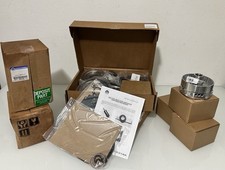
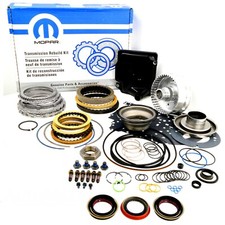
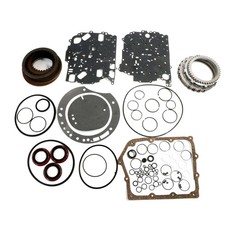
Building the Chrysler side, plan on the low clutch drum. Building the GM side, plan on the 3-5-R plate and the drum splines. Both kits ship through our sister store, Core Transmission Parts.
62TE master rebuild kit →Bench specs worth writing down
These are the 62TE compounder numbers from Gears Magazine, and they are the ones people get wrong:
- Direct clutch: 12 one-sided friction plates. Clearance 0.037 to 0.056 in., adjusted with the pressure plate. Dealer pressure plate kit is 68004116AA.
- Low clutch: clearance 0.019 to 0.030 in., adjusted with different thickness snap rings.
- Transfer gear nut: 200 ft-lb, temporary install only during setup. Do not stake it until final assembly.
- Turning torque: 8.0 to 18.0 in-lb measured with a dial-type inch-pound wrench after the shim, gear and nut are installed. Over 18.0 means a larger shim.
- Sprag orientation: the inner race has a black heat-treated side that faces up, toward the flat side of the outer race. Two offset blind splines mean the race only goes on one way.
Getting the compounder out of the case is its own fight. It sticks badly, and it generally takes a slide hammer plus the Chrysler tool or an aftermarket equivalent.
Fluid, and one 62TE trap
The 62TE takes Mopar ATF+4, Chrysler material standard MS-9602. On a pan and filter service, Chrysler's procedure is four quarts poured through the dipstick opening, filter nuts to 5 N.m (40 in-lb) and pan bolts to 6 N.m (50 in-lb).
Here is the trap. You cannot set the level by reading a mark on the stick. The 62TE uses dipstick 9336A, which has indicator marks every 10 mm, and you read the height on the stick against transmission fluid temperature on a scan tool using Chrysler's fluid graph. Normal operating temperature is 82 degrees C (180 degrees F). Fill it like a 4L60E and you will hand back an overfilled or underfilled transmission.
The 6T70 takes DEXRON-VI, and GM's published capacity is 9.0 liters, about 9.5 quarts. No substitutions on either one; both fluid specs are real specifications, not labels.
Which one is stronger, and which one to build
Neither is a heavy-duty unit. Both are mid-2000s fuel-economy six-speeds behind V6 engines in vehicles that get loaded to the roof and towed with.
If you are choosing a core to build, the 6T70 is the easier project. Parts availability is better, there is a Ford parts channel underneath it, and the failure mode has a proven aftermarket fix. Sonnax's 3-5-R drum saver kit 124555K uses a shot-peened waved plate with no teeth at all, which removes the stress risers, and its cupped steel plate can salvage a drum that already has damaged splines.
The 62TE is the more demanding rebuild. The compounder adds setup work with no equivalent on the GM side: turning torque, shim selection, a 200 ft-lb nut, and a drum that should be assumed bad. Do that work right and it is a durable unit. Skip it and it comes back.
The one thing that would make me walk away from either core is the same: metal in the pan. On a 6T70 that usually means the waved plate already went and took the housings and splines with it. On a 62TE it usually means the drum grooves are long gone. Check the pan first, quote second.
62TE rebuild kits, filters, solenoid blocks, pumps and valve bodies, plus the drum removal tooling. Working the GM side instead? Start at the 6T70 parts page.
Shop 62TE parts →Shop 62TE parts →
FAQ
Is the 62TE just a 41TE with an extra gearset?
Functionally, close to it. Chrysler's service information states that the underdrive compounder assembly replaces the 41TE transfer shaft and the case was modified to accept the extra components. The main centerline is the 41TE gear train; the compounder adds either a 1.45:1 reduction or a 1:1 direct pass, and multiplying those two together produces the six-speed ratio set. That is why first gear works out to 4.127, which is the 2.84:1 main ratio times the 1.45:1 compounder ratio.
Will 6T70 parts fit a Ford 6F50?
Many of the gear train parts will, because the two were developed jointly and a lot of the internals are very similar or nearly identical. Transmission Digest specifically documents buying the hard parts damaged by a broken 3-5-R waved plate from a Ford dealer, including front sun shell FT4Z-7A019-A, because they can be cheaper and more available than the GM equivalents. What does not carry over is the control side. GM uses an internal TEHCM, Ford uses an external module, so solenoid bodies and calibrations are not interchangeable.
What does a broken 3-5-R wave plate look like in codes?
Two families at once. You get pressure control solenoid performance codes P0776, P0777, P2723, P2714 and P2715 because the 3-5-Reverse clutch is not doing what the module commanded. You also get input speed sensor codes P0716 and P0717, because metal debris from the broken plate travels through the unit and attaches to the input speed sensor. Seeing both sets together is the tell. Treating the speed sensor codes as the fault is how a sensor gets sold on a transmission with a broken clutch plate inside it.
Why does my 62TE dipstick reading never seem right?
Because the stick is not meant to be read against a mark. The 62TE uses dipstick 9336A, which carries indicator marks every 10 mm, and the correct level depends on transmission fluid temperature. Chrysler's procedure is to warm the unit, cycle the ranges, push the dipstick in until it touches the pan, then compare the height on the stick against the scan tool fluid temperature using their fluid level graph. Normal operating temperature is 82 degrees C, or 180 degrees F.
Which is more expensive to rebuild, the 62TE or the 6T70?
The 62TE, in most shops. The compounder adds setup work with no GM equivalent, including selecting a shim to land turning torque between 8.0 and 18.0 in-lb, a transfer gear nut torqued to 200 ft-lb, and a low clutch drum that should be treated as a replace-or-sleeve item on every build. The 6T70 has cheaper and broader parts availability thanks to the shared Ford 6F50 channel, and its main failure has a well-established aftermarket fix.
Sources
- General Motors — Hydra-Matic 6T70 six-speed automatic press material. Manufacturer launch specifications. Backs the 6T70 gear ratios (4.48 / 2.87 / 1.84 / 1.41 / 1.00 / 0.74, reverse 2.88), the 6.04:1 overall spread, 280 lb-ft engine torque capacity with 380 lb-ft gearbox capacity, 315 hp, 7000 rpm maximum shift speed, 102 kg wet weight, 357 mm length, DEXRON-VI fluid at 9.0 liters / 9.5 quarts, and the in-line gear train arranged on the crankshaft centerline. GM release text, theautochannel.com
- Gears Magazine (ATRA) — Bill Brayton, "A Compound Solution." Backs the 62TE compounder concept (splitting the transfer and pinion drive with an underdrive and direct clutch, gearset at the output rather than the input as on the A4LD and 4L30), the seven forward ratios and the 4th prime kickdown, the direct clutch with 12 one-sided frictions and 0.037 to 0.056 in. clearance with pressure plate kit 68004116AA, the low clutch clearance of 0.019 to 0.030 in., the low clutch drum sealing ring groove history and the steel sleeve fix, the sprag inner race orientation, the 200 ft-lb transfer gear nut and the 8.0 to 18.0 in-lb turning torque window. gearsmagazine.com
- Transmission Digest — Joe Cangelosi, "Ford 6F50 and GM 6T70: Similar but Different," August 1, 2012. Backs the joint Ford and GM development, the 6T70 solenoid body with eight solenoids versus seven on the 6F50, the three normally low and three normally high pressure control solenoids and the clutches they serve, SS1 applying the low/reverse clutch below 3 mph in Drive 1st, SS2 and clutch select valve 3 in Reverse, the four transmission fluid pressure switches and which clutch regulator valve each one monitors, the normally closed switch logic used for gear identification, and the TEHCM versus external module split between GM and Ford. transmissiondigest.com
- Transmission Digest — "Pattern Failure." Backs the 3-5-Reverse waved plate failure mechanism (broken plate lets the piston over-travel and cut the lip seal), the resulting code families P0776, P0777, P2723, P2714 and P2715 plus P0716 and P0717 from debris on the input speed sensor, GM waved plate part number 24254103, the collateral damage list covering the 3-5-Reverse and 4-5-6 clutch housings, the 2-6 clutch piston return spring and the end cover, and the Ford parts crossover including front sun shell FT4Z-7A019-A. transmissiondigest.com
- Sonnax — "GM Gen. 1 6T70 & 6T75 Identification Guide" and 3-5-R Drum Saver Kit 124555K documentation. Backs the year identification chart (1.35 ratio 3-5-R clutch regulator valve in 2007-2008 versus 1.83 from 2009-2013, separator plate cut-out to notch to circle hole, exhaust port control closed through 2009 and open from 2010, channel plate raised notch in 2012-2013), the GM6T70-1E and GM6T70-1L reman valve body split, and the waved plate failure detail: teeth as high-stress points, micro-fractures at the tooth corners on unbroken plates, the updated shot-peened OE plate still failing, damaged drum splines, and the toothless shot-peened replacement plate with cupped steel plate. Identification guide • Drum saver kit 124555K
- Sonnax — Chris Leach (TASC Force), "Diagnosing 62TE, 68RFE Low/Reverse Switch Valve Issues," July 14, 2025. Backs the low/reverse switch valve and low clutch switch valve acting as one-way valves in Reverse and Drive, the leakage path past the valve exhausting through the manual valve, the resulting burnt clutches and delayed or absent Reverse and 1st and 2nd, side loading as the root cause, the vacuum test procedure including covering the long port front and back and manually shuttling the valve, the 18 in-Hg pass threshold, the port 1 to port 2 inference, and repair kits 92835-43K and 92835-47K. sonnax.com
- Chrysler LLC — 2009 Automatic Transmission 62TE Service Information (Dodge Journey). Backs the 62TE gear ratios and element application chart, the 40 to 70 millisecond double swap synchronization window, the 4th prime downshift strategy, the 2.21:1 and 2.84:1 main centerline ratios multiplied by the 1.45:1 compounder ratio, the underdrive compounder replacing the 41TE transfer shaft on a modified case, and the fluid service figures (filter nuts 5 N.m / 40 in-lb, dipstick 9336A with 10 mm marks read against transmission fluid temperature, 82 degrees C / 180 degrees F operating temperature). documents.cdn.ifixit.com (PDF)
- ATRA — "62TE Update: Front Wheel Drive 6 Speed," Mike Souza, 2014. Backs the 41TE-plus-compounder concept, the RFE-style solenoid and pressure switch assembly with a 23-way connector, the separate line pressure sensor and EMCC variable force solenoid, and the three-sensor layout (ISS on top of the case, the former 41TE output sensor relocated and renamed TSS, and a new OSS reading the compounder output carrier). atracom.blob.core.windows.net (PDF)
Verify specifications against the service information for the specific year and vehicle you are working on.