A 6T70 that will only give you one gear is not telling you what broke. It is telling you the control module already found something it could not verify, quit running its shift schedule, and parked the unit somewhere the customer can limp home on. Everything useful comes after that. What did the TEHCM see, and is the thing it saw the cause or the wreckage from the cause?
That distinction matters more than usual here, because the most common failure in the family throws debris that sets a second, unrelated-looking set of codes. Chase the second set and you sell a speed sensor on a transmission with a broken clutch plate in it.
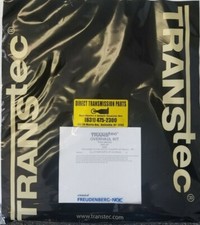
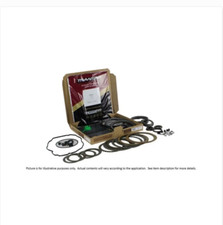

Before anything: is it a Gen. 1 or a Gen. 2?
The 6T70/6T75 got a major mid-life redesign, and half the diagnostic advice floating around applies to only one side of it. Per Sonnax, the pressure switches inside the TEHCM were eliminated beginning with the 2013 model year on 6T70 series units (2012 on the smaller 6T40 series), and the change was not applied across every model at once. Gen. 1 and Gen. 2 parts do not interchange.
Three ways to pin it down before you diagnose anything:
- RPO code. Pull the Service Parts Identification placard, usually in the glove box, sometimes the trunk or door jamb. Transmission RPOs all start with M, though not every M code is a transmission. Sonnax warns that RPO codes are not always unique per generation, so match the code against year and model together, never on its own.
- VIN lookup. The ACDelco TDS RPO lookup returns RPO codes from a VIN, and ordering by VIN is the one path that is hard to get wrong.
- The module itself. The middle number under the bar code on the TCM cover is a quick Gen. 1 versus Gen. 2 tell.
Get this wrong and you will be hunting a fault that cannot exist on the unit in front of you. Sonnax technical specialist Jim Mobley calls the resulting mess "Follower Syndrome": somebody installed the wrong TEHCM by matching the OE part number off the old module, and everyone downstream repeats it.
Cause 1: the 3-5-Reverse waved plate, and the codes it fakes
This is the headline failure of the family and the one most likely to be sitting underneath a limp complaint on an early unit. The mechanism, as documented by Pete Luban of ATSG in Transmission Digest: the 3-5-Reverse waved plate breaks, which lets the clutch piston over-travel, which cuts the lip seal, and the 3-5-R clutch stops applying. Customer complaint is no reverse, no third and no fifth.
The teeth on the OE plate are the problem. They are high-stress points that do not survive long-term fatigue, and Sonnax notes that plates which have not broken yet can already carry micro-fractures at the tooth corners. GM went to a shot-peened plate, part number 24254103, and it still fails in some units.
Here is the part that wrecks diagnoses. When the plate lets go, two separate code families show up at once:
- Pressure control solenoid performance codes — P0776, P0777, P2723, P2714 and P2715 — because the clutch is not doing what the module commanded.
- Input speed sensor codes P0716 and P0717 — because metal debris from the broken plate migrates through the unit and attaches itself to the input speed sensor.
Read those speed sensor codes in isolation and you will sell a sensor. Read them next to a P0776 and you have your answer before the pan comes down.
The collateral damage list is worth knowing before you quote the job, because it runs well past the plate: the 3-5-Reverse and 4-5-6 clutch housings, the 2-6 clutch piston return spring, and the end cover. On the drum side, the broken pieces chew up the 3-5-R clutch housing splines.
What the real-world mileage looks like
NHTSA's owner complaint database is a rough instrument, but it is a public one. Filtering the 2008 GMC Acadia file for complaints naming the wave plate or the 3-5-R clutch returns 83 records out of 858. Sixteen state a mileage: median roughly 79,000 miles, range 30,000 to 143,000, about four out of five under 120,000. Treat that as a shape, not a statistic. This is a mid-life failure, and a 90,000-mile unit is not "too new" for it.
Need parts for this job?
Filters and pan gaskets, magnetic drain plugs, TEHCM pressure switch seal tooling, sealing ring installers and DEXRON-VI — the 6T70 and 6T75 shelf in one place, shipped from the USA.
Shop 6T70 parts →Cause 2: the four TEHCM pressure switches (Gen. 1 only)
This is the cause most people miss, and it is limp mode in the purest sense: nothing mechanical is wrong, the module just lost its ability to confirm what gear it is actually in.
Gen. 1 6T70/6T75 units carry four pressure switches inside the TEHCM, each hydraulically tied to a clutch regulator valve. They do two jobs: tell the computer which gear is selected, and give it clutch timing feedback so it can adapt apply timing as the clutches wear. All of them are normally closed — current flows when the switch is not pressurized — and fluid pressure pushes the film down against the piston and metal disc to break contact.
The secondary function of each clutch regulator valve is what makes this work: when a valve sits un-stroked, it routes pressure to its switch, which opens and tells the module that clutch is released. Gear identification is nothing more than the open/closed pattern across the four:
| Range | 1-2-3-4 | 3-5-R | 2-6 | R1/4-5-6 |
|---|---|---|---|---|
| Park | — | Pressurized | — | Pressurized |
| Reverse | — | — | — | — |
| Neutral | — | Pressurized | — | Pressurized |
| D1 | Pressurized | Pressurized | Pressurized | Pressurized |
| D2 | Pressurized | Pressurized | — | Pressurized |
| D3 | Pressurized | — | Pressurized | Pressurized |
| D4 | Pressurized | Pressurized | Pressurized | — |
| D5 | — | Pressurized | Pressurized | Pressurized |
| D6 | Pressurized | Pressurized | Pressurized | — |
Gen. 1 6T70 series switch states by range, after Sonnax. "Pressurized" means that clutch regulator valve is feeding its switch, so the switch reads open. Verify against current service data for the specific unit before you condemn a switch.
When a switch fails, Sonnax lists the typical codes as P0752, P0872, P0877 and/or P0989, and notes plainly that the vehicle might also go into limp mode. On the bench the tell is visual: the film goes waffled or delaminated. That comes from high pressure, debris, or both, and once the film is compromised, contamination reaches the piston and contacts and the switch stops making reliable contact.
The practical point is that this is repairable. It used to mean buying a whole TEHCM. Sonnax sells pressure switch film and seal kits for the Gen. 1 6T70 series — 124740-28K, 124740-30K and 124740-TL30 — and the same kits cover the 6L45 through 6L90 family, which uses a similar switch design with the same failure pattern.
GM 6L80 / 6L90 / 6T70 pressure switch seal install tool kit
Seating those switch seals square is the whole job. This is the 124740-TL30 style tooling covering Gen. 1 6T70/6T75 and the 6L family. $22.99, shipped from the USA.
View the tool kit →On Gen. 2 units the switches are gone, so none of the above applies. Instead the module uses clutch pulse learning: roughly every 1,250 miles it pulses clutches on while they are not part of the current power flow and measures the change in apply time. Worth knowing, because it means a Gen. 2 unit can carry a clutch wear problem quietly for a thousand miles and then set a code with nothing in the driver's week to pin it on.
Cause 3: the internal mode switch and P1825
The 6T70's internal mode switch is a sliding contact switch connected to the manual valve, plugged into the control solenoid body and TCM assembly. It sends four inputs to the TCM — Signal A, Signal B, Signal C and Signal P (parity) — and the state of each one is displayed on a scan tool. A fifth signal, N (P/N start), bypasses the TCM entirely and goes straight to the ECM, which is why one of these will crank and start with a completely dead TCM.
If the TCM decides the IMS pattern is invalid, it sets P1825 and defaults the range. Wayne Colonna documented the version of this that bites rebuilders specifically: during disassembly the switch's retention tabs pop off, the tension plate spreads open in service, and the metal tension fingers lose pressure on the internal contacts. The code sets right after the rebuild, and the transmission has to come back out.
You can verify the switch on the bench with nothing but an ohmmeter. Terminal A is the ground path for the negative lead. Put the positive lead on terminal E to check Signal A: it should show continuity in every range marked LOW on the switch chart and an open circuit on every HI. Walk each signal through that way before the unit goes back in. If popped tabs are the only problem, dress the tab tops with a file, clean everything oil-free, reassemble with the tension plate flat on the detent assembly and the tension fingers unbent, then lock it down with UV liquid plastic weld on the tabs and alignment pins instead of buying a new assembly.
Cause 4: the module itself, or the wrong one
The TEHCM houses the TCM and the solenoids in one assembly, and internal component failures and circuit faults in it are common. They surface as solenoid circuit and performance codes, gear ratio codes, TCC codes, temperature sensor codes and internal memory codes, and none of it is repairable in the vehicle. Two things to get right on replacement:
- It has to be the right generation. A Gen. 2 module will not work properly in a Gen. 1 build, even when the OE part number on the old module appears in the replacement's fitment list. Match by VIN and RPO, not by the number on the module you pulled out.
- It has to be reprogrammed on the vehicle. A replacement TEHCM must be programmed with a J2534 device after installation to function correctly. Skipping that, or dropping in a used module still carrying another vehicle's VIN, is its own limp-mode cause and it will look exactly like a hardware failure.
For reference, the Gen. 2 6T70/6T75/6T80 module covers OE part numbers 24257300, 24264346, 24267570, 24268004, 24275870 and 24276632, typically on 2013–2016 GM applications.
Cause 5: the end cover blow-off ball (the one that eats new parts)
Worth knowing purely for how much money it can burn. Colonna documented a 2012 Acadia with 2-3 and 4-5 harsh shifts and a brief bind-up, and no codes at all. Relearns, reflashes and a fluid service changed nothing, and the complaint survived a new OE valve body with TEHCM.
The cause was the compensator blow-off ball bore, damaged externally by an old driver's-side front collision, so the ball could not seat. That ball is part of the compensator feed circuit controlling apply and release of the 3-5-Reverse and 4-5-6 clutches, and bad regulation there produces exactly those 2-3 and 4-5 complaints.
Two habits come out of that case. Do not run the end cover through a water-based parts washer during overhaul — debris and dried soap film collect in the ball bore pocket and hold the ball off its seat. And after servicing the cover, spray penetrating oil into the spring pocket and do a low-volume air test. A healthy blow-off ball produces a faint fluttering sound.
An order of operations that actually converges
- Identify the unit. Gen. 1 or Gen. 2, by VIN and RPO. Everything below branches on it.
- Pull all codes and write down the whole set, not the one at the top of the list. P0776 plus P0716 is a wave plate story. A lone P0752 or P0989 on a Gen. 1 is a pressure switch story. P1825 is a range story.
- Watch the IMS signal states on the scan tool while someone sweeps the shifter through every detent. Any signal that does not toggle cleanly makes the module's gear knowledge unreliable, and every ratio-based test downstream is garbage until it is fixed.
- Check the fluid before the hydraulics. Metal glitter on the magnet or in the pan on an early unit is a wave plate answer, not a keep-testing answer.
- Confirm the module is the correct one and correctly programmed before condemning anything inside the transmission, especially on a unit somebody else has been into.
- Only then go inside — and inspect the 3-5-R waved plate whether or not it has broken yet.
A bidirectional scan tool that shows the individual IMS signal states and, on a Gen. 1, the pressure switch states is the difference between this taking an hour and taking a week. If you do not have one, a capable bidirectional scan tool with GM transmission live data pays for itself on the first 6T70 you keep out of a needless teardown.
Keeping a 6T70 out of limp
Prevention on this unit is short and specific:
- Replace the waved plate any time the unit is apart, even if it looks fine — the micro-fracture problem means "not broken yet" is not the same as "good." The Sonnax 124555K drum saver kit goes a different direction than the OE update: shot-peened like the updated OE part, but with no teeth at all, removing the stress risers instead of strengthening them. Its cupped billet steel plate sets clutch clearance and lets the toothless plate ride in a drum whose splines are already damaged, which can save a drum you would otherwise replace.
- Clean out every trace of debris after a wave plate failure. Those P0716/P0717 codes exist because metal traveled. If it is still in there, it travels again.
- Service the fluid on schedule with DEXRON-VI, not a universal ATF. Gen. 1 pressure switch film failure is driven by pressure and debris, and the debris half is the half you control.
- Verify the correct clutch pack components on a Gen. 2 rebuild. Colonna documented a 2015 Equinox with delayed engagement and first-gear slip caused by a Gen. 1 1-2-3-4 apply piston in a Gen. 2 unit. Gen. 1 apply fingers measure 0.638 in.; Gen. 2 measures 0.785 in., 0.147 in. taller, and Gen. 2 frictions were thinned to 0.058 in. from 0.061 in. Mix them and the pack cannot hold. Gen. 2 parts appeared selectively in 2013; everything 2014 and later should be Gen. 2.
Working a 6T70 or 6T75 this week?
Filter and pan gasket kits, magnetic drain plugs, sealing ring installer kits, pressure switch seal tooling and DEXRON-VI — all sized for the 6T70 family and shipped from the USA.
Shop 6T70 parts →Related reading: our 6T70/6T75 service guide, 6T40/6T45 wave plate failure, and reading transmission live data.
Sources
- Sonnax — "Under Pressure: Shift Quality & Pressure Switches in TEHCM Applications," October 27, 2014. Backs the four Gen. 1 6T70/6T75 TEHCM pressure switches and their two functions, the normally-closed operation and film/piston/disc construction, the clutch regulator valve secondary function, the gear-state table reproduced above, the failure codes P0752, P0872, P0877 and P0989 and the limp mode note, the waffled/delaminated film inspection tell, the Sonnax film and seal kits 124740-28K, 124740-30K and 124740-TL30 and their 6L45–6L90 coverage, the 2013 model year elimination of the switches on 6T70 series units, the TEHCM bar code identification method, and the Gen. 2 clutch pulse learning interval of approximately 1,250 miles. sonnax.com
- Transmission Digest — "Pattern Failure," Pete Luban, ATSG, April 1, 2010. Backs the 3-5-Reverse waved plate mechanism (breakage, piston over-travel, cut lip seal, no 3-5-R apply), the pressure control solenoid performance codes P0776, P0777, P2723, P2714 and P2715, the debris-on-input-speed-sensor path to P0716 and P0717, the collateral damage list (3-5-R and 4-5-6 clutch housings, 2-6 clutch piston return spring, end cover), and GM waved plate part number 24254103. transmissiondigest.com
- Transmission Digest — "A 6T70 IMS Invalid Range Signal," Wayne Colonna, September 7, 2021. Backs the internal mode switch description, the four TCM inputs Signal A, B, C and P (parity), the Signal N path direct to the ECM allowing start with a dead TCM, DTC P1825 for an invalid signal, the popped retention tab failure after rebuild, and the ohmmeter continuity check using terminal A as ground and terminal E for Signal A with LOW/HI states by range. transmissiondigest.com
- Sonnax — "Identifying GM 6T70 Series TEHCM Generations Using VIN & RPO Codes," Jim Mobley, December 9, 2024. Backs the RPO placard locations and the M-prefix caution, the ACDelco TDS VIN-to-RPO lookup, the warning that a Gen. 2 module will not work properly in a Gen. 1 build, and the "Follower Syndrome" pattern of repeating a previous shop's wrong-module choice. sonnax.com
- Sonnax — 3-5-R Drum Saver Kit 124555K product and technical page. Backs the symptom list (code P0776, flare shifts, harsh reverse, no reverse, 2-3 harsh, no 3rd, 4-5 harsh, no 5th), the damaged 3-5-R clutch housing splines, the micro-fracture warning on unbroken OE plates, and the toothless shot-peened Sonnax plate plus cupped billet steel plate that sets clutch clearance and salvages damaged drums. sonnax.com
- Sonnax — Remanufactured TEHCM GM6T70-G2-TEHCM product page. Backs the statement that the TEHCM houses the TCM and solenoids in one assembly, the symptom list for internal module failure (solenoid electrical circuit faults, solenoid performance codes, gear ratio codes, poor shift quality, TCC codes, internal memory codes, temperature sensor codes), the requirement to reprogram a replacement module on the vehicle with a J2534 device, and the Gen. 2 OE part numbers 24257300, 24264346, 24267570, 24268004, 24275870 and 24276632 covering 2013–2016 applications. sonnax.com
- Transmission Digest — "GM 6T70/75 slips and delays in first," Wayne Colonna, November 1, 2023. Backs the Gen. 1 versus Gen. 2 1-2-3-4 clutch apply piston finger heights of 0.638 in. and 0.785 in. (0.147 in. difference), the Gen. 2 friction plate thickness of 0.058 in. versus Gen. 1 at 0.061 in., and the 2013 selective / 2014-and-later full Gen. 2 changeover. transmissiondigest.com
- Transmission Digest — "GM 6T70, Ford 6F50 Shift Complaints," Wayne Colonna, December 3, 2025. Backs the 2012 Acadia case: 2-3 and 4-5 harsh shifts with bind-up and no codes, no change from relearn, reflash, fluid service or a new OE valve body with TEHCM, the externally damaged compensator blow-off ball bore from a front-end collision, the blow-off ball's role in the compensator feed circuit for the 3-5-Reverse and 4-5-6 clutches, the warning against water-based parts washers on the end cover, and the penetrating-oil plus low-volume air test producing a faint flutter. transmissiondigest.com
- NHTSA Office of Defects Investigation — consumer complaint file, 2008 GMC Acadia (public complaints API). Backs the real-world mileage figures: of 858 complaints on file, 83 name the wave plate or the 3-5-R clutch, 16 of those state a mileage, median approximately 79,000 miles, reported range 30,000 to 143,000, roughly 81 percent under 120,000. Self-reported owner data, not a failure rate. api.nhtsa.gov