The 62TE is the transverse six-speed that Chrysler dropped into a mountain of front-drive vehicles: the Sebring, Avenger, and 200; the Journey; the Pacifica; and the Town & Country and Grand Caravan minivans that are still crowding parking lots. It first showed up in 2007 behind the 3.5L Sebring and the 4.0L Pacifica, moved into the 3.8L and 4.0L minivans in 2008, and stayed in production long enough that you will be pulling these for years yet. Volume alone guarantees the 62TE lands in your bay.
Here is the trap. The 62TE has a reputation for coming back after a rebuild, and it is almost never the friction plates that bring it back. It is the hydraulic control side — the valve body bore wear and the solenoid pack — that fakes you out. You can install a flawless clutch pack into a valve body that cannot hold apply pressure and hand the customer a slipping transmission on the test drive. This article is about finding those hydraulic faults on the bench and on the scan tool so the rebuild sticks the first time.
For more Mopar coverage, see our Dodge transmission hub and Jeep transmission hub.
The 62TE in Sixty Seconds
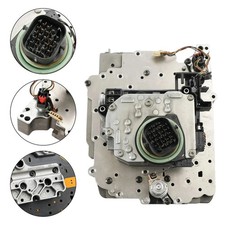
The 62TE belongs to Chrysler's 45RFE family — the branch that includes the 45RFE, 545RFE, 62TE, and 68RFE. These are clutch-to-clutch units with no bands, using adaptive shift logic, and they share a lot of valve-body DNA. Where the rear-drive relatives use a rectangular casting, the transverse units carry an L-shaped valve body, but the wear-prone components are essentially the same parts in a different housing. That shared lineage is why a wear pattern documented on a 68RFE tells you exactly where to look on a 62TE.
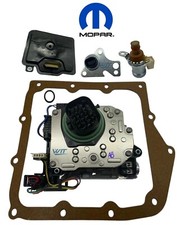
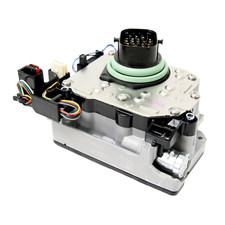
The 62TE gets its six forward ratios by bolting a compounder (a third planetary gearset) onto a four-speed-style base. That compounder is why you will see a dedicated compounder speed signal in the data list, and why a mechanical or hydraulic problem in that section throws a code you will not recognize from a garden-variety four-speed. Fluid control comes from three things working together: the solenoid pack, the pressure switches, and the switch valves in the casting. When people say a 62TE "has a valve body problem," this is the neighborhood they are describing.
Failure Cluster 1: Solenoid Switch Valve Bore Wear
This is the marquee 62TE hydraulic failure and the one most likely to send a fresh rebuild back on the hook. The solenoid switch valve (SSV) directs fluid between the low/reverse clutch and the torque converter clutch, and it also routes oil to the 2nd and overdrive clutches by way of two shuttle plugs in the end of the bore. Because there are no bands in this family, precise fluid control is everything — the clutches only apply correctly if the hydraulics hold pressure.
Over miles, the SSV and its plugs oscillate in an aluminum bore and wear it oval. Once the bore opens up, the valve and plugs cock and stick. Sonnax documents the resulting symptom list plainly: bind-up, engine stall, failsafe (limp) mode, no torque converter lockup, TCC apply-and-release complaints, and a specific run of transmission codes — 841, 868, 871, 988, 1775, and 1776. A burnt overdrive or 4th clutch is the mechanical evidence that the circuit has been cross-leaking apply oil.
Identify the Valve Before You Order Tooling
There are two SSV designs, and mixing them up wastes a valve body. All units originally used a switch valve with a 0.420" diameter large spool and 0.453" diameter outer plugs. Chrysler later increased the large spool to 0.453" — and in the 45RFE group (which is your 62TE), that change did not arrive until around the 2010 model year. Both designs use the same 0.453" plug diameter, so you cannot tell them apart by the plugs. You have to physically measure the large spool of the switch valve to know which reamer and sleeve set fits. Using the wrong tooling here can ruin the casting.
| Switch valve design | Large spool O.D. | Outer plugs O.D. | 62TE application |
|---|---|---|---|
| Original | 0.420" | 0.453" | 2007–~2009 |
| New | 0.453" | 0.453" | ~2010 and up |
The Fix
Sonnax offers matched repairs for each version: solenoid switch valve plug kit 92835-02K and oversized solenoid switch valve 92835-21 for the early 0.420" bores, oversized SSV plug kit 92835-18K for the same, and oversized SSV plug kit 92835-22K for the later 0.453" spool castings. The point is not to memorize part numbers — it is to measure first, then order the kit that matches the spool you actually have.
Failure Cluster 2: Low/Reverse and Low Clutch Switch Valve Leakage
The second wear area is a pair of one-way (checkball-style) valves. In the 62TE, the low/reverse switch valve acts as a one-way valve for the low/reverse clutch in Reverse and Drive, and the low clutch switch valve does the same job for the low clutch in Reverse and Drive. When those bores and valves wear, fluid leaks past the one-way function and exhausts through the manual valve. The result is low apply pressure, which shows up as burnt clutches and delayed — or completely absent — Reverse, 1st, and 2nd gear.
Sonnax attributes the wear to the valve being heavily side-loaded, likely because the valve's diameter sits too close to its overall length, so it rocks in the bore instead of sliding cleanly. Their repair uses inboard and outboard sleeves plus a checkball so oil can only move one way through the orifice: drop-in low/reverse switch checkball sleeve kit 92835-43K, and an oversized version 92835-47K for bores with extreme wear.
How to Confirm It on the Bench
Vacuum testing is the honest way to grade these bores, but the 62TE makes it awkward. There is a very long worm-track port you have to seal on both the front and back of the casting, and you have to manually shuttle the OE valve into whichever track you are testing to get a reading. A practical trick is to lay a rubber mat over the back of the casting to close off the exhausts. Sonnax's threshold is simple: 18"-Hg is satisfactory; anything below that is worn and should be replaced. Their field note is worth repeating — if you test the first port and find excessive leakage, leakage at the second is almost a given, so plan on replacing both OE valves rather than chasing one.
Inside the 62TE Solenoid Pack
Know what is actually in the pack before you condemn it. The 62TE solenoid pack contains six shift solenoids, one line-pressure solenoid, a temperature sensor, and five pressure switches. The pressure switches are the same style used in the old 604 (41TE) pack. Two components that people assume live in the pack do not: the line-pressure sensor and the TCC variable-force solenoid bolt directly onto the valve body and are separate from the pack.
The six shift solenoids look identical, but they are not wired the same — two are normally open and four are normally closed. There is a shop-floor trick to tell them apart: blow compressed air into the open end. If the air is blocked, it is a normally closed solenoid; if air escapes from the holes between the two large O-rings, it is normally open. Getting this right matters when you are transferring solenoids or verifying a replacement pack. The two normally open solenoids are the 2/4 and underdrive (source 4), and that is why a dead pack leaves the unit in third: Chrysler's 62TE service information lists third gear, UD plus 2-4 with the overrunning clutch holding the compounder, as the default limp-in gear, and specifies 6 N·m (50 in-lb) for the clamp plate bolts that hold the pack to the valve body (source 8). ATRA's 2008 seminar manual adds how the TCM reacts to a solenoid circuit fault: set above 35 km/h (22 mph), the transmission goes to neutral; below that, to limp-in. A pressure switch fault instead inhibits first gear and converter lockup, so the vehicle launches in second (source 9). For a full solenoid-by-solenoid symptom and resistance guide, see 62TE shift solenoid symptoms and replacement.
On the electrical side, run resistance checks at roughly 70°F for the values to mean anything, and remember that pin 10 at the pack connector is the shared power feed for all the solenoids. One more assembly note that causes phantom failures: when you install the valve body, route the harness through every clip and trough molded into the plastic body. Skip that and you can pinch or chafe a wire and create an intermittent you will chase for hours.
Reading the Codes: Ratio Errors Are Hydraulic Until Proven Electrical
The most useful diagnostic habit on a 62TE is to treat gear-ratio codes as a slip report, not an electrical fault. A real post-overhaul case from Transmission Digest makes the point: a 2013 Town & Country with the 3.6L faulted straight to limp mode after an overhaul, storing P0732 (Second Gear Ratio Error), P0735 (Fifth Gear Ratio Error), P0792 (Compounder Speed Error), and P1790 (Fault After Shift). The shop swapped the direct drum and piston twice — aftermarket, then OEM — and the complaint never moved, because the parts were never the problem.
The actual cause was hiding in the transfer plate: the direct clutch's non-removable captured check balls had fallen out of the valve body and gone unnoticed. Those captured check balls are installed by the factory to test clutch oil circuits — nozzles unseat them, pressure is verified, then the balls reseat and seal the circuit. If they are missing or no longer sealing, the clutch circuit bleeds down and you get ratio errors that look exactly like worn friction material. Before you tear back into a comeback, confirm every non-removable check ball is present in its bore and capable of sealing. ATRA's 62TE Update webinar counts nine of these non-removable check balls used as plugs in the 62TE valve body, plus four in the shift control circuit, and notes some valve bodies do not use the underdrive #2 ball at all, so compare against the correct casting before you call one missing (ATRA 62TE Update, source 7).
What to Watch in the Data List
- Input, output, and compounder speed: A ratio error is the module comparing commanded gear to measured input-versus-output speed. Watch all three RPM PIDs during the failed shift — a compounder speed that does not track (P0792) points you at that gearset and its apply circuit, not at a shift solenoid.
- Line pressure: The line-pressure sensor bolts to the valve body and reports actual pressure. Compare commanded versus actual during a load. Actual pressure that lags command means the pump or pressure-regulation circuit, and rebuilding clutches into a low-pressure unit just buys you a second failure.
- Solenoid state and pressure switches: Command each shift solenoid and confirm the matching pressure switch changes state. A solenoid that passes a resistance test but will not move its pressure switch is failing hydraulically even though it reads fine electrically.
- P1790, Fault After Shift: Treat this as a "the last shift did not complete correctly" flag and correlate it with the ratio codes rather than chasing it on its own.
Need parts for this job?
Rebuild kits, hard parts, solenoids, valve bodies, filters, gaskets and the correct fluid for this unit — shipped fast from the USA on secure checkout.
Shop 62TE parts →Fluid and Fill: ATF+4 Only, and Set the Level by Temperature
The 62TE takes ATF+4, which is Chrysler Material Standard MS-9602. Valvoline's ATF+4 product information sheet describes MS-9602 fluid as the factory fill for all 1998-and-later Chrysler automatic transmissions and transaxles, and lists specific friction properties for smooth clutch apply among its design goals. This is not a place to substitute a generic multi-vehicle ATF. The whole 45RFE family, which Sonnax groups the 62TE with, relies on the fluid's friction modifier to apply clutches cleanly; run the wrong chemistry and you accelerate exactly the clutch and switch-valve wear this article is about. Per the same Valvoline sheet, ATF+4 is fully back-serviceable wherever Mopar ATF+, ATF+2 or ATF+3 was specified, but it is not interchangeable with Dexron/Mercon.
On capacity, be realistic rather than dogmatic about a single number: figure on the order of 5 quarts to refill after a pan-and-filter service, and closer to 9 quarts on a dry fill after a rebuild with a fresh converter. The exact figure varies by year and body, so do not chase a quart count — set the final level with the factory fluid-temperature procedure using the correct dipstick or fill-check, because the 62TE is genuinely sensitive to being over- or under-filled. And when you replace a solenoid/pressure-switch assembly or valve body, plan on running the TCM quick-learn (or letting the adapts relearn over a couple weeks of driving) so shift quality settles back in.
62TE Master Rebuild Kit (2007-Up)
When the switch-valve wear has already cooked the clutches and you are going all the way in, a complete 62TE master kit with frictions, steels, and seals gets you there without piecing parts together. Pair it with the correct Sonnax switch-valve kit for your spool diameter so the hydraulic side is fixed at the same time.
View the 62TE Master Kit →The Short Version
The 62TE is not a fragile transmission — it is a well-controlled one that punishes sloppy hydraulic diagnosis. Before you touch friction plates on one, vacuum-test the solenoid switch valve and the low/reverse and low clutch switch valve bores to the 18"-Hg standard, measure the switch valve spool so you order the right kit, verify the six-solenoid pack against its pressure switches, and confirm every non-removable check ball is present and sealing. When the solenoid block goes back on, install its seal with the slot facing up: ATRA calls an upside-down seal the most common builder error, because it blocks the 2/4 clutch circuit and costs you third in limp mode plus fourth and sixth (source 7). Read ratio codes (P0732, P0735, P0792) as slip reports and P1790 as an incomplete shift, then chase pressure before you chase clutches. Fix the hydraulics and the rebuild stays fixed. For rebuild parts, seal kits, and solenoids, our sister store gearboxinsider.com ships direct.
Sources
- Sonnax — Diagnosing 62TE, 68RFE Low/Reverse Switch Valve Issues (Chris Leach, TASC Force). Backs the one-way function of the low/reverse and low clutch switch valves, the low-apply-pressure/burnt-clutch failure mode, the 18"-Hg vacuum-test threshold, and kits 92835-43K / 92835-47K. sonnax.com/tech_resources/1527
- Sonnax — All in the Family: Identification & Repair of Chrysler Solenoid Switch Valve Problems (Tory Royce, TASC Force). Backs the 45RFE-family/clutch-to-clutch architecture, the SSV function and symptom list (codes 841, 868, 871, 988, 1775, 1776), the 0.420" vs 0.453" spool identification, and SSV repair kits 92835-02K / 92835-21 / 92835-18K / 92835-22K. sonnax.com/tech_resources/85
- Sonnax — 62TE Solenoid Identification & Connector Pin Out. Backs the pack contents (six shift solenoids — two normally open, four normally closed — one line-pressure solenoid, temperature sensor, five pressure switches), the separate line-pressure sensor and TCC VFS, the ~70°F resistance-test note, and the compressed-air NO/NC identification. sonnax.com/tech_resources/312
- Transmission Digest — Solenoid-Pack Information for the Chrysler 62TE (Jeff Parlee). Backs the model history (2007 Sebring 3.5L and Pacifica 4.0L; 2008 minivans 3.8L/4.0L), the pin-10 shared power feed, and the harness-routing caution. transmissiondigest.com/solenoid-pack-information-for-the-chrysler-62te
- Transmission Digest — FCA 62TE Slipping in Second and Fifth. Backs the post-overhaul limp-mode case, codes P0732 / P0735 / P0792 / P1790, and the missing/unseated non-removable captured check-ball root cause. transmissiondigest.com/fca-62te-slipping-second-fifth
- Valvoline — Valvoline ATF+4 Transmission Fluid, product information sheet (Valvoline Global, 2024). Backs ATF+4 meeting Chrysler MS-9602, its role as factory fill for 1998-and-later Chrysler automatics and transaxles, its specific friction properties for clutch apply, and full compatibility with applications calling for Mopar ATF+, ATF+2 and ATF+3. valvolineglobal.com (PDF)
- ATRA — 62TE Update webinar (Mike Souza, ATRA Senior Research Technician, 2014). Backs the nine non-removable plug check balls and four shift-circuit check balls, the direct clutch blocker (switch) valve and low clutch switch valve added over the 41TE, and the upside-down solenoid block seal blocking the 2/4 circuit. atracom (PDF)
- Chrysler LLC — 2009 Automatic Transmission 62TE Service Information (Dodge Journey): Elements in Use chart and Assembly, Transmission Solenoid and Pressure Switch. Backs third gear as the default limp-in gear and the 6 N·m (50 in-lb) solenoid pack clamp plate torque. documents.cdn.ifixit.com (PDF)
- ATRA — 2008 Technical Seminar Manual, Chrysler 62TE Shift Solenoid Pressure Switches (page 129). Backs the inductive-spike solenoid monitor, neutral above 22 mph and limp-in below on a solenoid fault, and the second-gear launch with no EMCC on a pressure switch fault. atracom (PDF)