When a 62TE starts shifting wrong, the solenoid pack gets blamed first, and a lot of packs get replaced on a hunch when the real problem was a pin, a switch, a seal or the harness. This is how the 62TE shift solenoids work, what each one failing looks like on the road, how to prove the pack bad at the case connector, and how to replace it without making a new problem.
The numbered references point to the Sources list at the bottom.

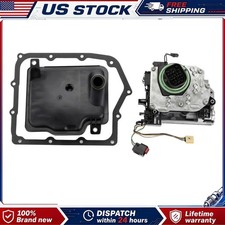
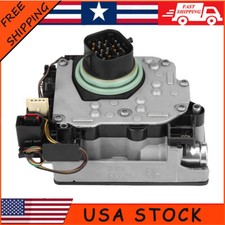
What is in the 62TE solenoid pack
Chrysler calls it the solenoid/pressure switch assembly. It bolts to the valve body under a clamp plate and talks to the TCM through a 23-way connector at the case [1]. Inside it are six shift solenoids, one line pressure variable force solenoid, the transmission temperature sensor and five pressure switches [4][6]. The line pressure sensor and the TCC variable force solenoid are not part of the pack; they bolt directly to the valve body [4][6].
The six shift solenoids look identical, but they are not all the same type [4]:
| Solenoid | Type | Clutch it feeds | Gears where that clutch is applied | Circuit DTC |
|---|---|---|---|---|
| Low/Reverse (L/R) | Normally closed | L/R clutch | 1, 2, Reverse | P0750 |
| 2/4 | Normally open | 2-4 clutch | 3, 4, 6 | P0755 |
| Underdrive (UD) | Normally open | UD clutch | 1 through 5, including 4 prime | P0765 |
| Overdrive (OD) | Normally closed | OD clutch | 4 prime, 5, 6 | P0760 |
| Low clutch (LC) | Normally closed | Compounder low clutch | Reverse; coast in 1, 3 and 4 prime | P075A |
| Direct clutch (DC) | Normally closed | Compounder direct clutch | 2, 4, 5, 6 | P076A |
The gear columns come from Chrysler's elements-in-use chart [1] and the codes from ATRA's 62TE DTC list [2]. The 62TE is a 41TE-style main centerline plus an underdrive compounder that runs in direct (DC applied) or reduction (LC or the overrunning clutch holding). Chrysler notes the 2-3, 3-2 and 4-2 shifts are "double swap" shifts, two elements off and two on, synchronized within 40 to 70 milliseconds. If the compounder shifts too early you get a shudder or harsh shift; too late and the driver feels a double bump [1]. A sticking or weak solenoid on one side of that swap is exactly what produces those complaints.
Why a dead pack leaves you in third
Look at which two solenoids are normally open: UD and 2/4. With no power to the pack, those two pass oil and the other four stay shut. UD plus 2-4 on the main line, with the overrunning clutch holding the compounder, is third gear, and Chrysler's chart marks third as the limp-in gear [1]. That is why a 62TE that loses its relay feed or pack goes to one forward gear plus reverse. It is designed to fail that way.
ATRA's 62TE update adds a warning for builders that ties right into this. If the 2/4 seal in the case is installed upside down, it blocks the 2/4 circuit and you lose third in limp mode along with fourth and sixth [3].
Symptoms by solenoid
Match the complaint to a circuit before you touch a meter:
- Stuck in one gear, MIL on, one or more solenoid codes: the TCM has shut the solenoids off and you are in limp (third). Look at power and ground before any single solenoid.
- Harsh or bumpy 1-2 or 2-3, flare on the 2-3: DC, LC or L/R timing. On the 1-2, the compounder goes from reduction to direct (DC on) while L/R stays applied [1].
- No fifth or sixth, or a flare going into fourth prime: OD solenoid or OD clutch circuit.
- Harsh or delayed reverse, or neutral in reverse: L/R or LC, the two elements applied with the reverse clutch [1].
- Launches in second and never locks the converter: not a shift solenoid at all. That is the TCM's response to a pressure switch fault (next section).
How the TCM tests the solenoids and switches
ATRA's 62TE seminar material spells out the monitor [2]. The TCM periodically toggles each solenoid and looks for an inductive spike. No spike, it tests again, and if it fails the second time it sets the circuit code. The solenoid circuits are also checked any time a gear ratio or pressure switch error occurs. When a solenoid code sets above 35 km/h (22 mph), the transmission goes to neutral; below that speed it goes to limp-in [2]. A van that "went into neutral on the highway" with a solenoid code is that logic, not a slipping clutch.
The five pressure switches monitor the L/R, 2/4, DC, LC and OD circuits and are checked continuously for the correct state in each gear [2]. When a pressure switch set condition is found, the TCM inhibits first gear and converter lockup; the vehicle launches in second and shifts normally without EMCC. If the condition clears during the same key cycle, first gear and lockup come back [2]. Pressure switch codes include P0841 (L/R), P0846 (2-4), P083B (LC), P084B (DC) and P0871 (OD) rationality, plus the hydraulic pressure test codes P0845, P083A, P084A, P0870 and P0992 [2].
Line pressure is closed-loop. The line pressure sensor reads actual pressure and the TCM changes the duty cycle of the pressure control solenoid in the pack: 5 percent duty (off) gives maximum line, 62 percent (on) gives minimum. During shifts and in Park and Neutral, the TCM targets a preset 120 or 135 psi, and if actual pressure stays below target while driving it sets P0868 [2]. Low line from a worn pump or leaking circuit makes every clutch-to-clutch shift look like a solenoid problem, so rule it out with a gauge; see our 62TE line pressure testing guide.
Diagnosis at the case connector
Check at the 23-way case connector before the pan comes off. It tests the pack and its internal wiring in one shot.
- Read the codes and the freeze frame. One circuit code points at one solenoid. Several solenoid circuit codes at once almost always point at something shared: the transmission control relay feed, the connector or the TCM.
- Unplug the case connector and meter from pin 10. Pin 10 is the common power feed for all of the solenoids, supplied from the transmission control relay at battery voltage [4][6]. Put one lead on pin 10 and go to each solenoid's control pin, using the Sonnax pin chart [6].
- Compare to spec at about 70 F. The shift solenoids should read about 1.8 ohms, the line pressure solenoid about 4.9 ohms, and the pressure switch resistors about 300 ohms. The temperature sensor is checked between pins 22 and 23 [5][6]. A shift solenoid reading open, or far off from its neighbors, is a failed coil or broken internal lead.
- If the pack meters good, go upstream. Check pin fit and corrosion at both halves of the connector, then power at pin 10 with the key on. The pins tell you something too: ATRA notes the pressure switch circuits use gold pins and the solenoid circuits use tin pins [3]. A green, corroded tin pin can throw a circuit code while the solenoid itself is fine. Transmission Digest documented a 2010 Journey in third-gear failsafe with P0562 plus P0765, P0750 and P0755 stored at once; the solenoids were fine, and the cause was loose pin fit at connector C101 on the transmission control output feed, where P0562 sets when sense voltage stays below 10.0 volts for 15 seconds [7].
- Watch the pressure switch states on the scan tool. Drive it and compare which switches read closed in each gear against the elements-applied chart [1]. A switch that never closes in a gear where its clutch should be on is either a switch problem or a real pressure problem in that circuit.
The bench check
With the pack out, you can confirm solenoid type with shop air. Blow into the tip of the solenoid: if air comes out of the holes between the two large O-rings, it is normally open; if the air is blocked, it is normally closed [4][5][6]. Only the 2/4 and UD locations take normally open solenoids [5]. A normally closed solenoid that leaks air with no power, or a normally open one that will not flow, is stuck.
Replace the pack, rebuild it, or replace the valve body
Jarad Warren's GEARS article makes the case that the pack should not be thrown away automatically on every rebuild [5]. His rules of thumb: replace it if the unit has 150,000 miles or more, or if the failure was a pressure problem with a lot of burned components. Do not replace it just because the common drum has sealing ring issues, or because of a planetary, hard part or converter failure [5].
If one solenoid meters bad on an otherwise healthy pack, it can be repaired [5]:
- There is no rebuild kit made specifically for the 62TE pack, but the 545RFE solenoid pack rebuild kit works. The base screen, O-rings and pressure switches are the same; only the line pressure solenoid O-rings are not included [5].
- RFE solenoids with the white and gray connectors are the same and can be used as donor parts [5].
- Normally open solenoids are often marked with white, yellow or black paint, and the paint can come off in solvent. Air-test every one before it goes back in [5].
- Never use assembly gel on the pressure switches. It can set pressure switch codes until it melts [5].
- The pack top plate bolts go to 50 in-lb [5].
When the complaint is a harsh or flared double-swap shift with good electrical readings, the problem may be in the valve body itself rather than the solenoids: worn bores at the switch valves, or the blocker valve that prevents simultaneous DC and LC application [3]. Our 62TE valve body and solenoid failures guide covers the switch valves in detail.
Replacing the solenoid pack
The pack comes out with the valve body. Chrysler's procedure [1]:
- Remove the valve body.
- Remove the clamp plate bolts and clamp plate.
- Disconnect the pressure control solenoid and line pressure sensor connectors.
- Remove the solenoid/pressure switch assembly.
- Install the new assembly, install the clamp plate and tighten the bolts to 6 N.m (50 in. lbs.).
- Reconnect the pressure control solenoid and line pressure sensor, and install the valve body.
Route the pack wiring through every clip and trough molded into the plastic body. The ValveBody Xpress write-up by Jeff Parlee warns that skipping that routing can damage the wiring [4]. After an overhaul with clutch or seal replacement, Chrysler requires the TCM Quick Learn procedure [1], and it is good practice after any pack or valve body swap so the TCM relearns clutch fill on the new hardware.
Codes that point near the pack but are not shift solenoids
Two common ones. P2764 (TCC pressure control circuit low) is the most common code on ATRA's 62TE technical hotline, usually with a TCC stuck on complaint, and the fix ATRA gives is the TCC solenoid, part 5169313AA [3]; that solenoid is on the valve body, not in the pack. And P0792 (compounder speed ratio error) with slipping in 1-2 is often mechanical: ATRA reports worn snap ring grooves in the underdrive compounder direct clutch housing [3]. Replacing the pack for either one will not fix it. For the full code picture see our 62TE P0748 and 62TE P0741 guides.
Shop the part for this fix: 62TE shift solenoid block pack
The CoreTransmissionParts 62TE solenoid block pack (68376696AA) is the complete assembly: six shift solenoids, line pressure solenoid, temperature sensor and pressure switches, ready to bolt to the valve body.
View the 62TE solenoid pack at CoreTransmissionPartsOr browse all 62TE parts at CoreTransmissionParts.
Need parts for this job?
Our 62TE parts page has solenoid block packs, solenoid kits, TCC and pressure control solenoids, and complete valve bodies, all on our own checkout. The 62TE takes ATF+4 only; see the transmission fluid spec chart.
FAQ
What are the symptoms of a bad 62TE shift solenoid?
The most common are a stuck-in-one-gear limp mode with the check engine light on, harsh or flared shifts, a missing gear such as no fifth or sixth, and harsh or delayed reverse. If a solenoid code sets above 22 mph the 62TE drops to neutral, and below that speed it goes to limp-in, which is third gear.
How many solenoids are in a 62TE solenoid pack?
The pack has six shift solenoids (L/R, 2/4, low clutch, underdrive, overdrive and direct clutch), one line pressure solenoid, a temperature sensor and five pressure switches. The TCC solenoid and line pressure sensor bolt to the valve body separately. The 2/4 and underdrive solenoids are normally open and the other four are normally closed.
What should 62TE solenoids measure in ohms?
Measured from pin 10 of the case connector at about 70 F, the shift solenoids should read about 1.8 ohms and the line pressure solenoid about 4.9 ohms. The pressure switch resistors read around 300 ohms, and the temperature sensor is checked between pins 22 and 23.
Can you replace just one solenoid in a 62TE pack?
Yes. The pack comes apart, and a single bad solenoid can be swapped with a good one from a spare RFE-style pack; the 545RFE pack rebuild kit supplies the screen, O-rings and pressure switches. Air-test each solenoid to confirm normally open or closed, and do not use assembly gel on the pressure switches.
Related guides
Sources
- Chrysler LLC, 2009 Automatic Transmission 62TE Service Information (Dodge Journey): Description, Elements in Use chart, gear power flow, Assembly - Transmission Solenoid and Pressure Switch, and overhaul notes. Backs the 23-way connector and solenoid/pressure switch assembly, the elements-applied chart and third gear as limp-in, the 40-70 ms double-swap shift and its shudder/double-bump symptoms, the clamp plate removal steps and 6 N.m (50 in. lbs.) torque, and the Quick Learn requirement after overhaul. documents.cdn.ifixit.com (PDF)
- ATRA, 2008 Technical Seminar Manual, Chrysler 62TE section: DTC list, Shift Solenoid Pressure Switches, and Hydraulic Line Pressure Control (pages 127-130). Backs the P0750/P0755/P075A/P0760/P0765/P076A circuit codes and pressure switch codes, the inductive-spike solenoid test, neutral above 22 mph and limp below, the second-gear launch with no EMCC on a pressure switch fault, the 5/62 percent PCS duty cycle, the 120/135 psi shift target and P0868. DTC list (PDF); solenoids and pressure switches (PDF); line pressure control (PDF)
- ATRA (Mike Souza, Senior Research Technician), 62TE Update webinar. Backs gold pressure-switch pins versus tin solenoid pins, the DC/LC blocker valve, the upside-down 2/4 seal causing loss of third in limp plus fourth and sixth, P2764 as the most common hotline code with TCC solenoid 5169313AA, and the worn compounder direct clutch housing snap ring groove behind P0792. atracom (PDF)
- Jeff Parlee (Sonnax / ValveBody Xpress), "Solenoid-Pack Information for the Chrysler 62TE," Transmission Digest, September 2011. Backs the six-solenoid layout with normally open/closed type for each, the line pressure solenoid in the pack, the line pressure sensor and TCC VFS mounted on the valve body, the air test, wiring-routing warning and pin 10 as the common feed. transmissiondigest.com
- Jarad Warren, "Saving Some Dollars: Rebuilding 62TE Solenoid Packs," GEARS magazine (ATRA), October/November 2018. Backs the 1.8 ohm solenoid, 4.9 ohm line pressure solenoid and 300 ohm pressure switch resistor specs, pins 22-23 for the temperature sensor, the replace-or-reuse criteria, the 545RFE rebuild kit and RFE donor solenoids, the no-assembly-gel warning and the 50 in-lb top plate torque. gearsmagazine.com
- Sonnax, "62TE Solenoid Identification and Connector Pin Out." Backs the pack contents, testing resistance at about 70 F, the normally open/closed air test, and the 23-pin case connector pin assignments including the transmission control relay feed. sonnax.com
- Dana Deeke, "Multiple Causes for P0562," Transmission Digest, October 2018. Backs the 2010 Journey 62TE in third-gear failsafe with P0562, P0765, P0750 and P0755 stored together, the 10.0 V for 15 seconds set condition, and the loose C101 pin fit repair. transmissiondigest.com