The complaint behind a P0741 is quiet, which is why it usually sits for six months before anybody looks at it. Highway RPM runs a couple hundred higher than it used to. Fuel mileage drops two or three miles per gallon. Sometimes there is a shudder around 45 mph that the customer describes as a rough road. Then the light comes on and the scan tool reads P0741, Torque Converter Clutch Circuit Performance or Stuck Off.
Here is the part that costs shops money on this unit. P0741 is a slip code, not a circuit code. The controller commanded the converter clutch on, watched the speed data, and the slip never went away. Nothing in that description points at wiring. The electrical version of this circuit on a 62TE is P2761, which sets on an open or shorted control circuit, and the mechanical opposite is P0742, the clutch that will not release. Three codes, three different repair paths, and only one of them is settled with an ohmmeter.
What follows is how the circuit actually works on a 62TE, how to isolate the fault to the command, the solenoid, the valve body or the converter without pulling the unit, and the parts that fix each one.
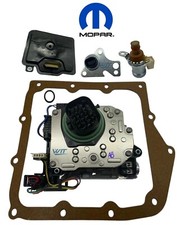
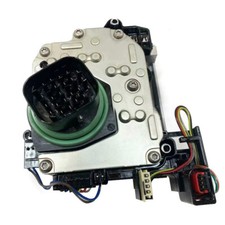
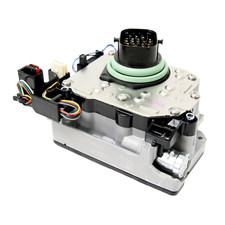
What the Controller Is Actually Measuring
Chrysler calls the 62TE converter clutch system EMCC, for Electronically Modulated Converter Clutch. Modulated is the operative word. This clutch is not a simple on/off lockup like an old 125C. It is commanded to a controlled slip rate by a variable force solenoid, so the controller is not looking for zero slip. It is looking for slip that stays inside a calibrated window for a calibrated length of time. Slip is derived by comparing engine speed against the Input Speed Sensor, and when commanded slip and measured slip diverge far enough for long enough, P0741 matures.
That has two practical consequences. First, a small, gradual loss of apply capacity sets this code long before the customer can feel a hard failure, which is why the code usually arrives before the complaint does. Second, anything that corrupts the input speed signal can set it with no converter problem present at all, so confirm ISS integrity before you condemn hardware.
Chrysler's own 62TE service information adds the conditions that matter for your road test. The controller will not engage the converter clutch in the lower gears, because that would kill the torque multiplication needed for acceleration, and the inputs it weighs for engagement are coolant temperature, vehicle speed and throttle position. Per the same service information, the clutch engages at approximately 56 km/h (35 mph) with light throttle after the shift to third gear, and engagement also lowers transmission fluid temperature. So a cold engine, heavy throttle or a test drive that never gets past 35 mph will never give the controller a chance to command apply, let alone set P0741. Chrysler also describes the torque converter as a sealed, welded unit that is not repairable and is serviced as an assembly, which is why confirming the fault is upstream of the converter before you pull the unit saves real money.
The Hydraulic Chain, and Why a New Solenoid Alone Fails
The 62TE runs a two-path converter. Sonnax's Bob Warnke lays the mechanism out in the converter clutch control installment of the Hydraulics Fundamentals series: release oil flows through the center of the turbine shaft and exits between the TCC piston and the cover, holding the friction material off the cover. Apply pressure is the second path, and it is the clamping force loading the piston onto the cover. As Warnke puts it, as the release oil is exhausted, apply pressure is increased, and two-path clutch control typically requires three to four valves to regulate the slip rate.
So a converter clutch that will not apply has three ways to fail hydraulically: apply pressure never rises, release oil never exhausts, or the circuit leaks somewhere in between. Now look at what sits in that circuit on this unit.
Per Sonnax's 62TE solenoid identification data, the solenoid pack holds six shift solenoids, one line pressure solenoid, a temperature sensor and five pressure switches, and the line pressure sensor and the TCC variable force solenoid bolt directly onto the valve body and are not part of the solenoid pack. The pack your parts supplier wants to sell you for a transmission code contains none of the components that set P0741. Case connector terminal 3 is TCC VFS control; that is the wire you backprobe, not a pack terminal.
Downstream, Sonnax's 62TE valve body layout numbers the front-face valves that touch the converter circuit: 101 pressure regulator, 102 TCC regulator, 103 TCC control with its plunger and sleeve, 104 TCC switch valve, and 106 solenoid switch valve. Wear at 103 is documented as a cause of excess TCC slip, TCC shudder and TCC codes. Wear at the 104 and 106 group is documented as no lockup, erratic TCC apply and torque converter slip codes. That is five things upstream of the converter that all produce this same code.
Isolate It in One Road Test: The Cooler Flow Split
The best diagnostic on this code did not come out of a code chart. It came out of a 62TE case Rob Faucett wrote up for ATRA's Gears, and it cuts the circuit in half in about fifteen minutes.
The physics behind it is that same Warnke article. When the clutch is not applied, the piston has moved off the cover, and that release clearance is a restriction oil passes through. On lockup, apply pressure dead-heads and flow from the TCC control valve goes to the cooler instead of through the converter. In Warnke's words, flow typically has a significant increase at full lockup.
So plumb a flow meter into the cooler line and watch it while the controller commands EMCC apply:
- Cooler flow changes at the command but the code still sets. The command reached the solenoid, the solenoid worked, and the valve stroked. Your problem is downstream, inside the transmission or in the converter itself.
- Cooler flow does not change at all. The command, the solenoid, or the valve is the fault. Everything past that point is innocent, and you have just talked yourself out of pulling a converter.
In Faucett's case a 2008 Chrysler Town and Country showed zero converter clutch slip cold, then commanded lockup after several miles and never applied. There was no cooler flow change once hot. The technician had already replaced the EMCC solenoid with no change, which is the trap on this unit. Backprobing terminal 3 of the C4 connector showed a good signal cold and no signal change at the computer connector once the vehicle was hot, even though the command still looked correct on the scan tool. Battery condition, powers, grounds and a current draw test on the circuit all passed. The controller was the failure. It got a new computer and the complaint was gone.
That is worth sitting with. The scan tool displays what the controller intends to output, not what actually leaves the pin. On a heat-related P0741 with a clean-looking data list, a meter on the real control wire is not optional.
Set your data list up like this
- Graph engine RPM and Input Speed Sensor RPM on one scale. The difference between them is the slip the controller is judging.
- Add TCC or EMCC duty cycle so you can mark the exact instant the controller asks for apply.
- Add transmission fluid temperature. This failure is very often thermal, perfect cold and gone hot. Road test it cold and you will find nothing.
- Capture freeze frame before you clear anything, then duplicate those conditions: fully warmed up, steady cruise above 45 mph on a flat road, light throttle.
The Causes, Ranked by How Often They Are Actually It
1. The EMCC variable force solenoid, stuck or physically broken loose
This is the most common single answer and it is serviceable with the pan down. The electrical side usually tests fine; the spool is hanging up on varnish or debris, and no resistance check finds that.
There is a specific failure mode on this solenoid worth knowing before you go looking. Wayne Colonna documented a 2016 Dodge Journey in Transmission Digest that arrived with delayed forward engagement, fluid leaking out of the vent in Drive, and a stored converter clutch code. With the valve body cover off, the EMCC-VFS solenoid was broken at the mounting bracket and had partially worked its way out of the valve body. Because the solenoid sits close to the vent area, that was the source of the leak; it was also the cause of the converter clutch slip and the code. The delayed forward was simply the low fluid level the leak created. Colonna lists the service part as 62TE EMCC-VFS solenoid 5169313AA, and the correction was a soft parts overhaul, a replacement converter and a new solenoid.
Two takeaways. Inspect the mounting bracket every time the cover is off, not just the solenoid body. And if a 62TE shows up with a converter clutch code and a delayed engagement, check the fluid level before you write a rebuild estimate. Sonnax sells a TCC solenoid hold-down bracket, part 92835-27, specifically for the broken-mount version of this failure.
2. Fluid level and fluid type
Cheap to check, embarrassing to miss. The 62TE takes ATF+4 built to Chrysler Material Standard MS-9602 and nothing else. The friction modifier package in ATF+4 is what lets a modulated converter clutch hold controlled slip without shuddering, so a generic multi-vehicle fluid produces a shudder and a slip code that look exactly like a hydraulic fault you will then chase for a week.
Most 62TE applications have no factory dipstick, so a correct level check needs the Chrysler service dipstick tool (8863B / 9336) with the fluid at the specified temperature. A pan-and-filter service on this unit takes roughly 5.5 quarts; a dry overhaul is about 9 quarts. Guessing at level on a converter clutch complaint is how a small job goes sideways.
3. TCC control valve bore wear
This is the cause that survives a new solenoid, and Sonnax states the mechanism in one line: TCC control bore wear allows pressure loss that results in driveability concerns. The symptom list Sonnax publishes for that bore reads like the P0741 complaint verbatim, including excess TCC slip, TCC shudder, TCC codes, overheated fluid and TCC lining, TCC apply and release concerns, and loss of fuel economy.
The repair is not a solenoid. Recondition the bore and install the Sonnax oversized TCC control and plunger valve kit 92835-33K, which Sonnax states is compatible with all 42LE, 42RLE and 62TE units and contains the control sleeve, control plunger, control valve and dampener plunger. It requires the F-92835-TL33 reamer and the VB-FIX fixture. The valves are hardcoat anodized aluminum with annular grooves that help center the valve in the bore and cut future side-load wear.
4. Solenoid switch valve and TCC switch valve wear
Sonnax's vacuum test guide lists no lockup and torque converter slip codes among the wear symptoms at the solenoid switch valve and TCC switch valve group, alongside 4th clutch burned, bind-up, failsafe mode, stalling and the 841 / 868 / 871 / 988 / 1775 / 1776 code family. The right repair depends on which switch valve your casting has: 92835-02K, 92835-18K, 92835-21 and 92835-32K fit bores containing the OE switch valve with a 0.420 in. diameter large spool, while 92835-39K fits bores with a 0.453 in. large spool and an ID groove. Measure before you order, because they are not interchangeable.
5. The converter clutch itself
Last on the list, not first. If cooler flow changed at the command and the valve body vacuum tests clean, the lining is what is left and the converter is the repair. A converter that has been slipping against a healthy apply signal is not a core you reuse. Sonnax specifically ties overheated fluid and TCC lining failure back to the same bore wear symptoms, so replacing the converter without correcting the bore just cooks a new one.
62TE Torque Converter Clutch (TCC) Solenoid, OEM 926-378 → or browse all transmission solenoids
Vacuum Test Before You Close It Up
If the valve body is on the bench, do not judge the bores by eye. Sonnax publishes a 62TE vacuum test guide that maps every critical wear area on both faces of the casting and marks the test port for each one. Three rules make the readings mean something:
- Test the OE valves in their rest position unless the guide says otherwise. Springs are left off the diagrams for clarity, not off your assembly.
- A low vacuum reading indicates wear at that bore. That is the entire interpretation.
- Work the front face for this code: pressure regulator (101), TCC regulator (102), TCC control (103), TCC switch valve (104) and solenoid switch valve (106).
Then test again after reaming and installing the oversized valve. A vacuum test run only before the repair tells you what was wrong, not whether you fixed it.
Bench Notes That Prevent the Comeback
- Test solenoid resistance at approximately 70 degrees F. Sonnax specifies it, and a reading taken on a hot unit will not match any published spec.
- Identify bare solenoids with compressed air. Blow into the open end: air blocked means normally closed, air out of the holes between the two large O-rings means normally open. Four of the six shift solenoids are normally closed and two are normally open.
- Route the pack wiring through every clip and trough in the plastic body. A pinched harness is how a clean hydraulic repair turns into a P2761 six weeks later.
- Deal with cooler flow while you are in there. The converter circuit and the cooler circuit share the same regulation, so a restricted cooler and a worn bore make each other worse.
- Replace the cooler bypass valve, do not clean it. Sonnax notes the 41TE and 62TE use a pressure-sensitive relief valve behind the pump, and that a weak spring or contaminated seat lets that type of valve stay open, so converter outflow skips the cooler and the unit runs hot. Chrysler's 62TE service information says the valve must be replaced after any transaxle failure and never reused or cleaned, and ATRA's 62TE update calls it "a high risk area" worth replacing on every repair. A slipping converter clutch has already sent lining debris that way. If the vehicle tows, our 62TE towing and cooling guide covers the rest of the heat picture.
- Change ATF+4 on an interval, not on a symptom. Varnish is what parks the solenoid spool in the first place, and every mile the clutch spends slipping instead of applying is heat going into the fluid and the lining.
Need parts for this job?
TCC solenoids, solenoid block packs, valve bodies, filters, pan kits and full rebuild kits for the Chrysler 62TE, priced for shops and shipped from the USA.
Shop 62TE parts →FAQ
What does P0741 mean on a 62TE?
P0741 is the SAE generic definition for Torque Converter Clutch Circuit Performance or Stuck Off. On a 62TE it means the controller commanded the EMCC converter clutch to apply, compared engine speed against the Input Speed Sensor, and found more slip than the calibration allows for longer than it allows. It is a performance code, not a wiring code. The wiring version of the same circuit is P2761 and the opposite mechanical failure is P0742.
Is P0741 safe to drive with?
It will not strand you the way P0742 can, because a clutch that fails to apply does not stall the engine. But it is not harmless. A converter clutch that slips instead of applying turns that slip into heat, and Sonnax lists overheated fluid and TCC lining failure among the symptoms tied to the same wear. Left alone long enough, a cheap solenoid or valve repair becomes a converter plus a fluid contamination cleanup.
Will replacing the TCC solenoid fix 62TE P0741?
Sometimes, and it is the right first suspect, but it is not automatic. A documented ATRA case had a technician replace the EMCC solenoid on a 62TE converter clutch code with no change at all, and the real fault was the controller failing to output the command once it got hot. Sonnax separately documents TCC control bore wear as a cause of excess TCC slip that no solenoid can correct. Split the circuit with a cooler flow test before you buy anything.
Is the TCC solenoid part of the 62TE solenoid pack?
No. Sonnax states that the line pressure sensor and the TCC variable force solenoid bolt directly onto the valve body and are not part of the solenoid pack. The pack itself holds six shift solenoids, one line pressure solenoid, a temperature sensor and five pressure switches. Buying a solenoid pack for a P0741 gets you none of the parts that set the code. Transmission Digest lists the EMCC-VFS service part number as 5169313AA.
What fluid does the 62TE take, and how much?
ATF+4 meeting Chrysler Material Standard MS-9602, with no substitutes. The friction modifiers in ATF+4 are what allow a modulated converter clutch to hold controlled slip without shuddering, so the wrong fluid produces a shudder that mimics a hydraulic fault. A pan drop and filter change takes roughly 5.5 quarts; a dry overhaul takes about 9 quarts. Most 62TE applications have no factory dipstick, so level checks need the Chrysler service dipstick tool.
Sources
- Sonnax — "Hydraulics Fundamentals Part IV: Converter Clutch Control," Bob Warnke, May 3, 2019. Backs the mechanism section: the definition of a two-path lockup converter; release oil flowing through the center of the turbine shaft and exiting between the TCC piston and the cover; apply pressure as the clamping force loading the piston onto the cover; the statement that as release oil is exhausted, apply pressure is increased; that two-path clutch control typically requires three to four valves to regulate slip rate; the release clearance acting as a restriction; and the significant increase in cooler flow at full lockup as apply pressure dead-heads, which is the physics the cooler flow test in this article depends on. sonnax.com
- Gears Magazine (ATRA) — "Even Common Conditions are Sometimes Wrong," Rob Faucett, February 28, 2018. Backs the isolation procedure and the controller failure: the description of the 62TE EMCC solenoid, its constant feed oil, and its ability to stick both on and off; the 2008 Chrysler Town and Country case with zero converter clutch slip cold and no apply after several miles hot; the EMCC solenoid replaced with no change; the use of cooler flow change during commanded apply as the mid-circuit split, and what each result rules in or out; the finding of no flow change hot; backprobing terminal 3 of the C4 connector and seeing a good signal cold but no signal change hot despite a correct-looking scan tool command; the battery, powers, grounds and current draw checks; and the controller replacement that corrected the complaint. gearsmagazine.com
- Transmission Digest — "62TE delayed forward engagement," Wayne Colonna, April 28, 2023. Backs the broken-solenoid failure mode: the 2016 Dodge Journey with delayed forward engagement, fluid leaking from the vent in Drive and a stored converter clutch code; the EMCC-VFS solenoid found broken at the mounting bracket and partially worked out of the valve body; the solenoid's proximity to the vent as the source of the leak; the identification of that failure as the cause of both the converter clutch slip and the code, with the delayed forward traced to the resulting low fluid level; the correction of a soft parts overhaul, replacement converter and new solenoid; and the service part number 5169313AA. transmissiondigest.com
- Sonnax — Oversized TCC Control & Plunger Valve Kit 92835-33K product page. Backs cause 3 and its repair: the stated cause that TCC control bore wear allows pressure loss resulting in driveability concerns; the symptom list of excess TCC slip, TCC shudder, TCC codes, overheated fluid and TCC lining, TCC apply and release concerns and loss of fuel economy; the correction of reconditioning the bore and installing the oversized kit; compatibility with all 42LE, 42RLE and 62TE units; the kit contents of control sleeve, control plunger, control valve and dampener plunger; the hardcoat anodized aluminum construction and annular grooves that reduce future side-load wear; and the F-92835-TL33 and VB-FIX tooling requirement. sonnax.com
- Sonnax — "Chrysler 62TE Vacuum Test Guide," November 5, 2021. Backs the valve body map and the bench procedure: the front-face valve identification numbers used throughout this article (101 pressure regulator valve, 102 TCC regulator valve, 103 TCC control valve, 104 TCC switch valve, 105 low/reverse switch valve, 106 solenoid switch valve, 107 blocker valve, 108 low clutch switch valve, 109 manual valve); the no lockup, stalling condition and torque converter slip code symptoms listed at the solenoid switch valve and TCC switch valve group; the switch valve spool sizing split between 0.420 in. bores (92835-02K, 92835-18K, 92835-21, 92835-32K) and 0.453 in. bores with an ID groove (92835-39K); the TCC solenoid hold-down bracket 92835-27; the instruction to test OE valves in rest position; and the rule that a low vacuum reading indicates wear. sonnax.com
- Sonnax — "62TE Solenoid Identification & Connector Pin Out," January 1, 2013. Backs the hardware architecture and the bench notes: the solenoid pack contents of six shift solenoids, one line pressure solenoid, a temperature sensor and five pressure switches; the statement that the line pressure sensor and the TCC variable force solenoid bolt directly onto the valve body and are not part of the pack; the split of two normally open and four normally closed shift solenoids; the compressed-air identification method (air blocked means closed, air out of the holes between the two large O-rings means open); the instruction that all solenoid resistance tests be performed at approximately 70 degrees F; and the case connector pin out identifying TCC VFS control at terminal 3. sonnax.com
- Chrysler LLC — 2009 Automatic Transmission 62TE Service Information (Dodge Journey), Torque Converter and Torque Converter Clutch (TCC) description. Backs the OEM engagement logic: no converter clutch engagement in the lower gears, engagement inputs of coolant temperature, vehicle speed and throttle position, engagement at approximately 56 km/h (35 mph) with light throttle after the shift to third gear, reduced fluid temperature with the clutch engaged, and the converter being a sealed, welded, non-repairable unit serviced as an assembly; also the instruction to replace, never clean or reuse, the cooler bypass valve after a transaxle failure. documents.cdn.ifixit.com (PDF)
- ATRA — "62TE Update: Front Wheel Drive 6 Speed," Mike Souza, 2014. Backs the cooler bypass valve being "a high risk area" that should be replaced with a new valve on any repair. atracom.blob.core.windows.net (PDF)
- Sonnax — "Understanding Transmission Cooler Control Valves: What Thermal vs. Pressure Control Means for Your Build." Backs the 41TE/62TE pressure-sensitive relief valves mounted behind the pump and weak springs or contaminated seats holding a relief valve open. sonnax.com