P0748 reads as "Pressure Control Solenoid A Electrical" in the generic SAE list, and that wording sends a lot of techs down the wrong road. On a Chrysler 62TE it is not a shift solenoid complaint and it is not, by itself, a pump complaint. Solenoid A on this transaxle is the line pressure variable force solenoid, and it is the one component that decides how much of the pump's output actually stays in the hydraulic system instead of going back to the sump.
That distinction matters because of how the 62TE controls pressure. This is a variable line pressure unit. It does not run a fixed pressure schedule off a throttle valve and hope for the best. It runs a closed loop, and P0748 is the controller telling you the loop is broken on the electrical side.
How the 62TE Actually Sets Line Pressure
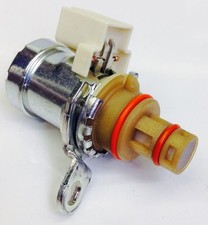
Per ATRA's Chrysler variable line pressure material covering the 41TES, 42RLES and 62TE, the transmission control module uses a closed-loop system with two components. The first is the pressure control solenoid, a variable force solenoid mounted on top of the valve body next to the line pressure transducer; the TCM duty-cycles it to vent the unnecessary line pressure supplied by the oil pump back to the sump. The second is the line pressure sensor, wired directly into the TCM, which reports actual line pressure and closes the feedback loop.
The relationship between current and pressure is inverted, and this trips people up on a scan tool. At zero current and 0% duty cycle the circuit sits at maximum pressure; at maximum current and 100% duty cycle it is at its lowest. So a solenoid that has gone electrically open does not necessarily give you low pressure. It can just as easily default the circuit high, which is why 62TE pressure faults show up as bang shifts about as often as they show up as slip.
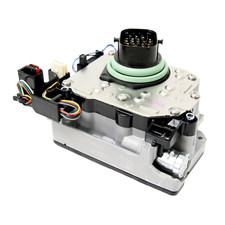
One clarification on hardware, because it changes what you unbolt. Sonnax's 62TE identification data and Jeff Parlee's write-up in Transmission Digest both make the same point: the line pressure variable force solenoid is inside the solenoid pack, but the line pressure sensor and the TCC variable force solenoid bolt directly to the valve body and are not part of the pack. Buying a pack does not get you a sensor, and replacing a sensor does not touch the solenoid that P0748 is complaining about.
What Happens If You Let It Ride
This is the part customers need to hear before they drive away. When the variable line pressure control circuit faults, the TCM falls back to open-loop line pressure control. It still moves the van, just without feedback, at whatever pressure the default schedule produces. ATRA documents the clock on that: it takes 3,220 kilometers (2,000 miles) or 1,000 2-3 upshifts of open-loop operation for the informational code to mature. Once it does, the controller puts the transmission into limp-in and lights the MIL, specifically to protect a unit that was never designed to run open loop for that long. That follow-on code is P1745, "Line Pressure Too High w/ VLP." It is not a separate failure. It is the counter running out on the P0748 you already have.
Also note the reset requirement: the code has to be cleared with a scan tool and the counters reset on the engine side only. Clearing codes without resetting the counter means the van comes back with limp-in a lot sooner than the customer expects.
The Scan Tool Pass, Before You Touch Anything
ATRA's pre-diagnostic sequence for this family is worth following literally, because four of the steps catch faults that mimic a bad solenoid:
- Fluid level and condition first. A low 62TE aerates and produces pressure errors that look exactly like a solenoid fault.
- Battery fully charged. Low system voltage skews solenoid current and produces false electrical diagnoses on a variable force circuit.
- Read PCM codes before TCM codes. Torque management faults change what the transmission is being asked to do.
- Pull DTC event data. A P0748 that only sets cold points at a connector or a chafed wire; one that sets hot under load points inside the pack.
On the data list, watch line pressure actual against line pressure desired while you sweep throttle. A commanded change that produces no movement in actual pressure, with the solenoid duty cycle pegged at one end of its range, is your confirmation that the circuit is not doing anything. ATRA's 2008 62TE seminar page gives you the endpoints to judge against: about 5% duty cycle is solenoid off and maximum line pressure, about 62% is solenoid on and minimum line pressure, and the TCM holds a preset 120 or 135 psi (827 or 931 kPa) during shifts and in park and neutral. If actual pressure stays below that target while driving, it sets P0868 alongside or instead of P0748, so read both. Also log transmission temperature, because a solenoid that reads in spec cold and drops out hot is a resistance-versus-heat failure and will not show on a cold bench check.
The Electrical Test: Real Pins, Real Numbers
This is the part that settles the argument, and it takes about ten minutes at the case connector. Sonnax specifies that all solenoid resistance tests be performed at approximately 70 degrees F, so let the unit cool if you just drove it in. The 62TE case connector is a 23-way; per Sonnax's pin out, the relevant pins are:
- Pin 10 — power from the transmission control relay, battery voltage. This is the common feed for all the solenoids and it is your fixed test lead.
- Pin 12 — line pressure VFS control. This is the P0748 circuit.
- Pin 6 — line pressure signal from the pressure sensor.
- Pin 3 — TCC VFS control (the other variable force solenoid, and not part of the pack).
- Pins 22 and 23 — trans oil temp signal and temp sensor ground.
ATRA's rebuild procedure gives the values to expect, measured with one lead on pin 10:
- Line pressure solenoid: about 4.9 ohms (pin 10 to pin 12).
- All six on/off shift solenoids: about 1.8 ohms each.
- Pressure switch resistors: around 300 ohms.
- Temperature sensor: measured between pins 22 and 23, not through pin 10.
An open reading, or anything far off 4.9 ohms on pin 10 to pin 12, puts the fault in the pack or the wiring to it. A reading dead on spec means the pack is probably fine and you have a connector or controller-side problem — worth knowing before you spend money on a solenoid block. Check the case connector itself while you are in there: fluid wicking up the harness into the connector is a known 62TE pattern, and a connector full of ATF gives intermittent readings that come and go with temperature.
The Failure Nobody Mentions: Wire Routing
If this transaxle has already been apart once, look hard at the internal wiring before you condemn anything. Parlee's Transmission Digest piece on the 62TE pack is blunt about it: when the valve body goes back in, the wiring has to be routed through all the clips and routing troughs molded into the plastic body of the solenoid pack, and failure to do that results in damaged wiring. A chafed line pressure control wire produces an intermittent P0748 that no amount of parts throwing will fix, and it is the single most common reason a code comes back after a valve body service.
Fluid: ATF+4 and Nothing Else
The 62TE is an ATF+4 unit, which is Chrysler Material Standard MS-9602. FCA US service bulletin 21-046-15 spells the requirement out in its parts list for this exact transaxle: one quart of part number 05013457AA, "Fluid, Automatic Transmission (ATF+4) or Equivalent." That is the entire acceptable list. That same bulletin is worth knowing before you condemn a solenoid, because it exists for a 62TE complaint of harsh shifting under heavy acceleration in hot or cold ambient temperatures whose only repair is correcting an underfilled transmission. Do not put a "multi-vehicle" or "universal" ATF in this transaxle while chasing a pressure code — the variable line pressure strategy is calibrated around a specific fluid friction and viscosity profile, and the wrong fluid shifts the pressure the controller has to command to hit its target. That can turn a marginal circuit into an active code, and it can hide a real one.
Repair Order That Does Not Waste Money
- Verify fluid level and condition. Dark and burnt means a bigger conversation with the customer before any electrical work.
- Charge the battery, clear the engine side. PCM codes diagnosed and repaired first.
- Pull DTC event data and note whether the code sets cold, hot, or under load.
- Resistance test at the case connector — pin 10 to pin 12, about 4.9 ohms at 70 degrees F. Wiggle the harness while you watch the meter.
- Inspect the connector and the internal harness routing. Fluid in the connector, chafe at the clips, or a repair that skipped a routing trough.
- Then, and only then, address the solenoid pack. Rebuild it or replace it based on mileage and what the pan told you.
- Check for a controller software update. Some 62TE shift-quality complaints riding alongside a pressure code are calibration, not hardware.
- Clear the codes and reset the counters on the engine side so the open-loop counter starts over.
The Software Angle
Before you chase shift feel that did not fully clean up after the electrical repair, check for a flash. Chrysler bulletin 21-012-12 REV A covers 2011 through 2013 RT Caravan and Town & Country built with the 3.6L (sales code ERB) and the six-speed automatic (sales code DG2) built before September 26, 2012. It addresses harsh 1-3 upshift in Economy mode, harsh 2-3 upshift in normal mode and a 1-2 upshift clunk after a throttle back-out, and revises the shift schedules for the 1-2, 3-4, 4-5 and 5-6 upshifts plus fifth gear converter lock-up. Two practical notes from it: record and repair any stored DTCs before flashing, so the P0748 gets fixed first, and keep battery voltage between 13.2 and 13.5 volts during the reprogram — a proper charger, not a jump box.
Rebuilding the Pack Instead of Buying One
If the resistance check condemned the pack and the unit is not high mileage, ATRA's Gears procedure will get you through a teardown in about fifteen minutes. The line pressure solenoid is individually serviceable:
- Remove the six T25 or T20 Torx bolts and lift the metal top plate off.
- Pull the six spacers and five pressure switch springs with a magnet, then pry the black plastic housing off the base.
- Remove the line pressure solenoid by pressing the two retainer rods out from the bottom with a paper clip. That is the whole trick to it.
- Note the two solenoids carrying ink marks — those are the normally open 2/4 and underdrive solenoids. If the marks washed off in solvent, blow into the tip; air out the side means normally open.
- There is no dedicated rebuild kit for this pack, but the 545RFE solenoid rebuild kit fits. The base screen, O-rings and pressure switches are the same. It does not include the line pressure solenoid O-rings, which is rarely a problem.
- On reassembly, never use assembly gel on the pressure switches — it will set pressure switch codes until it melts out.
- Torque the six top plate bolts to 50 in-lb.
When should you just buy a pack? ATRA's guidance: 150,000 miles or more, replace it. A pressure failure that burnt multiple components, replace it, because burnt clutch material moves through the hydraulics. A sealing ring, planet or hard part failure — test the pack and reuse it.
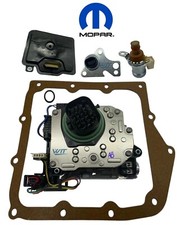
62TE Solenoid Block, TCC and LPS Sensor Filter Kit, 5-Piece → or browse all transmission solenoids
If the resistance test pointed at the pack itself rather than the sensor circuit, the OEM block pack numbers to match against your core are 05078709AB for 2007-up units and 68376696AA for the later design. Check what is on the van before ordering, because the two are not universally interchangeable across the run.
Need parts for this job?
Solenoid block packs, line pressure sensors, valve bodies, filters, pan kits and full rebuild kits for the Chrysler 62TE, priced for shops and shipped from the USA.
Shop 62TE parts →FAQ
What does P0748 mean on a Chrysler 62TE?
P0748 is the SAE generic definition for Pressure Control Solenoid A Electrical, and on a 62TE that solenoid is the line pressure variable force solenoid inside the solenoid pack. The controller runs line pressure as a closed loop: it duty-cycles that solenoid to vent unwanted pump pressure back to the sump, then reads the line pressure sensor to confirm it worked. P0748 says the electrical side of that loop is out of range.
Can I keep driving a van with P0748?
For a short time, but there is a clock running. Per ATRA's Chrysler variable line pressure material, the controller falls back to open-loop pressure control, and after 3,220 km (2,000 miles) or 1,000 2-3 upshifts of open-loop operation the informational code matures, the transmission goes to limp-in and the MIL comes on. The unit was never designed to run open loop that long.
What resistance should the 62TE line pressure solenoid read?
About 4.9 ohms at roughly 70 degrees F, measured at the case connector from pin 10 (the common battery feed) to pin 12 (line pressure VFS control). The six on/off shift solenoids read about 1.8 ohms each and the five pressure switch resistors read around 300 ohms. The temperature sensor is the exception: measure that between pins 22 and 23.
Do I have to replace the whole 62TE solenoid pack for P0748?
Not always. The pack comes apart in about fifteen minutes, and the line pressure solenoid lifts out once you press its two retainer rods out from the bottom with a paper clip, so a good used solenoid from a spare pack will replace it. Replace the complete pack when the unit is high mileage or the failure pushed burnt clutch material through the hydraulics.
Is P0748 the same thing as P1745 on a 62TE?
No, but they are two ends of the same chain. P0748 is the electrical complaint about the pressure control solenoid circuit. P1745 is the follow-on code that sets after the transmission has run in open-loop line pressure control for an extended period because a variable line pressure fault is present. Fix the P0748 circuit first, then clear the codes and reset the counters on the engine side.
Sources
- Sonnax — "62TE Solenoid Identification & Connector Pin Out," January 1, 2013. Backs the pack composition (six shift solenoids, one line pressure solenoid, a temperature sensor and five pressure switches), the note that the line pressure sensor and TCC variable force solenoid bolt directly to the valve body and are not part of the pack, the instruction that all solenoid resistance tests be performed at approximately 70 degrees F, the compressed-air method for telling a normally open solenoid from a normally closed one, and the full 23-way case connector pin out used here (pin 10 battery feed from the transmission control relay, pin 12 line pressure VFS control, pin 3 TCC VFS control, pin 6 line pressure signal from the sensor, pins 22 and 23 trans oil temp signal and ground). sonnax.com
- Gears Magazine (ATRA) — "Saving Some Dollars: Rebuilding 62TE Solenoid Packs," Jarad Warren. Backs every resistance figure and the entire rebuild procedure: all solenoids 1.8 ohms except the line pressure solenoid at 4.9 ohms, pressure switch resistors around 300 ohms, pin 10 as the common test point with pins 22 and 23 for the temperature sensor, the T25 or T20 Torx teardown, pressing the line pressure solenoid retainer rods out with a paper clip, the 545RFE solenoid rebuild kit interchange, the warning against assembly gel on the pressure switches, and the 50 in-lb torque on the six top-plate bolts. gearsmagazine.com
- ATRA — 41TES/42RLES/62TE technical manual section, "P1745 Line Pressure Too High w/ VLP," 2012. Backs the variable line pressure architecture and the consequences of ignoring a pressure control solenoid fault: the closed-loop system built from the pressure control solenoid and the line pressure sensor, the pressure control solenoid mounted on top of the valve body next to the line pressure transducer, the inverse duty-cycle relationship (low current or 0% duty cycle equals maximum pressure, 100% duty cycle equals lowest pressure), the 3,220 km (2,000 mile) or 1,000 2-3 upshift maturation window for open-loop operation, the resulting limp-in and MIL, the requirement to clear the code and reset the counters on the engine side, and the pre-diagnostic sequence (fluid level first, fully charged battery, read PCM codes before TCM codes, review DTC event data, check for controller software bulletins). atracom.blob.core.windows.net
- Transmission Digest — "Solenoid-Pack Information for the Chrysler 62TE," Jeff Parlee (Sonnax TASC Force), September 1, 2011. Backs the application history (first used in 2007 in the Sebring with the 3.5L and the Pacifica with the 4.0L, then in 2008 in the minivans with the 3.8L and 4.0L), the named list of the six shift solenoids and which two are normally open (2/4 and underdrive) versus the four normally closed (low/reverse, low clutch, overdrive, direct clutch), the note that the pressure switches are the same design used in the 604 pack, the identification of pin 10 as the power feed for all solenoids, and the warning that failing to route the pack wiring through every clip and trough results in damaged wiring. transmissiondigest.com
- Chrysler Group LLC Service Bulletin 21-012-12 REV A, "Flash: Transmission Shift Quality Improvements," October 31, 2012 (NHTSA document library). Backs the software section: the bulletin covers 2011 through 2013 RT Caravan and Town & Country built with the 3.6L (sales code ERB) and the six-speed automatic (sales code DG2) built before September 26, 2012, addresses harsh 1-3 upshift in Economy mode, harsh 2-3 upshift in normal mode and a 1-2 upshift clunk after a throttle back-out, adds shift schedule changes for the 1-2, 3-4, 4-5 and 5-6 upshifts and the 6-4P, 6-5 and 5-4 downshifts plus fifth gear converter lock-up changes, instructs the tech to record and repair any stored DTCs before flashing, and specifies keeping battery voltage between 13.2 and 13.5 volts during the reprogram. static.nhtsa.gov
- FCA US LLC Service Bulletin 21-046-15, "Low Transmission Fluid Level," July 14, 2015 (NHTSA document library). Backs the fluid requirement and the fluid-level-first diagnostic step: the bulletin covers the 2015 RT Dodge Grand Caravan and Chrysler Town & Country built with the 6-speed 62TE (sales code DG2), lists the required fluid as part number 05013457AA, "Fluid, Automatic Transmission (ATF+4) or Equivalent," describes the symptom as harsh transmission shifting under heavy acceleration in hot or cold ambient temperatures, instructs the technician to record and repair any stored DTCs before proceeding, and resolves the complaint by checking the 62TE fluid level for being under-filled and adjusting it to the correct level. static.nhtsa.gov (SB-10058728-3150.pdf)
- ATRA Technical Seminar Manual 2008, Chrysler section, 62TE "Hydraulic Line Pressure Control" (page 130). Backs the pressure control solenoid duty-cycle endpoints (5% = solenoid off = maximum line pressure, 62% = solenoid on = minimum line pressure), torque-based line pressure, the preset 120 or 135 psi (827 or 931 kPa) during shifts and in park and neutral, and the P0868 line-pressure-low set condition. atracom.blob.core.windows.net