The 41TE is the four-speed transaxle that went into a huge chunk of the Chrysler front-wheel-drive fleet: the minivans, Neon, PT Cruiser, Stratus, Sebring, and Journey, with the wider-ratio 42LE version living behind the 3.5L in the LH cars and 300M. It started life in 1989 as the A604 Ultradrive and was renamed the 41TE in 1992, which is why a bulletin can say "A604" and "41TE" in the same paragraph and mean the same unit. It was the first fully adaptive, electronically controlled automatic Chrysler built, and that adaptive nature is the single most important thing to understand before you touch one. This transaxle learns. When it stops shifting right, the learned data it stores is your fastest route to a diagnosis -- if you know how to read it.
For more Mopar coverage, see our Dodge transmission hub and the related 45RFE/545RFE writeup.
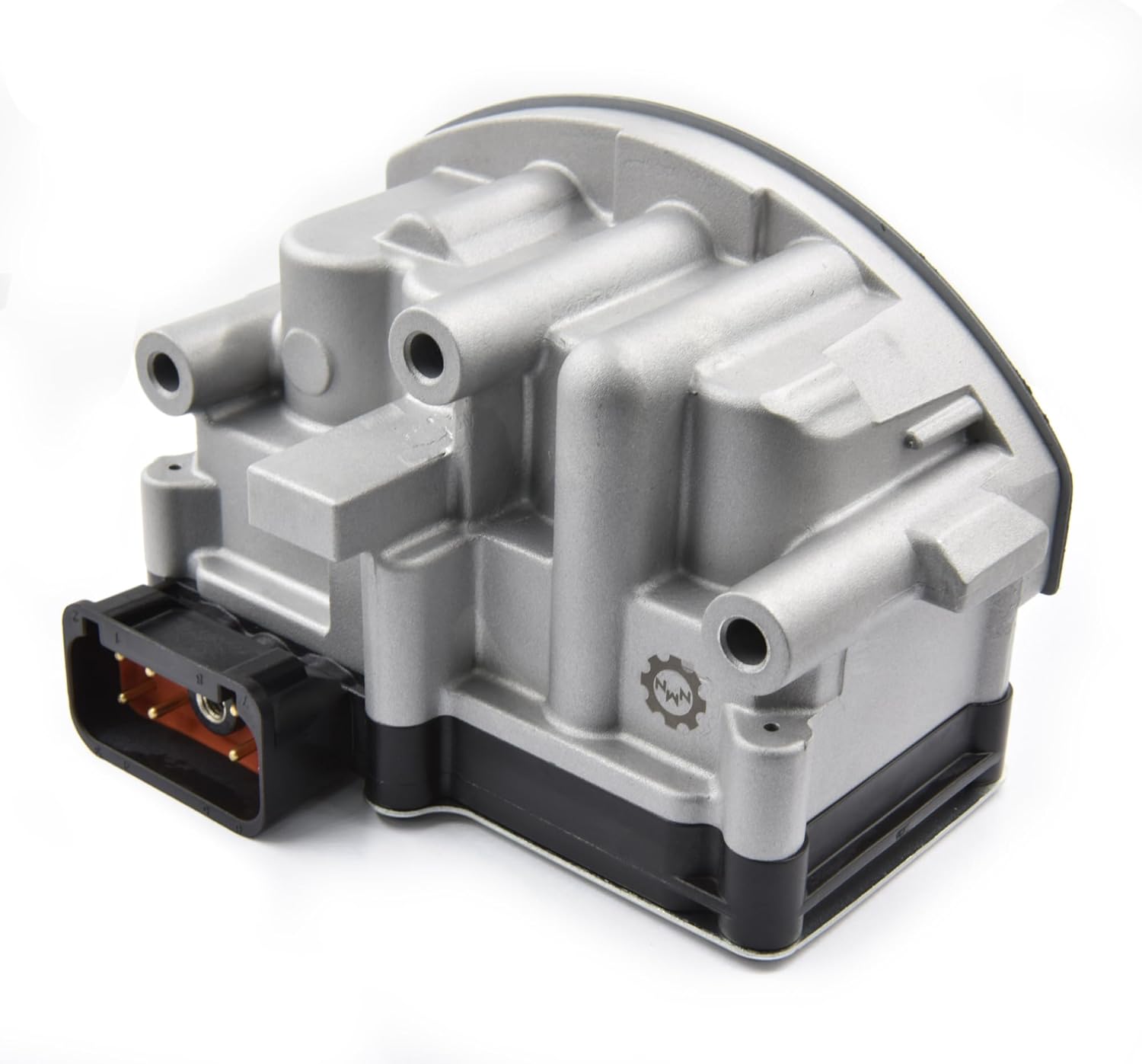
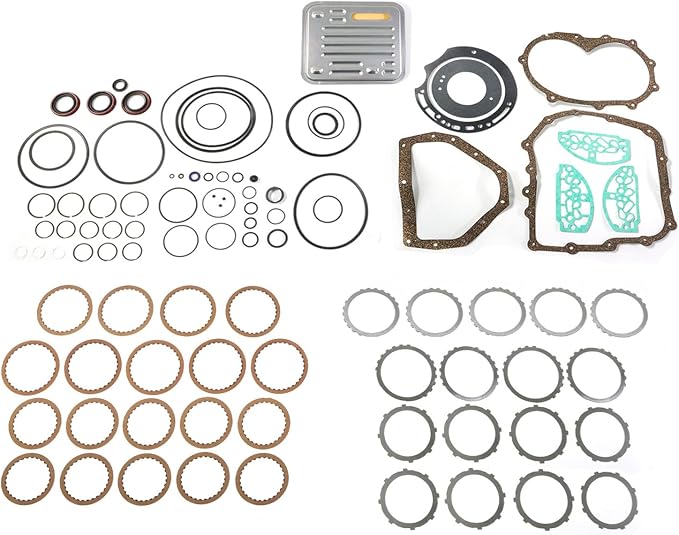
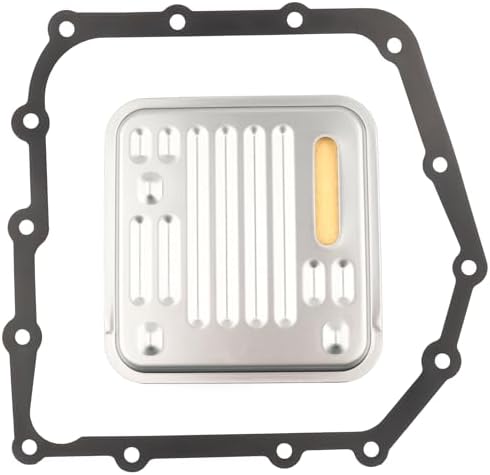
Why It Drops Into Second-Gear Limp Mode
The defining 41TE complaint is a sudden lock into second gear, sometimes at highway speed. Owners describe the car "falling on its face" and refusing to shift. That is not a mechanical failure by itself -- it is the Transmission Control Module protecting the unit. When the TCM sees something it cannot reconcile (a speed sensor reading that does not agree with commanded gear, an out-of-range input, or a solenoid it cannot verify), it defaults to what the industry calls "limp home": second gear only, under TCM control, so the driver can limp to a shop without cooking the clutches (Center for Auto Safety, Ultradrive summary).
The trap for a new tech is treating limp mode as the problem instead of the symptom. It is a fault flag. The correct move is never to clear the code and road test hoping it stays out -- it is to pull the codes, note them, and read the transaxle's stored learn data before you change anything. Low fluid alone will trigger limp mode on this unit, sometimes without setting a hard trouble code, so a fluid level and condition check on level ground at operating temperature is step one, every time.
Clutch Volume Index: The 41TE's Built-In Wear Report
Clutch Volume Index (CVI) is the diagnostic that separates people who guess at this transaxle from people who fix it. CVI is a calculated value the TCM stores for each of the four applied clutches, representing the volume of fluid it took to apply that clutch without stroking the accumulator piston (ATRA, "Understanding Clutch Volume Index"). As a clutch's friction material and steels wear, the pack has to travel farther to lock up, so it needs more fluid volume -- and the CVI number climbs. You are reading clutch wear as a number, before the customer ever feels a slip.
Each CVI updates on a specific shift, so a proper road test has to command every shift to refresh the whole picture. The 2/4 clutch value updates on a 1-2 shift; the OD (overdrive) value updates on a 2-3 shift; the L/R (low/reverse) value updates on a 2-1 or 3-1 coast downshift; and the UD (underdrive) value updates on a 4-3 or 4-2 shift. Read them with the fluid temperature in the correct window -- roughly 70 to 120 degrees F -- because cold fluid inflates the numbers and gives a false "worn" read.
| Clutch | Normal CVI range | Updates on |
|---|---|---|
| Underdrive (UD) | 24 – 70 | 4-3 or 4-2 downshift |
| Overdrive (OD) | 48 – 150 | 2-3 upshift |
| 2/4 clutch | 20 – 77 | 1-2 upshift |
| Low/Reverse (L/R) | 35 – 83 | 2-1 or 3-1 coast downshift |
Here is how to actually use the numbers. A UD value pushing past 70 with a slipping-in-drive complaint points you at the underdrive pack -- do not just condemn the unit; verify it against a road test. A high OD number with a soft or slipping 2-3 tells the same story for that clutch. The one that catches people is the low/reverse clutch: an L/R CVI over roughly 100, especially paired with a delayed or missing reverse and stored codes in the 24 or 60 range, is the documented symptom set for the low/reverse piston retainer's oil-feed seal leaking rather than the frictions being shot -- the OEM gasket around that feed hole relaxes and lets ATF cross-leak at the retainer, and Sonnax's fix is kit 92106-01K (the early-style-gasket version for four-speed units like the 41TE), which swaps the gasket for a steel shim and rubber grommet that will not distort the way the stock gasket does. That is a seal kit and a valve body reseal, not a teardown -- if you read the CVI first. Guessing costs the customer a rebuild they did not need.
FOXWELL NT604 Elite OBD2 Scanner
You cannot read Chrysler CVI data or command the shifts that refresh it with a basic code reader. A scan tool that pulls enhanced transmission live data is the single most useful thing you can put in your hand before condemning a 41TE. Reads the TCM data list, clears adaptives, and lets you watch clutch volumes update during a road test.
See it in the shop →Speed Sensor Codes: P0715 and P0720
The input (turbine) and output speed sensors are among the most common 41TE failures, and they mimic much more expensive problems. Both bolt to the outside of the case where they live in heat and vibration, so they degrade over time. P0715 is the input/turbine speed sensor circuit; P0720 is the output speed sensor circuit. A failing output sensor throws P0720, frequently drags P0700 along with it, and shows up as an erratic or dead speedometer plus limp mode. Because the TCM compares input speed to output speed to verify gear ratio, a bad sensor makes a healthy transaxle look like it is slipping and forces it into second gear.
Before you touch clutches over a "slip," confirm the sensors. The Mopar input speed sensor is part number 4800878 and the output speed sensor is 4800879; they are cheap, external, and standard practice is to replace both together since they see the same heat and mileage. Check the connectors and the ground before condemning the sensor itself -- a corroded pin does a great impression of a dead sensor. This is a five-minute check that has saved a lot of transaxles from getting pulled for no reason.
The Solenoid Switch Valve: The Wear Point Nobody Sees
If the codes and CVIs are clean but the unit has erratic torque converter clutch behavior, second-gear starts, or an intermittent low/reverse code, look at the valve body -- specifically the solenoid switch valve. Sonnax documents this as a family-wide Chrysler issue across the 41TE, 42LE, 42RLE, and the RFE units: the solenoid switch valve plug cocks in its bore and hangs up, and the constant oscillation of the plug wears the bore oval over time (Sonnax, "All in the Family"). Once that bore is worn, apply oil cross-leaks and the switch valve can no longer route pressure cleanly, which is what produces the erratic TCC and gear-start complaints.
The fix depends on how far the bore is gone. For a bore that still measures in-spec, Sonnax offers standard-sized drop-in replacement plugs (kit 92835-02K) that need no machining. For a worn bore, the oversized plug kit 92835-18K restores the fit but requires the matching reamer, 92835-RM, to clean the bore to size. If you are already in the valve body and the unit has miles on it, the Sonnax Sure Cure kit (SC-41TE) bundles the switch valve fix with the other known 41TE/42LE valve body wear corrections into one reconditioning package -- that is the move on a rebuild rather than chasing one valve at a time.
Bore work is where a lot of rebuilders create their own comebacks. Do not run a drill-mounted brush hard enough to bell-mouth the bore, and clean every valve body passage before reassembly -- a single flake of old friction material parked in a switch valve bore will put the car right back in your bay. Hand-controlled bore brushes sized for these valve bodies are the right tool; an air ratchet and a wire wheel are not.
Transmaxx Bench Buddy Valve Body Bore Brush Set (4-Piece)
Sized brushes for cleaning solenoid switch valve and regulator bores on the 41TE and similar Chrysler valve bodies without opening up the bore. This is the correct way to prep a bore before dropping in Sonnax replacement plugs -- clean, controlled, and it will not bell-mouth the bore the way a power tool does.
See it in the shop →Fluid: ATF+4 (MS-9602) Only, and Here Is Why
The 41TE is fussy about fluid in a way that is not marketing -- it is chemistry. The original Ultradrive fluids, ATF+2 and ATF+3 (Chrysler material standard MS-7176), had anti-shudder additives that degrade with heat and mileage. The anti-shudder property of ATF+3 is typically worn out by around 30,000 miles, which is why an Ultradrive that was smooth when the fluid was fresh develops a torque converter clutch shudder as the fluid ages. Chrysler replaced that chemistry with ATF+4 (MS-9602), a fully synthetic-base fluid that is far more heavily friction-modified and dramatically more shear-stable: published shear-loss testing shows roughly 9.9 percent viscosity loss for the MS-9602 chemistry versus about 40 percent for a Dexron III fluid, which is exactly why generic Dexron does not belong in this transaxle.
The practical rules: use only a fluid that carries the ATF+4 / MS-9602 licensing. Do not substitute Dexron/Mercon, and do not top off an ATF+4 unit with old ATF+3 stock. The friction modifiers in ATF+4 are what let the clutches grab quickly without shudder; the wrong friction curve either shudders or slips, and on an adaptive unit that also corrupts the learned CVI data. A drain-and-fill on a 41TE takes roughly 4 to 5 quarts; a dry unit with an empty converter after a rebuild takes on the order of 9 to 10 quarts. Always set final level by the dipstick procedure at the correct temperature -- overfill foams the fluid and underfill triggers the same limp mode you just fixed.
Service and Prevention
A 41TE that gets a fluid-and-filter service on ATF+4 every 30,000 miles, kept at the right level, is a genuinely durable unit. The failures cluster around neglect: fluid run past its anti-shudder life, low level from an unrepaired leak, and speed sensors left in the car until they take the transaxle down with them. After any service or valve body work, clear the adaptives and let the TCM relearn -- the quick-learn procedure resets the stored CVI and shift-pressure data so the transaxle recalibrates to the fresh fluid and any parts you changed, instead of carrying old learn data that will feel like a shift-quality complaint.
Bottom line: read before you wrench. Codes, then CVIs at the right temperature, then a fluid check, then the valve body. On the 41TE that order of operations is the difference between a seal kit and an unnecessary rebuild, and the transaxle will tell you which one it needs if you know how to ask.
Need parts for this job?
Rebuild kits, hard parts, solenoids, valve bodies, filters, gaskets and the correct fluid for this unit — shipped fast from the USA on secure checkout.
Shop 41TE / A604 parts →Sources
- ATRA — Understanding Clutch Volume Index (CVI). Definition of CVI and how clutch wear raises the stored volume value. atracom.blob.core.windows.net/manuals/individual/2009/2009-135.pdf
- ATRA Technical Bulletin — 41TE / 42LE (ATB 1377). CVI ranges and diagnostic reference for the Ultradrive family. atracom.blob.core.windows.net/bulletins/2011/apr/atb1377.pdf
- Sonnax — All in the Family: Identification & Repair of Chrysler Solenoid Switch Valve Problems. Bore wear/cocking mechanism, resulting TCC and gear-start symptoms, affected units. sonnax.com/tech_resources/85
- Sonnax — Oversized Solenoid Switch Valve Plug Kit 92835-18K and reamer 92835-RM (worn-bore repair). sonnax.com/parts/41-oversized-solenoid-switch-valve-plug-kit
- Sonnax — Sure Cure Kit SC-41TE (complete 41TE/42LE valve body reconditioning package). sonnax.com/parts/3025-the-sure-cure-kit
- Center for Auto Safety — Chrysler Ultradrive overview: A604-to-41TE naming and the second-gear limp-home default behavior. autosafety.org/chrysler-ultradrive
- Transmission Digest — Chrysler Low/Reverse Piston Retainer Oil Feed Seal Kit. Backs the piston retainer distortion/gasket relaxation failure mechanism at the low/reverse oil feed, the delayed reverse and Code 24/60 symptom set tied to a high L/R CVI, and the Sonnax steel-shim-and-grommet fix (92106-01K for 41TE early-style gaskets, 92106-03K for 62TE late-style). transmissiondigest.com – Chrysler Low/Reverse Piston Retainer Oil Feed Seal Kit