P0894 reads as "Transmission Component Slipping" in the generic SAE list, which is about as much help as a check engine light. It tells you something inside is turning when the controller told it to hold. It does not tell you which clutch, and on a Chrysler 62TE it does not even tell you which half of the transaxle.
That is what makes this code different here. The 62TE is not one gear train. Per ATRA's 62TE training material, the design took a proven 41TE four-speed and split the transfer and pinion drive with an underdrive and direct clutch, driving a second ratio into the final drive. There are actually seven forward speeds in there, because a fourth-gear prime ratio exists purely to avoid a double swap during a 6-4 kickdown. So when the controller flags slip, the offending element could be in the original 41TE centerline or in the compounder behind it.
What Is Actually Slipping: The Compounder
The underdrive compounder assembly is four things: a low clutch, a direct clutch, an overrunning clutch (a sprag), and a planetary gear set. It runs in two modes, direct and reduction, and the handoff between them is fast. ATRA puts the clutch-to-clutch synchronization window at 40 to 70 milliseconds. Shift the compounder early relative to the main centerline and you get a shudder or a harsh hit; shift it late and the driver feels a double bump. That tight window is why a small pressure loss shows up as a driveability complaint long before it matures into a code.
The sprag holds in first, third and fourth, which smooths the 1-2, 2-1, 4-5 and 5-4 shifts. It also masks damage: a low clutch that has stopped holding will still let the van drive, because the sprag covers for it in certain gears and throttle conditions. That is the classic P0894 profile on a 62TE. Drives fine cold, slips under moderate throttle once the fluid thins out, sets a code, looks clean again on the next key cycle.
The failure everyone finds
ATRA names it outright: the most common failure on this unit is wear at the low clutch drum sealing ring grooves in the underdrive compounder. The sealing rings ride in machined lands and route apply oil to the clutch. Normal running clearance in that area is about 0.005 inch. As the land wears, the ring loses its seal, apply pressure bleeds into the case, and the clutch cannot hold torque. ATRA's teardown photos step through normal, badly worn and extreme, and they put the extreme examples at a 100 percent failure rate. There is an aftermarket drum with a steel insert in the ring land specifically to keep this from coming back.
Second on the list is the direct clutch housing. ATRA flagged a snap ring groove that wears in that housing and listed the symptom set as DTCs P0792 and P0735, no line rise, and a slip on the 1-2. If P0894 is sitting alongside a compounder speed error or a fifth gear ratio error, that is where to look first.
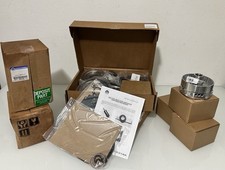
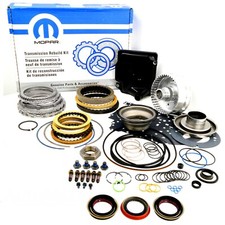
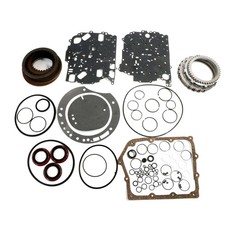
62TE Master Level 2 Rebuild Kit with Pistons and Filter
If the compounder is apart and the friction material is gone, this is the kit that covers it: frictions, steels, pistons, bushings, seals and filter for the 2007-up 62TE. Sold by Core Transmission Parts.
See the 62TE Level 2 master kit →Rule Out the Hydraulics Before You Pull the Unit
A clutch that never received apply pressure looks identical, on a scan tool, to a clutch that wore out. The difference is a few thousand dollars, so the hydraulic side gets checked first.
Line pressure
Sonnax publishes the working numbers for these Chrysler variable line pressure units: normal OE pressure is 60 psi minimum and 150 to 160 psi maximum at stall, and the controller's default desired pressure is 125 psi. If actual line pressure sits pinned at 150 to 160 psi at idle in Park, Neutral and Drive, and 250 psi in Reverse, with the duty cycle flatlined and no activity, that is an open circuit on the pressure control solenoid rather than a mechanical fault. Sonnax also notes a trap worth remembering here: P0869 (high line pressure) on a 62TE is often a bad powertrain control module, because the open circuit is commonly internal to the module.
Low pressure is the version that burns clutches. A pressure regulator bore worn at the spring end lets line pressure exhaust, which Sonnax describes as producing low line pressure, soft shifts and burnt clutches. That is a P0894 waiting to happen, and it is repairable in the valve body with an oversized pressure regulator valve (Sonnax 92835-29 for variable line pressure units) rather than in the case.
Vacuum test the two switch valves
The 62TE valve body carries a low/reverse switch valve and a separate low clutch switch valve, both acting as one-way valves for their circuits in Reverse and Drive. Sonnax found that these valves side-load heavily because the valve diameter is close to its total length, and that wear in either bore lets fluid leak past the one-way function and exhaust through the manual valve. The result is low apply pressure, burnt clutches, and delayed or absent Reverse or 1st and 2nd gear. That is a slip complaint by another name.
The pass/fail number is simple: 18 inches of mercury is satisfactory, and anything below that is worn. Testing them on a 62TE is fussy. There is a long worm track that has to be covered front and back, holes inside the covered area have to be plugged, and the valve has to be manually shuttled into whichever port you are testing. Sonnax's practical tip is that if port 1 shows excessive leakage, leakage at port 2 is close to guaranteed, so plan on replacing both valves. The repairs are drop-in kit 92835-43K, or 92835-47K for bores with extreme wear.
The check balls that walk away
This one costs people entire rebuilds. The back of the 62TE valve body has clutch pressure tap check balls, and Sonnax's vacuum test guide lists their failure symptoms as drive slip, reverse slip, gear ratio errors and limp mode. They are pressed in at the factory, unseated with nozzles during end-of-line clutch circuit testing, then left to seal the circuit for the life of the unit.
Wayne Colonna documented in Transmission Digest what happens when one leaves. A 2013 Town and Country with the 3.6L came back immediately after overhaul in limp mode with P0732, P0735, P0792 and P1790 stored. The direct drum and piston had already been replaced twice, once with aftermarket parts and once with OEM, and the complaint never changed. The cause was that the direct clutch non-removable captured check balls had fallen out of the valve body transfer plate and gone unnoticed. The correction was a valve body. Confirm those balls are present and sealing before you close a 62TE up.
The Scan Tool Pass
Do this before anything comes apart, and do it in this order.
- Fluid level and condition. A low 62TE aerates and throws pressure faults that mimic a worn clutch. Burnt smell and dark fluid on the stick moves the compounder to the top of the list. The fluid is ATF+4 to Chrysler material standard MS-9602, and nothing else belongs in it.
- Read all stored codes, not just P0894. The company it keeps tells you where to look. P0792 (compounder speed error) or P0735 point at the compounder. A pattern of P0731 through P0735 pins the problem to specific gears. P0933, P0869 or P1745 move you to the pressure control circuit.
- Graph input speed against engine RPM. Watch the traces while the complaint happens. Input speed following engine RPM with the converter clutch commanded off is the stumbling-to-a-stop complaint ATRA attributes to a mechanically faulty TCC solenoid, which can be serviced without pulling the unit. Different fault, and worth ruling out first because it is cheap.
- Watch countershaft speed sensor data. ATRA's guidance for compounder complaints is to monitor that PID directly. A countershaft speed that does not track the commanded compounder ratio is the compounder telling on itself.
- Compare actual line pressure to desired. Sweep the throttle and watch whether actual follows desired. No movement in actual with the duty cycle pegged at one end of its range is an electrical fault, not a slipping clutch.
On the Bench: What to Inspect and What to Set
Once the unit is out and the valve body and feed tubes are off, the compounder comes out as an assembly. ATRA's procedure uses Miller tool 9908 or equivalent for removal, and 9725 to compress the low clutch return spring during teardown. Only pull the bolts you need to mount the tool.
ATRA is emphatic on one point that saves comebacks: completely disassemble the compounder even on a low mileage unit, and inspect every bearing, spline, ring land, ring surface, drum and snap ring groove. This is not a subassembly to reuse on faith. On the low clutch drum specifically, measure the sealing ring grooves against the roughly 0.005 inch normal clearance and replace the drum if the land is opened up. Use the updated low clutch drum assembly with locking rings. Mopar sells the complete compounder assembly under part number 05078815AD if the whole thing is past saving.
On the overrunning clutch, orientation matters and it is easy to get backwards. The inner race has offset splines and the outer race carries an ID groove that faces down when installed correctly. Assembled right, the outer race turns counterclockwise. If it does not, take it back apart.
The number that decides whether the slip comes back
Low clutch clearance is 0.018 to 0.029 inch, roughly 0.46 to 0.76 mm, measured by applying about 30 psi of air pressure through the compounder feed hole and reading the travel. Set it loose and the pack starts slipping again under load; set it tight and it drags and burns. Check it with the selective plate you actually intend to install, not the one that came out.
Need parts for this job?
Compounder drums, low clutch packs, pistons, filters, valve bodies and complete 62TE overhaul kits, priced for shops and shipped from the USA.
Shop 62TE parts →Keeping It Fixed
Three things decide whether this unit comes back:
- Repair the valve body, do not just clean it. If the switch valve bores vacuum tested under 18 in-Hg, they are still leaking after the rebuild. New clutches in front of a leaking bore burn on the same schedule the old ones did.
- Verify the check balls. Both the removable ones and the factory captured ones in the transfer plate. A two-minute check that prevents a second teardown.
- Look for a controller software update. ATRA's standing advice on the 62TE is to check for software updates for the specific make, model and year, because a number of the shift quality complaints on this transaxle were addressed in calibration rather than in hardware. A unit that shifts harshly with correct clearances and correct pressures may simply be running an old calibration.
One thing to tell the customer up front: ATRA's own note on the 62TE is that on a good day these units produce shifts that are not especially refined, and that shifts during throttle transitions and braking have the highest probability of feeling harsh or flared. Fixing P0894 gets the slip out. It does not turn a 62TE into something it never was.
Shop the Part for This Fix
62TE rebuild kits and clutch packs
Master, deluxe and overhaul kits for the 2007-up 62TE, plus individual clutch packs and pistons if the compounder is the only thing you are touching.
Browse rebuild kits at Core Transmission Parts →FAQ
What does P0894 mean on a Chrysler 62TE?
P0894 is the SAE generic description for Transmission Component Slipping. The controller compares its speed sensor inputs against the ratio it commanded and finds a holding element turning when it should be locked. On a 62TE that math covers both the 41TE-style main centerline and the underdrive compounder behind it, so the code tells you a clutch is passing, not which one.
Is P0894 on a 62TE always a rebuild?
No. The slip is real, but the cause can be hydraulic rather than mechanical. Worn valve bores, a pressure regulator valve that has worn its bore, or a dislodged captured check ball in the transfer plate will all starve a clutch of apply pressure and read as slip. Check line pressure and vacuum test the valve body before condemning the clutch packs, because a clutch that never got pressure is not a clutch that wore out.
What is the most common mechanical cause of 62TE slipping?
Ring land wear on the low clutch drum inside the underdrive compounder. ATRA's 62TE training material calls this the most common failure on the unit and rates the extreme-wear examples at a 100 percent failure rate. The sealing rings ride in those lands to feed the clutch, so once the land opens up, apply pressure bleeds off and the clutch slips under load.
What clearance should the 62TE low clutch be set to?
0.018 to 0.029 inch, roughly 0.46 to 0.76 mm. Measure it by applying about 30 psi of air pressure through the compounder feed hole and reading the travel. Set it loose and the slip comes back under load; set it tight and the pack drags and burns.
Can low fluid alone set P0894 on a 62TE?
Yes, and it is the first thing to rule out. A low 62TE aerates the pump feed, line pressure falls off, and clutches release under load exactly the way a worn pack does. Correct the level with ATF+4 to Chrysler material standard MS-9602, repair whatever leaked, then clear the code and see whether it returns before going further.
Sources
- ATRA — "62TE Update: Front Wheel Drive 6 Speed," webinar presented by Mike Souza. Backs the compounder architecture (low clutch, direct clutch, overrunning clutch and planetary), the 41TE-plus-compounder design history and the seventh forward ratio used for the 6-4 kickdown, the 40 to 70 millisecond clutch-to-clutch synchronization window with its early-shudder and late double-bump symptoms, the sprag holding in first, third and fourth, low clutch drum sealing ring groove and ring land wear as the most common failure with roughly 0.005 in normal clearance and a 100 percent failure rate at extreme wear, the steel-insert aftermarket drum, the direct clutch housing snap ring groove wear producing P0792, P0735, no line rise and a 1-2 slip, Miller tools 9908 and 9725, the overrunning clutch ID groove facing down with counterclockwise outer race rotation, and the low clutch clearance spec of .018 to .029 in measured with 30 psi of air through the compounder feed hole. atracom.blob.core.windows.net
- Sonnax — "Diagnosing 62TE, 68RFE Low/Reverse Switch Valve Issues," Chris Leach, July 14, 2025. Backs the function of the low/reverse switch valve and the 62TE low clutch switch valve as one-way valves for their clutches in Reverse and Drive, the side-loading wear mechanism caused by valve diameter being close to total length, the leakage path exhausting through the manual valve with resulting low apply pressure, burnt clutches and delayed or absent Reverse and 1st and 2nd gear, the 18 in-Hg vacuum test pass/fail threshold, the long-worm-track testing difficulty and the port 1 to port 2 correlation, and repair kits 92835-43K and 92835-47K. sonnax.com
- Sonnax — "Chrysler 62TE Vacuum Test Guide," November 5, 2021. Backs the 62TE valve body lineup used here (pressure regulator, TCC regulator, TCC control, TCC switch, low/reverse switch, solenoid switch, blocker, low clutch switch and manual valves) and the clutch pressure tap check balls on the back of the valve body with their listed symptoms of drive slip, reverse slip, gear ratio errors and limp mode. Also backs the Sonnax 92835-29 oversized pressure regulator valve callout and its low line pressure, high line pressure and shift concern symptom list. sonnax.com
- Sonnax — "Diagnosing Chrysler Transmission Max Line Pressure & P0933, P0869, P1745 Codes," Jim Mobley, January 12, 2023. Backs the pressure figures: normal OE pressure of 60 psi minimum and 150 to 160 psi maximum at stall, the 125 psi default desired pressure, the 150 to 160 psi at idle in Park, Neutral and Drive with 250 psi in Reverse as the open-circuit signature, and the specific warning that P0869 on a 62TE is often a bad PCM because the open circuit is commonly internal to the module. sonnax.com
- Transmission Digest — "FCA 62TE slipping in second and fifth," Wayne Colonna, October 24, 2022. Backs the captured check ball case study: a 2013 Chrysler Town and Country with the 3.6L faulting to limp mode immediately after overhaul with P0732, P0735, P0792 and P1790 stored, the direct drum and piston replaced twice with both aftermarket and OEM parts without changing the complaint, the direct clutch non-removable captured check balls having fallen out of the valve body transfer plate as the actual cause, the valve body replacement as the correction, and the explanation that those balls are unseated by nozzles during factory clutch circuit pressure testing and then reseal the circuit. transmissiondigest.com
- GEARS Magazine (ATRA) — "Six-Speed Success! 62TE Things To Do To Deliver Them Right The First Time," Keith Clark. Backs the pattern complaints that bring these units in, the instruction to completely disassemble the compounder even on low mileage units and inspect bearings, splines, ring lands, ring surfaces, drums and snap ring grooves, the recommendation to use the updated low clutch drum assembly with locking rings, Mopar compounder assembly part number 05078815AD, the input speed sensor versus engine RPM graphing method for the stumbling-to-a-stop complaint and its mechanically faulty TCC solenoid cause serviceable without removing the unit, the advice to monitor countershaft speed sensor data for compounder concerns, the standing advice to check for controller software updates, and the caution that this transaxle produces less than refined shifts during throttle transitions and braking even when it is correct. gearsmagazine.com