"It slips" is the least useful sentence on a 62TE repair order. This transaxle has seven friction elements plus an overrunning clutch, and every forward gear uses a different combination of them. Which gear the slip shows up in tells you which clutch, which circuit and usually which failed part you are looking for. This is the triage we use: confirm it is a real slip, pin it to a gear, read the codes and clutch volumes, then go after the part that actually failed.
The numbered references point to the Sources list at the bottom.
First, make sure it is really slipping
Three things get written up as slipping that are not clutch slip at all:
- Converter clutch not applying or cycling. Higher cruise rpm feels like slip. See our 62TE P0741 guide for the TCC side.
- Neutral on the highway. When a solenoid circuit code sets above 35 km/h (22 mph), the 62TE is designed to go to neutral, and below that speed it goes to limp-in [2].
- Launch in second. A pressure switch fault makes the TCM inhibit first gear and converter lockup, so the van launches in second and never locks the converter [2].
A real slip is input speed climbing while output speed does not follow. The 62TE has three speed sensors: the input speed sensor reads turbine speed off the input clutch hub, the transfer speed sensor reads the front annulus/rear carrier assembly (the old 41TE output sensor, moved and renamed), and the output speed sensor reads the underdrive compounder output carrier [3]. Divide input speed by output speed and you have the actual ratio [2]. On a real slip that number drifts away from the commanded gear, and which pair of sensors stops agreeing tells you whether the slip is in the main centerline or in the compounder. That is why the 62TE has its own compounder speed ratio code, P0792 [2].
Check the fluid before anything else
ATF+4 only, checked hot and at the correct level. Low fluid on a 62TE shows up first as flares on the clutch-to-clutch shifts and a slipping or harsh feel under heavy throttle, because the pump starts pulling air long before the unit is empty enough to lose drive. Codes P0944 (loss of hydraulic pump prime), P0868 (line pressure low) and P0897 (transmission fluid deteriorated) are all in the 62TE code set [2], and all of them point you at fluid and pressure before hard parts. For capacities and the level procedure, see our 62TE fluid type and capacity guide.
Pin the slip to a gear
This is the core of the diagnosis. The 62TE is a 41TE main centerline with an underdrive compounder added behind it. The compounder runs either in direct (direct clutch applied) or in reduction (low clutch or the overrunning clutch holding) [3]. Each gear uses a known set of elements [1]:
| Element | Applied in | If it slips, you feel |
|---|---|---|
| Underdrive (UD) clutch | 1, 2, 3, 4 prime, 4, 5 | Slip or flare in nearly every forward gear except 6th |
| Low/Reverse (L/R) clutch | 1, 2, Reverse | Slip on launch, in 2nd and in reverse |
| 2/4 clutch | 3, 4 prime, 6 | Flare into 3rd, slip in 4th prime and 6th |
| Overdrive (OD) clutch | 4, 5, 6 | Slip in 4th, 5th and 6th, flare on the 6-4 kickdown |
| Direct clutch (DC), compounder | 2, 4 prime, 5, 6 | Slip on the 1-2, slip in 2nd, 4th, 5th and 6th |
| Low clutch (LC), compounder | Reverse; coast in 1, 3, 4 prime | No or slipping reverse, no engine braking in low |
| Reverse clutch | Reverse | Reverse only |
Drive it on the scan tool and note every gear where the ratio drifts. Then find the element common to all of those gears and absent from the gears that hold. A few patterns come up over and over.
Slips on the 1-2 shift and in 2nd, 4th prime, 5th and 6th
That is the compounder direct clutch circuit, and it is the classic 62TE failure. ATRA's 62TE update calls ring land wear on the underdrive compounder low clutch drum the most common failure, shows lands worn to roughly .005 in. of clearance on a bad drum, and flags a worn snap ring groove in the direct clutch housing with the pattern of P0792, P0735, no line rise and a 1-2 slip [3]. The sealing rings wear into the drum grooves, the grooves open up, and the direct clutch circuit bleeds off; Transmission Digest describes the same ring wear causing flares or neutral conditions on the shift [6]. GEARS lists P0732 and P0735 as the codes that point at a probable compounder failure [5]. ATRA also shows direct clutch piston delamination, a split bonded seal, as a common problem, and warns that a piston with minimal damage can still air check well [3].
Slips in 1st, 2nd and reverse, but 3rd and up are fine
The common element is the L/R clutch. If the L/R pack is burnt, find out why before you replace it. Sonnax documents wear in the low/reverse switch valve bore and the low clutch switch valve bore on the 62TE valve body. These valves act as one-way valves for the L/R clutch and the low clutch; when the bore wears, oil leaks past and exhausts through the manual valve, apply pressure drops, and you get burnt clutches and delayed or no reverse, first and second [4]. The root cause is side-loading, because the valve diameter is too close to its overall length [4].
Slips or no drive in reverse only
Reverse needs the reverse clutch, the L/R clutch and the low clutch together [1]. Wayne Colonna's Transmission Digest write-up covers a 62TE that drove forward normally but had no reverse, even in failsafe third with the solenoid pack unplugged. The usual cause was the 0.020 in. air-bleed capsule blowing out of the low clutch drum; if it is not properly staked it leaves a leak big enough to stop the clutch from applying or to burn it [6]. The low clutch is not needed to drive forward, because the one-way clutch holds in the reduction gears, but reverse cannot work without it [6].
Feels like 1st goes to neutral early
If first seems to drop into neutral well before a normal 1-2 shift point, Transmission Digest points at the underdrive one-way clutch rather than the low clutch drum [6]. ATRA's update gives the assembly check: the outer race's ID groove faces down, and with everything together the outer race should rotate counterclockwise [3].
Slips in 4th, 5th and 6th, or flares on the 6-4 kickdown
OD clutch circuit. The 6-4 kickdown goes through fourth prime, which releases the OD clutch and applies the UD clutch at the same time so the unit avoids a double swap [3]. A worn OD circuit usually shows up there first. P1741 is the gear ratio error in fourth prime [2].
Slips in every gear
When everything slips, look at what everything shares: line pressure, the pump and the fluid supply. ATRA's update calls the cooler bypass valve a high-risk area and recommends a new valve on any repair [3]. GEARS documents a check ball in the case line port near the pan that can dislodge and dump mainline pressure; the permanent fix is to tap the hole to 1/8 in. pipe thread and install a thread-locked pipe plug [5]. Verify pressure with a gauge before you tear into the unit; our 62TE line pressure testing guide has the procedure.
Read the codes the TCM already logged
The 62TE code set tells you a lot about a slip if you read it by group [2]:
- Gear ratio errors: P0731 (1st), P0732 (2nd), P0733 (3rd), P0734 (4th), P0735 (5th), P0729 (6th), P0736 (reverse) and P1741 (4th prime). Lay the gears that set over the element chart above.
- Compounder: P0792, compounder speed ratio error.
- Element volume: P1770 and P1771 (inadequate element volume, L/R), P273A (low clutch) and P273B (direct clutch). The TCM measured more oil than it should take to fill that clutch.
- Hydraulic pressure tests: P0845 (2-4), P083A (LC), P084A (DC), P0870 (OD) and P0992 (2-4/OD). These come from the pressure switch readings, so a failed test on one circuit can be a real leak in that circuit, not just a bad switch.
Read the clutch volume indexes
Clutch volume indexes (CVIs) are one of the best slip tools on any Chrysler TE or RFE unit. ATRA explains that the TCM watches how long the gear ratio takes to change after it commands a shift, using the input and output speed sensors, and from that time it calculates the volume of fluid needed to apply the element [2]. As friction material wears, clearance grows and the volume goes up. ATRA lists these preliminary 62TE clutch volumes [2]:
| Clutch | Preliminary CVI range |
|---|---|
| Underdrive (UD) | 26-74 |
| 2/4 | 16-54 |
| Overdrive (OD) | 42-143 |
| Low/Reverse (L/R) | 16-63 |
| Low clutch (LC) | 16-25 |
| Direct clutch (DC) | 26-34 |
Two practical notes. First, a CVI only updates when the TCM sees the particular shift it learns on, warm. On the 41TE that the 62TE's main box comes from, ATRA shows L/R learning on a 2-1 or 3-1 coast downshift, 2/4 on the 1-2, OD on the 2-3 and UD on a 4-3 or 4-2, with minimum fluid temperatures of 70 to 110 F [2]. Second, watch the narrow windows. LC and DC allow only a few counts of spread, so a compounder clutch losing oil past worn rings goes out of range quickly. A DC volume above its range together with a 1-2 slip and P0792 is about as clear a compounder call as you get without pulling the unit.
A high CVI does not always mean worn frictions. A leak in the feed circuit (worn ring lands, a delaminated piston, a worn switch valve bore) also takes more oil to fill the clutch.
The repair
Once the gear pattern, codes and volumes agree, the fix follows the failed part:
- Compounder direct clutch circuit (1-2 slip, P0792/P0735): a unit-out job. Inspect all bearings, splines, ring lands, ring surfaces, drums and snap ring grooves in the compounder [5]. GEARS recommends the updated low clutch drum with locking rings [5], and ATRA notes aftermarket drums are available with a steel insert [3]. Replace the scarf-cut sealing rings and inspect the direct clutch piston for delamination [3]. Our 62TE P0894 guide walks through the compounder bench work.
- L/R or low clutch burnt: vacuum test the switch valve bores. Sonnax uses 18 in. Hg or better as a pass; lower means wear, and the fix is the checkball sleeve kit 92835-43K, or the oversize 92835-47K for badly worn bores [4].
- No reverse with good frictions: check the low clutch drum air-bleed capsule, and restake it or replace the drum [6].
- Whole-unit slip: gauge line pressure, replace the cooler bypass valve [3], and check the case check ball [5].
Set the clearances
New frictions at the wrong clearance will not fix a slip. Chrysler's 62TE clutch clearances [1]:
| Clutch | Clearance |
|---|---|
| Low/Reverse | 0.89-1.47 mm (0.035-0.058 in.) |
| Reverse (select snap ring) | 0.76-1.245 mm (0.030-0.049 in.) |
| Overdrive | 0.491-2.345 mm (0.019-0.092 in.) |
| Underdrive (select pressure plate) | 0.91-1.47 mm (0.036-0.058 in.) |
| 2/4 | 0.76-2.64 mm (0.030-0.104 in.) |
| Low clutch | 0.48-0.76 mm (0.019-0.030 in.) |
| Direct clutch | 0.95-1.41 mm (0.037-0.056 in.) |
ATRA's update measures the compounder clutches with 30 psi of air through the compounder feed hole, the direct clutch with its hub removed [3]. The low clutch is set with a select snap ring; ATRA notes Mopar packages eight thicknesses together, from 2.78 mm up to 4.39 mm, and they cannot be ordered individually, so keep the ones you do not use [2].
Relearn
Chrysler requires the TCM Quick Learn after an overhaul or clutch replacement [1]. Run Quick Learn, then drive through every shift at operating temperature so all of the clutch volumes update.
Shop the part for this fix: 62TE underdrive/direct clutch molded piston
If the teardown shows the delaminated direct clutch piston ATRA warns about, the CoreTransmissionParts molded piston for 2007-2015 units replaces it; pair it with a new 62TE sealing ring kit for the compounder.
View the 62TE direct clutch piston at CoreTransmissionPartsAlso see the 62TE sealing ring kit or browse all 62TE parts at CoreTransmissionParts.
Need parts for this job?
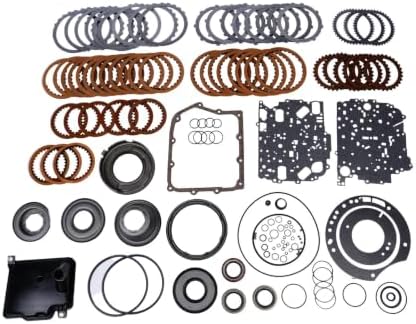
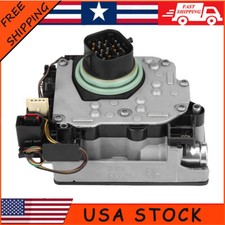
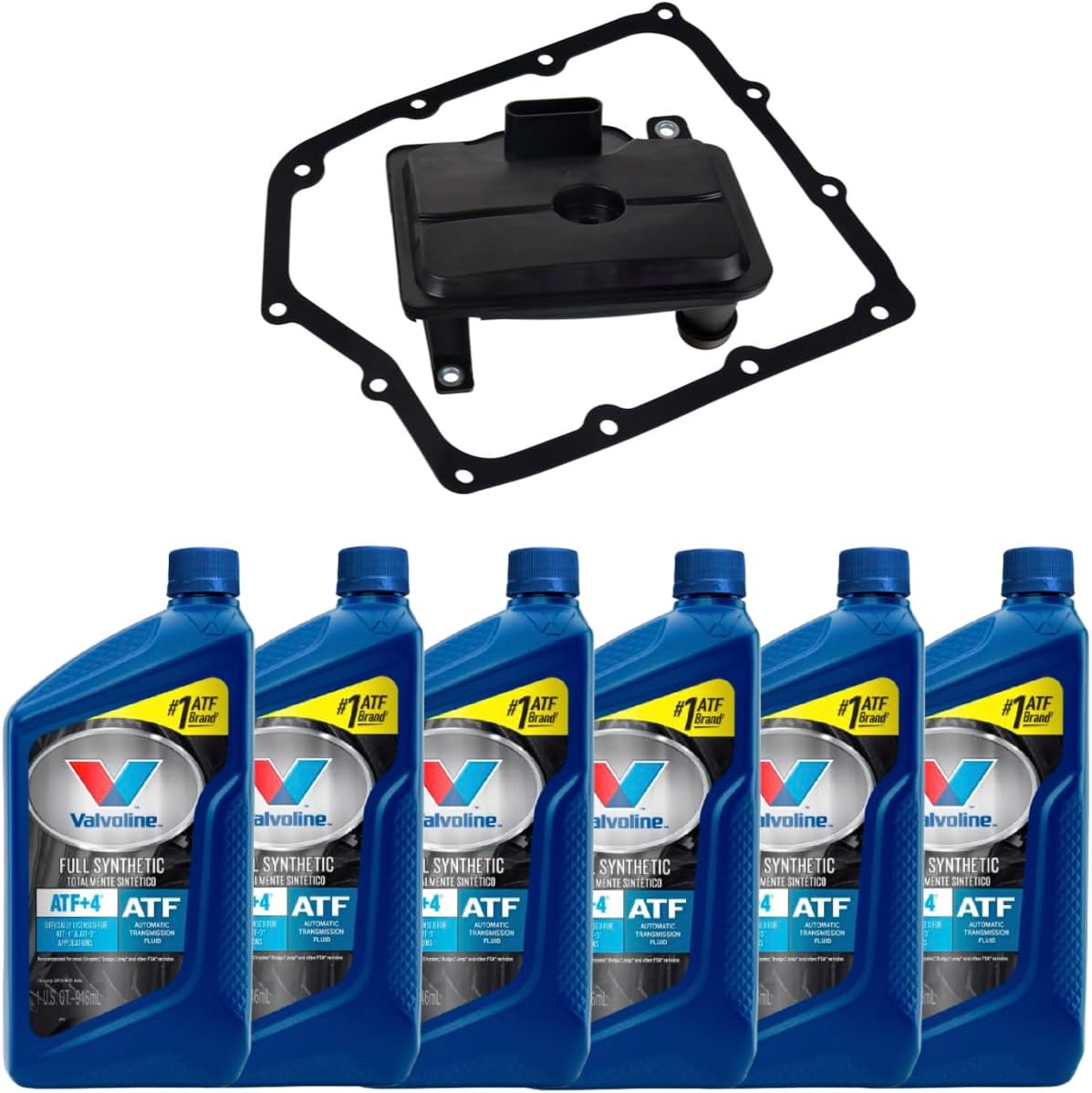
Our 62TE parts page has master rebuild kits, clutch drums, sprags, valve bodies, pumps and ATF+4 service kits, all on our own checkout. The 62TE takes ATF+4 only; see the transmission fluid spec chart.
FAQ
Why is my 62TE slipping?
Start with fluid: the 62TE takes ATF+4 only and flares or slips when it is low. If the fluid is right, the most common mechanical cause is wear in the underdrive compounder, worn low clutch drum ring lands and a worn direct clutch housing snap ring groove, which ATRA ties to P0792, P0735 and a 1-2 slip. Burnt L/R clutches from a worn low/reverse switch valve bore are the other common one.
How do I tell which 62TE clutch is slipping?
Drive it on a scan tool and note every gear where the input-to-output ratio drifts, then find the clutch that is applied in all of those gears. Slip in 2nd, 4th, 5th and 6th points at the compounder direct clutch; slip in 1st, 2nd and reverse points at the L/R clutch; slip in 5th and 6th points at the overdrive clutch. The clutch volume indexes and gear ratio codes should agree with that pattern.
What are normal 62TE clutch volume index values?
ATRA lists preliminary 62TE ranges of 26-74 for the underdrive clutch, 16-54 for 2/4, 42-143 for overdrive, 16-63 for low/reverse, 16-25 for the low clutch and 26-34 for the direct clutch. A value above range means the clutch is taking more oil than it should to apply, from worn frictions or a leak in its feed circuit.
Can a 62TE slip be fixed without a rebuild?
Sometimes. Low fluid, a TCC complaint mistaken for slip, or a pressure switch fault that forces a second-gear launch can all be fixed without pulling the unit. Once clutches are burnt or the compounder drum ring lands are worn, the transaxle has to come out, and the valve body switch valve bores should be checked so the new clutches do not burn again.
Related guides
Sources
- Chrysler LLC, 62TE Service Information (2009 Dodge Journey and 2009 Town and Country editions): Elements in Use chart, clutch clearance specifications and overhaul notes. Backs the elements applied in each gear, the L/R, reverse, OD, UD, 2/4, low and direct clutch clearances, and the Quick Learn requirement after overhaul. documents.cdn.ifixit.com (PDF)
- ATRA Technical Seminar Manuals, Chrysler section: 62TE DTC list and shift solenoid/pressure switch monitoring (2008, pages 127-129), and Clutch Volume Indexes plus the 62TE low clutch selectable snap ring package (2012, pages 155-157). Backs the gear ratio, compounder, element volume, hydraulic pressure test and line pressure codes, neutral above 22 mph and the second-gear launch on a pressure switch fault, how the TCM calculates CVIs, the preliminary 62TE CVI ranges and the 41TE learn conditions, and the eight select snap ring thicknesses. DTC list (PDF); solenoids and pressure switches (PDF); clutch volume indexes (PDF)
- ATRA (Mike Souza, Senior Research Technician), 62TE Update webinar. Backs the three speed sensors and what each reads, the compounder direct and reduction modes, fourth prime on the 6-4 kickdown, low clutch drum ring land wear as the most common failure, the worn direct clutch housing snap ring groove with P0792/P0735/1-2 slip, direct clutch piston delamination, the one-way clutch orientation check, the 30 psi air clearance check and the cooler bypass valve. atracom (PDF)
- Chris Leach, Sonnax, "Diagnosing 62TE and 68RFE Low/Reverse Switch Valve Issues." Backs the low/reverse and low clutch switch valve bore wear, the burnt clutch and delayed or no reverse/1st/2nd symptoms, the side-loading cause, the 18 in. Hg vacuum test and kits 92835-43K and 92835-47K. sonnax.com
- Keith Clark, "Six-Speed Success: 62TE Things to Do to Deliver Them Right the First Time," GEARS magazine (ATRA). Backs P0732/P0735 as compounder failure codes, the full compounder inspection list, the updated low clutch drum with locking rings, and the case line port check ball and 1/8 in. pipe plug repair. gearsmagazine.com
- Wayne Colonna, "62TE: No Reverse," Transmission Digest, October 2012. Backs the low clutch drum 0.020 in. air-bleed capsule failure, the low clutch being required for reverse but not forward, direct clutch sealing ring groove wear causing flares, and the one-way clutch as the cause of an early first-to-neutral feel. transmissiondigest.com