The 62TE shows up in more shops than almost any other front-drive six-speed, because it went into the Grand Caravan, Town and Country, Journey, Avenger, Sebring and 200 for well over a decade. It is not a mystery unit. ATRA's senior research technician Mike Souza summed up the design in one line: it is a 41TE with an underdrive compounder bolted on the back, a low clutch, direct clutch, overrunning sprag and a planetary set that splits the transfer drive into two ratios [1]. The front half is the four-speed everybody knows. Most of the 62TE-specific trouble lives in the part that was added.
What follows is the list I would hand a tech who is about to open one: the failures that actually come across the bench, the codes they set, how to prove them, and what fixes them for good. Sources are numbered and listed at the bottom.

How the compounder changes the diagnosis
Understanding the compounder saves a lot of wrong turns. It has two modes, direct and reduction. The 2-3, 3-2 and 4-2 shifts are "double swap" shifts: two elements release while two others apply, one pair in the main centerline and one pair in the compounder. ATRA gives the synchronization window as 40 to 70 milliseconds [1]. If the compounder shifts early relative to the main box you feel a shudder or harsh shift; if it shifts late, the driver describes a "double bump." To avoid a double swap on a 6-4 kickdown the unit uses a fourth-prime ratio, which is why the 62TE is sometimes described as having seven forward speeds [1].
The unit also has three speed sensors, not two. The input speed sensor sits on top of the case and reads turbine speed off the input clutch hub. What the 41TE called the output sensor is now the transfer speed sensor. The new output speed sensor at the rear of the case reads the compounder output carrier [1]. When you see a ratio code, look at all three on the scan tool before you condemn anything. A P0735 fifth-gear ratio error with the input and transfer shafts agreeing with each other points straight at the compounder.
1. Low clutch drum ring land wear (P0792, P0735, slips 1-2)
This is the one. ATRA lists ring land wear on the underdrive compounder low clutch drum as the most common 62TE failure, shows lands worn to roughly .005 in. of clearance on a "badly worn" drum, and labels the original drum with a 100 percent failure rate [1]. The sealing rings wear the lands until the low clutch and direct clutch circuits leak into each other. Worn snap ring grooves in the direct clutch housing are part of the same pattern. Typical complaints and codes, per ATRA [1]:
- P0792 compounder speed error and P0735 fifth-gear ratio error
- A slip on the 1-2 shift
- No line rise when the PCM commands higher pressure
GEARS Magazine adds P0732 second-gear ratio to the list and says to monitor the countershaft (transfer) speed data to confirm it [2]. Their instruction on the fix is blunt: disassemble the compounder completely even on a low-mileage unit, and inspect every bearing, spline, ring land, ring surface, drum and snap ring groove. The updated low clutch drum uses locking rings, and the complete updated compounder is Mopar 05078815AD [2]. ATRA notes the drum is also available in the aftermarket with a steel insert [1].
Do not reuse a drum because the rings "look okay." A drum with .005 in. of land clearance will pass a quick visual and come back in a month with the same codes.
2. Direct clutch piston delamination
The direct clutch piston uses a bonded rubber seal, and ATRA flags delamination, a split between the rubber and the piston, as a common problem [1]. The catch is that a piston with minor damage may still air check fine on the bench. You have to look at the bonded edge, not just trust the air test. Replace any piston with a visible split. A kit that includes pistons is worth the extra money on this unit for exactly this reason.
While the compounder is apart, set clearances. ATRA's figures, measured with 30 psi of air through the compounder feed hole: direct clutch clearance .037 to .056 in., measured with the clutch hub removed, and low clutch clearance .018 to .029 in. [1]. The direct clutch uses a selectable pressure plate to get there.
3. TCC and EMCC solenoid faults (P2764, P0740, shudder at a stop)
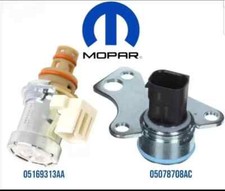
The 62TE controls the converter clutch with an electronically modulated converter clutch variable force solenoid (EMCC VFS) that bolts to the valve body separately from the main solenoid pack. ATRA reported P2764, TCC stuck on, as a new failure on its technical hotline, with the fix being replacement of the TCC solenoid, part 5169313AA [1].
A stuck-on converter clutch shows up as a stumble or shudder coming to a stop. GEARS describes the scan tool proof: watch the input speed sensor trace following engine rpm while the converter clutch is commanded off [2]. If ISS rides right on engine speed at a stop with TCC commanded off, the clutch is not releasing. The solenoid can be serviced without pulling the transmission.
There is a mechanical version of this failure too. Transmission Digest documented a 2016 Journey with delayed forward engagement, fluid coming out the vent and a P0740. The EMCC solenoid's mounting bracket had broken, letting the solenoid back partly out of the valve body near the vent. The leak dropped the fluid level, which caused both the delayed engagement and the converter slip. The fix was a soft-parts overhaul, a converter and a new 5169313AA solenoid [6]. If you find the bracket broken, check how long it ran low before you just bolt in a solenoid.
4. Low/reverse switch valve wear (no reverse, no 1st/2nd, burnt clutches)
The 62TE valve body carries more switch valves than the 41TE: a low clutch switch valve, a direct clutch blocker valve that keeps the direct and low clutches from applying together, plus the low/reverse, solenoid and TCC switch valves [1]. The low/reverse switch valve is the known wear item. Sonnax attributes it to the valve being heavily side-loaded, likely because its diameter is too close to its length, which wears the valve and bore until fluid leaks past [5].
Symptoms per Sonnax: burnt clutches, delayed or no reverse engagement, and no first or second [5]. The test is a vacuum test. Cover the casting with a rubber mat, shuttle the valve into each port and read the gauge. 18 in. Hg or better passes; anything lower means the bore is worn. Sonnax's repair is a checkball sleeve kit, 92835-43K for standard wear or 92835-47K oversized for extreme wear [5]. For the full valve body picture, see our 62TE valve body and solenoid guide.
5. Low fluid level and harsh shifts
A 62TE is less tolerant of low fluid than the four-speeds, and FCA put that in writing. Service bulletin 21-046-15 covers 2015 Grand Caravan and Town and Country vans with the 62TE built June 19 to June 21, 2015, whose owners complained of harsh shifting under heavy acceleration in hot or cold weather. The whole repair was checking for an underfill and topping up with ATF+4, Mopar 05013457AA [4]. There was nothing broken; the units simply left the plant low.
Low fluid is also the root of a lot of the no-movement calls. GEARS lists low fluid level and a restricted or leaking main sump filter alongside broken pump gears, stripped converter-to-input-shaft or transfer gear splines, and a stripped or popped-out axle as causes of no movement [2]. Check level and condition first, with the correct procedure and hot fluid, before you pull anything. Use ATF+4 only. If you want the level check procedure in detail, our 62TE line pressure testing guide covers the tools and specs for confirming pressure once the level is right.
6. The dislodged case check ball (no movement)
One no-movement cause gets missed because it is not in the valve body. GEARS describes a check ball in a case line port that can dislodge. Their fix is to thread the hole with a 1/8 in. pipe tap and install a pipe plug with permanent thread locker; they note a 5R55W fill plug works [2]. On the valve body side, ATRA points out that the 62TE valve body has nine non-removable check balls used as plugs, in addition to four in the shift circuits [1]. If one of those captured balls is missing, the clutch circuit it seals will not hold, and new clutches will not cure it.
7. Harsh shifts after a rebuild, flash or solenoid pack
Before you condemn a clutch pack for a flare, read the clutch volume indexes. The TCM calculates each clutch's volume from how long the ratio change takes after a shift command, and ATRA lists preliminary 62TE ranges of 26-74 for UD, 16-54 for 2/4, 42-143 for OD, 16-63 for L/R, 16-25 for the low clutch and 26-34 for the direct clutch [7]. The compounder windows are narrow, so a direct clutch volume above range with a 1-2 slip is a strong pointer at the worn drum ring lands described above. When you rebuild the compounder, the low clutch clearance is .019-.030 in., set with one of eight select snap rings that Mopar sells only as a package [7]. Our 62TE slipping guide walks through the full gear-by-gear diagnosis.
A lot of 62TE comebacks are not parts failures. The PCM adapts clutch fill and pressure to the parts it learned, and new parts with old adaptives shift hard. FCA's flash bulletin 21-012-12 REV A, for 2011-2013 Caravan and Town and Country vans with the 3.6L, addressed harsh 1-3 upshifts in ECO mode, harsh 2-3 upshifts in normal mode and a 1-2 clunk after throttle back-out, and changed shift schedules and fifth-gear lock-up [3]. The procedure after the flash is the part to remember for any 62TE job: clear the Variable Line Pressure counters, then run the Quick Learn, both in the PCM's miscellaneous functions [3]. Keep a battery charger on so voltage stays between 13.2 and 13.5 volts during a flash [3].
For harsh engagement after a rebuild, GEARS gives a relearn routine: bring fluid temperature up to about 90 degrees F on the scan tool, drive to 10 mph, stop, then cycle neutral to drive, about three seconds in each, until the engagement smooths out, keeping the fluid near that temperature [2]. Check for updated software before you chase hardware on any shift-quality complaint.
8. Builder errors that look like failures
ATRA singles out two things that bring rebuilt 62TEs back [1]:
- The upside-down solenoid block seal. If the seal between the solenoid block and valve body goes in upside down, it blocks the 2/4 clutch circuit. The result is no third in limp mode and no fourth or sixth. Install it with the slot facing up. ATRA calls it the most common builder error.
- The cooler bypass valve. ATRA calls it a high-risk area and recommends replacing it with a new valve on every repair. A stuck bypass valve starves the cooler or lube circuit and cooks the new clutches.
Two more from the same webinar: the "squished" 62TE pump gears have assembly dots that must face up, with the more heavily chamfered side of the teeth going into the pocket first, and gear face clearance is .0008 to .0018 in., checked with plastic gauge [1]. The underdrive sprag outer race should turn counterclockwise with the assembly together; if it locks the wrong way, it is in backward [1].
Where to start on a 62TE that just came in
- Check fluid level hot and look at the fluid. Low or burnt changes everything else on this list.
- Read all codes and pull up ISS, TSS and OSS together. Ratio codes with the compounder sensor disagreeing point at the low clutch drum or direct clutch.
- Shudder at a stop or P2764/P0740: watch ISS versus engine rpm with TCC commanded off, and look at the EMCC solenoid and its bracket.
- No reverse or no 1st/2nd: vacuum test the low/reverse switch valve before ordering clutches.
- Shift quality only, no codes: check for PCM software, clear VLP counters and run the Quick Learn before touching hardware.
Shop the part for this fix: 62TE master rebuild kit with pistons
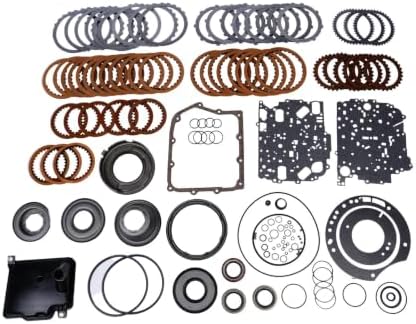
If the compounder is coming apart for ring land wear or a delaminated direct clutch piston, the CoreTransmissionParts 62TE Master Level 2 kit includes the pistons and filter so you are not reusing the part that failed.
View the 62TE Master Level 2 kit at CoreTransmissionPartsChasing a pressure switch or shift solenoid code instead? See the 62TE shift solenoid block pack, or browse all 62TE parts at CoreTransmissionParts.
Need parts for this job?
Our 62TE parts page has master rebuild kits, solenoid block packs, TCC solenoids, valve bodies, pumps and ATF+4, all on our own checkout. For every fluid spec side by side, see our transmission fluid spec chart.
FAQ
What is the most common 62TE transmission failure?
Ring land wear on the underdrive compounder low clutch drum. ATRA's 62TE update webinar calls it the most common failure and shows lands worn to roughly .005 in. of clearance. It typically sets P0792 or P0735, causes a 1-2 slip and can show no line rise. The fix is an updated drum, either the Mopar compounder update or an aftermarket drum with a steel insert.
What fluid does the 62TE take?
ATF+4 only. FCA service bulletin 21-046-15 lists Mopar part 05013457AA, ATF+4, for topping off a 62TE. Using a universal or Dexron-type fluid changes friction characteristics and can cause shudder and harsh shifts on a unit that relies on adaptive clutch control.
Why does my 62TE shift hard after a rebuild or solenoid pack replacement?
The PCM is still running the adaptive values it learned for the old parts. Clear the Variable Line Pressure counters and run the Quick Learn with a scan tool, as FCA bulletin 21-012-12 directs after a flash. GEARS Magazine adds that the engagement relearn works best with fluid near 90 degrees F, cycling neutral to drive about three seconds at a time.
What causes a 62TE P2764 or P0740 code?
Both point at torque converter clutch control. ATRA's technical hotline found P2764, TCC stuck on, was usually cured by replacing the EMCC variable force solenoid, part 5169313AA. Transmission Digest documented a P0740 case where that solenoid's mounting bracket broke, the solenoid backed partly out and fluid pumped out the vent.
Is the 62TE a reliable transmission?
It is a 41TE with an underdrive compounder added, so it shares a proven main centerline, but the compounder adds its own weak spots: low clutch drum ring lands, the direct clutch piston seal and the extra valve body switch valves. Kept full of ATF+4 and serviced, most go a long way. The expensive failures usually start with low fluid or a missed compounder update.
Related guides
Sources
- ATRA (Mike Souza, Senior Research Technician), 62TE Update webinar, 2014. Backs the 41TE-plus-compounder design, double swap shifts and 40-70 ms window, fourth prime, three speed sensors, the valve body switch valves and nine non-removable check balls, low clutch drum ring land wear as the most common failure with P0792/P0735/no line rise/1-2 slip, direct clutch piston delamination, clutch clearances, P2764 and TCC solenoid 5169313AA, the upside-down seal builder error, the cooler bypass valve and pump assembly specs. atracom (PDF)
- GEARS Magazine (ATRA), "Six-Speed Success: 62TE Things to Do to Deliver Them Right the First Time." Backs the ISS-follows-engine-rpm TCC test, P0732/P0735 compounder diagnosis, updated low clutch drum with locking rings and compounder 05078815AD, the no-movement cause list, the case check ball pipe-plug repair and the 90 degree F engagement relearn. gearsmagazine.com
- FCA / Chrysler Group service bulletin 21-012-12 REV A, "Flash: Transmission Shift Quality Improvements" (October 31, 2012), via NHTSA. Backs the harsh 1-3 / 2-3 upshift and 1-2 clunk conditions, the shift schedule and fifth-gear lock-up changes, clearing VLP counters, Quick Learn and the 13.2-13.5 volt charging note. static.nhtsa.gov (PDF)
- FCA US service bulletin 21-046-15, "Low Transmission Fluid Level" (July 14, 2015), via NHTSA. Backs the June 19-21, 2015 build range, the harsh shift under heavy acceleration complaint and ATF+4 part 05013457AA. static.nhtsa.gov (PDF)
- Sonnax, "Diagnosing 62TE and 68RFE Low/Reverse Switch Valve Issues." Backs the side-loading wear mechanism, the burnt clutch / no reverse / no 1st-2nd symptoms, the 18 in. Hg vacuum test and kits 92835-43K and 92835-47K. sonnax.com
- Transmission Digest, "62TE Delayed Forward Engagement." Backs the 2016 Journey case: P0740, broken EMCC VFS bracket, fluid loss through the vent, and the repair with solenoid 5169313AA. transmissiondigest.com
- ATRA Technical Seminar Manual (2012), Chrysler section, "CVI (Clutch Volume Indexes)" and "62TE Low Clutch Selectable Snap Ring Package" (pages 155-156). Backs how the TCM calculates clutch volumes from shift time, the preliminary 62TE ranges (UD 26-74, 2/4 16-54, OD 42-143, L/R 16-63, LC 16-25, DC 26-34) and the low clutch pack clearance of .019-.030 in. clutch volumes (PDF); low clutch snap rings (PDF)