A 62TE in limp mode is doing exactly what Chrysler designed it to do. The TCM saw something it did not trust, shut the solenoids off, and left the driver with one forward gear and reverse so the van can get off the road. The job is not to "fix limp mode." The job is to find out what the TCM saw. Most of the time the answer is sitting in the stored codes, and a surprising share of the time it is not inside the transaxle at all.
This guide works through the 62TE's limp logic code group by code group, in the order I check them on a Caravan, Town and Country, Journey or ProMaster. The numbered references point to the Sources list at the bottom.

What limp mode actually is on a 62TE
Chrysler's service information marks third gear as the default, or limp-in, gear [1]. In third the underdrive (UD) and 2/4 clutches are applied on the main centerline and the overrunning clutch holds the underdrive compounder, for an overall ratio of 2.28:1 [1]. That choice is not an accident. Two of the six shift solenoids are normally open and four are normally closed, and the two normally open ones sit in the UD and 2/4 locations [6], so when the TCM kills power to the solenoid block, those two keep passing oil and the other four stay shut. No power equals third gear, plus reverse through the manual valve.
That gives you the classic complaint: it takes off sluggish, never shifts, the MIL is on, and after a restart it may drive normally for a while. Sonnax's pin-out shows pin 10 of the 23-way case connector as the common feed to the solenoids, supplied by the transmission control relay [6]. Anything that drops that feed, from a relay to a loose pin, produces the same limp symptom as a failed solenoid.
Three conditions that get called limp mode
Before you scan it, pin down which one the driver actually has, because the 62TE has more than one failsafe strategy.
| What the driver feels | What the TCM did | Typical trigger |
|---|---|---|
| Stuck in one gear (third), MIL on | True limp-in: solenoids off | Solenoid circuit, gear ratio, pressure switch or power fault set below 22 mph [2] |
| Lost drive at highway speed, then one gear after restart | Neutral first, limp-in after the next start | Same faults set above 35 km/h (22 mph) [2] |
| Launches in second, shifts through the gears, no converter lockup | Substitute operation, not limp: 1st gear and EMCC inhibited | Pressure switch set condition [2] |
The third row trips up a lot of people. ATRA's write-up of the 62TE pressure switch strategy says that when a set condition is identified, first gear and EMCC are inhibited, the vehicle launches in second and shifts normally without lockup, and if the condition clears during the same key start it returns to normal operation [2]. The MIL does not come on until after five minutes of substituted operation, and limp-in only occurs on a P0841 if it is accompanied by P0706 [2]. So a van that "starts in second and runs hot on the highway" is often a pressure switch rationality fault, not a limp-in event, and the fix path is different.
Step 1: Read every code and sort them
P0700 on the engine side only tells you the transmission module has codes of its own. Read the TCM directly and sort what you find. From ATRA's 62TE code list [2], the groups that put these units in failsafe are:
| Group | Codes | Check first |
|---|---|---|
| Power and relay | P0562, P0882, P0883, P0888, P0890, P0891 | Battery, relay, fuses, connector pin fit |
| Solenoid circuits | P0750, P0755, P075A, P0760, P0765, P076A | Pin 10 feed, then the pack |
| Speed and range sensors | P0716, P0721, P0791, P1794, P0706, P0726 | Sensor, connector, shared ground |
| Gear ratio and compounder | P0729, P0731-P0736, P1741, P0792, P1790 | Clutch or hydraulic leak |
| Pressure test and switch | P0841, P0845, P0846, P083A, P084A, P0870, P0871, P0992 | Switch, valve body, clutch circuit |
| Line pressure and pump | P0868, P0869, P0933-P0935, P0944 | Fluid level first, then gauge it |
| Valve body latch | P1775, P1776 | Solenoid switch valve bore |
| Module and network | P0604, P0613, U0100, U0121, U0141, U0002 | Module power, CAN wiring |
The pattern matters more than any single code. One solenoid circuit code usually points at one solenoid. Three or four solenoid codes at once almost never mean three or four bad solenoids; they mean the solenoids lost something they share.
Step 2: Power and grounds before parts
The solenoid circuits are tested periodically by switching each one and looking for the inductive spike, and they are tested again any time a gear ratio or pressure switch error occurs [2]. Drop the supply voltage and every one of those tests fails at once. That is why power faults show up as a pile of solenoid codes.
Dana Deeke documented a 2010 Journey AWD with the 3.5L and 83,000 miles that went into third-gear failsafe, intermittently at first and then regularly [3]. It carried P0562 along with P0765, P0750 and P0755. The P0562 description on that platform is specific: the PCM commanded the TIPM to energize the transmission control output and did not see the expected voltage on the sense circuit, with a set condition that includes voltage below 10.0 volts for 15 seconds [3]. The cause was loose pin fit at connector C101 near the PCM on top of the transmission. A new wire bypassing the bad terminal fixed it, and the three "solenoid" codes did not come back [3]. That same van also had low fluid from a cooler line leak, which needed fixing but was not the reason it limped.
The relay can fail the other way, too. Wayne Colonna wrote up a 2015 ProMaster in failsafe with P0883 where heat had discolored the power distribution center and the transmission relay was stuck on, holding voltage on the solenoid block with the key off. An earlier shop had spliced in a relay under the damaged PDC instead of repairing it [5]. Nothing inside the transaxle was wrong.
My order on the bench: battery and charging voltage under load, then relay operation with the key on and off, then voltage at pin 10 of the case connector with the key on [6], then pin fit on both halves of every connector in that feed. Only after that do I meter the pack.
Step 3: Speed sensors and range sensor
The TCM computes every gear ratio from its speed inputs, so a bad sensor makes a healthy transaxle look like it is slipping. The 62TE uses an input speed sensor at the top of the case that reads turbine speed off the input clutch hub, and an output speed sensor at the rear of the case that reads the underdrive compounder output carrier [1]. Both are two-wire magnetic pickups that generate an AC signal, both seal with an O-ring that Chrysler says to replace every time, and both bolt down at 12 N-m (105 in-lb) [1]. A third sensor watches the transfer shaft; its circuit code is P0791, and P1794 flags a speed sensor ground error [2].
Do not assume a bad sensor will set its own code. Deeke's second case was a 2014 Ram C/V with the 3.6L and 62TE that stayed in limp mode after a used transmission was installed [4]. The transmission code pointed at line pressure, not at a speed signal. The real fault was a turbine speed sensor loaded with metal debris, and it had been moved from unit to unit, so every "new" transmission inherited the same failure. A new sensor plus the line pressure reset procedure fixed it [4]. When you swap a used or rebuilt unit in, install new speed sensors, or at minimum pull the old ones and inspect them for a fuzzy coat of metal.
On a live-data scan, watch input and output speed at a steady cruise in a known gear. If the ratio between them jumps around while engine speed is steady, or one signal drops to zero for an instant, you are looking at a sensor, a connector or that shared ground before you are looking at a clutch.
P0706 (range sensor rationality) is its own trap. As noted above, it is the code that turns a P0841 pressure switch fault from a second-gear substitute strategy into true limp-in [2]. Check the shifter cable adjustment and the TRS before condemning anything hydraulic.
Step 4: Hydraulic faults that trigger limp
If power and sensors check out and you have gear ratio or pressure test codes, now the problem is inside. The ones that come up constantly:
- Low fluid. P0944 (loss of pump prime) and P0868 (line pressure low) together on a unit that is down on ATF+4 is a fluid problem first [2]. Check the level hot with the scan tool reading transmission temperature; our 62TE fluid type and capacity guide covers the procedure.
- Solenoid switch valve. P1775 and P1776 mean the TCM thinks the switch valve latched in the TCC or L/R position [2]. Sonnax lists failsafe, no converter lockup, a burned overdrive clutch and bind-up among the symptoms of a worn switch valve bore on this family, and recommends vacuum testing the bore before deciding between an oversize valve kit and a replacement valve body [6].
- Gear ratio codes. A P0734 or P0735 with a real flare on the scan tool is a clutch that is not holding, or a leak feeding it. Our 62TE slipping guide and won't shift into overdrive guide break those down by gear.
Gauge it before you guess. The 62TE commands line pressure through the pressure control solenoid and reads it back on the line pressure sensor, so a scan tool comparison of desired versus actual comes first, followed by a mechanical gauge if they disagree. The procedure is in our 62TE line pressure testing guide.
The fix, by what you found
- Power code or multiple solenoid codes: repair the supply side: relay, PDC or TIPM output, fuse, or connector pin fit [3][5]. Clear codes and road test before ordering a pack.
- Single solenoid circuit code with good pin 10 voltage: meter that solenoid at the case connector. If it is out of spec, replace the solenoid/pressure switch assembly and run the Quick Learn [1].
- Speed sensor code, or ratio codes that do not match how it drives: new sensor, new O-ring, 12 N-m [1], and inspect the old one for metal [4].
- P1775/P1776 or pressure switch faults with good power: valve body work, starting with a switch valve bore vacuum test [6].
- Ratio codes with a confirmed flare: unit-out repair. The limp mode is protecting what is left of the clutch.
After any overhaul or clutch or seal replacement, Chrysler requires the TCM Quick Learn [1]. Skip it and a good unit can shift badly enough to set new codes and go right back into limp.
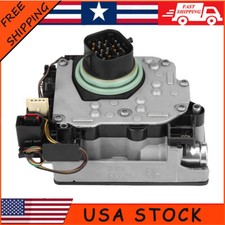
Shop the part for this fix: 62TE shift solenoid block pack
When power and pin 10 check good and the pack itself meters out of spec, this CoreTransmissionParts solenoid block pack replaces the complete solenoid and pressure switch assembly.
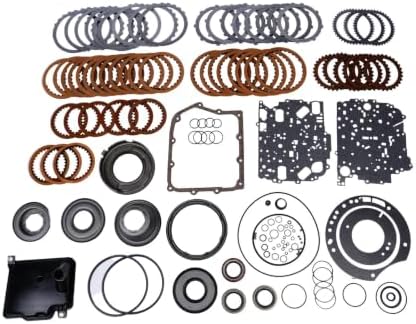
View the 62TE solenoid block pack at CoreTransmissionPartsIf the teardown shows burnt clutches instead, see the 62TE master rebuild kit with pistons or browse all 62TE parts at CoreTransmissionParts.
Need parts for this job?
Our 62TE parts page has solenoid block packs, valve bodies, master rebuild kits and ATF+4 service kits, all on our own checkout. For a shorter overview, see our Chrysler 62TE limp mode page, and for how limp mode works on other units, our transmission limp mode guide. The 62TE takes ATF+4 only; see the transmission fluid spec chart.
FAQ
Why is my 62TE stuck in third gear?
Third is the 62TE's default limp-in gear. When the TCM shuts off power to the solenoid pack, only the normally open UD and 2/4 solenoids pass oil, and that combination is third. Read all transmission codes, and check power and relay codes like P0562 and P0883 before replacing any solenoids.
Can a bad battery or relay put a 62TE in limp mode?
Yes. The solenoids share one feed from the transmission control relay, so low voltage or a relay fault fails every solenoid test at once and sets several solenoid codes together. A 2010 Journey documented in Transmission Digest went into third-gear failsafe from a loose pin at connector C101, with P0562, P0765, P0750 and P0755 stored.
Why does my 62TE start in second gear with no lockup?
That is not true limp mode. When a pressure switch set condition is detected, the TCM inhibits first gear and converter lockup, launches in second and shifts normally. If the condition clears during the same key cycle it returns to normal, and the MIL only comes on after five minutes of substitute operation.
Will clearing the codes get a 62TE out of limp mode?
Restarting or clearing codes will usually give you normal shifting back until the fault is detected again, which can be seconds or days. It does not fix anything. If the fault set above 22 mph, the unit drops to neutral first, so a car that limps repeatedly should not be driven until the cause is found.
Related guides
Sources
- Chrysler LLC, 2009 62TE Automatic Transmission Service Information (Dodge Journey). Backs third gear as the default limp-in gear with its elements and 2.28:1 ratio, the input speed sensor reading turbine speed from the input clutch hub, the output speed sensor reading the compounder output carrier, the two-wire magnetic pickup design, the new O-ring requirement and 12 N-m (105 in-lb) bolt torque, and the Quick Learn requirement after overhaul. documents.cdn.ifixit.com (PDF)
- ATRA Technical Seminar Manual 2008, Chrysler section, 62TE DTC list and Shift Solenoid Pressure Switches (pages 127-129). Backs the code list used in the table, the periodic inductive-spike solenoid test, neutral above 35 km/h (22 mph) versus limp-in below it, the five monitored pressure switches, the second-gear launch with 1st and EMCC inhibited, the five-minute MIL delay, and P0841 needing P0706 to cause limp-in. DTC list (PDF); solenoids and pressure switches (PDF)
- Dana Deeke, "Multiple Causes for P0562," Transmission Digest, October 2018. Backs the 2010 Journey 62TE in third-gear failsafe, the P0562 set condition (transmission control output sense voltage below 10.0 V for 15 seconds), the accompanying P0765/P0750/P0755, and the loose C101 pin fit repair. transmissiondigest.com
- Dana Deeke, "How Do You Know If a Car Is Lying to You?" Transmission Digest, November 2022. Backs the 2014 Ram C/V 62TE in limp mode after a used unit swap, the line pressure code with no turbine speed code, the metal-contaminated turbine speed sensor carried over between units, and the sensor plus line pressure reset fix. transmissiondigest.com
- Wayne Colonna, "62TE Overheat Discoloring: A Brand New Issue," Transmission Digest, January 2022. Backs the 2015 ProMaster in failsafe with P0883 caused by a stuck-on transmission relay and a heat-damaged PDC. transmissiondigest.com
- Solenoid pack and valve body references: Sonnax, "62TE Solenoid Identification and Connector Pin Out"; Jarad Warren, "Saving Some Dollars: Rebuilding 62TE Solenoid Packs," GEARS magazine (ATRA), 2018; and Tory Royce, Sonnax, "All in the Family: Identification and Repair of Chrysler Solenoid Switch Valve Problems." Backs two normally open and four normally closed solenoids with the normally open ones in the UD and 2/4 locations (GEARS), pin 10 as the common solenoid feed from the transmission control relay, the switch valve failsafe, no-lockup and burned OD symptoms, and bore vacuum testing with oversize valve kits. pin-out (sonnax.com); GEARS article; switch valve article (sonnax.com)