Type "62TE P0751" into any code lookup and you get the same answer back: Shift Solenoid A Performance or Stuck Off. Techs then start pricing solenoid packs. The problem is that the answer belongs to a different transmission.
"Shift Solenoid A" is SAE generic language. Chrysler does not use it on this transaxle. The 62TE names its solenoids after the clutches they feed — low/reverse, underdrive, overdrive, 2/4, low clutch and direct clutch — and Chrysler's own enhanced definition of P0751 has nothing to do with any of them. In the Chrysler-specific 62TE code set, P0751 is an overdrive switch input fault: the O/D switch has been read in the pressed or low state for more than five minutes. That is a driver-input circuit, not a hydraulic failure. The strongest confirmation is what is missing: ATRA's published 62TE diagnostic trouble code list does not contain P0751 anywhere. The solenoid circuit codes on this transaxle are P0750, P0755, P075A, P0760, P0765 and P076A, and none of them is P0751. If a generic reader hands you P0751 on a 62TE, it has matched an SAE code number to an SAE description this controller never uses.
So before you order anything, you need to know which list your scan tool was reading from. That one question decides whether you are chasing a switch circuit or a solenoid pack.
Generic Read vs. Enhanced Read
A basic code reader talks to the powertrain controller in generic mode and prints the SAE definition table it ships with. It has no idea it is looking at a Chrysler minivan. So a stored transmission fault gets rendered with whatever generic wording matches the number, and P0751 comes out as "Shift Solenoid A Performance."
On most 62TE applications the transmission control function lives inside the NGC powertrain controller rather than in a separate standalone TCM, so a generic tool will happily show you powertrain codes without ever entering Chrysler enhanced data. Pull the same vehicle with a tool that speaks Chrysler enhanced and you either get a completely different, correctly worded code, or you get the overdrive switch definition above.
Practical rule on the bench: a P0751 on a 62TE that came off a generic reader is a code you have not actually read yet. Re-scan on the enhanced side and write down what it really says. Half the time the enhanced read hands you a P0750, P0765 or P0870, and now you have something you can test.
The Real 62TE Solenoid Code Map
Here is the translation table worth taping inside the toolbox lid. Chrysler splits solenoid faults into two families, and knowing which family you are in tells you whether to grab a meter or a pressure gauge.
Electrical codes (the circuit is wrong)
These are the six solenoid circuit codes exactly as ATRA's published 62TE code list defines them. Note the two alphanumeric codes: a scan tool or code chart that only handles numeric codes will not show you P075A or P076A at all.
- P0750 — L/R (low/reverse) solenoid circuit
- P0755 — 2-4 solenoid circuit
- P075A — LC (low clutch) solenoid circuit
- P0760 — OD (overdrive) solenoid circuit
- P0765 — UD (underdrive) solenoid circuit
- P076A — DC (direct clutch) solenoid circuit
Related electrical faults that get blamed on the pack: P0888 transmission relay always off, P0891 transmission relay always on, P0934 and P0935 line pressure sensor circuit low and high, and P0882 / P0883 TCM power input low and high. A relay or power-feed fault takes down several solenoid circuits at once and reads like a dead pack.
Hydraulic performance codes (the circuit is fine, the clutch did not apply)
- P083A — LC hydraulic pressure test
- P0845 — 2-4 hydraulic pressure test
- P084A — DC hydraulic pressure test
- P0870 — OD hydraulic pressure test
- P0992 — 2-4/OD hydraulic pressure test
Each has a matching pressure switch rationality code, which is the controller saying the switch itself is not behaving: P083B (LC), P0841 (L/R), P0846 (2-4), P084B (DC) and P0871 (OD). Line pressure reports separately as P0868 low and P0869 high.
Gear ratio errors round out the set: P0731 through P0736 cover 1st, 2nd, 3rd, 4th, 5th and reverse, P0729 covers 6th, and 4th prime carries its own code, P1741. The compounder gearset adds P0792, a compounder speed ratio error with no equivalent on a conventional four or five speed.
That second family is the 62TE's actual version of "shift solenoid performance or stuck off." The controller commanded a clutch, then checked a pressure switch to confirm the clutch got oil, and the switch did not agree. If somebody handed you a P0751 and the complaint is a slip or a flare, the hydraulic pressure test failure codes are where the real fault is going to be sitting.
Why the Pressure Switches Are the Whole Story
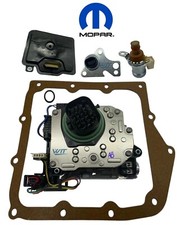
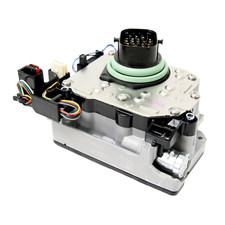
To diagnose any of this you need to know what is actually inside the pack. Per Sonnax's 62TE identification data and Jeff Parlee's write-up in Transmission Digest, the 62TE solenoid pack holds six shift solenoids, one line pressure solenoid, a temperature sensor and five pressure switches. The pressure switches are the same design used in the old 604 pack. The line pressure sensor and the TCC variable force solenoid are not in the pack — they bolt directly to the valve body.
Those five pressure switches are how the controller grades its own work. Command the 2-4 solenoid, then look for the 2-4 pressure switch to close. No confirmation inside the calibrated window and you get P0845, the 2-4 hydraulic pressure test, not a solenoid circuit code, because the wire was never the problem.
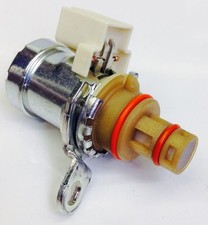
The six shift solenoids look identical but they are not. Two are normally open and four are normally closed:
- Normally open: 2/4 and underdrive
- Normally closed: low/reverse, low clutch, overdrive and direct clutch
Both Sonnax and ATRA give the same field test for sorting them: blow compressed air into the open end. Air blocked means normally closed; air coming out of the holes between the two large O-rings means normally open. The factory paint marks identify the two normally open units, but solvent takes those marks off, so the air test is the one that always works. Get a normally open solenoid into a normally closed position on reassembly and you will build yourself a set of pressure switch and ratio codes that look exactly like a valve body problem.
The Electrical Test That Settles It
Whatever the code said, this ten-minute check tells you whether the pack is in play. Sonnax specifies that all 62TE solenoid resistance tests be performed at approximately 70 degrees F, so let the unit cool if you just drove it onto the rack.
Work at the 23-way case connector. Per ATRA's Gears procedure, pin 10 is the main power pin — leave one meter lead there and probe the component you want with the other:
- Any of the six shift solenoids: about 1.8 ohms
- Line pressure variable force solenoid: about 4.9 ohms
- Pressure switch resistors: around 300 ohms
- Temperature sensor: measured between pins 22 and 23, not through pin 10
Useful pins from the Sonnax pin out while you are in there: pin 12 is line pressure VFS control, pin 3 is TCC VFS control, pin 6 is the line pressure signal from the sensor, and the L/R, 2/4, OD, UD and 4C solenoid controls and their matching pressure switch signals all land on this same connector.
If you want to isolate the controller out of the picture entirely, ATRA's 62TE circuit test does it with the NGC unplugged: key off, unplug the green-face C4 connector, jump fused 12 volts to pin 18 to energize the transmission relay, then check for voltage at the solenoid and switch pins. Their quick reference for that test is roughly 2 ohms on the on/off solenoids, 6 on the line pressure solenoid circuit and 5 on the converter clutch circuit. Wiggle the harness while you watch the meter — an intermittent that only shows during the wiggle is a connector or a chafe, and no parts will fix it.
One 62TE-specific thing to look for: fluid wicking up the internal harness into the case connector. A connector full of ATF gives readings that drift with temperature and sets codes that come and go with the weather.
62TE Shift Solenoid Block Pack 68376696AA → or browse all transmission solenoids
If the Code Really Is the Overdrive Switch
Say you re-scanned on the enhanced side and P0751 came back with Chrysler's wording. Now the diagnosis moves out of the transaxle entirely. The code matures because a switch input has been stuck in one state for over five minutes, which is longer than any driver holds a button. You are looking for:
- A shorted or stuck overdrive / ECO switch, or the range select switch on applications that use one
- The switch signal wire shorted to ground
- Corrosion or a spread terminal at the switch connector
- Rarely, the controller itself — and only after the circuit checks clean
Backprobe the switch signal at the controller and watch the state change as the button is cycled. If the signal never moves, the fault is between the switch and the controller. This repair costs almost nothing, which is exactly why misreading it as a solenoid pack is such an expensive mistake.
Fluid Comes First, Every Time
Before any of the electrical work, check level and condition. The 62TE is an ATF+4 unit, which is Chrysler Material Standard MS-9602. Valvoline's ATF+4 product information sheet lists the typical properties of a fluid built to that standard: about 7.55 cSt at 100°C, 34.13 cSt at 40°C, a viscosity index of 198, a pour point of -48°C and roughly 9,000 cP Brookfield at -40°C. Those numbers are the point — a low-temperature and shear-stable profile the shift calibration is built around.
Do not put a "universal" or "multi-vehicle" ATF in this transaxle while chasing a code. The friction and viscosity profile is what the pressure switches are timed against. Wrong fluid moves the apply timing enough to set hydraulic performance codes on a mechanically healthy unit, and it can just as easily mask a real one.
Check for a Flash Before You Chase Shift Feel
If the customer complaint is harshness rather than a hard code, some of it is calibration. Chrysler service bulletin 21-012-12 REV A (October 31, 2012) covers 2011 through 2013 RT Caravan and Town & Country built with the 3.6L (sales code ERB) and the six-speed automatic (sales code DG2), built before September 26, 2012. It addresses harsh 1-3 upshift in Economy mode, harsh 2-3 upshift in normal mode and a 1-2 upshift clunk after a throttle back-out, and revises the shift schedules for the 1-2, 3-4, 4-5 and 5-6 upshifts plus fifth gear converter lock-up.
Three details from the bulletin that matter on the job: record and repair stored DTCs before flashing, keep battery voltage between 13.2 and 13.5 volts on a proper charger during the reprogram, and afterward clear the variable line pressure counters and run Quick Learn. Skipping the Quick Learn is why a van sometimes comes back shifting worse than it did before the flash.
Repair Order That Does Not Waste Money
- Re-scan with enhanced Chrysler data. Write down the actual code and wording, not the generic translation.
- Fluid level and condition. Dark and burnt is a different conversation before any electrical work.
- Charge the battery, clear the engine side first. Low system voltage produces false electrical diagnoses on solenoid circuits.
- Pull DTC event data. Sets cold points at a connector or a chafe; sets hot under load points inside the pack.
- If the enhanced code is the O/D switch: diagnose the switch circuit and stop there.
- If it is a solenoid circuit code: resistance test at the case connector, 1.8 ohms per shift solenoid at 70°F, one lead on pin 10.
- If it is a hydraulic pressure test failure code: the wiring is likely fine. Pressure test the unit and look at the valve body and the clutch that code names.
- Inspect the case connector and internal harness routing. ATF in the connector, or a previous repair that skipped a routing trough in the pack, are both known 62TE patterns.
- Only then decide on the pack. Replace at 150,000 miles or after a burnt-clutch pressure failure; test and reuse after a sealing ring or hard part failure.
The pack itself comes apart in about fifteen minutes if you want to test or rebuild rather than replace: six T25 or T20 Torx bolts, lift the metal top, pull the six spacers and five pressure switch springs with a magnet, pry the black housing off the base. The line pressure solenoid releases when you press its two retainer rods out from the bottom with a paper clip. There is no dedicated kit, but the 545RFE solenoid rebuild kit fits — same base screen, O-rings and pressure switches. Never use assembly gel on the pressure switches; it sets pressure switch codes until it melts out. Torque the six top plate bolts to 50 in-lb.
Need parts for this job?
Solenoid block packs, pressure switches, valve bodies, filters, pan kits and full rebuild kits for the Chrysler 62TE, priced for shops and shipped from the USA.
Shop 62TE parts →FAQ
Is P0751 a real Chrysler 62TE code?
Not in the way most code lookups present it. The SAE generic definition of P0751 is Shift Solenoid A Performance or Stuck Off, but Chrysler does not use A/B/C solenoid naming on this transaxle. In Chrysler's own enhanced list for the 62TE, P0751 is defined as an overdrive switch input fault - the O/D switch has been read in the pressed or low state for more than five minutes. It is an input code, not a solenoid failure.
What are the actual 62TE shift solenoid codes?
Chrysler names them by the clutch they feed. ATRA's published 62TE code list gives six solenoid circuit codes: P0750 L/R, P0755 2-4, P075A LC, P0760 OD, P0765 UD and P076A DC. Two of those are alphanumeric, so a numeric-only code chart will never display them. Those are the electrical codes. The performance side, where the circuit is electrically fine but the clutch does not apply, sets as a hydraulic pressure test code instead: P083A LC, P0845 2-4, P084A DC, P0870 OD and P0992 2-4/OD.
What resistance should a 62TE shift solenoid read?
About 1.8 ohms per shift solenoid at roughly 70 degrees F, measured at the 23-way case connector with one meter lead on pin 10, the common battery feed. The line pressure variable force solenoid reads about 4.9 ohms and the pressure switch resistors read around 300 ohms. The temperature sensor is the exception and is measured between pins 22 and 23.
How do I tell a normally open 62TE solenoid from a normally closed one?
Blow compressed air into the open end of the solenoid. If the air is blocked it is normally closed; if air comes out of the holes between the two large O-rings it is normally open. Two of the six shift solenoids are normally open - the 2/4 and the underdrive - and the other four, low/reverse, low clutch, overdrive and direct clutch, are normally closed. They look identical, so this test matters on reassembly.
Do I have to buy a whole solenoid pack?
Not automatically. ATRA's guidance is to replace the pack outright at 150,000 miles or more, or when a pressure failure burnt multiple components and pushed clutch material through the hydraulics. For a sealing ring, planet or hard part failure, test the pack and reuse it. The pack comes apart in about fifteen minutes and individual solenoids can be swapped from a spare.
Sources
- ATRA — Chrysler 62TE Diagnostic Trouble Code list, ATRA technical manual pages 127–128 (2008). Backs the full 62TE code set used here: the six solenoid circuit codes P0750 (L/R), P0755 (2-4), P075A (LC), P0760 (OD), P0765 (UD) and P076A (DC); the hydraulic pressure test codes P083A (LC), P0845 (2-4), P084A (DC), P0870 (OD) and P0992 (2-4/OD); the pressure switch rationality codes P083B, P0841, P0846, P084B and P0871; line pressure codes P0868 and P0869; relay codes P0888 and P0891; line pressure sensor codes P0934 and P0935; TCM power codes P0882 and P0883; gear ratio errors P0731–P0736, P0729 and P1741 (4th prime); and the compounder speed ratio error P0792. It also backs the central correction in this article by omission: P0751 does not appear anywhere in ATRA's 62TE code list. ATRA 62TE DTC list, page 128 (PDF) · ATRA 62TE manual page 124 (PDF)
- Sonnax — "62TE Solenoid Identification & Connector Pin Out," January 1, 2013. Backs the pack composition (six shift solenoids, one line pressure solenoid, a temperature sensor and five pressure switches), the fact that the line pressure sensor and TCC variable force solenoid bolt directly to the valve body and are not part of the pack, the requirement that all solenoid resistance tests be run at approximately 70 degrees F, the compressed-air method for identifying normally open versus normally closed solenoids, and the 23-way case connector pin out (pin 10 battery feed from the transmission control relay, pin 12 line pressure VFS control, pin 3 TCC VFS control, pin 6 line pressure signal, pins 22 and 23 trans oil temp signal and ground). sonnax.com
- Gears Magazine (ATRA) — "Saving Some Dollars: Rebuilding 62TE Solenoid Packs," Jarad Warren, October 19, 2018. Backs every resistance figure and the teardown: all solenoids 1.8 ohms except the line pressure solenoid at 4.9 ohms, pressure switch resistors around 300 ohms, pin 10 as the common test point with pins 22 and 23 for the temperature sensor, the T25 or T20 Torx disassembly, pressing the line pressure solenoid retainer rods out with a paper clip, the 545RFE solenoid rebuild kit interchange, the warning against assembly gel on the pressure switches, the 50 in-lb top plate torque, and the replace-versus-rebuild guidance at 150,000 miles or after a burnt-component pressure failure. gearsmagazine.com
- Transmission Digest — "Solenoid-Pack Information for the Chrysler 62TE," Jeff Parlee (Sonnax TASC Force), September 1, 2011. Backs the named list of the six shift solenoids and their states — low/reverse normally closed, 2/4 normally open, low clutch normally closed, underdrive normally open, overdrive normally closed, direct clutch normally closed — the note that the pressure switches are the same design used in the 604 pack, pin 10 as the power feed for all solenoids, and the warning that failing to route the pack wiring through every clip and trough results in damaged wiring. transmissiondigest.com
- ATRA — "Chrysler 62TE 2007-Up Solenoid and Switch Circuit Test with the NGC Disconnected," technical manual page 188, 2011. Backs the controller-isolated circuit test: key off, unplug the green-face C4 NGC connector, jump fused 12 volts to pin 18 to energize the transmission relay, then check voltage at the solenoid and switch pins, along with the quick-reference values of approximately 2 ohms on the on/off solenoids, 6 on the line pressure circuit and 5 on the converter clutch circuit. atracom.blob.core.windows.net
- Chrysler Group LLC Service Bulletin 21-012-12 REV A, "Flash: Transmission Shift Quality Improvements," October 31, 2012 (NHTSA document library). Backs the software section: coverage of 2011 through 2013 RT Caravan and Town & Country with the 3.6L (sales code ERB) and six-speed automatic (sales code DG2) built before September 26, 2012; the harsh 1-3 upshift in Economy mode, harsh 2-3 upshift in normal mode and 1-2 upshift clunk after throttle back-out symptoms; the revised 1-2, 3-4, 4-5 and 5-6 upshift and 6-4P, 6-5 and 5-4 downshift schedules plus fifth gear converter lock-up changes; the instruction to record and repair stored DTCs before flashing; the 13.2 to 13.5 volt requirement during reprogramming; and the post-flash steps of clearing the variable line pressure counters and performing Quick Learn. static.nhtsa.gov
- Valvoline — ATF+4 Transmission Fluid product information sheet, October 3, 2024. Backs the fluid section: ATF+4 is built to Chrysler Material Standard MS-9602 and is the factory-fill specification for 1998-and-later Chrysler automatic transmissions and transaxles, with typical properties of 7.55 cSt at 100°C, 34.13 cSt at 40°C, viscosity index 198, pour point -48°C and about 9,000 cP Brookfield viscosity at -40°C. valvolineglobal.com