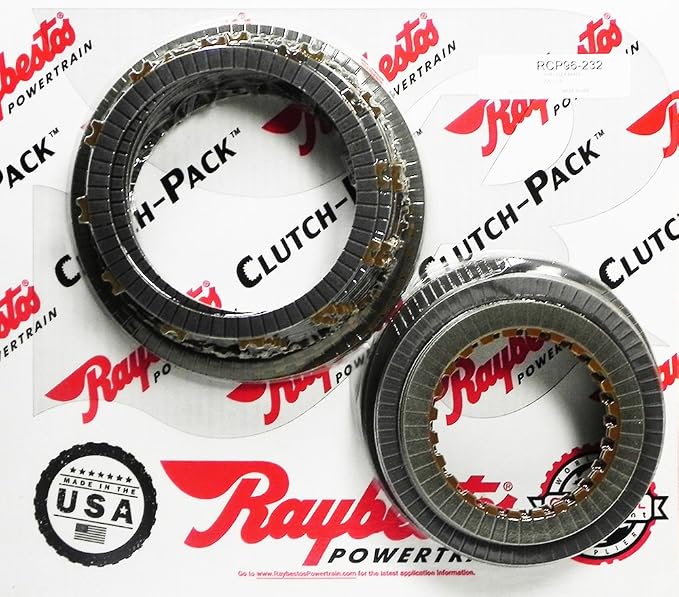
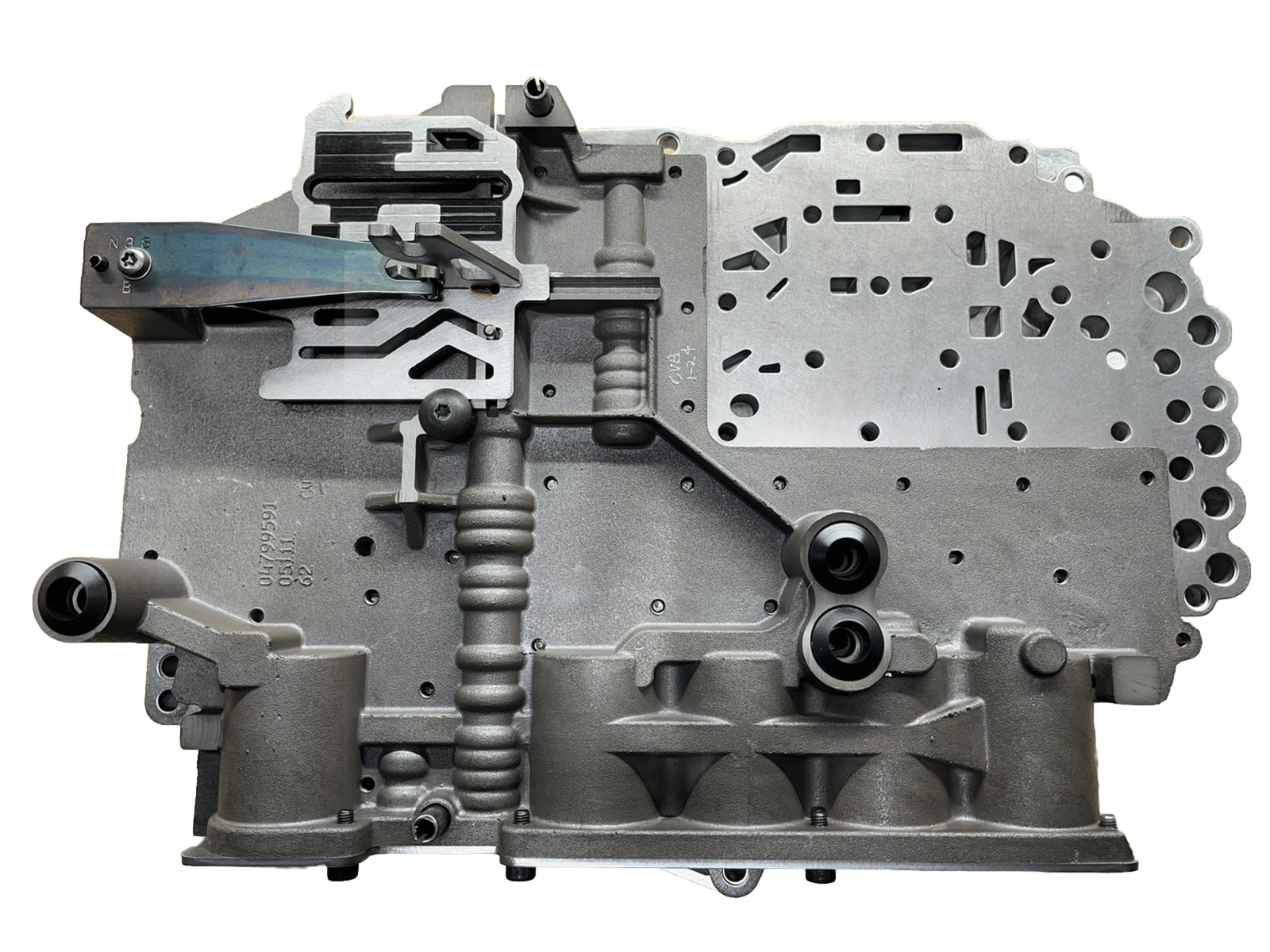
On the 68RFE, "3-4 clutch" and "overdrive clutch" are the same clutch pack. The 3-4 upshift is the shift that applies the overdrive (OD) clutch, and it is the single most common internal failure point on this transmission — in gas or diesel trucks, stock or modified. If your 68RFE flares, bangs, or won't hold 4th through 6th, you're almost certainly looking at this clutch pack and the hydraulic circuit that feeds it, not a random electrical gremlin.
This isn't a guess. Sonnax's own teardown writeup on the 68RFE, published in Transmission Digest, names the overdrive clutches as the most common failure point in the unit, with real weak points even at stock power levels.[1] Understanding why it fails, and what actually causes it underneath the burnt frictions, is the difference between a repair that holds and one you're redoing in a year.
Why the 3-4/Overdrive Clutch Is the Weak Link
The 68RFE is a six-speed derived from the 45RFE/545RFE family, originally sized for much lighter applications before Chrysler put it behind the 6.7L Cummins in 2007. The overdrive clutch pack inherited from that lineage simply was not built with the same margin as the rest of the unit.
Two design facts explain almost everything that follows. First, the OD clutches are single-sided, and the steel core is only 0.034 inch thick — compare that to the 0.080-inch steels in the direct clutch pack of a 4L80-E, a transmission rated for similar or lower torque.[1] Thin steels have very little mass, so they have almost no tolerance to heat and dissipate it poorly. Once they heat past a threshold they distort, which shrinks clutch clearance, keeps the pack from fully releasing, and the clutches cook from there.
Second, the stock overdrive clutch housing is not well supported at the top, which lets it flex under clutch apply load and opens clearances beyond spec under hard use.[1] Add a tuner, bigger tires, or regular towing near GVW, and that flex gets worse. This is why the OD clutch is usually the first thing to go when someone adds power to a 6.7 Cummins without touching the transmission — the clutch pack and housing were never the strong point to begin with.
Symptoms of 3-4/OD Clutch Failure
The progression is fairly predictable if you've seen a few of these come through the shop:
- Flared 3-4 shift. RPM rises for a beat before the truck picks up speed, as if the transmission briefly slipped into neutral between 3rd and 4th.
- Delayed or banging 3-4 upshift. The shift either takes longer than normal to engage, or slams in hard once it finally catches.
- Slip or no hold in 4th, 5th, or 6th. Because all three of those ranges rely on the same OD clutch being applied, losing the clutch pack can take out the top half of the gearbox at once.
- P0871 on the scan tool. This is the code most often tied to the overdrive circuit on a 68RFE — more on exactly what it means below.
- Intermittent neutral or limp mode under load, especially on a hot transmission after sustained highway driving or towing.
We cover the electrical side of this diagnosis in detail, including scan tool PIDs and the pressure switch window, in our dedicated P0871 breakdown. This article focuses on the mechanical and hydraulic root cause behind that code.
The Root Cause Underneath the Burnt Clutches: Solenoid Switch Valve Leaks
The clutch pack is the part that shows visible damage, but it is rarely the whole story. Sonnax's diagnostic writeup on the P0871 code identifies worn solenoid switch valve bores and the outer switch valve plugs as the cause of P0871 "about 90% of the time" in their shop experience — treat that figure as one vendor's field data rather than an independently audited statistic, but the mechanism it describes lines up with what shows up on the bench.[2]
Here's the mechanism. The solenoid switch valve and its plugs cycle every time the transmission shifts, and over tens of thousands of cycles that constant motion wears the aluminum valve body casting around them. Worn bores and plugs create crossleaks into and out of the OD circuit.[1] Those crossleaks bleed off clutch apply pressure, which lowers the OD clutch's holding force. A clutch that can't hold full force under load will slip, generate heat, and burn — which is the "transmission ate its overdrive clutch" story almost every 68RFE owner with miles on the truck eventually hears.
The OD pressure switch itself is calibrated to close around 22 psi and reopen around 11 psi.[2] In 4th through 6th gear, the OD clutch should be applied and the switch should read closed. If a crossleak lets apply pressure sag below that 22 psi threshold, the switch opens, the TCM reads a fault it isn't expecting for that gear range, and P0871 sets — sometimes forcing the transmission straight to neutral as a protective measure.[2]
Other things that can trigger the same code or contribute to the same pressure loss, per Sonnax's diagnostic notes: a missing or out-of-place checkball in the valve body, a loose solenoid pack bolt or missing pressure port plug, the wrong separator plate or gasket from a prior repair, a damaged lip seal on the pressure switch itself, and in rare cases a failed solenoid driver inside the transmission control module.[2] None of those are clutch problems, but all of them can look like one until you've actually checked the valve body.
How to Diagnose It on the Bench
Don't skip straight to a clutch pack order. Work the diagnosis in this order so you don't pay for parts you didn't need:
1. Pull codes and check the gear-by-gear pattern
Confirm P0871 and note when it sets — constantly, only in Drive, or only under load. Sonnax's guidance: in 1st through 3rd the OD switch should read open, and an intermittent closed reading in 2nd or 3rd points at the switch valve assembly itself; in 4th through 6th the switch should read closed, and an open reading there is what typically sets the code.[2]
2. KOER test in Reverse, then watch live data in Drive
With the selector in Reverse, all pressure switches should read open. Gently flex the harness and connectors while watching scan data to rule out a wiring fault before you touch the valve body.[2]
3. Vacuum test the solenoid switch valve bore
A vacuum test on the bore is the reliable way to find the location and severity of a crossleak without guessing.[1] If the bore shows erosion or porosity in the aluminum casting, it may not be repairable with a standard plug and will need an oversized or sleeved fix.
4. Verify line pressure and the pressure sensor separately
Low line pressure will also starve the OD clutch and produce the same slip and flare symptoms, independent of any valve body wear. Check main line pressure at idle and under a stall test in Drive, and confirm the pressure sensor itself isn't the thing lying to you — a failed sensor can mask a real pressure problem on the scan tool.
5. Scope test if the fault is intermittent on the road
Use a scope with at least four channels and 100V capability plus a pressure transducer. If the switch closes before the signal wire voltage changes, the fault is hydraulic. If the signal drops with no corresponding pressure change, the fault is electrical — a wire, connector, or TCM driver.[2]
The Fix: What Actually Holds
A clutch-and-steels swap alone tends to be a short-lived repair if the switch valve bore and housing flex that caused the failure in the first place aren't also addressed. Three things go together on a real fix:
Rebuild the clutch pack with upgraded components, not a like-for-like OE swap. Thicker steels and better frictions buy real margin over the factory 0.034-inch steel cores.[1] Most shops pair this with an upgraded overdrive clutch housing — the kind of fix Sonnax's own Smart-Tech housing kit (OEM-replacement part number 72960-18K) is built around, since it's designed to hold a taller pack with thicker steels and stop the top-of-housing flex that opens clearances under load.
Repair or replace the valve body, not just the clutch pack. If the solenoid switch valve bore shows wear, ream and fit an oversized plug, or replace the valve body outright if the casting is too far gone to repair reliably. Reassembling a worn bore and hoping it holds is how you end up redoing the same job in another 20,000 miles.
Check the stator overdrive dribbler valve. It is easy to miss because it lives on the converter side, but Sonnax's three-area troubleshooting guide for RFE overdrive failure puts it right behind the switch valve. The dribbler times OD clutch apply: a restricted dribbler delays apply and lets the pack drag, and a leaking one lets too much pressure into the circuit so the clutches stay slightly applied.[6] Either one burns a fresh clutch pack no matter how carefully it was assembled.
Run the fast learn after the repair. Sonnax notes that some professional scan tools display each clutch volume index, which helps confirm which pack was slipping, and that a fast learn should follow any repair so the transmission is recalibrated for the new clutches.[6]
Check the solenoid pack while you're in there. A damaged solenoid driver or a worn solenoid in the pack can both masquerade as a hydraulic fault and contribute to one, so it's worth testing or replacing the pack as part of the same repair rather than coming back into the truck a second time.
Need parts for this job?
Overdrive clutch pack rebuild kits, remanufactured valve bodies, and solenoid kits for the 68RFE — in stock, shipped fast from the USA.
Shop 68RFE parts →Fluid Matters Here Too
The 68RFE takes ATF+4 only — Stellantis/Mopar's own owner's manual for the Ram 2500/3500 diesel states "only use ATF+4 Automatic Transmission Fluid" and recommends Mopar ATF+4 specifically.[3] Degraded or wrong-spec fluid lowers the friction coefficient the OD clutch pack depends on to hold, which accelerates exactly the kind of slip-and-burn failure described above. If you're already pulling the pan for a clutch or valve body repair, that's the moment to install fresh ATF+4 and a new filter regardless of what the service interval says. We break down exact capacity and change intervals in our 68RFE fluid type and capacity guide.
FAQ
What does a 68RFE 3-4 clutch failure feel like?
Early on it feels like a flare on the 3-4 upshift: the engine RPM rises for a beat before the truck actually picks up speed, as if the transmission briefly went to neutral between gears. As the overdrive clutch pack burns further, the 3-4 shift gets delayed, then starts banging in hard, and eventually the transmission will not hold 4th, 5th or 6th gear at all because those ranges all depend on the same clutch.
What code sets when the 68RFE overdrive clutch fails?
P0871, Output Speed Sensor/OD Pressure Switch Circuit High, is the code most often tied to overdrive clutch problems on the 68RFE. The OD pressure switch is wired to close around 22 psi and reopen around 11 psi; when clutch apply pressure cannot hold inside that window because of a crossleak or worn switch valve bore, the TCM reads the mismatch and sets P0871, sometimes forcing the transmission to neutral.
Can you keep driving a 68RFE with overdrive clutch failure?
You can drive it in a lower gear range if the TCM has not already defaulted to limp mode, but every mile you drive on a slipping overdrive clutch pack generates more heat and burns the frictions further, which usually spreads damage to the clutch drum and housing. Most shops recommend getting it on a lift for a pressure and vacuum test as soon as the flare or delayed shift shows up, before it turns into a full teardown.
Is overdrive clutch failure common on the 68RFE?
Yes. Sonnax's own teardown writeup in Transmission Digest calls the overdrive clutches the most common failure point on the 68RFE, even at stock power levels, because the steel cores are only 0.034 inch thick against 0.080 inch in a comparable 4L80-E clutch pack. Add a tuner, bigger tires, or trailer weight and the failure shows up sooner.
Does fixing the clutch pack alone fix a 68RFE overdrive failure for good?
Usually not by itself. The clutch pack is the part that visibly burns, but the solenoid switch valve plugs and bore wear that cause the pressure crossleak, and the unsupported OE housing that flexes under apply, are the root causes behind most repeat failures. A repair that only swaps frictions and steels without addressing the switch valve bore and the housing will often fail again within another 20,000 to 40,000 miles.
Related 68RFE guides
Sources
- Transmission Digest — "68RFE Overdrive Clutch Failure," by Sonnax, August 3, 2020. Backs the overdrive clutches as the 68RFE's most common failure point, the 0.034 in. single-sided steel core versus 0.080 in. in a 4L80-E direct pack, the unsupported OE overdrive housing flex, and the solenoid switch valve plug crossleak mechanism. transmissiondigest.com
- Sonnax Tech Resources — "Dodge RFE Pressure Switch Diagnosis, Code P0871." Backs the OD pressure switch's approximately 22 psi close / 11 psi reopen window, the gear-range switch state pattern used to diagnose the code, the KOER Reverse test, the scope-test method for separating hydraulic from electrical faults, and the list of secondary causes (checkballs, loose solenoid pack bolts, wrong gaskets, switch lip seal damage). sonnax.com
- Stellantis / Mopar — 2022 Ram 2500/3500 Owner's Manual, Chassis Fluids and Lubricants. Backs the ATF+4-only fluid requirement for the 68RFE. vehicleinfo.mopar.com
- Transmission Digest — "The causes of the P0871 fault code on the 68RFE," Builder's Bench with ATSG, July 8, 2025. Backs the real-world shop case of P0871 behavior changing between pre- and post-rebuild, and confirms the OD pressure switch should stay open until the transmission reaches 4th gear. transmissiondigest.com
- Sonnax Tech Resources — "Maximize 68RFE Overdrive Clutch Capacity & Squawk Resistance with the Sonnax Smart-Tech Housing." Backs the Smart-Tech Overdrive Clutch Housing Kit (current part number 72960-18K) as the upgraded-housing fix for OD clutch burnup and 3-4 shift squawk. sonnax.com
- Sonnax Tech Resources — "Troubleshooting RFE Overdrive Clutch Failure: Three Key Areas to Check," Caleb Perham, July 13, 2023. Backs the stator overdrive dribbler valve failure modes (restricted = delayed apply and drag, leaking = partial apply), the clutch volume index on professional scan tools, and the fast learn after any repair. sonnax.com