Every 68RFE in a RAM 2500 or 3500 Cummins has two external fluid lines running from the transmission case to a cooler and back. They are steel tube with push-connect fittings on at least one end, they run through an engine bay that sees real heat cycling, and on diesel trucks they also pass through a thermal bypass valve that fails in a way that gets misdiagnosed as a line leak more often than it should. Before you pull a line off this transmission, you need to know which fitting type you are actually dealing with and whether the "leak" you are chasing is a line at all.
For more on Dodge and RAM transmissions, visit our Dodge transmission hub and RAM transmission hub.
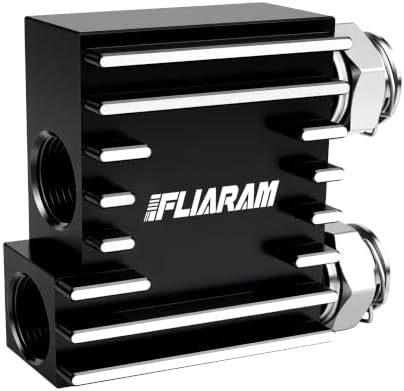
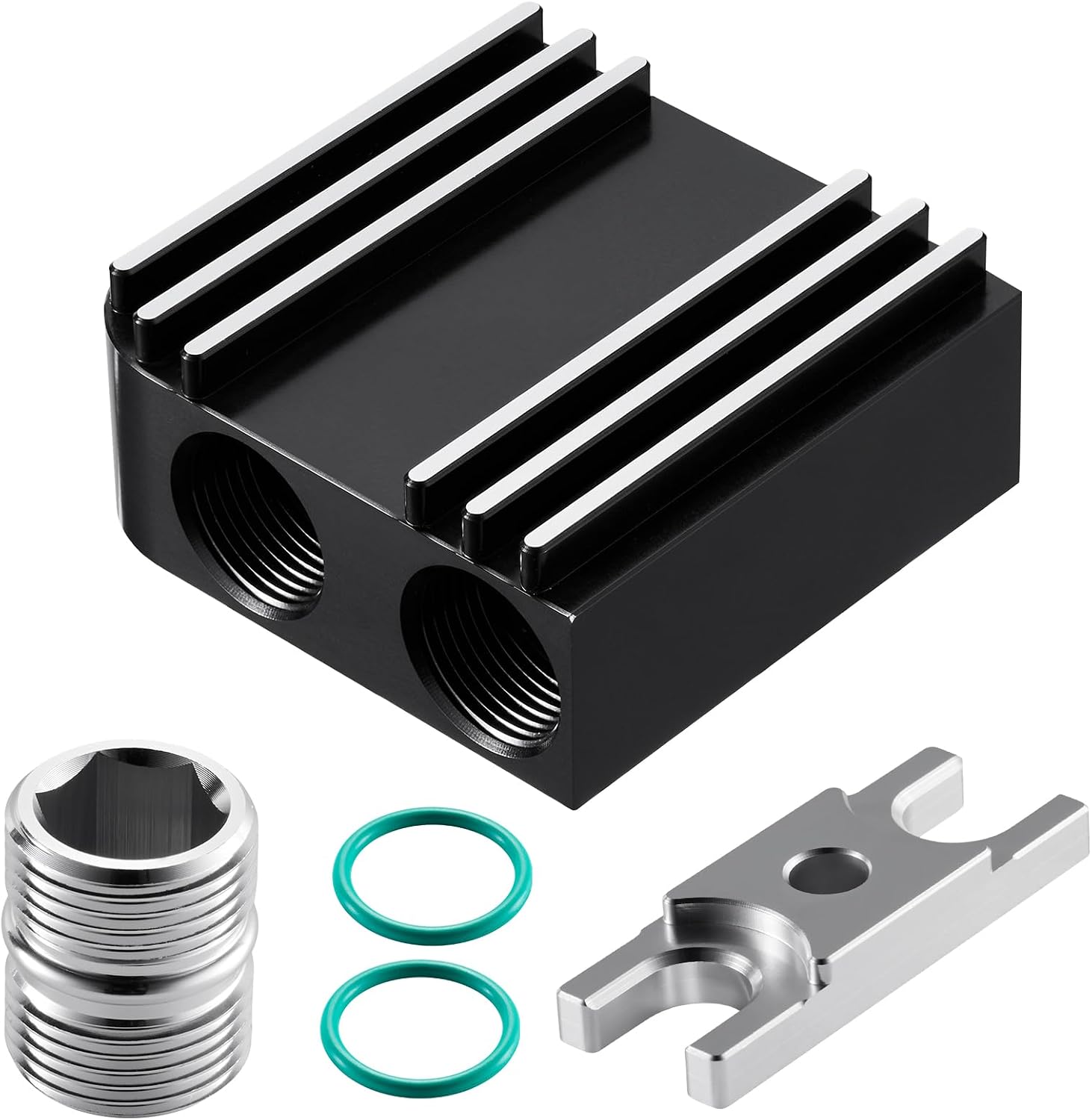
The Fitting Standard These Lines Actually Use
Most 68RFE cooler lines terminate in push-connect fittings built to SAE J2044, the SAE International standard that covers quick-connect couplings for automotive fluid and vapor lines. A J2044 fitting is a plastic retaining collar with an internal O-ring seated over a machined tube end -- you do not thread it off, you release the collar with a dedicated disconnect tool and pull the line straight out. Trying to pry a J2044 collar apart with a screwdriver is the single most common way technicians crack the collar and create a leak that was not there before the repair started.
The case-side connection is less standardized than the cooler-side connection. Mopar's own parts catalog lists more than one cooler line-to-case fitting for the 68RFE family depending on model year and case casting -- for example, Mopar part 52119547AA is a 1/2-inch male-thread-to-3/8-inch quick-connect adapter used on some Ram applications, and parts sellers explicitly warn that 2013-model-year trucks can carry either of two different case thread sizes depending on which exact transmission casting is installed. Do not assume your truck matches a parts-counter photo. Pull the old fitting, measure the thread, and match it before you order.
Diagnose the Leak Before You Touch a Line
Three different failures on this transmission all present as "fluid near the cooler lines," and only one of them is actually the lines:
1. The Push-Connect Collar or O-Ring
The internal O-ring in a J2044 collar hardens with age and heat. When it does, fluid seeps out around the collar rather than spraying -- it shows up as a wet film and accumulated grime rather than an active drip, and it gets worse when the fluid is hot and thin. This is the actual "line" failure, and it is fixed by releasing the collar with the correct tool, inspecting the tube end for nicks or corrosion, and reconnecting with a fresh factory-style O-ring rather than reusing the old one.
2. The Case-Side Threaded or Quick-Connect Adapter
Owners on Ram forums report this exact failure on 68RFE trucks: a leak at the fitting where the line meets the transmission case, where a replaced O-ring does not hold once the fluid is back up to operating temperature. On teardown, the usual cause is sand, moisture, and corrosion that worked into the coupling over years of road exposure, which pits the sealing surface enough that a new O-ring alone will not seal it. If the sealing surface is pitted, the fix is a new fitting with a fresh sealing surface, not another O-ring on the old one.
3. The Thermal Bypass Valve -- No External Leak At All
This is the one that costs people the most diagnostic time. The 68RFE uses an in-line thermal bypass valve (OE part numbers 55111005AC and 68192000AA on affected applications) that is supposed to route fluid around the cooler when the transmission is cold and open the cooler circuit once fluid is up to temperature. Sonnax documents that this valve is a known failure point: it sticks in the bypass/recirculation position, fluid keeps circulating only inside the transmission, and the unit overheats with no fluid loss and no visible leak anywhere near the lines. If you have rising transmission temperature, normal fluid level, and dry fittings, stop looking at the lines and check the bypass valve. Sonnax sells a drop-in eliminator kit (72760-02K) that replaces the internal valve guts and forces permanent flow-through to the cooler while retaining a pressure bypass if the cooler itself gets blocked.
If the bypass valve checks out and the truck still runs hot, measure cooler flow before you buy anything else. Sonnax measured a stock-programmed 68RFE in a Ram 2500 6.7L at about 1.3 GPM of cooler flow at idle, and saw it fall to 0.5 GPM or lower once a tune raised desired line pressure in Drive at a stop from 60–70 psi to 100–105 psi, because the pressure regulator valve then sits where only a small undercut feeds the lube and converter circuits (per Sonnax's March 2021 RFE stalling and overheat article). On a rebuilt unit, also confirm the pump cover and spacer plate match: Transmission Digest's August 2012 RFE pump write-up shows that a first-design plate on a third-design cover connects to-cooler pressure to a 0.101-inch orifice that dumps into the sump, a mismatch it ties to overheating and planetary failures.
Thermal bypass valve instead of a line leak?
If the diagnosis points at the bypass valve rather than the lines themselves, we stock direct replacements for both the 2013-2018 and 2019-2024 case designs.
Shop 68RFE cooler and bypass parts →A Different Leak Path: Know the Dipstick Tube Recall
Before you commit to a cooler line repair, rule out one more thing specific to this transmission. NHTSA recall campaign 20V043000 covers roughly 87,000 model-year 2019-2020 Ram 2500 and 3500 trucks with the 68RFE six-speed, where internal pressure and heat can push transmission fluid out of the dipstick tube. The fluid can reach the turbocharger or another ignition source in the engine bay, which is why NHTSA classified it as a fire risk rather than a routine leak. The factory remedy was a transmission valve body separator plate replacement plus a powertrain control module reflash -- not a cooler line fix. If you are working on a 2019-2020 truck in that production window and fluid is tracking down from above the transmission rather than from the cooler line fittings below it, check the dipstick tube and confirm whether the recall was already performed on that VIN before you spend time on the lines.
Replacing the Lines: Step by Step
- Confirm the fluid is cool. ATF+4 under line pressure at operating temperature will find any gap in your protection. Let the truck sit, or work on it cold.
- Identify both fitting types before ordering parts. Photograph the cooler-side connection and the case-side connection separately. They are frequently not the same fitting style on the same truck.
- Release push-connect fittings with a disconnect tool sized to the collar, not a screwdriver or pliers. Squeeze or seat the tool around the collar per its design, then pull the line straight out. A cracked collar means you are now replacing the fitting, not just the O-ring.
- Inspect the tube end. Nicks, corrosion, or an out-of-round tube end will not seal against a new O-ring either. If the tube end is damaged, replace that section of line rather than reusing it.
- On the case side, back off the threaded adapter or release the quick-connect, and inspect the sealing boss on the case. Light surface corrosion can be cleaned up; pitting deep enough to see with a fingernail test usually means a new fitting, not just a new O-ring.
- Reassemble with fresh O-rings rated for ATF service, lightly lubricated with clean ATF+4 -- never a petroleum grease that is not compatible with the seal material. Push-connect fittings seat with a positive click; always pull-test the joint by hand after reconnecting.
- Route the new line exactly as the old one was routed, including every factory clip and standoff. Lines that lose their clips sag, contact hot components, and fail again at a new point.
- Refill with ATF+4 and check the level per the published cold/hot check procedure rather than assuming the amount drained equals the correct refill -- fluid stays trapped in the cooler and lines even with the pan dropped.
- Run the truck through all gears, recheck every fitting you touched after it reaches full operating temperature, and look for the thin film of fresh fluid that signals a seep before it becomes a drip.
Fluid: ATF+4, No Substitutions
Stellantis specifies ATF+4 for the 68RFE across the Ram 2500/3500 diesel lineup -- it is the only fluid listed in the owner's manual's maintenance plan for this transmission, and the manual sets the normal-service fluid and filter change at 120,000 miles (96 months), dropping to 60,000 miles (48 months) for police, fleet, or frequent-trailer-towing use. After any cooler line repair, use fresh ATF+4 for the refill. A different ATF changes the friction coefficient the valve body's adaptive shift logic was tuned around, and on a truck that just had its cooler circuit opened up, that is the wrong moment to introduce a fluid-compatibility variable into the diagnosis.
Preventing the Repeat Leak
Most 68RFE cooler line failures are not random -- they cluster at the same two or three points on every truck because the routing and the exposure are identical truck to truck. Before you call the job done:
- Reinstall every factory routing clip. A line that is free to vibrate against a bracket or heat shield will wear through at that contact point long before the rest of the line fails.
- Check for proximity to exhaust components and confirm any factory heat shielding is back in place. Diesel trucks route these lines closer to sources of radiant heat than a comparable gas truck.
- If the truck tows regularly or runs a tuner, treat the thermal bypass valve as a wear item worth checking at the same service interval as the fluid, not just when a symptom shows up.
- Document the fitting part numbers you actually used. The next person working on this truck -- possibly you, in three years -- will thank you for not having to guess twice.
FAQ
Can you replace 68RFE cooler lines without pulling the transmission?
Yes. The cooler lines run externally from the transmission case to the cooler and back, so both the quick-connect ends and the case-side fitting are accessible from under the truck. The transmission only has to come out if the leak turns out to be a cracked case boss or a stripped fitting thread rather than the line or O-ring itself.
What kind of fitting does the 68RFE use for cooler lines?
Most 68RFE cooler lines use SAE J2044 push-connect fittings, a plastic collar with an internal O-ring that locks onto a tube end and is released with a collar-release tool rather than a wrench. The case-side connection varies by year: some trucks use a quick-connect at the case, others use a threaded adapter fitting with its own O-ring, and Mopar's parts catalog lists more than one case thread size depending on model year, so confirm which one you have before ordering parts.
Is a cooler line leak the same thing as a thermal bypass valve failure?
No, and mixing the two up wastes a lot of diagnostic time. A cooler line leak is fluid escaping at a fitting, O-ring, or a chafed section of line. A thermal bypass valve failure is the OE valve sticking in the recirculation position so fluid never reaches the cooler at all -- no external leak, just rising transmission temperature. Sonnax documents this as a known failure mode on the 68RFE and sells a drop-in eliminator kit to fix it without replacing the whole valve body casting.
What fluid do you refill a 68RFE with after a cooler line repair?
ATF+4 only. Stellantis specifies ATF+4 for the 68RFE in the Ram 2500/3500 owner's manual, and using a different fluid changes friction and viscosity characteristics the unit's adaptive shift logic was calibrated around. After any cooler line service, check the fluid level per the manual's cold/hot check procedure rather than assuming the drained amount is the full fill amount, since some fluid stays trapped in the cooler and lines.
Why do 68RFE cooler lines fail more on Cummins diesel trucks than you'd expect?
Heat cycling and engine bay packaging. The lines run close to the engine and, on some routings, near the turbocharger, so the plastic quick-connect collars see more thermal cycling than a gas truck's lines would. Road salt and debris also reach the fittings directly since there's no splash shield over most of the run, which is exactly the corrosion pattern owners report at the case-side coupling.
If your 68RFE is leaking from somewhere other than the cooler lines, our common fluid leak points guide covers the rest of the usual suspects.
Doing this job this week?
Thermal bypass valves, transmission coolers, filters and ATF+4 -- all in one place, shipped fast from the USA.
Shop 68RFE parts →Sources
- SAE International — Surface Vehicle Standard J2044, "Quick Connect Coupling Specification for Liquid Fuel and Vapor/Emissions Systems." Backs the push-connect fitting design these cooler lines use: a plastic retaining collar locking over a machined tube end, released with a dedicated disconnect tool rather than a wrench. sae.org
- Sonnax — Thermal Bypass Eliminator Kit, Part No. 72760-02K, product page. Backs the 68RFE's listed thermal bypass valve failure mode (sticking in the recirculation position, causing overheating with no external leak), the affected OE part numbers 55111005AC and 68192000AA, and the eliminator kit's drop-in fix with retained pressure bypass. sonnax.com
- NHTSA — Recall Campaign 20V043000, Acknowledgment and Part 573 Safety Recall Reports, 2020. Backs the recall scope (approximately 87,000 model-year 2019-2020 Ram 2500/3500 trucks with the 68RFE), the dipstick-tube fluid leak defect, the fire risk from fluid contacting the turbocharger, and the valve body separator plate and PCM reflash remedy. static.nhtsa.gov
- Stellantis / Mopar — 2022 Ram 2500/3500 Owner's Manual, Maintenance Plan — Diesel Engine. Backs the ATF+4-only fluid requirement for the 68RFE and the 120,000-mile/96-month normal-service fluid and filter interval, dropping to 60,000 miles/48 months for police, fleet, or frequent-trailer-towing use. vehicleinfo.mopar.com
- Summit Racing — Mopar Replacement Quick Connect Transmission Fitting, Part No. 52119547AA, product listing. Backs the specific 1/2-inch male-thread-to-3/8-inch quick-connect case fitting part number and the fitment caution that 2013-model-year trucks can carry either of two different case thread sizes. summitracing.com
- Sonnax — Resolving Stalling & Overheat Issues After Performance Tuning on RFE Transmissions (March 11, 2021). Backs the RFE cooler flow figures (about 1.3 GPM at idle stock versus 0.5 GPM or lower tuned), the line pressure numbers and the pressure regulator valve explanation. sonnax.com
- Transmission Digest — Dodge 45/545/68RFE: Design Changes in Lube Circuit and Pump Casting (August 2012). Backs the pump cover and spacer plate design changes in the to-cooler circuit and the 0.101-inch orifice mismatch that causes overheating and planetary failures. transmissiondigest.com