Look up the 68RFE pan bolt torque and you will find two different answers, and both of them come straight from FCA. That is not a typo floating around the internet — it is two separate factory documents written for two different jobs, three years apart, and nobody reconciled them for the person doing a routine pan drop. Here is both numbers, why they do not match, and which one to use.


The Quick Answer
| Procedure | Torque | Pattern | Sealing method |
|---|---|---|---|
| TSB 21-024-17 — pan reseal for a leak (2017) | 12 N·m (105 in-lb) | Not specified; use crisscross | Mopar RTV sealant, part 05010884AD |
| Recall W03 / NHTSA 20V-043 — valve body service (2020) | 9 N·m (80 in-lb) | Crisscross, explicitly stated | New gasket if truck is over 501 miles or 6 months old from build |
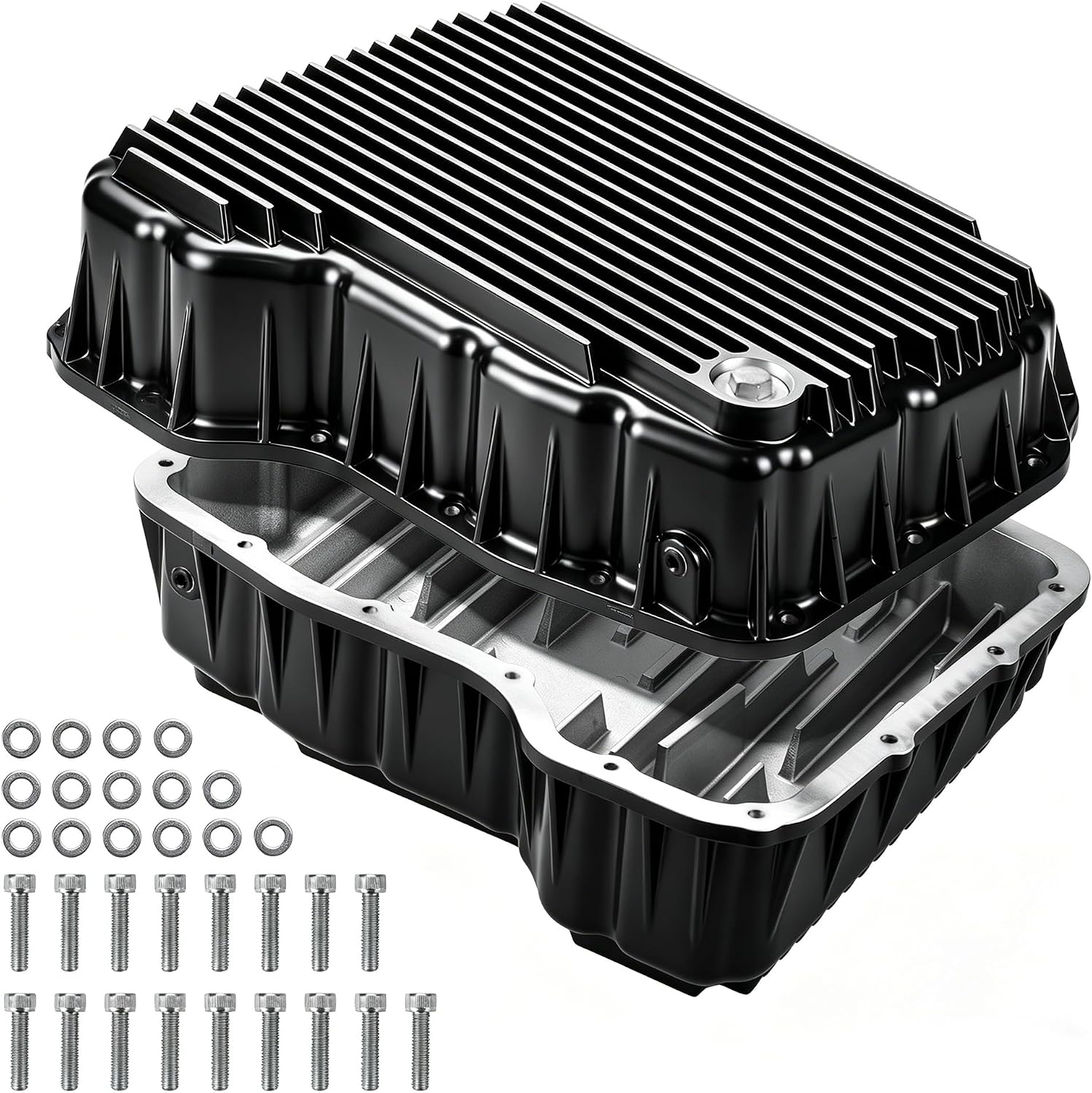
If you only remember one number, remember the ceiling: do not go past 105 in-lb. These 15 bolts thread straight into the aluminum transmission case. There is no separate flange, no steel insert, nothing between the bolt threads and soft cast aluminum. Go a little over by feel with an impact gun and you either strip the hole or warp the thin stamped-steel pan flange — and a warped flange will leak no matter which sealant you used.
Where Each Number Comes From
FCA Service Bulletin 21-024-17, dated June 7, 2017, covers a specific leak on 2017 Ram 2500/3500 trucks built between October 2016 and March 2017 with the 6.7L Cummins and 68RFE (sales code DG7). The fix is to drop the pan, scrape the old sealant, run a bead of Mopar RTV part 05010884AD, reinstall, and tighten pan bolts to 12 N·m (105 in. lbs.) torque — that is the bulletin's exact wording.
Three years later, FCA's dealer instructions for Safety Recall W03 (NHTSA campaign 20V-043) also have the technician remove the 68RFE pan, but for a different reason: replacing a defective lower valve body separator plate. That procedure specifies 9N·m (80 in. lbs.), and unlike the 2017 bulletin it spells out the pattern — a numbered crisscross sequence shown in the dealer instructions, not a simple circle. The recall document is also explicit that for trucks already past 501 miles or six months from the build date, you install a new gasket instead of resealing with RTV, which is the first factory confirmation that Mopar moved to a service gasket as a running change on this transmission.
Neither document supersedes the other; they are written for different repairs on the same pan. In practice this means: if you are doing a straight reseal for a leak with no other work involved, 105 in-lb with RTV is the documented factory procedure. If you already have the pan off for anything else — filters, a valve body, a cooler line repair — 80 in-lb in the crisscross pattern is the more recent factory number and the one I run in the shop by default, specifically because the written pattern leaves less room to interpret "evenly" your own way.
Why the gap exists
I do not have a factory explanation for the discrepancy, and I am not going to invent one. What I can tell you from the bench: 80 to 105 in-lb is a narrow enough window that either number, done in a real crisscross pattern with a calibrated wrench, seals this pan correctly. The number that actually causes leaks is neither of these — it is 150, 180, 200 in-lb from a tech who does not own a 3/8-drive inch-pound wrench and trusts their forearm instead.
The Full Reseal Procedure
Combining both factory documents with what actually works on the bench:
- Raise and support the truck, position a drain pan, and loosen all 15 pan bolts. Leave one started on each side so the pan does not drop free, and let the fluid run out before you pull the rest.
- Lower the pan level, don't let it tip and dump fluid across the frame rail. Pour what's left in the pan into your drain container — do not reuse it.
- Clean the three magnets in the pan with mineral spirits and let them dry fully before reinstalling. Wet magnets contaminate new RTV and keep a gasket from seating.
- Scrape the case and pan sealing surfaces back to bare metal. Do not gouge the aluminum — a plastic or brass scraper beats a razor blade here.
- Check the pan flange on a flat surface if it has ever been off before. A flange that rocks on a known-flat plate was overtightened at some point and will not seal evenly no matter what you put on it.
- Reseal. If the truck has a factory gasket in place (or is past 501 miles / 6 months from build and you are doing a recall-adjacent repair), install a new Mopar gasket, part 68425659AA. If it is a bare RTV pan, run a continuous bead of Mopar RTV 05010884AD around the sealing surface, inside the bolt holes.
- Set the pan and start all 15 bolts by hand before torquing any of them. Cross-threading one of these into aluminum on the first pass is how holes get stripped.
- Torque in a crisscross pattern — corner to opposite corner, working your way around, never around in a circle. Use 80 to 105 in-lb depending on which procedure you are following; do not exceed 105.
- If you used RTV, give it the cure time on the tube before running fluid through it. Filling and driving on fresh RTV before it sets is the single most common reason a "properly torqued" RTV pan still weeps.
- Refill with Mopar ATF+4. The recall procedure adds approximately 5 quarts after a pan drop, which tracks with Ram's published service-fill capacity of 5.20 L (about 5.5 qt) for 4x2 and 6.20 L (about 6.6 qt) for 4x4.
- Set the level correctly. Per the factory fluid level chart, the transmission needs to be at least 160°F, which can take up to 20 minutes idling in Park, before the dipstick reading means anything. Read between the HOT reference holes, not the cold ones.
- Raise the truck and recheck for leaks after it has run long enough to build real pressure — a static check in the driveway will not catch a pan that only weeps under load.
If You're Already In the Valve Body
The W03 recall pulls the pan to get at the lower valve body, and its documented fastener torques are useful reference even outside a recall repair, since they come from the same factory procedure as the 80 in-lb pan spec:
| Fastener | Torque | Notes |
|---|---|---|
| Lower valve body separator plate fastener | 6.5 N·m (57.5 in-lb) | Hand start, then torque; digital torque wrench recommended |
| Lower valve body fasteners (9 total) | 7.3 N·m (64.6 in-lb) | Specific numbered crisscross pattern per the factory diagram — sequence matters, not just the number |
| Main valve body fastener (improves LVB-to-main seal) | 7.3 N·m (64.6 in-lb) | Tightened after the lower valve body fasteners, then those 9 are re-torqued a second time |
| Transmission pan (15 fasteners) | 9 N·m (80 in-lb) | Crisscross pattern |
| Battery negative cable | 7 N·m (62 in-lb) | If disconnected for the PCM reflash step |
The factory procedure also packs the main valve body check ball hole with a thin smear of petroleum jelly to hold the ball in place during reassembly, and it warns that the lower valve body's defective separator plate (two identical small holes) versus the correct replacement (one hole visibly larger than the other) is easy to tell apart on sight if you know to look.
Why FCA Cared Enough to Recall This
Worth knowing why a pan-off procedure like this exists as a safety recall and not just a tech bulletin. FCA's dealer instructions for W03 describe roughly 85,000 2019-2020 Ram 2500/3500 trucks where that defective separator plate let pressure and heat build inside the transmission to the point of pushing fluid out the dipstick tube, where it could contact the turbocharger and ignite. The interim guidance FCA gave owners before their truck was fixed is useful diagnostic context even now: watch trans temp, pull over above 210°F, don't use the truck for static pulling, and if the fault lamp comes on with the transmission stuck in 4th, stop driving it. If you are chasing an unexplained fluid-at-the-dipstick complaint on an earlier 68RFE, that failure pattern is worth ruling out before you blame the pan gasket.
What I Actually Recommend
For a routine fluid-and-filter service with no other symptoms, I run the pan bolts to 90 in-lb in a crisscross pattern — splitting the difference between the two factory numbers, well under the ceiling either document sets. For a truck that already has a Mopar gasket installed from a prior service, I leave the gasket question alone and just torque to that same 90 in-lb. The one thing I will not do is hand a customer's truck back with pan bolts torqued "by feel." On a $450 filter-and-fluid ticket, a $20 inch-pound wrench is not the place to improvise.
How Often That Pan Should Come Off
The torque spec only matters if the pan is coming off on schedule. Ram's diesel supplement puts the 68RFE on a fluid and filter change every 120,000 miles in normal use, but cuts that to 60,000 miles for trucks used for frequent trailer towing, which describes most Cummins 2500s and 3500s we service. [5] The same owner information calls for ATF+4 only, with no additives or chemical flushes, and has the 68RFE level checked fully hot at 170-180°F. That is a little hotter than the 158-176°F window in the 2022 owner's manual [4], so on an older truck let it get all the way up to temperature before you trust the stick. [5]
68RFE filter and pan gasket kits, factory-style and deep aluminum pans, RTV-ready sealing surfaces, and the dipstick and tools to do the fill right — shipped fast from the USA.
Shop 68RFE parts →Frequently Asked Questions
What is the torque spec for 68RFE pan bolts?
FCA has published two numbers depending on the job. Bulletin 21-024-17, for resealing a leaking pan, calls for 12 N·m (105 in-lb). The 2020 Safety Recall W03 procedure, which also requires removing the pan, calls for 9 N·m (80 in-lb) in a crisscross pattern. Either is correct for its own procedure; the practical takeaway is do not exceed 105 in-lb on these aluminum-threaded holes and always tighten in a crisscross pattern, not around in a circle.
Does the 68RFE pan use RTV sealant or a gasket?
Both exist in FCA's own documentation. The 2017 TSB reseals the pan with Mopar RTV sealant, part 05010884AD. The 2020 recall procedure instead calls for a new gasket, but only on trucks already over 501 miles or 6 months old from the build date, which suggests Mopar moved to a service gasket as a running change rather than replacing RTV across the board. If you are unsure which your truck has, pull the pan and look: a factory pan with RTV residue and no gasket groove gets new RTV; a factory pan with a gasket in place gets a new Mopar gasket, part 68425659AA.
How much ATF+4 do I need after a 68RFE pan drop?
FCA's own W03 recall procedure has the technician add approximately 5 quarts of Mopar ATF+4 after a pan drop, which lines up with Ram's published service-fill capacity of 5.20 L (about 5.5 quarts) for 4x2 trucks and 6.20 L (about 6.6 quarts) for 4x4. Start with 5 quarts, then bring the level to the HOT mark on the dipstick with the transmission at least 160 degrees F and idling in Park, per the fluid level chart in the recall procedure.
Why does overtightening the 68RFE pan bolts cause a leak?
The bolts thread directly into the aluminum transmission case, not into a separate flange with its own hardware. Aluminum threads strip and the thin stamped-steel pan flange warps long before you would feel it getting hard to turn. A warped flange no longer sits flat against the sealing surface, which is exactly the kind of gap that both RTV and a gasket are bad at bridging. That is why the factory numbers top out at 105 in-lb, call for a crisscross pattern, and are not a place to go by feel with an impact gun.
What caused the 68RFE W03 recall?
FCA's dealer instructions for Safety Recall W03 (NHTSA 20V-043) identify a defective lower valve body separator plate on about 85,000 2019-2020 Ram 2500 and 3500 trucks. The plate has two identical small holes instead of the correct pattern of one larger and one smaller hole, which let pressure and heat build inside the transmission and could expel fluid out the dipstick tube onto the turbocharger. The fix replaces the separator plate and reprograms the PCM; the pan has to come off to get at it, which is why the recall procedure also documents its own pan torque spec.
Related 68RFE guides
Sources
- FCA US LLC — Service Bulletin 21-024-17, "Transmission Oil Pan Leaking," June 7, 2017 (hosted by NHTSA). The 12 N·m (105 in. lbs.) pan bolt torque for the reseal procedure, the use of Mopar RTV sealant part 05010884AD, the full repair steps, and the applicability to 2017 Ram 2500/3500 trucks built October 2016-March 2017 with the 6.7L Cummins and 68RFE (sales code DG7). static.nhtsa.gov
- FCA US LLC — Dealer Service Instructions for Safety Recall W03 / NHTSA 20V-043, "Transmission Valve Body," Revision 1, February 2020 (hosted by NHTSA). The 9 N·m (80 in. lbs.) crisscross pan bolt torque, the 501-mile/6-month gasket-versus-RTV criterion, the lower valve body (6.5 N·m / 57.5 in-lb separator plate fastener, 7.3 N·m / 64.6 in-lb for the 9 lower valve body fasteners and the main valve body fastener) and battery cable (7 N·m / 62 in-lb) torques, the approximately 5-quart ATF+4 refill, the 160°F minimum fluid temperature for setting level, the defective separator plate description, the roughly 85,000-vehicle population, and the interim driving guidance for affected trucks. static.nhtsa.gov
- Ram Body Builder Guide — Fluid Capacities sheet. The published 68RFE service-fill capacities used for the refill cross-check: 5.20 L (11.0 pints) for 4x2 and 6.20 L (13.0 pints) for 4x4. rambodybuilder.com
- Stellantis / Mopar — 2022 Ram 2500/3500 Owner's Manual, Fluid Level Check — 6-Speed Transmission. The 158-176°F operating temperature for an accurate reading, the minimum idle time with the engine running, the requirement to read between the HOT reference holes, and the two-minute drain-back wait after adding fluid, used for the refill procedure above. vehicleinfo.mopar.com
- FCA US LLC — 2017 Ram 1500/2500/3500/4500/5500 Diesel Supplement (owner information). The 60,000-mile 68RFE fluid and filter change for frequent trailer towing versus 120,000 miles otherwise, ATF+4 only with no additives or chemical flushes, and the 170-180°F hot fluid level check. vehicleinfo.mopar.com (PDF)