P0700 sells more unnecessary transmissions than any other code on a Ram Cummins. A customer pulls codes at a parts store, the printout says "Transmission Control System Malfunction," and by the time the truck reaches a bay somebody has already quoted a rebuild. Here is the thing every RFE tech eventually learns: P0700 does not describe a failure at all. It describes a phone call between two modules. Until you read the code on the other end of that call, you know exactly nothing about what is wrong with the transmission.
This is written for the 68RFE behind the 6.7L Cummins in the 2007 through 2020 Ram 2500 and 3500. Most of it applies to the 45RFE, 545RFE, 65RFE and 66RFE family too.
What P0700 Actually Is
On this truck the transmission is run by a transmission control module, and the check engine light is owned by the powertrain control module. Those are two different computers. When the TCM detects a fault it can act on, it stores its own DTC and sends a MIL request over the bus to the PCM. The PCM cannot illuminate a light for a fault it never saw, so it logs a placeholder in its own memory to document why the light is on. That placeholder is P0700.
So P0700 is a pointer. It is the PCM saying "the transmission module asked me to turn this light on." The description of what is actually wrong lives in the TCM, on a separate module address, in a completely separate code list. A generic OBD-II reader that only talks to the PCM will show you P0700 and nothing else, every single time, no matter whether the real fault is a chafed wire or a burned overdrive pack.
Practical consequence: if your scan tool cannot select and read the transmission control module on a Chrysler platform, stop. You cannot diagnose this. Everything after this point depends on the code you find in the TCM.
Step One: Pull the TCM Code Behind It
Connect a scan tool that supports module selection, choose the TCM, and read both stored and pending codes. Do not clear anything yet: the freeze frame gear, output speed, transmission temperature and line pressure at the moment of the fault will save you an hour of road testing.
What comes back generally falls into one of five families:
- Pressure switch rationality codes — P0841, P0846, P0871, P0876 and friends. The module commanded a gear, and a pressure switch disagreed about which clutch had pressure.
- Solenoid circuit codes — electrical faults on a specific solenoid driver, including P0778 on the linear pressure solenoid.
- Gear ratio codes — P0731 through P0736, meaning the input-to-output speed relationship did not match the commanded gear. This is the family that actually means slip.
- Line pressure codes — P0868 low, P0869 high, P0933 line pressure sensor performance.
- Torque converter clutch codes — P0740 and related, meaning commanded TCC slip was not achieved.
Those five families point in very different directions. Chasing them in the wrong order is how a wiring repair turns into a teardown.
Why the Truck Is Stuck in One Gear
Most P0700 complaints arrive with "it will only drive in one gear." That is limp-in, and its behavior on this transmission changed partway through production. Around the 2009 to 2010 model year the 68RFE received a revised valve body and solenoid assembly that eliminated the overdrive solenoid, which also eliminated the manual 2 position and the old manual-2 limp mode. From that point on, limp mode is 4th gear only. Sonnax's solenoid pin-out for the family confirms the change from the electrical side: pin 7, Overdrive Solenoid Control, is simply not used in the 2010 through 2018 version of the valve body.
Two things follow. A truck limping in 4th is a normal failsafe response, not proof of mechanical damage. And limp on these units generally will not clear with a key cycle: when something like P0778 lands, the transmission stays in failsafe until the code is repaired and cleared.
Chasing a P0700 this week?
Solenoid packs, pressure switch and switch valve kits, filters, separator plates and the ATF+4 to refill it — the parts that actually clear the codes behind P0700, shipped from the USA.
Shop 68RFE parts →Check the Cheap Stuff Before the Expensive Stuff
Before a single bolt comes out, run the free checks. On the RFE family these are unusually productive because the hydraulic monitoring system tells on itself.
Fluid level and condition
Check the level hot, engine running, truck level. This unit takes ATF+4 only, Chrysler material standard MS-9602. Universal fluid changes the friction characteristics the adaptive strategy was written around, and a unit run low or on the wrong fluid will set pressure and ratio codes that look exactly like hard parts failure.
The KOER Reverse pressure switch test
This is the single best five-minute test on the platform, and most people never run it. RFE units use a five pressure switch system: low/reverse, underdrive, overdrive, 2C and 4C. Each switch has its own signal wire fed with system voltage, and inside the solenoid pack current is limited to 50 mA or less by a 300-ohm resistor per switch. Each switch sits naturally open with no pressure, closes when circuit pressure reaches 22 psi, and does not release back open until pressure falls to 11 psi. That hysteresis is why a marginal leak can make a switch chatter and set intermittent codes.
The trick, per Sonnax, is that with the key on, engine running, selector in Reverse, all five switches should read open. An open switch means the controller sees system voltage of 12.6 to 14.4 volts on that signal wire; a closed switch means the circuit is pulled nearly to ground and the controller sees 25 to 50 millivolts. So in Reverse you have a known-good state for all five circuits at once. Wiggle the connectors and harness while watching the data. If a switch drops out, that is an electrical fault, and it must be repaired before any other diagnosis is trusted.
One important gotcha in that test: an open signal wire and a signal wire shorted to ground both look identical to the controller, because absence of voltage reads the same as a closed switch. So a switch that reads closed when it should be open is not automatically a hydraulic problem. Two normal exceptions are worth knowing so you do not chase ghosts either: the low/reverse switch stays closed until roughly 150 rpm output shaft speed is reached, and it may read open when rolling in Neutral or when the fluid is still cold.
One more caution. The solenoid block conductor plate is unsupported on one side while the connector seal pushes against it, and over time that force lets the plate warp. Sonnax reports that worn solenoid blocks in 2018-and-earlier 68RFE units trigger false, intermittent pressure switch codes because the circuit board flexes under pressure and stops the switches working normally. A switch code that comes and goes with temperature, on a unit that otherwise drives fine, deserves a hard look at the solenoid block before anything gets torn down.
Solenoid resistance
If the TCM handed you a solenoid circuit code, measure before you replace. On this family the shift solenoids — low/reverse, multi-select, underdrive, overdrive, 4th clutch and 2nd clutch — all read about 1.3 ohms. The pressure control solenoid is different at about 3.5 ohms. Note also which are normally applied and which are normally venting, because it changes what a stuck solenoid does: underdrive and multi-select are normally applied, while low/reverse, overdrive, 4C and 2C are normally venting.
Reading Line Pressure Like a Diagnostician
If the code behind P0700 is a pressure or ratio code, line pressure data is where the real answer lives. Pull up commanded line pressure, actual line pressure and line pressure duty cycle percent together and compare them.
On a healthy stock 68RFE at idle you should see roughly 60 to 70 psi commanded and actual, with line pressure duty cycle at 22 to 24 percent. Per ATRA's Gears write-up on solving 68RFE root causes, an idle duty cycle of 18 percent or higher is the healthy window. When duty cycle sits down near 5 percent, the module is maxing out its command. If duty cycle is pinned that low and actual pressure is still below desired, the transmission physically cannot produce the pressure being asked of it — think pump wear, a worn pressure regulator bore, or a circuit leaking pressure away. That is a genuine hydraulic problem and it will not be fixed by a solenoid pack.
The max line pressure trap
The opposite failure is more common than most techs expect, and it is a pure wiring problem masquerading as a dead transmission. There is no dedicated Chrysler code for a circuit fault on the pressure control solenoid, so the truck sets P0933 (line pressure sensor performance), P0869 (high line pressure), or simply a P0700 with pressure complaints. Per Transmission Digest, if you find actual line pressure at 150 to 160 psi at idle in Park, Neutral and Drive, and about 250 psi in Reverse, that is the signature of an open circuit on the pressure control solenoid. In their documented example the scanner showed line pressure duty cycle at 38.38 percent, line pressure at 160 psi, and desired line pressure sitting at the 125 psi default with no activity — the module had given up controlling it.
Careful with P0933 in particular: with a max line condition present, that code will happily send you to the line pressure sensor when the sensor is fine and the solenoid circuit is the problem.
The 2013-era 6.7L diesel Ram is called out specifically as extremely prone to this open-circuit condition, intermittent or constant. To confirm it non-invasively, put a low-current clamp on the pressure control solenoid ground control wire — pin 12 at the transmission connector, running to PCM connector C1 terminal 29 — then clear codes and monitor key-on, engine-running in Park or Drive. Current flow should vary from 0.20 to 1.00 amps. If you see current, the circuit is not open. If you see none, you just saved the customer a transmission. Get a wiring diagram for the specific VIN first. A short to ground on that same wire also shows current flow, but produces the opposite complaint: low pressure.
One more filter on the data: verify the line pressure sensor itself before you trust it. A failed sensor can hide genuinely low line pressure, and low pressure that goes unnoticed is what burns overdrive clutches. The factory line pressure adapter tool 8259 installs in place of the sensor so you can read true main line pressure with a gauge. Maximum line pressure on a stock RFE runs around 160 psi in the forward ranges.
68RFE Shift Solenoid Kit → or browse all 68RFE parts →
When P0700 Really Does Mean Damage
Sometimes the code behind the pointer is a gear ratio fault or a pressure switch rationality fault that traces to genuine internal wear. On the 68RFE, that usually lands in one of two places.
Overdrive clutches
The overdrive pack is the top failure point on this transmission, and the reason is dimensional. The OE overdrive clutches are single-sided with a steel core only .034 inches thick. For scale, OE steels in a 4L80-E direct clutch pack are .080 inches. With that little mass they have almost no tolerance for heat and cannot shed it well. Once hot enough they distort, which takes clearance out of specification, keeps the pack from fully releasing, and burns it up. Add a tuner, 35s or a loaded trailer and it happens faster.
Solenoid switch valve and bore plug wear
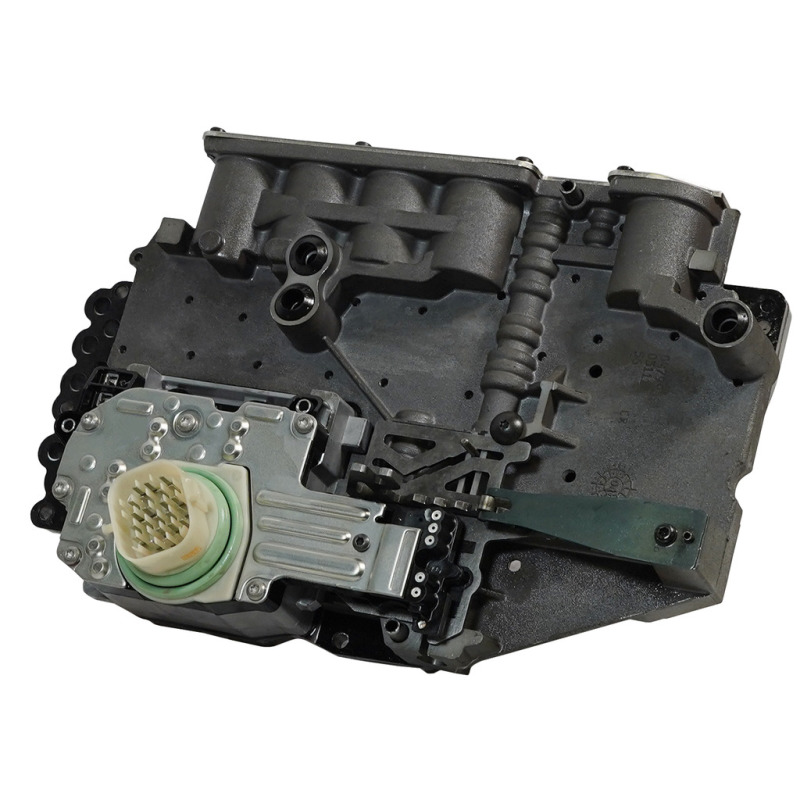
The valve most likely to be behind an electrical-looking code is the solenoid switch valve. Its valve and bore plugs cycle constantly and wear the aluminum casting over time, which creates cross-leaks into and out of the overdrive circuit. Lost OD pressure means less clutch holding force, which means slip, heat and failure. Sonnax's vacuum test guide ties this exact wear pattern to codes 841, 868, 871, 988, 1775 and 1776, along with bind-up, failsafe mode, burned OD clutches, wrong gear starts and TCC apply and release complaints. That is a large share of the codes that hide behind a P0700, and vacuum testing the bore is how you prove it in a few minutes instead of guessing.
Check the recall before you quote the job
On 2019 and 2020 Ram 2500 and 3500 trucks with the 68RFE, run the VIN. NHTSA campaign 20V-043 (Chrysler's number W03) covers 87,431 vehicles where pressure and heat buildup inside the transmission can push fluid out of the dipstick tube, where it may contact the turbocharger and start a fire. The remedy is a transmission valve body separator plate replacement plus a PCM reprogram. If a customer's truck falls in that range and has pressure-related codes, checking open-recall status before writing an estimate is free and occasionally saves them the whole bill.
The Repair Order That Actually Works
- Read the TCM, not just the PCM. Record every stored and pending code plus freeze frame. P0700 alone is not a diagnosis.
- Check fluid level and condition hot and running. ATF+4 only. Burned fluid with debris changes the entire plan.
- Run the KOER Reverse pressure switch test and wiggle-test the harness while watching all five switches. Fix anything electrical here first.
- Compare commanded vs actual line pressure and duty cycle. Pinned near 5 percent with actual below desired is hydraulic; 150 to 160 psi at idle with 250 in Reverse is an open PCS circuit, so amp-clamp it before touching the transmission. Verify the line pressure sensor with a gauge before trusting any of it.
- Measure solenoid resistances if a solenoid circuit code is stored: about 1.3 ohms on the shift solenoids, 3.5 ohms on the pressure control solenoid.
- Only then pull the pan and valve body. Vacuum test the solenoid switch valve bore and plugs, inspect the solenoid block for conductor plate warp, and verify checkball placement and separator plate orientation against the diagram for that exact valve body. Inspect the overdrive pack any time an OD-circuit code has been live for a while, because reinstalling a repaired valve body over cooked clutches brings the truck back on a hook.
- Refill with ATF+4, set the level hot, clear codes and road test. Confirm all five pressure switches track the commanded gears and that duty cycle returns to the normal window.
Preventing the Repeat
Most repeat P0700s on this truck come from heat and pressure, not bad luck. Keep the fluid on schedule and keep it ATF+4. If the truck tows or is tuned, address cooling and watch transmission temperature, because the thin overdrive frictions are the first thing to pay for a hot day. When the valve body is already off for an unrelated repair, vacuum test the switch valve bore in the same pass rather than paying the labor twice. And if the unit has been apart before, treat every checkball, gasket and separator plate as suspect, because assembly errors set the exact same codes as wear does.
Frequently Asked Questions
Does P0700 by itself mean my 68RFE is bad?
No. P0700 is a MIL request, not a failure description. The transmission control module sets its own fault code, then asks the powertrain control module to turn the light on, and the PCM logs P0700 to record that request. The actual defect is described by the code stored in the TCM, which can be anything from a chafed solenoid wire to a burned overdrive clutch.
Why does my scan tool only show P0700 and no transmission codes?
Most generic OBD-II tools only read the powertrain control module. The 68RFE stores its faults in the transmission control module on a separate module address, so you need a scan tool that can select and read the TCM specifically. If you cannot get into the TCM, you cannot diagnose a P0700 and you are guessing.
Why is my Ram stuck in one gear with P0700 set?
That is limp-in. On 2010 and later 68RFE valve bodies the overdrive solenoid was eliminated along with the manual 2 limp position, so limp mode is 4th gear only. The truck will start and drive in 4th with no upshifts or downshifts. Limp usually will not clear on a key cycle, so the underlying TCM code has to be found and repaired.
What line pressure should a healthy 68RFE show at idle?
On a stock unit expect roughly 60 to 70 psi commanded and actual at idle, with line pressure duty cycle around 22 to 24 percent. A duty cycle at or below about 10 percent with actual pressure sitting under desired means the module is already asking for everything it can get and the unit cannot make it, which points to pump, regulator or leak problems.
Can a wiring problem set P0700 without the transmission being damaged?
Yes, and it is common on this truck. An open circuit on the pressure control solenoid ground control wire drives the transmission to maximum line pressure, roughly 150 to 160 psi at idle in Park, Neutral and Drive and about 250 psi in Reverse, which sets pressure codes and a P0700 with no internal damage at all. Repair the circuit and the codes go away.
Sources
- Sonnax — "Dodge RFE Pressure Switch Diagnosis & Code P0871" (Jim Mobley, January 2025). Backs the five-pressure-switch RFE system, the 12.6–14.4V open / 25–50 mV closed signal states, the 300-ohm current limiting to 50 mA or less, the 22 psi close and 11 psi release thresholds, the KOER-in-Reverse all-switches-open baseline test, the open-wire-reads-the-same-as-closed caution, and the low/reverse switch staying closed until 150 rpm output shaft speed. sonnax.com
- Sonnax — "45RFE, 545RFE, 68RFE Solenoid Identification & Connector Pin Out" (Tech Resource 318). Backs the 1.3-ohm shift solenoid and 3.5-ohm pressure control solenoid resistance values, which solenoids are normally applied versus normally venting, the pin 12 pressure control solenoid control assignment, and the overdrive solenoid being eliminated in the 2010–2018 valve body. sonnax.com
- Sonnax — "68RFE Overdrive Clutch Failure: What to Check First When Troubleshooting OD Issues" (Jason Larochelle, August 2020). Backs the 2007–2020 Ram 2500/3500 6.7L application, the .034 in. OE overdrive clutch steel core versus .080 in. in a 4L80-E direct pack, the heat-distortion failure mechanism, solenoid switch valve plug cross-leaks as the weak link in the OD circuit, and the solenoid conductor plate warping that causes false and intermittent pressure switch codes on 2018-and-earlier units. sonnax.com
- Sonnax — "Chrysler 45RFE, 545RFE, 65RFE, 66RFE, 68RFE Vacuum Test Guide." Backs the solenoid switch valve and bore plug wear being tied to codes 841, 868, 871, 988, 1775 and 1776, plus the associated symptoms of bind-up, failsafe mode, burned OD clutches, wrong gear starts and TCC apply and release complaints. sonnax.com
- Transmission Digest — "Diagnosing Chrysler transmission max line pressure and P0933, P0869, P1745 codes" (Jim Mobley, January 19, 2023). Backs the absence of a dedicated Chrysler code for a PCS line pressure circuit fault, the P0933 and P0869 definitions and the P0933 misdirection warning, the 150–160 psi idle / 250 psi Reverse open-circuit signature, the 38.38 percent duty cycle and 125 psi default example, the pin 12 to PCM C1 terminal 29 low-current clamp test with 0.20–1.00 amps normal, the short-to-ground low-pressure distinction, and the 2013 6.7L diesel Ram being especially prone to this fault. transmissiondigest.com
- Gears Magazine (ATRA) — "Fixing the Root Cause of the Problem: Solving Issues with the 68RFE Transmission." Backs the 60–70 psi commanded and actual line pressure at idle with 22–24 percent line pressure duty cycle, the 18-percent-or-higher healthy idle window, the meaning of a duty cycle pinned near 5 percent with actual below desired, and the commanded-versus-actual pressure diagnostic method. gearsmagazine.com
- NHTSA — Part 573 Safety Recall Report 20V-043 (Chrysler / FCA US LLC campaign W03). Backs the 2019–2020 Ram 2500 and 3500 68RFE recall covering 87,431 vehicles for transmission fluid leaking from the dipstick tube onto ignition sources, and the remedy of replacing the transmission valve body separator plate and reprogramming the powertrain control module. nhtsa.gov