A customer backs a 6.7 Cummins RAM out of the driveway, the check engine light comes on, and the truck feels like it hesitates before Reverse takes hold. You plug in and pull P0736 — Reverse Incorrect Gear Ratio. Before you condemn the transmission, understand exactly what that code is telling you, because P0736 does not name a broken part. It reports a math problem, and there are half a dozen reasons the math can come out wrong on a 68RFE.
For more on Dodge and RAM transmissions, visit our Dodge transmission hub and RAM transmission hub.

What P0736 Actually Measures
The 68RFE has an input speed sensor reading the input shaft and an output speed sensor reading the output shaft. The TCM knows what gear it commanded, and it knows the gear ratio that gear is supposed to produce. Divide input speed by output speed and you get the ratio the transmission is actually delivering. When Reverse is commanded, the controller expects that measured ratio to land inside a tolerance window around the reverse ratio, which on this unit is a deep 4.44:1 reduction per Ram's Heavy Duty spec sheet (deeper than 1st at 3.23). If the ratio falls outside that window for a calibrated length of time, it sets P0736.
You can do the same math on a scan tool. Back the truck up at a steady crawl and log input and output speed: with 200 rpm on the output shaft, a healthy unit shows about 890 rpm on the input (200 × 4.44). If input climbs to 1,000, 1,100, 1,200 rpm while output stays put, the reverse power path is slipping. If input reads zero or jumps around while the truck is clearly moving, suspect the sensor, not the clutch. Every forward ratio and the step between them is laid out in our 68RFE gear ratios and specs guide.
Put plainly: the input shaft is turning faster than it should relative to the output shaft. Something in the reverse power path is letting the input side spin without carrying the output side with it. That is the signature of a slipping clutch. It can also be a sensor feeding the controller bad speed data, or a valve body that is not routing oil where the calibration assumes it is. All three produce the same code.
How Reverse Applies on the 68RFE
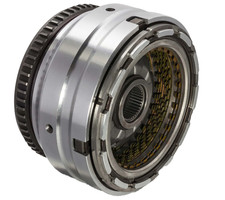
To chase P0736 you have to know what holds Reverse. In Reverse the 68RFE applies the reverse clutch to drive the geartrain and the low/reverse clutch as the reaction (holding) member. The low/reverse clutch is a single-sided pack. Per ATSG, it is the only clutch applied in Park and Neutral, and in 1st gear it stays on only while output shaft speed is below 150 rpm, after which the low sprag carries 1st. That overlap matters: if the low/reverse clutch is marginal, you often see complaints in Reverse and on low-speed launches together, and you may collect a first-gear ratio code alongside P0736.
The other half of Reverse behaves differently. ATSG notes that on 2007.5-2018 units the solenoids control the L/R, 2C, 4C, UD and OD clutches, but the Reverse clutch is controlled by the manual valve and line pressure, with no solenoid and no pressure switch of its own. That is why the TCM can only catch a slipping Reverse clutch through the ratio math that sets P0736. On 2019-and-later trucks, Sonnax documents that the Reverse clutch gained its own control solenoid and a Reverse accumulator, so an electrical fault can also cause the code there. If the truck has no Reverse at all rather than a slipping one, see our 68RFE no Reverse diagnosis guide.
Oil gets to that low/reverse clutch through the manual valve and past the low/reverse switch valve, which acts as a one-way valve for the clutch in both Reverse and Drive. Hold that detail. It is the single most common reason a 68RFE sets a reverse ratio code with a clutch pack that still has life left in it.
The Number One Cause: Low Apply Pressure at the Low/Reverse Clutch
Switch Valve Bore Wear
Sonnax has documented wear in the low/reverse switch valve bore on these units. The valve is heavily side-loaded — its diameter is close to its overall length, which is a recipe for the casting to wear oval. Once the bore and valve wear, oil leaks past the one-way valve and exhausts through the manual valve instead of holding the clutch. The result is low apply pressure, which the manufacturer ties directly to burnt clutches and delayed — or even no — Reverse or first and second gears. A clutch that is only partially applied slips, the output shaft turns slower than the input demands, and P0736 sets. Left alone, the slip cooks the clutch and you graduate from a valve body repair to a teardown.
Vacuum Test the Bore Before You Guess
You do not have to guess whether the valve is worn. Vacuum test it. On the 68RFE you manually shuttle the low/reverse switch valve to the worm track area you are testing. Sonnax's spec is straightforward: 18 in-Hg is satisfactory, and anything below that is worn and should be replaced. If the bore fails, ream it and fit an oversized valve rather than reassembling and hoping the slip goes away.
Low Line Pressure Feeding the Whole Unit
Sometimes the switch valve is fine and the entire unit is starved. The RFE family runs a full-range pressure transducer and closed-loop, adaptive pressure control, so you diagnose it with data, not a mechanical gauge alone. Watch commanded pressure, actual pressure, and the line pressure duty cycle percentage in graphing mode. Per ATRA's teardown coverage, a healthy idle commanded duty cycle is 18 percent or higher, and idle pressure typically runs about 60 to 70 PSI at roughly a 22 to 24 percent duty cycle. Anything under 10 percent is not suitable for this transmission. A duty cycle pinned at 5 percent with actual pressure below commanded means the pressure control system is maxed out and physically cannot make the pressure the unit is asking for — and a clutch that does not get its commanded pressure will slip and throw a ratio code.
The root cause of low pressure is not always inside the case. Oversized tires and aggressive diesel tunes — some pushing well past 700 lb-ft — drive the commanded pressure up and the low-rpm duty cycle down until the pump cannot keep up. If you rebuild the unit and hand it back to a truck that maxes the duty cycle at cruise, you will see it again. Sort the tune and tire situation, or at least document it, before you warranty the job.
Don't Skip the Sensors and the Solenoid Pack
P0736 is a ratio code, and a ratio is only as honest as the two sensors feeding it. A failing input or output speed sensor, or a chewed reluctor, can report a ratio that never actually happened. Before you pull the pan, confirm the input and output speed traces in Reverse are clean and track together. Erratic drops in one signal point at the sensor, not the clutch.
The low/reverse clutch is applied electronically through the solenoid pack. On 2019-and-later trucks the low/reverse solenoid controls the low/reverse clutch only, because a separate TCC control solenoid was added; on earlier units that same solenoid handled TCC apply as well. Either way, a solenoid that does not deliver commanded pressure will slip the clutch. The RFE uses a five-pressure-switch system that makes this checkable: with the key on, engine running, selector in Reverse, all pressure switches should read open, which confirms the wiring and controller basics are intact before you go hunting hydraulics. Note that the low/reverse pressure switch stays closed (clutch on) until output shaft speed reaches about 150 rpm, and the switches close at roughly 22 PSI and release near 11 PSI — useful reference points when you read switch data live.
Checkball and Separator Plate Mistakes
If P0736 shows up right after a rebuild, suspect your own bench work before the hard parts. Wrong separator plates, misplaced checkballs, and gaskets on the wrong side of the plate all generate pressure-switch and ratio codes on the RFE. One more trap worth naming: a 2019 channel casting installed on an early unit can create a gear-ratio code all by itself. Match the casting to the year.
Diagnostic Sequence That Actually Works
- Read all codes, not just P0736. Multiple ratio codes across gears point to slippage or low pressure. A companion P0871 or P0868 points at the pressure/switch-valve side. Speed sensor codes point away from the clutches.
- Check fluid level and condition. Low or aerated ATF+4 will slip a good clutch. Burnt fluid and clutch material in the pan tells you the low/reverse pack is already gone.
- Drive it with a scan tool. Watch input and output speed in Reverse to confirm the ratio really is off, then watch commanded vs. actual line pressure and the line pressure duty cycle percentage.
- Run the KOER Reverse pressure switch check. All switches open in Reverse confirms the electrical basics. Wiggle connectors and harness while watching switch data to catch intermittents.
- Verify the line pressure sensor. Scan data is only as good as the transducer reporting it. A failed sensor can hide real low pressure.
- Vacuum test the low/reverse switch valve bore. Below 18 in-Hg, it is worn. This is where reverse-ratio complaints most often live.
Building a 68RFE this week?
Low/reverse clutch packs, switch valve repair sleeves, solenoid packs, valve body components, filters and ATF+4, plus the tools to set it right — all in one place, shipped from the USA.
Shop 68RFE parts →The Fix
Match the repair to what the diagnosis found:
- Worn switch valve bore, clutch still good: ream the bore and install an oversized or drop-in low/reverse switch checkball sleeve kit. Sonnax lists drop-in kit 92835-41K and oversized kit 92835-45K for the 68RFE for bores with heavier wear. This restores one-way holding and brings apply pressure back.
- Burnt low/reverse clutch: the unit comes apart. Replace the clutch pack, inspect the drum and piston for scoring, and address whatever starved it in the first place so the new pack does not follow the old one.
- Solenoid fault: replace the individual low/reverse solenoid or the pack, confirm with bidirectional testing.
- Speed sensor: replace the offending input or output sensor and clear the ratio code.
- Valve body mistake: correct the checkball count, plate, and gasket orientation, and verify casting-to-year match.
- External root cause: address the tune and tire diameter, or the pressure duty cycle will strangle the rebuild.
After any internal repair, run a fast learn so the TCM recalibrates its adaptive pressure and shift timing to the fresh parts. Refill with Mopar ATF+4 (MS-9602) — a pan-and-filter service takes roughly 7 to 8 quarts, and a dry fill after a rebuild or converter swap runs roughly 17 to 17.5 quarts, so fill in stages and set the final level at operating temperature.
If your 68RFE is past valve body work and into a full teardown, we walk through the whole job — clutch options, valve body choices, and break-in — in our complete 68RFE rebuild guide.
FAQ
What does P0736 mean on a 68RFE?
P0736 is Reverse Incorrect Gear Ratio. The TCM compares input shaft speed to output shaft speed while Reverse is commanded. If the measured ratio does not match the expected reverse ratio for a calibrated period, it sets P0736. On the 68RFE it usually means the low/reverse clutch is slipping from low apply pressure rather than a sensor lying about speed.
Can I fix 68RFE P0736 without pulling the transmission?
Sometimes. If the low/reverse clutch is still good and the cause is low apply pressure from switch valve bore wear, a low line pressure sensor, a fluid level problem, or a checkball or plate mistake, the repair can be done at the valve body or externally. If the clutch is already burnt, the unit has to come apart to replace it.
Is P0736 always the low/reverse clutch?
No. P0736 reports a ratio mismatch, not a specific part. Confirm it with live input and output speed data in Reverse. A failed input or output speed sensor can trigger a ratio code with healthy clutches, and low line pressure from a worn pump, a maxed pressure control duty cycle, oversized tires, or an aggressive tune can slip a good clutch.
What line pressure duty cycle is healthy on a 68RFE?
At idle the 68RFE typically commands about 60 to 70 PSI with the line pressure duty cycle around 22 to 24 percent. Anything under 10 percent is not suitable for this unit, and a duty cycle stuck at 5 percent with actual pressure below commanded means the pressure control system is maxed out and cannot make the pressure the unit is asking for.
What fluid and how much does a 68RFE take?
The 68RFE uses Mopar ATF+4 (MS-9602). A pan drop and filter service takes roughly 7 to 8 quarts. A dry fill after a rebuild or torque converter replacement is roughly 17 to 17.5 quarts, so fill in stages and verify level at temperature.
Sources
- Sonnax — "Diagnosing 62TE, 68RFE Low/Reverse Switch Valve Issues," Chris Leach. Backs the low/reverse switch valve acting as a one-way valve for the clutch in Reverse and Drive, side-load bore wear causing leakage that exhausts through the manual valve and produces low apply pressure, burnt clutches and delayed or no Reverse or 1st/2nd gears, the 18 in-Hg vacuum test spec, and drop-in kit 92835-41K and oversized kit 92835-45K for the 68RFE. sonnax.com
- Transmission Digest — "Diagnosing 62TE, 68RFE Low/Reverse Switch Valve Issues." Backs the same low/reverse switch valve wear pattern, the leakage-past-the-one-way-valve mechanism, and the vacuum test procedure with manual valve shuttling on the 68RFE. transmissiondigest.com
- Sonnax — "Dodge RFE Pressure Switch Diagnosis & Code P0871," Jim Mobley. Backs the five-pressure-switch system, the KOER Reverse test with all switches open confirming electrical basics, switches closing at 22 PSI and releasing at 11 PSI, the low/reverse clutch staying on until about 150 rpm output shaft speed, and separator plate, checkball and 2019-casting mistakes generating switch/ratio codes. sonnax.com
- GEARS Magazine (ATRA) — "Fixing the Root Cause of the Problem: Solving Issues with the 68RFE Transmission." Backs the line pressure duty cycle diagnostics: healthy idle 18 percent or higher, typical idle 60 to 70 PSI at 22 to 24 percent, under 10 percent unsuitable, 5 percent duty cycle with actual below commanded meaning the system is maxed, and oversized tires and aggressive tunes over 700 lb-ft driving pressure demand up. gearsmagazine.com
- Sonnax — "Troubleshooting 68RFE OD Clutch Failure: What to Check First." Backs the role of the solenoid switch valve and bore plugs in routing clutch apply oil, and how bore wear leaks into adjacent circuits to trip pressure switches and burn clutches — the same wear family that also disturbs low-gear and reverse apply. sonnax.com
- ATSG — Dodge Ram Trucks 68RFE Transmission, Technical Service Information (2011). Backs the Reverse and L/R clutch application, only the L/R clutch applied in Park and Neutral, the L/R clutch on in 1st only below 150 rpm output speed, and the Reverse clutch being controlled by the manual valve and line pressure rather than a solenoid. atsg.biz (PDF)
- Sonnax — "Chrysler 68RFE '19-Later Changes & Identification." Backs the 2019-and-later Reverse accumulator and the Reverse clutch getting its own control solenoid. sonnax.com
- Stellantis / Ram — 2024 Ram 2500 & 3500 Heavy Duty Specifications. Backs the 68RFE reverse ratio of 4.44 and first gear ratio of 3.23 used for the expected-ratio math above. Ram spec sheet (PDF)
Shop 68RFE parts →
Related 68RFE guides
- 68RFE No Reverse: Diagnosis and Fix
- Dodge 68RFE Weak Spots, Common Codes, and How to Keep It Alive
- 68RFE Valve Body Problems: Symptoms, How to Test, and Replacement
- 68RFE Valve Body Wear: Symptoms and the Bench Fix
- 68RFE Shift Solenoid Symptoms, Testing and Replacement
- 68RFE Rebuild Guide for RAM 2500/3500 Cummins: What Fails and How to Fix It