P0716 shows up on GM 6L80 and 6L90 trucks and cars more than most techs expect, and it gets misdiagnosed almost as often. The scan tool reads out "Input/Turbine Speed Sensor A Circuit Range/Performance," a shop hands the customer an estimate for a sensor, and the code comes right back after the fix. The reason is simple: on this transmission the input speed signal is a system, not a plug. It runs through internal wiring, a case connector, and the TEHCM. Fix the wrong part of that chain and you have not fixed anything. This is how to run it down the first time.
For more GM six-speed diagnostics, see our 6L80 limp mode guide and our gear ratio code walkthrough.
What P0716 Actually Means
P0716 is defined as Input/Turbine Speed Sensor "A" Circuit Range/Performance. Read the second half of that carefully. This is not a circuit-open or circuit-low code (those are P0717 and its relatives). "Range/Performance" means the circuit is electrically alive and the TCM is getting a signal, but the value it is getting does not make sense against everything else the module knows. The signal is present but implausible: it drops out, spikes, reads too high or too low for the conditions, or goes ragged while engine speed and output speed stay steady.
The input speed sensor (ISS), also called the turbine speed sensor (TSS), reports how fast the input side of the gear train is turning. The TCM uses that number constantly. It compares ISS to engine RPM to measure torque converter slip and to know when the converter clutch is truly locked. It divides ISS by output speed (OSS) to verify which gear is actually engaged. And it watches the rate of ISS change during every shift to grade shift quality and adjust apply pressure. When that number stops being trustworthy, the module cannot do any of that, so it flags P0716 and protects itself.
Where the ISS Lives on a 6L80
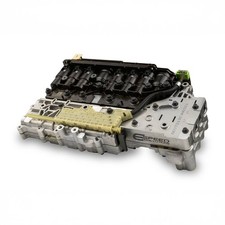
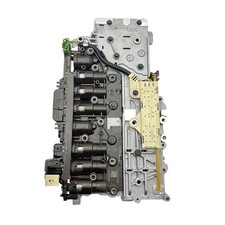
This is the part that trips up techs coming off older GM units. On a 4L60E you could reach an external vehicle speed sensor from under the truck. The 6L80 does not work that way. The input and output speed sensors are internal, they read off rotating members inside the case, and their signals are handled by the TEHCM — the Transmission Electro-Hydraulic Control Module, the combined TCM, solenoid body, pressure switches, and temperature sensor that Sonnax describes as being remanufactured as one assembly of "TCM, solenoid, sensors and pressure switch components." GEARS Magazine's Steve Garrett (ATRA) spells out the layout: the 6L80 uses two speed sensors, input (ISS) and output (OSS), combined as one assembly and mounted under the valve body, and both are Hall-effect sensors [5]. Their short internal harness runs to the TEHCM, and the TEHCM talks to the rest of the truck through the case connector.
That layout matters for diagnosis because every one of those points — sensor, internal harness, bracket, case connector, ground, module — can throw the same P0716. You are not chasing a part. You are chasing a signal path.
Symptoms You Will Actually See
- Erratic or harsh shifts. With a jumpy input signal, adaptive pressure control has nothing solid to work from, so shifts turn firm, late, or inconsistent.
- Wrong-gear starts and gear hunting. If the module cannot trust ISS to confirm the ratio, it can start in a higher gear or refuse to hold a commanded gear.
- Failsafe / limp mode. This is the common one. Lose a trusted input speed signal and the 6L80 drops to one fixed gear with no torque converter lockup. The truck still moves, but it feels stuck in a tall gear and the tach sits high on the highway.
- Check engine light with P0716, often with company. P0716 frequently sets alongside P0717, gear ratio codes, or a P0700 that just says "look at the transmission." Read the freeze frame and the full code set before you decide which one is the cause.
Diagnosis: Make the Scan Tool Do the Work
Do not guess. The input speed sensor gives you the cleanest live-data check on the whole transmission because you have three numbers to cross-reference: engine RPM, ISS/TSS RPM, and OSS RPM. Pull them all into one graphing session and drive the vehicle.
Check 1: ISS versus engine RPM at converter lockup
Get the transmission warm and cruise at steady throttle until the torque converter clutch applies (usually in the higher gears). With the TCC locked, there is no fluid coupling slip, so ISS should track engine RPM within a handful of RPM — call it single digits, not hundreds. If engine sits at 1,600 and ISS reads 1,590, that sensor is telling the truth. If engine is steady at 1,600 and ISS bounces to 900 or drops to 0 with the converter locked, you have found your range/performance fault.
Check 2: ISS divided by OSS in each gear
In any given gear, ISS divided by OSS equals that gear's ratio. On the 6L80 that is roughly 4.03:1 in first, 2.36:1 in second, 1.53:1 in third, 1.15:1 in fourth, 0.85:1 in fifth, and 0.67:1 in sixth. Hold a gear on a road test and do the math on the live values. If OSS is climbing normally with road speed but ISS will not hold the expected ratio — or the calculated ratio jumps around while you are steady in one gear — the input signal is the problem, not the output side.
Check 3: watch for dropouts, not just wrong numbers
A failing internal harness often reads perfectly at idle and only breaks down under load, heat, or a specific gear where a rotating member gets close to a chafed wire. Log a full drive cycle including a reverse engagement and a couple of stops. A signal that is clean at idle and goes to zero for a beat during a 1-2 shift or in reverse is pointing you straight at the wiring, not the sensor element.
Only after those three checks do you go electrical: check the case connector and the TEHCM power and grounds, and confirm the module is seeing what the sensor is sending. Because the sensors are hard to reach, GM's recommended bench test, as GEARS describes it, is a signal generator: pull the TEHCM and valve body, connect the generator to the TCM pins in place of the sensor, connect the scan tool through the DT 47825 jumper harness, and feed an 8-volt square wave. If the speed reading on the scan tool follows the frequency, the module is good and the fault is the sensor or its connection; if it does not change or does not read at all, suspect the TEHCM [5].
The Two Causes That Actually Set This Code
Cause 1: Internal ISS wiring chafed by the reverse input drum
This is the one to check first, and it is documented, not folklore. The clearest case study comes from the 6L80's four-speed sibling: the Transmission Digest write-up on the GM 4L70-E with P0716/P0717 lays it out plainly: after a repair or overhaul the "input speed sensor wiring was not properly secured in its locating brackets on the back of the pump assembly," and "the wires were damaged by the spinning reverse input drum, which is close to the Input Speed Sensor wiring." A drum turning right next to an unsecured wire will eventually wear through the insulation, and once it does you get an intermittent, implausible signal — textbook P0716.
The 6L80 routes its sensor wiring differently, with the sensor assembly under the valve body [5], but the lesson carries straight over: any internal speed sensor lead that is not seated in its retainers after a valve body or TEHCM job can rub, chafe and produce the same intermittent, implausible signal. The correction is exactly what it sounds like: route and secure the harness properly, well clear of anything that rotates, and repair or replace any wire that is already nicked. If your P0716 showed up shortly after a rebuild or a valve-body job, this is very likely your answer. Inspect before you order parts.
Cause 2: Lost ISS ground inside the TCM
The same source flags a second known cause: "a loss of an ISS ground circuit provided by the TCM," where "the loss of ground occurs inside the TCM." A module that stops providing a clean ground to the sensor makes a good sensor look bad. The documented field repair is to provide an external ground — splice into the ISS ground circuit and ground it to the vehicle, restoring the reference the internal path lost. Before you condemn a TEHCM on a P0716, verify the sensor ground is actually good at the sensor; a bad ground mimics a bad sensor and a bad module both.
Cause 3: the sensor or the TEHCM itself
Sensors do fail, and the TEHCM can develop internal faults that corrupt speed-sensor processing. But on this platform they are third on the list, not first. Because the ISS is bundled into the TEHCM assembly on the 6L80/6L90, a genuine internal sensor or module fault usually means a TEHCM repair or a remanufactured unit rather than a standalone sensor swap. Confirm the wiring and grounds are clean first so you are not throwing a module at a chafed wire.
One TEHCM and Interchange Warning
Do not grab a TEHCM off the shelf by transmission family alone. Sonnax breaks the reman TEHCMs into distinct part numbers by year and application — one group covering roughly Cadillac 2010-2011, Chevrolet 2010-2013, GMC 2010-2011, and another covering Cadillac 2012-2015, Chevrolet and GMC 2011-2020, Isuzu 2012-2016 — and tells you to match your OE TEHCM part number, not just the model. On top of that, ATSG's Wayne Colonna documented in Transmission Digest that during model year 2012 the 6L80/90 trucks got an updated output-shaft assembly that "required the use of a specific style output transmission speed sensor." The takeaway for a speed-sensor job: a 2012-and-later core is not automatically interchangeable with an earlier one. Verify the sensor style and the module part number for the exact vehicle in front of you.
After the repair, relearn it. GEARS lists the situations that call for clearing adapts and running a Fast Learn on the 6L80: internal repairs, a replaced valve body, a replaced control solenoid valve assembly, or a TEHCM that was recalibrated or replaced. The procedure wants transmission fluid temperature between 158 and 230°F (70–110°C) and will not run with DTCs in memory [5]. Skip it and a correctly repaired unit can still shift badly enough to look like the fix failed.
The Fix, Step by Step
- Confirm with live data. Run the three scan-tool checks above and capture a log that shows the implausible ISS behavior. Do not open the transmission on a code alone.
- Inspect the internal harness and brackets. Drop the pan, pull the valve body and TEHCM as needed, and look hard at the ISS wiring where it passes the reverse input drum. Chafed insulation or a wire out of its bracket is your fix.
- Verify the ground. Check the ISS ground at the sensor and back through the case connector. If the module-side ground is lost internally, add the external ground per the documented repair.
- Re-secure or replace. Route the harness correctly in its brackets, clear of rotating parts, and replace any damaged wiring or the sensor if it is the actual fault.
- Address the TEHCM only if the chain proves it. If wiring and grounds are clean and the fault follows the module, install the correct reman or repaired TEHCM for that year and application.
- Refill with DEXRON VI and set the level by temperature. The 6L80 takes DEXRON VI only. A pan-and-filter service is about 6 to 7 quarts; a dry rebuild with converter and cooler is roughly 11 to 12 quarts. Set the final level with the fluid-temperature check procedure, then clear codes and re-drive to confirm ISS reads clean across all gears.
Chasing a 6L80 speed-sensor code this week?
Internal speed sensors, TEHCM units, pan and filter kits, DEXRON VI, and the wiring pieces to fix a chafed harness right — matched to your year and application, shipped from the USA.
Shop 6L80 parts →FAQ
Is P0716 on a 6L80 the sensor or the wiring?
More often the wiring and connection than the sensor element itself. The most documented 6L-family cause is the ISS wiring not being secured in its brackets on the back of the pump, letting the spinning reverse input drum chafe it. A lost ISS ground inside the TCM is the other common cause. Confirm the harness and grounds before condemning the sensor or the TEHCM.
Can I drive a 6L80 with a P0716 code?
You can move it, but the transmission will usually drop into failsafe once the TCM loses a trusted input speed signal — one fixed gear, no converter lockup, firm shifts. It is fine to limp home or to the shop, but sustained driving in failsafe with no lockup builds heat, so fix it before you tow or run it hard.
What scan data confirms an input speed sensor problem?
Watch the ISS (input/turbine) RPM against engine RPM and OSS (output) RPM on a road test. With the converter clutch applied, ISS should track engine RPM within a few RPM. In each gear, ISS divided by OSS should equal that gear's ratio (about 4.03:1 in first, 0.67:1 in sixth). An ISS value that drops to zero, spikes, or goes erratic while engine and output stay steady is the range/performance fault P0716 describes.
Does replacing the input speed sensor require dropping the transmission?
The 6L80/6L90 input and output speed sensors are internal, mounted at the pump and case and read by the TEHCM. Reaching them and the sensor wiring means dropping the pan and, in most cases, pulling the valve body and TEHCM. It is not an under-hood plug-and-play part, so plan the job accordingly.
What fluid does the 6L80 take and how much?
DEXRON VI only. A pan drop and filter takes roughly 6 to 7 quarts; a dry rebuild with converter and cooler runs about 11 to 12 quarts. Always set the final level by the fluid-temperature check procedure, not a fixed quart count — level affects speed-sensor and shift behavior.
Sources
- Transmission Digest — "GM 4L70-E ISS DTC P0716 or P0717," Precision International, October 8, 2020. Backs the code definitions (P0716 Input Speed Sensor Performance, P0717 Low Input Speed Sensor Circuit Voltage), the ISS wiring not secured in its locating brackets on the back of the pump, the wires being damaged by the spinning reverse input drum, and the lost-ISS-ground-inside-the-TCM cause with the external-ground repair. transmissiondigest.com
- Transmission Digest — "Updated 6L80/90 Output Shaft Assembly," Wayne Colonna (ATSG), July 1, 2017. Backs the model-year-2012 output-shaft assembly change on 6L80/90 trucks and that it required a specific style output transmission speed sensor, i.e. speed-sensor parts are not blindly interchangeable across years. transmissiondigest.com
- Sonnax — "6L80, 6L90 Remanufactured TEHCMs." Backs the TEHCM as a combined TCM, solenoid, sensors and pressure-switch assembly, and the year/application-specific part numbers (Cadillac 2010-2011, Chevrolet 2010-2013, GMC 2010-2011 versus Cadillac 2012-2015, Chevrolet/GMC 2011-2020, Isuzu 2012-2016) that must be matched by OE part number. sonnax.com
- Sonnax — GM 6L80 unit page. Backs 6L80 applications (Silverado, Tahoe, Suburban, Sierra, Yukon, Escalade, Corvette, Hummer; heavy-duty 6L90) and the internal component and failure-mode reference used for the diagnostic context. sonnax.com
- GEARS Magazine (ATRA) — "A Look at the 6L80; Part 3 of 3: Internal Transmission Diagnosis," Steve Garrett, April 2008. Backs the ISS and OSS as a combined Hall-effect sensor assembly mounted under the valve body, GM's signal-generator test (8-volt square wave at the TCM pins through the DT 47825 jumper harness) for separating a sensor fault from a TEHCM fault, and the Fast Learn triggers and 158–230°F temperature window. GEARS April 2008 (PDF)