P0742 is one of those codes that sends people straight to the parts counter for a torque converter, and on a 6L80 that is usually the wrong first move. The code says Torque Converter Clutch Circuit Stuck On. What it actually means is that the transmission control module commanded the converter clutch to release, watched the slip speed, and never saw the slip come back. The clutch stayed locked when it was supposed to let go.
On most transmissions that points you at an apply-side problem. On the 6L80 it usually does not, because of one design detail that changes the whole diagnosis.
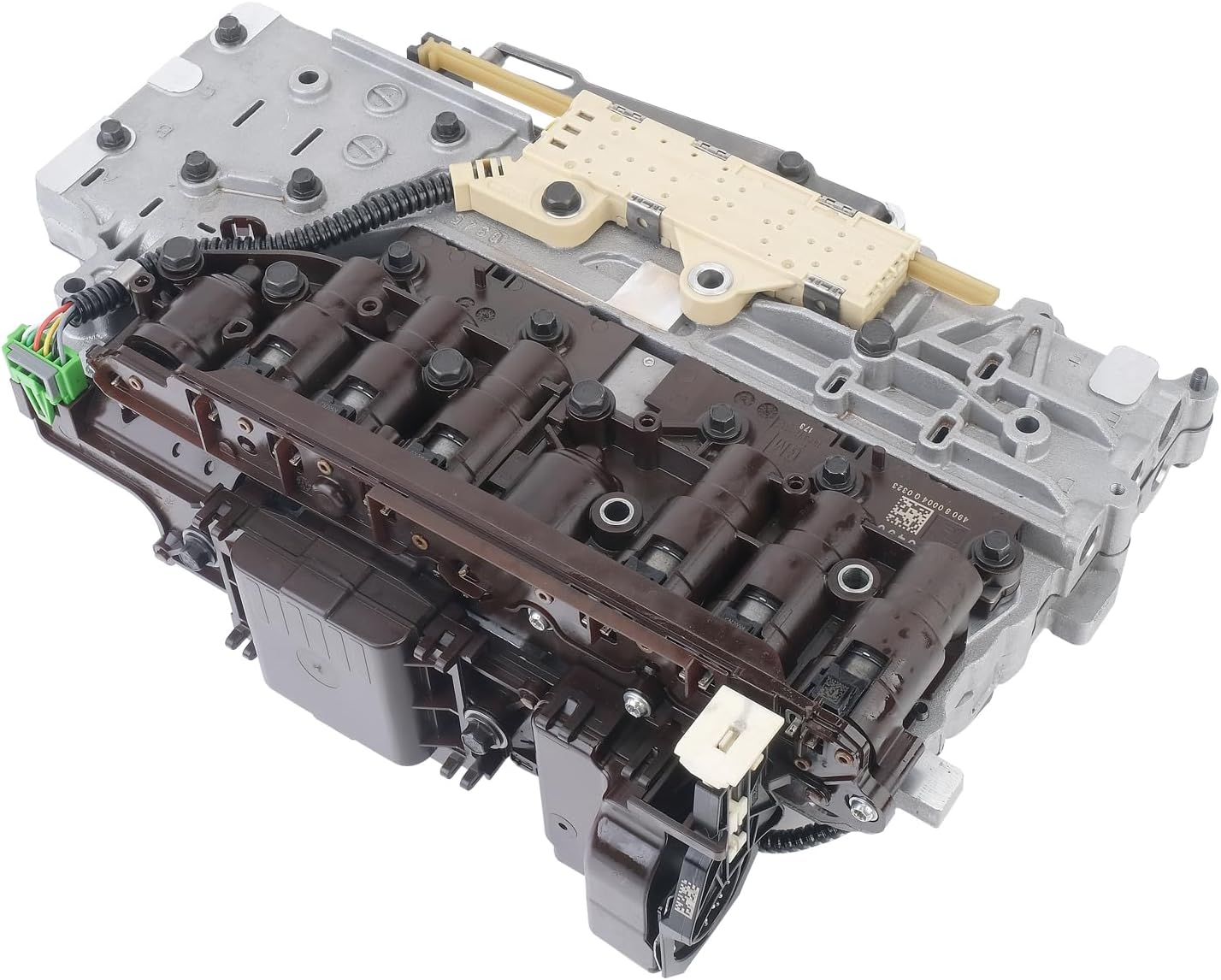
The 6L80 converter clutch is preloaded, and that changes everything
Sonnax's Bob Warnke lays this out in the Hydraulics Fundamentals series: the 6L80 is one of the units whose TCC piston is preloaded toward the cover. Preloaded means the clutch is mechanically applied with the engine off. It does not take pressure to lock this converter. It takes pressure to unlock it.
Read that again, because it is the whole article. Release oil flows through the center of the turbine shaft and exits between the TCC piston and the cover, pushing the piston away from the cover. Apply happens by exhausting that release oil and letting the preload plus apply pressure clamp the clutch down.
So on a 6L80, "stuck on" is the failure-safe direction. Anything that starves or leaks off the release circuit leaves the clutch dragging on the cover. That is why a 6L80 with P0742 so often shows up with a rough idle or an outright stall when you drop it into gear at a stop sign: the pump cannot generate enough release volume at idle to unlock the clutch, so the engine is being held against the driveline. Warnke names that symptom directly, and it is the single best confirming clue you will get on the test drive.
The one PID that decides this job: TCC Slip Speed
Do not start with a meter. Start with the scan tool, on a level road, at a steady throttle, watching TCC Slip Speed (engine RPM minus turbine RPM).
GM published the number you need in bulletin PI1413. Per that bulletin, normal 6L80 converter clutch operation is for slip to momentarily drop to zero and then climb back to 30 to 50 RPM of slip. That brief touch of zero is not a fault. What is a fault is slip speed sitting at a constant zero RPM during the concern. PI1413 is explicit: if TCC slip speed is a constant zero RPM, inspect the lower valve body for a broken torque converter clutch regulator valve spring (353).
That bulletin was written against 2011 Escalade, Avalanche, Camaro, Silverado, Suburban, Tahoe, Sierra and Yukon models with Active Fuel Management V8 engines (RPO LC9, LMG, LZ1, L77, L94, L99) and the 6L80 (RPO MYC). The customer complaint in the bulletin is not a check engine light at all. It is a vibration, shudder or roughness at low steady speeds, worse uphill, worst in V4 mode. Same mechanical failure, different presentation. If the spring is broken badly enough or the driving pattern is right, you get the code instead of the shudder.
So: constant zero slip plus a broken 353 spring is a confirmed, documented, GM-acknowledged cause of a stuck-on 6L80 converter clutch. Check it before you touch anything else, because it costs you nothing but a road test.
Ruling out the electrical side properly
P0742 is a performance code, not a circuit code, so the wiring is rarely the culprit. Check it anyway, because it is cheap and because you need the baseline.
Real numbers, from ATRA's GEARS teardown of the unit by Steve Garrett: on the 6L80 control solenoid valve assembly (the TEHCM), the six pressure control solenoids including the TCC solenoid measure 3.0 to 5.5 ohms at 70°F (21°C), with a 0.9-amp current limit, and the TCM regulates solenoid feed voltage to 8.3 to 9.3 volts. The two on/off shift solenoids read 16 to 20 ohms at the same temperature. The TCM also fires a cleaning pulse every 30 seconds while the vehicle sits in Park or Neutral.
There is a trap here that catches good techs. The 6L80 uses Bosch solenoids, and as GEARS warns, ON and OFF in this system refer to the solenoid's commanded hydraulic position, not its electrical state. Bosch describes them as Normally High or Normally Low. Normally High means pressure reaches the clutch when the solenoid is off. If you are reading a data list and assuming electrical logic, you will chase your tail. Confirm which way the solenoid you are looking at is described before you draw a conclusion from a commanded state.
If you are scoping the PWM signal, Sonnax recommends a graphing multimeter or oscilloscope set to a 500 Hz scale for usable accuracy on these converter clutch circuits.
Bore wear at the TCC regulator valve
If the spring is intact and the electrical side is clean, the next suspect is the bore the regulator valve rides in. Sonnax lists P0742 by name among the codes cured by its TCC regulator valve kit for the 6L45, 6L50, 6L80 and 6L90 family, alongside P0741, overheated fluid, failsafe mode, harsh shifts, harsh TCC apply, loss of fuel economy and high TCC slip RPM.
The mechanism Sonnax describes: bore wear at the TCC regulator valve reduces TCC apply and converter charge pressure, and a stuck TCC regulator valve causes either TCC slip or harsh apply depending on where it hangs up. Stuck in the apply position gives you harsh apply and, on this preloaded design, a clutch that will not release. Stuck in the release position gives you no apply or continuous slip, which is the P0741 side of the same coin.
You find this with a vacuum test, not by eyeballing the valve. Sonnax publishes a vacuum test guide specifically for the 6L45/6L50/6L80/6L90 valve body that marks the test ports and the minimum in-Hg each circuit must hold. If the port will not hold the guide's minimum, the bore is worn regardless of what the valve looks like under a light.
The repair is a drop-in valve kit rather than a valve body: Sonnax 104740-46K for moderately worn bores, with lengthened inboard and outboard spools that ride in unworn casting, a longer outboard shuttle valve that resists cocking in the bore, and hardcoat anodized aluminum valves. The kit contains the regulator valve, shuttle valve, end plug and spring. For bores too far gone for the drop-in, the oversized kit 104740-07K requires reaming.
Do not skip line pressure
Before you commit to a valve body repair, put a mechanical gauge on it. Two GM bulletins explain why.
PI1393B covers the opposite code, P0741 stuck off, and traces it to debonded torque converter clutch friction material. The important part for you is what that debris does downstream: loose friction material passing through the pump scores the pump pocket in the converter housing and the pump cover, which drops line pressure, which distresses clutches. The bulletin calls out the 4-5-6 clutch as the most likely casualty and P0796 as the code it sets. It also notes the material can debond without setting P0741 at all, and can throw U0101, P0634 or a "TRANSMISSION HOT IDLE ENGINE" message from a restricted cooler. Debris in a cooler is a converter problem that will destroy your repair if you do not flush and flow-test the cooler.
Second, PI1404: if someone has been in this unit before you and installed service pump cover P/N 24248573, the rust inhibitor on that cover is a thick waxy substance that can stick the pressure regulator valve (233) or isolator valve (236), or plug the small orifice #5 in the isolator valve sleeve (237). Low line pressure from that will masquerade as a converter clutch control problem, because everything downstream is starved. GM's instruction is to clean it with solvent, light penetrating oil or carburetor cleaner, and specifically not to use abrasive pads or to dunk the cover in dirty solvent.
One bulletin that does not apply here
You will find GM bulletin 18-NA-355 in every search for GM converter shudder, and it is a real bulletin with a real fix: exchange the fluid for Mobil 1 Synthetic LV ATF HP to cure TCC shudder between 25 and 80 MPH. It does not cover your truck. That bulletin applies to the 8L45 and 8L90 eight-speeds, not the 6L80. Pouring the 8-speed fluid into a 6L80 to chase P0742 is not a fix, it is a fluid spec violation. Worth knowing so you do not waste a day on it.
Fluid and capacities
The 6L80 requires DEXRON VI. Nothing else. Per ATRA's specifications for the unit, fill capacity depends on the model code: 9.5 L (10 quarts) on model 6CDA, 9.7 L (10.2 quarts) on 6CZA, and 11.9 L (12.6 quarts) on CYA. Many 6L80 applications have no dipstick and are checked through a plug at a specified fluid temperature, so verify the level the way the service information tells you to rather than guessing.
One more item that gets missed and causes comebacks: the filter plate sits between the valve body and the control solenoid valve assembly, and per ATRA it must be replaced any time the valve body or TEHCM is replaced, or any time the two are unbolted from each other. The TEHCM is held to the valve body with six bolts. If you are going in to fix a regulator valve, that plate is part of the job.
Working order that actually saves time
- Verify fluid level and condition at the correct temperature. Burnt fluid with debris changes the whole plan.
- Road test at steady throttle watching TCC Slip Speed. Constant zero RPM instead of 30 to 50 RPM points at the broken 353 regulator valve spring per PI1413.
- Note whether the engine idles rough or stalls when you select a gear at a stop. That is the preloaded clutch refusing to release.
- Check TCC solenoid resistance against 3.0 to 5.5 ohms and confirm feed voltage in the 8.3 to 9.3 volt window.
- Put a mechanical gauge on line pressure. Low pressure sends you to the pump, not the valve body.
- Drop the pan and vacuum test the TCC regulator valve bore against the Sonnax guide values.
- Repair with 104740-46K if the bore is moderately worn, or the oversized 104740-07K if it is not. Replace the filter plate. Flush and flow-test the cooler if there is any converter debris.
6L80 TCC Lock-Up Solenoid
If the electrical checks put the fault at the solenoid rather than the valve body, this is the replacement unit for the 6L80 converter clutch circuit. Core Transmission Parts stocks it along with the rest of the 6L80 line.
View the 6L80 TCC solenoid →Shop the part for this fix
Valve body components, solenoids, pumps, filters and full rebuild kits for the 6L80 — the parts this job actually needs, in one place.
Shop 6L80 parts at Core Transmission Parts →Need parts for this job?
We keep 6L80 valve body components, solenoid kits, pumps, oil pan and filter kits and DEXRON VI on the shelf. If you are going into a 6L80 for a converter clutch control problem, get the filter plate and the fluid in the same order so the unit does not come back.
Browse the full 6L80 parts collection →
FAQ
Does P0742 on a 6L80 mean I need a new torque converter?
Usually not. P0742 says the clutch would not release, and on the 6L80 the clutch is preloaded toward the cover, so it stays applied unless release oil unlocks it. That makes a control problem in the valve body far more likely than a converter problem. GM's own bulletin PI1413 traces this exact behavior on the 6L80 to a broken regulator valve spring in the lower valve body. Check slip speed and the valve body before you order a converter.
Why does my truck stall at stop signs with P0742 set?
Because the converter clutch never released, so the engine is still coupled to the driveline when you come to a stop. Sonnax notes that on preloaded designs like the 6L80, insufficient pump volume at idle in Drive or Reverse produces a rough idle or an engine stall. That stall is not a separate problem to diagnose. It is the same stuck-on clutch showing itself at low RPM, and it is one of the more reliable confirming symptoms you will get.
What should 6L80 TCC slip speed read on a scan tool?
Per GM bulletin PI1413, normal operation is for slip to drop momentarily to zero and then climb back to roughly 30 to 50 RPM. A brief touch of zero is normal and not a fault. Slip speed pinned at a constant zero RPM during the complaint is the abnormal reading, and the bulletin sends you to inspect the lower valve body for a broken torque converter clutch regulator valve spring.
What is the resistance spec for the 6L80 TCC solenoid?
The six pressure control solenoids in the 6L80 control solenoid valve assembly, including the TCC solenoid, measure 3.0 to 5.5 ohms at 70°F according to ATRA's technical breakdown of the unit. The TCM limits current to 0.9 amps and regulates solenoid feed voltage to between 8.3 and 9.3 volts. The two on/off shift solenoids are a different spec at 16 to 20 ohms, so do not compare them against each other.
Can I fix a worn 6L80 TCC regulator valve bore without replacing the valve body?
In most cases yes. Sonnax makes a drop-in TCC regulator valve kit, part 104740-46K, with lengthened spools that ride in unworn portions of the casting and seal against the leakage the worn area allows. It covers moderately worn bores and needs no reaming. If the bore is worn past what the drop-in can handle, the oversized kit 104740-07K is the alternative, and that one does require reaming the bore.
Related guides
- 6L80 TCC Shudder: Diagnosis and Fix
- 6L80 Valve Body Problems and How to Test For Them
- 6L80 P0748: Pressure Control Solenoid Electrical
- 6L80 Limp Mode: Causes and Diagnosis
- 6L80 Transmission Service Guide
Sources
- General Motors, Bulletin PI1413 (Feb 2015) — root cause is a broken torque converter clutch regulator valve spring (353) in the lower valve body; normal TCC slip drops momentarily to zero then climbs to 30-50 RPM; constant zero RPM slip indicates the broken spring. Applies to 2011 AFM V8 models with 6L80 (RPO MYC). static.nhtsa.gov (NHTSA bulletin archive)
- General Motors, Bulletin PI1393B (Jun 2015) — DTC P0741 torque converter clutch stuck off; debonded TCC friction material scoring the pump and dropping line pressure; 4-5-6 clutch distress and P0796; U0101, P0634 and "TRANSMISSION HOT IDLE ENGINE" from a restricted cooler; flush and flow-test the cooler. static.nhtsa.gov (NHTSA bulletin archive)
- General Motors, Bulletin PI1404 (Feb 2015) — rust inhibitor in service pump cover P/N 24248573 sticking the pressure regulator valve (233) and isolator valve (236) or plugging orifice #5 in the isolator sleeve (237), causing low line pressure. static.nhtsa.gov (NHTSA bulletin archive)
- Sonnax, TCC Regulator Valve Kit 104740-46K — lists code P0742 among symptoms; bore wear at the TCC regulator valve reduces TCC apply and converter charge pressure; stuck in apply gives harsh apply, stuck in release gives no apply or slip; kit contents and the oversized 104740-07K alternative. sonnax.com
- Sonnax, Hydraulics Fundamentals Part IV: Converter Clutch Control (Bob Warnke) — the 6L80 TCC piston is preloaded toward the cover and is applied with the engine off; release oil path through the turbine shaft; insufficient pump volume at idle in Drive or Reverse causes rough idle or engine stall; 500 Hz scope scale recommendation. sonnax.com
- Sonnax, GM 6L45, 6L50, 6L80, 6L90 Vacuum Test Guide — test port locations and minimum in-Hg values used to confirm TCC regulator valve bore wear. sonnax.com
- ATRA / GEARS Magazine, "A Look at the GM 6L80, Part 1" by Steve Garrett (Jan/Feb 2008) — pressure control solenoids including TCC at 3.0-5.5 ohms at 70°F, 0.9-amp current limit, 8.3-9.3 volt solenoid feed, 30-second cleaning pulse in Park/Neutral; shift solenoids 16-20 ohms; Bosch Normally High / Normally Low convention; filter plate replacement requirement; DEXRON VI and 9.5 L / 9.7 L / 11.9 L fill capacities by model code. atracom.blob.core.windows.net (GEARS archive, PDF)
- General Motors, Bulletin 18-NA-355 (Aug 2019) — TCC shudder fluid exchange procedure; confirms the bulletin covers 8L45 and 8L90 transmissions only, not the 6L80. static.nhtsa.gov (NHTSA bulletin archive)