The 6L90 is the heavy-duty half of GM’s 6L family, RPO MYD, and it lives behind the engines that ask the most of it: the 6.0L and 6.2L gas V8s, the 2500HD and 3500HD trucks, Express and Savana vans, Escalade, and on the performance side the CTS-V and ZL1. It is not a 6L80 with a bigger badge. The case is longer, the pan is longer, the 4-5-6 clutch housing takes seven friction plates where the 6L80 housing takes six, and the valve body meters clutch feed oil across a different distance to the case. ATSG counted fifteen components where height, diameter or thickness differs between the two units.
That matters, because the 6L90 gets rebuilt by people who have a shelf full of 6L80 parts. What follows is the short list of what actually fails on these, what each failure does to the truck, and how to confirm it before you spend money. Fluid is DEXRON VI, GM part 88865601 in the US. None of this gets fixed by a bottle of additive.
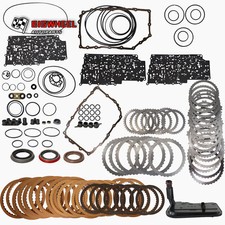

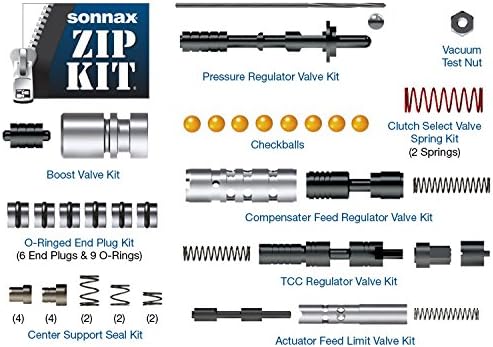
1. The 4-5-6 clutch is the one that burns
Seven frictions, and it still cooks. Sonnax names two design reasons, and neither one is the friction material. The first is apply surface area: there is not enough contact between the apply piston and the plate stack, and once apply pressure climbs past OE specification the plates fail. The second is the backing plate, which flexes and bows into a cone when the clutch applies. Sonnax calls that coning a primary source of clutch failure. A coned backing plate does not load the stack evenly, so the outer frictions do most of the work and glaze first.
You feel it as a slip or a flare on the 3-4 or the 4-5, and on a loaded truck it shows up towing before it shows up empty, because that is where apply pressure and heat both peak. By the time it sets a ratio code the plates are already dark.
The fix: address the apply side, not just the frictions. Sonnax kit 104960-01K pairs a modified piston with an apply ring that increases the contact area against the OE waved plate, plus a rigid backing plate that does not cone. For reference when you are measuring a used stack, OE friction thickness runs about .063 inch and the steels about .086 inch. And fix whatever cooked it, which is usually the next two items.
2. The thermal bypass valve ran the fluid at 194F
This is the cheapest item on the list and the one most often skipped. The 6L80 and 6L90 use an external thermal bypass valve in the cooler circuit that blocks flow to the cooler until the fluid comes up to temperature. The original valve had a full open temperature of 194F. Per GM bulletin 21-NA-199, GM replaced it with a valve that opens fully at 158F, stamped with a 70 on the bottom, readable with the valve installed on the transmission.
GM’s instruction is worth following to the letter: install the new TBV one time during any transmission repair, including a Customer Concern Not Duplicated, and once the 70-stamped valve is in, it does not get replaced again unless it fails. The bulletin’s own complaint list tells you what the old valve was doing: MIL on, harsh shifts, slip, surge, shudder, harsh garage shifts, harsh range shifts, noise, whine, growl, shake, vibration, delayed shifts.
Part numbers matter here. The HD trucks are not the same as the half-tons. GM lists 85547828 for Silverado and Sierra 2500HD and 3500HD, 85563685 for 2019-2021 Silverado and Sierra with aluminum lines plus Express and Savana, and 86774933 for the 2016-2018 steel-line trucks. The 70 stamp can be hard to read because a dot print is sometimes stamped over it.
3. A twisted cooler line that mimics a dying transmission
GM bulletin 22-NA-182, which replaced PIP5792E, covers 6L80, 6L90, 8L90, 10L80, 10L90 and 10L1000 units with harsh shifting, shudder, surging, stalling, neutral/flare, transmission overheating or above-normal fluid temperature, before or after an overhaul. The cause GM names is a twisted cooler line on a low mileage vehicle. On the 2021 and later 2500HD and 3500HD with the L5P or L8T and RPO MYD, this is on the list.
Inspect the lines, and expect to pull under-body panels to see them properly. If a line is twisted, disconnect it at the transmission auxiliary cooler, untwist it, reconnect it and check fluid level. If it stays misshaped after untwisting, replace it. That is a shop-hour repair standing in front of a complaint that reads like a burnt clutch pack, so do it before you quote a teardown.
The same bulletin gives the bypass-valve temperatures by family, which is useful when you are chasing an overheat: the 6-speeds open at 158F, the 8L90 at 194F, and the 10-speeds at 143F. On the 6L80 and 6L90 the valve is external to the transmission, so you can get at it without dropping anything.
4. No line rise after a rebuild, stuck near 70 psi
You finish a 6L90, hook up a gauge, and pressure sits flat at 65 to 70 psi and will not climb with throttle. GEARS documented this on a 2007 GMC K2500 whose previous rebuild had burnt the fluid inside two weeks. Inside were burnt 1-2-3-4, 3-5-R and 4-5-6 clutches that nonetheless air checked good at 35 psi, which tells you the clutches were victims, not the cause.
Here is the test that splits the diagnosis in one move: unplug the transmission electrical connector and read pressure again. With the connector off, the pressure control solenoid defaults to maximum line and the gauge should jump. On that truck it stayed at 70 psi. Electrical is out. The fault is hydraulic.
What it turned out to be is a parts-interchange trap specific to this family. The replacement torque converter housing and the pump body had been updated to a new design, and the hydraulic passages near the pressure regulator valve did not match between the original and the replacement. The two pieces are not interchangeable individually. Replacing the converter housing and the pump body together as a matched set put line and boost pressure back in spec and made it respond to throttle again.
Lay the old part next to the new one and compare the passages before anything gets bolted on. That is thirty seconds against a second teardown.
5. Checkball #1 wears away and you lose forward
Checkball #1 sits in the upper valve body in the 1-2-3-4 clutch circuit. Drive 1-6 oil seats it against the spacer plate, then feeds the 1-2-3-4 clutch to get first gear. Turbulence in the ball pocket spins the ball, and the soft material erodes. GEARS puts numbers on it: the ball starts at .250 inch diameter and worn examples measure .180 inch or less. Eventually it either shrinks past sealing, sticks in the plate, or blows straight through it, and 1-2-3-4 clutch pressure exhausts at the clutch select #2 valve.
The complaint is a no-forward, a slip pulling away, or a cold-only drop to neutral in first that clears as the unit warms. It is often intermittent, which is exactly why it gets chased into a teardown it did not need. Watch for P2723 or P2724.
The fix: replace all the checkballs at any overhaul or valve body service on a 6L45, 6L50, 6L80 or 6L90. They cost almost nothing, and the ones that look fine are the next comeback.
6. 6L80 parts installed in a 6L90
ATSG built an entire bulletin around this after a truck came back from overhaul with a screech on the 2-3 and 4-5 shift. The cause was a 6L80 3-5-R clutch hub in a 6L90. The 6L80 hub is 8 inches tall, the 6L90 hub is 8-1/2 inches. The short hub did not reach the teeth on the bottom friction plate, so the plate scraped the hub every time the clutch applied.
Fifteen components differ dimensionally. The ones that bite most often:
- 4-5-6 clutch housing — the 6L80 housing takes six frictions, the 6L90 housing takes seven. Different heights.
- 3-5-R clutch hub — 8 inches versus 8-1/2 inches.
- Converter housing — the gasoline housing measures 7-3/16 inches tall; the 6L90 diesel housing measures 7-5/8 inches and carries a cast D on the side to identify it.
- Case, park rod, park pawl and pan — all different lengths or thicknesses between the two.
- Valve body — the distance from the clutch feed oil transfer passages to the case differs, which is why a 6L90 body does not belong on a 6L80.
- Output shaft — multiple lengths and diameters exist across both units.
- 1-2-3-4 clutch hub, 1-2-3-4/3-5-R housing, 2-6/low-reverse support, output planetary and sun gear — all dimensionally specific.
Measure the replacement against the original before it goes in the unit. Every one of these parts will physically fit in your hand and look right on the bench.
One complaint that is not on this list: on 2016-2019 trucks and vans with the 6.0L (L96), a mild surge or chuggle at a steady 30-40 mph with the converter locked. GM bulletin 18-NA-253 attributes it to a reduced TCC slip calibration meant to protect the converter under heavy load. If scan-tool TCC slip holds steady at roughly 0-20 rpm and there are no misfires, GM calls it characteristic and says no repair should be made; slip that cycles up and back to zero is true shudder and goes to PIP 5504F. Details for the HD truck are in 6L90 Silverado 2500 common problems.
A diagnostic order that saves a teardown
- Inspect the cooler lines for a twist or a kink, per 22-NA-182, before anything else. It is free, and it explains harsh shift, shudder, surge, stall and overheat.
- Look at the thermal bypass valve. If there is no 70 stamped on the bottom, the fluid has been running to 194F before the cooler ever saw flow.
- Check fluid level and cut the filter open. Friction material or aluminum ends the conversation about a partial repair.
- Pull codes. P2723 or P2724 with a cold neutral or a forward slip points at checkball #1, not at the geartrain.
- Gauge line pressure. Flat at 65 to 70 psi with no rise is the no-line-rise branch.
- If pressure is flat, unplug the transmission connector and read it again. No change means the fault is hydraulic, and the pump and converter housing get compared side by side.
- If the complaint is a screech on the 2-3 and 4-5 after a rebuild, suspect a 6L80 part in the unit before you suspect the planetary.
- Before assembly, measure every replacement part against the original it came off of.
What actually keeps a 6L90 alive
Heat and apply pressure kill these, in that order. The 158F bypass valve is a short install that changes how hot the fluid gets every day for the rest of the unit’s life, and GM tells you to do it on any transmission repair, so there is no reason to leave a 194F valve in a truck you just rebuilt. Past that: verify cooler flow rather than assuming it, keep clean DEXRON VI in it on a real interval instead of treating it as a lifetime fill, and on a truck that tows, fix the 4-5-6 apply side while you are already in there. None of that is glamorous. All of it is cheaper than doing the unit twice.
One more that catches people on a routine service: GM Bulletin 23-NA-224 covers the 6L50/6L80/6L90 auxiliary filter and seal kit (part number 24236933, now split into filter 24236517 and seal 24225347) and states plainly that the seal must be replaced any time the filter is removed. Reusing the old seal is a documented way to turn a routine fluid service into a fresh leak at the filter cover a few weeks later.
Shop the part for this fix
The 4-5-6 clutch is the pack that burns on a 6L90, and the apply piston and backing plate are what let it. CoreTransmissionParts stocks the Sonnax 104960-01K heavy duty apply piston kit that fixes the apply side.
6L90 Sonnax HD 4-5-6 Clutch Apply Piston Kit 104960-01K →Need parts for this job?
Cooler bypass valve kits, valve body zip kits, pressure regulator kits, pumps, clutch packs and master rebuild kits for the 6L90, in stock with secure on-site checkout.
Shop 6L90 parts →FAQ
What is the most common failure on a 6L90 transmission?
The 4-5-6 clutch. The 6L90 runs seven friction plates in that pack where the 6L80 runs six, and Sonnax names the two design reasons it still fails: not enough piston-to-plate apply surface area once apply pressure climbs above OE spec, and the backing plate flexing and bowing into a cone when the clutch applies. Heat makes both worse, which is why the thermal bypass valve and the cooler circuit matter as much as the clutch pack itself. If you are in the unit, address the apply side, not just the frictions.
Why did GM change the 6L90 thermal bypass valve?
Because the original one ran the fluid too hot. GM bulletin 21-NA-199 states the previous thermal bypass valve had a full open temperature of 194F and the revised valve opens fully at 158F. The new valve is stamped with a 70 on the bottom, visible with the valve installed. GM instructs technicians to install it one time during any transmission repair, including a Customer Concern Not Duplicated, and lists part 85547828 for Silverado and Sierra 2500HD and 3500HD.
Can a cooler line really cause a harsh shift on a 6L90?
Yes, and GM says so directly. Bulletin 22-NA-182 lists harsh shifting, shudder, surging, stalling, neutral/flare and transmission overheating on 6L80, 6L90, 8L90, 10L80, 10L90 and 10L1000 units, and names a twisted cooler line on low mileage vehicles as the cause. The repair is to disconnect the line at the auxiliary cooler, untwist it, and replace it if it stays misshaped. Check this before you quote a teardown.
What causes no line rise on a 6L90 after a rebuild?
Pressure that sits flat around 65 to 70 psi and does not climb with throttle. GEARS documented a 2007 GMC K2500 that did exactly that, and the pressure stayed at 70 psi even with the transmission electrical connector unplugged, which proves the problem is hydraulic rather than electrical. The cause was a torque converter housing and pump body that had been updated to a new design with different passages near the pressure regulator valve. They are not interchangeable individually and had to be replaced as a matched set.
Will 6L80 parts fit a 6L90?
Some will and many will not, and ATSG published a bulletin on exactly this. The 6L80 3-5-R clutch hub is 8 inches tall and the 6L90 hub is 8-1/2 inches, so a 6L80 hub in a 6L90 does not engage the bottom friction plate teeth and screeches on the 2-3 and 4-5 shift. ATSG illustrates fifteen components where height, diameter or thickness differ, including the 4-5-6 clutch housing, the case, the pan, the output shaft and the valve body. Measure against the original before anything goes in.
Related guides
- 6L80 vs 6L90: What Actually Changed
- 6L80/6L90 3-5-R Clutch Failure: Why Reverse Goes First
- 6L90 Valve Body Problems and How to Test Them
- 6L90 Shift Solenoid Symptoms
- 6L90 Rebuild Wear Points
- 6L90 P0741: Torque Converter Clutch Stuck Off
- 6L90 Silverado 2500 Common Problems and Fixes
Sources
- General Motors, Service Bulletin 21-NA-199, December 2021 (hosted by NHTSA) — The revised thermal bypass valve full open temperature of 158F (70C) versus the previous valve’s 194F (90C); the 70 stamp identifying the new valve; TBV part 85547828 for Silverado and Sierra 2500HD/3500HD and 85563685 for 2019-2021 aluminum-line trucks, Express and Savana; the instruction to install it once during any transmission repair including CCND; the MYC and MYD application list; DEXRON VI fluid part 88865601. https://static.nhtsa.gov/odi/tsbs/2021/MC-10207911-9999.pdf
- General Motors, Service Bulletin 22-NA-182, August 2023 (hosted by NHTSA, replaces PIP5792E) — Harsh shift, shudder, surge, stall, neutral/flare and transmission overheating on 6L80, 6L90, 8L90, 10L80, 10L90 and 10L1000 units caused by a twisted cooler line on low mileage vehicles; the untwist-or-replace procedure at the auxiliary cooler; the TBV full open temperature of 158F (70C) on the 6-speeds versus 194F on the 8L90 and 143F on the 10-speeds; 2021-2024 Silverado and Sierra 2500HD/3500HD with L5P and L8T engines and RPO MYD. https://static.nhtsa.gov/odi/tsbs/2023/MC-10242240-0001.pdf
- ATSG, GM 6L80/90 Internal Parts Dimensional Differences, 2020 Seminar Information — The 6L80 3-5-R clutch hub at 8 inches versus the 6L90 at 8-1/2 inches and the resulting screech on the 2-3 and 4-5 shift after overhaul; fifteen dimensionally different components; the 6L80 4-5-6 clutch housing taking six frictions and the 6L90 housing taking seven; the 7-3/16 inch gasoline converter housing versus the 7-5/8 inch 6L90 diesel housing marked with a D; differing case, pan, output shaft and valve body clutch feed passage dimensions. https://www.atsg.us/atsg/skin/frontend/default/atsg/corrections/20Red74-75.pdf
- ATRA / GEARS Magazine, UPDATE: 6L90E: No Line Rise after a Rebuild — A 2007 GMC K2500 with line pressure steady at 65 to 70 psi and no rise on acceleration; pressure unchanged at 70 psi with the electrical connector disconnected, isolating the fault to the hydraulic side; burnt 1-2-3-4, 3-5-R and 4-5-6 clutches that still air checked good at 35 psi; differing pressure regulator passages between the original and replacement converter housings; the converter housing and pump body having to be replaced together as a matched set. https://gearsmagazine.com/magazine/6l90e-no-line-rise-after-a-rebuild/
- ATRA / GEARS Magazine, What’s Old Is New Again: 6L45/6L50/6L80/6L90 No Forward, Slips Moving Forward — Checkball #1 in the upper valve body as the 1-2-3-4 clutch feed seal; the original .250 inch diameter versus worn examples at .180 inch or less; wear caused by turbulence spinning the ball in its pocket; no forward, forward slip, and a cold neutral condition in first gear; DTCs P2723 and P2724; the instruction to replace all checkballs at overhaul or valve body service. https://gearsmagazine.com/magazine/whats-old-is-new-again-6l45-6l50-6l80-6l90-no-forward-slips-moving-forward/
- Sonnax, Heavy Duty 4-5-6 Clutch Apply Piston Kit 104960-01K — Insufficient clutch piston-to-plate apply surface area causing 4-5-6 clutch plate failure when apply pressures exceed OE specification; backing plate flexing and bowing (coning) as a primary source of clutch failure; the modified piston and apply ring that increase surface area against the OE waved plate; friction thickness of approximately .063 inch and steel thickness of approximately .086 inch. https://www.sonnax.com/parts/3809-heavy-duty-4-5-6-clutch-apply-piston-kit
- General Motors, Service Bulletin 23-NA-224, December 2023 (hosted by NHTSA) — The 6L50 (MYB), 6L80 (MYC) and 6L90 (MYD) automatic transmission oil filter and seal kit part number 24236933 transitioning to separately ordered filter (24236517) and seal (24225347) parts, and the requirement that the seal be replaced any time the filter is removed. https://static.nhtsa.gov/odi/tsbs/2023/MC-10248721-0001.pdf
- General Motors, Service Bulletin 18-NA-253, September 2020 (hosted by NHTSA) — Surge, chuggle, misfire, fishbite or shudder at a steady 30-40 mph with the TCC applied on 2016-2019 Express, Savana, Silverado and Sierra (including 2019 2500/3500) with the 6.0L L96 and RPO MYD; the reduced TCC slip calibration cause; steady 0-20 rpm slip as characteristic of the vehicle; cycling slip referred to PIP 5504F. https://static.nhtsa.gov/odi/tsbs/2020/MC-10181674-9999.pdf