Most 6L90s that come back after a rebuild do not come back because the clutches were wrong. They come back because the thing that killed the unit in the first place was still bolted to the flexplate, or because the pump could no longer regulate, or because a separator plate went on that the case was never machined for. The 6L90 is a good unit. It is just unforgiving about a short list of specific things, and every one of them is checkable on the bench before the case halves go together. This guide walks that list in the order the failures actually happen.
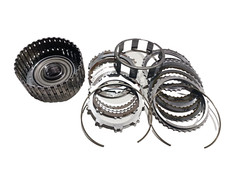
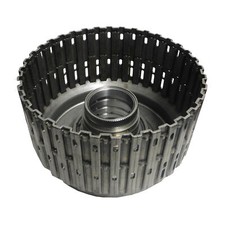
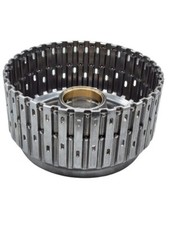
Know which unit is on your bench
The 6L90 is the heavy-duty member of the 6L family that GM introduced in 2006 with the 6L80. Per Sonnax TASC Force technical specialist Tory Royce, roughly 25 percent of the 6L90's internal components were upgraded over the 6L80 to increase torque capacity, and the case was lengthened by 1 3/8 in. to house stronger input and output gear sets along with a different output shaft. Plenty of parts cross over, which is why people get burned.
The trap that costs a second teardown: a 6L80 valve body will physically bolt to a 6L90 case and vice versa, but the center support holes in the upper casting sit at a different offset between the two models. Install the wrong one and you get Forward with no Reverse, because the case ports do not line up with the upper casting. Do not lean on the machined-down identification bosses (A, B, C or D) on the upper casting to sort them either — some valve bodies have no bosses machined down at all, so that method is not foolproof.
Wear point 1: the converter, and the metal it sends downstream
On full-size 6L80 and 6L90 trucks and SUVs, the torque converter is the most common root failure, not a downstream victim. Most of these units use the JMBX 300 mm single-disc, non-captive-clutch converter. Sonnax, which supplies the converter reman industry, reports that a high percentage of JMBX cores opened on the bench show the clutch piston and front cover crashed into each other badly enough that neither part is reusable. That is where the metal in your pan came from.
Their working theory is geometric. The 4L60-E TMBX converter uses a .115 in. thick clutch piston with the spring damper on the transmission side; the JMBX uses a .150 in. piston with the damper flipped to the engine side, which forces a radically different piston profile. The thinner, bowl-shaped TMBX piston flexes and conforms to a cover that is not truly flat, and CMM scans show JMBX covers are wavy and undulating on the clutch surface. The thicker JMBX piston does not conform to that, and it grinds itself and the cover apart. TMBX cover failures are rare; JMBX cover failures keep Sonnax selling forged cover GM-CC-13 and forged piston GM-DA-17P.
GM's own bulletin on the subject is worth reading before you quote the job. GM bulletin PI1393B (June 2015), covering 2015 Silverado, Sierra, Tahoe, Yukon, Suburban, Express and Savana with RPO MYC or MYD, ties DTC P0741 to damaged torque converter clutch friction material and then lists what the debris does next:
- Scoring in the pump pocket of the converter housing, or scoring of the pump cover, from friction material passing through the pump.
- Low line pressure as a result of that pump damage.
- Distressed clutches from the low line pressure — GM names the 4-5-6 clutch as the most likely casualty, which may set P0796.
- U0101, P0634, or a "TRANSMISSION HOT IDLE ENGINE" driver information center message, all possibly caused by a restricted or plugged cooler.
The bulletin is also explicit that friction material can debond without setting P0741 at all, so a clean scan does not clear the converter. GM's instruction is to check line pressure as part of diagnosis, and if it is below spec, disassemble and inspect the pump and clutches. If the converter is condemned, replace the filter assembly and flush and flow test the cooler. Skipping the flow test is how you send a fresh unit out to be killed by the debris still sitting in the cooler lines.
6L80E / 6L90E Master Rebuild Kit with Steel Clutch Plates
Frictions, steels, gaskets, seals and sealing rings for a full 6L90 teardown, so the only things you source separately are the hard parts your inspection actually condemns.
See the rebuild kit →Wear point 2: the pressure regulator bore in the pump
This is the quiet one. The PR valve oscillates continuously in service, and that oscillation wears the bore. Sonnax documents two distinct wear signatures on the same valve, with opposite symptoms:
| Where the bore is worn | What it does hydraulically | What the customer feels |
|---|---|---|
| Balance spool end | Critical fluid loss at the balance end; regulator cannot control line | High line pressure, harsh shifts, overheating from reduced cooler and converter flow |
| Outboard spool | Robs converter feed pressure | Low line pressure, soft shifts, burnt clutches |
You do not guess at this. Vacuum test the pump body at the PR valve and boost assembly ports with the outboard end blocked using a.125 in. thick nut, per the Sonnax vacuum test guide for the 6L45/50/80/90 family, and replace when the port will not hold the recommended minimum. The current repairs are drop-in kit 104520-15K, which needs no pump drilling and includes a replacement outer spring worth a modest 5 psi across the pressure curve, or oversized kit 104520-16K when the bore is far enough gone to require reconditioning. The pump has to come out for either one, so decide during teardown, not after.
While the pump body is on the bench, vacuum test the TCC control valve and the converter feed limit valve too. A TCC control valve stuck against its spring blocks converter charge oil entirely and reads as a no-movement complaint. Stuck in other positions it gives you TCC shudder on apply or when coasting to a stop — the same complaint set covered in our 6L80 and 6L90 TCC shudder diagnosis writeup.
Wear point 3: the 3-5-R drum, the 1-2-3-4 piston, and the 4-5-6 pack
Three hard-part failures repeat on these units. Cracked welds in the 3-5-R drum show up as a no-Reverse or a Reverse that fades — inspect the weld seam under good light on every core, because a hairline crack there will not show itself until the unit is in the truck. The 1-2-3-4 piston cracks; Sonnax sells heavy duty piston 104984-01 for it and lists it as appropriate at every power level, including bone-stock vehicles, which tells you how routine that failure is. The 4-5-6 clutch is the pack GM's own bulletin names as the first to distress under low line pressure, and it is where the 6L90-specific upgrades live: heavy duty 4-5-6 clutch hub and intermediate shaft 104690-36 for stock and heavy-duty commercial work, or 104690-45 for extreme duty builds. Note the part numbers — the 6L80 equivalents are 104680-36 and 104680-45, and they are not interchangeable.
Wear point 4: the output planetary lube dam
This one specifically generates post-overhaul comebacks, which makes it the most expensive item on the list. The 6L90 output planetary carries a lube dam, essentially a cover that directs lube oil into the planetary feed passages. Over time it collects gunk and sludge and chokes off lubrication, and the large OE pinion pins never supplied lube to the small gears in the first place. The result is burnt gears, pins, bearings, needles and washers, plus gear train noise, on a unit you just built. Sonnax kit 104584-90K (the 6L80 version is 104584-80K) replaces the dam, the full washer and bearing set, and adds lube-upgrade pinion pins. Do not wash the old dam off and reinstall it.
Wear point 5: the valve body and TEHCM mistakes that read as hard-part failures
Sonnax technical support publishes a list of 6L-series no-movement causes that is basically a catalog of assembly errors. The ones worth writing on your build sheet:
- Wrong separator plate. A Type 2 plate on a Type 1 valve body gives no Forward. The Type 1 plate, part 24245720, uses seven checkballs; early Type 1 valve bodies cannot be updated to the later eight-checkball plate. Put a Type 1 plate on a Type 2 body and you get no 3rd and no Reverse. Line pressure reads normal in both cases, which is what makes this so easy to chase in the wrong direction.
- Checkballs. No. 1 out of place or shrunken is no Forward. No. 5 out of place is no Reverse. Line pressure normal, sometimes intermittent.
- Clutch select valves installed backwards. Valves go in first, springs outboard. Backwards costs you Forward, Reverse, or both.
- 1-2-3-4 and 3-5-R clutch regulator valves. Easily missed, and usually discovered after the unit is back in the vehicle. A stuck 3-5-R regulator valve gives no Reverse and shift complaints.
- TEHCM filter gasket left out. Rare, but it is a no-move with low or no line pressure.
- TEHCM part number and programming. Verify the number and that the program file matches the VIN. Wrong or misprogrammed reads as no movement or no upshift.
Two pressure numbers from that same Sonnax material are worth memorizing because they sort electrical from mechanical fast. A line pressure solenoid stuck in exhaust holds line at roughly 60 to 68 psi with no rise on RPM — unplugged looks identical. A missing pressure regulator boost valve retaining roll pin shows up as under 30 psi at idle. Hook a gauge to the line tap before you pull anything; the procedure is in our line pressure testing guide.
One relearn quirk that is not a failure: during OE programming or the relearn process these units can go temporarily no-move. Remove the scanner, pull the key, open and close the driver door, wait 15 to 20 minutes, and it usually comes back. Do not tear into a unit over that. Our adaptive relearn writeup covers the full post-rebuild sequence.
Fluid, fill and the level check
The 6L90 runs DEXRON VI, and GM TechLink's 2025 transmission capacities table lists the fluid-change capacity for the 6L90 (RPO MYD) as 5.7 liters / 6.0 quarts. That is a service fill after a pan and filter, not a dry fill — an overhaul with an empty converter and flushed cooler lines takes considerably more, and you finish the job on the level control plug rather than on a quart count. There is no dipstick. Fill through the plug, run the selector slowly through every range at idle to charge the passages and clutches, return to Park, and pull the level plug: correct level is when fluid just begins to drip. Do it inside the fluid temperature window your service information specifies, because a cold check reads low and a hot check reads high. DEXRON VI is a licensed spec with defined friction characteristics, and substituting a generic multi-vehicle fluid is a shudder complaint waiting to happen.
None of the vacuum testing above works without a stand you trust. A valve body vacuum test kit turns bore wear from an argument into a number.
Need parts for this job?
Master rebuild kits, valve body and pressure regulator kits, hard parts, coolers and bench tooling for the GM 6L90, all in one place.
Shop 6L90 parts →Which upgrades are actually worth it
Ranked by return per dollar on a truck that tows:
- An updated converter, every time. Reusing a JMBX core on a unit that came in full of metal is the most reliable way to buy the job back. This is the failure, not a symptom of it.
- Flush and flow test the cooler, replace the filter assembly. GM calls for both in PI1393B when the converter is the cause. Debris left in the cooler kills the new unit.
- PR valve kit if the bore fails a vacuum test. 104520-15K drop-in, or 104520-16K with bore reconditioning. Restores line pressure control in all ranges and protects cooler and lube flow.
- Output planet saver kit 104584-90K. Cheap relative to a burnt planetary, and it addresses a failure mode that specifically targets freshly overhauled units.
- Heavy duty 1-2-3-4 piston 104984-01. Appropriate on stock vehicles, not just performance builds.
- Heavy duty 4-5-6 clutch hub and intermediate shaft 104690-36 on anything doing commercial or towing work, stepping up to 104690-45 with tuning or a power adder.
The short version
Condemn the converter before you condemn anything else, because on a full-size 6L90 it is usually the source of the metal. Flush and flow test the cooler and replace the filter assembly whenever it is. Vacuum test the pump PR bore instead of assuming it is fine. Inspect the 3-5-R drum welds, replace the 1-2-3-4 piston, and treat the output planetary lube dam as a service item. Then confirm you have the right valve body for the case, the right separator plate for the valve body, seven checkballs where the Type 1 plate calls for them, and clutch select valves in with the springs outboard. Fill it with DEXRON VI, set the level on the plug rather than the invoice, and let it relearn before you decide anything is wrong.
Sources
- General Motors — Bulletin PI1393B, "Diagnostic Tips for DTC P0741: Torque Converter Clutch Stuck Off," June 2015 (via NHTSA). Backs the affected 2015 GM models with RPO MYC/MYD, the link between P0741 and damaged torque converter clutch friction material, the requirement to check line pressure as part of diagnosis, pump pocket and pump cover scoring from friction material passing through the pump, low line pressure and resulting clutch distress with the 4-5-6 clutch named as most likely and P0796 as a result, the U0101 / P0634 / "TRANSMISSION HOT IDLE ENGINE" symptoms from a restricted cooler, that debond can occur without setting P0741, and the instruction to replace the filter assembly and flush and flow test the cooler. static.nhtsa.gov
- GM TechLink — "2025 Transmission Capacities & Fluids (U.S. and Canada only)," May 2025. Backs the 6L90 (RPO MYD) fluid change capacity of 5.7 liters / 6.0 quarts and the DEXRON VI fluid specification, and the distinction the table draws between fluid change capacity and overhaul capacity. gm-techlink.com
- Sonnax — "GM 6L45/50, 6L80/90 No Movement Conditions: Analysis & Repair Tips," Jim Mobley, March 2023. Backs the temporary no-move during programming or relearn and the 15 to 20 minute key-off reset, TEHCM part number and VIN program file verification, the line pressure solenoid stuck in exhaust holding roughly 60 to 68 psi with no RPM rise, the under 30 psi at idle symptom of a missing boost valve roll pin, the TCC control valve stuck against its spring as a no-movement and shudder cause, Type 1 versus Type 2 separator plate mismatches with plate 24245720 and its seven checkballs, the TEHCM filter gasket omission, clutch select valves installed backwards with springs outboard, the No. 1 and No. 5 checkball conditions, the 1-2-3-4 and 3-5-R clutch regulator valves, and the 6L90 valve body on a 6L80 no-Reverse condition. sonnax.com
- Sonnax — "6L80, 6L90 Transmission Tech Advisory: Consider an Updated Converter in Your Next Rebuild," March 2020. Backs the converter as the dominant root failure in full-size 6L80/6L90 applications, the JMBX 300 mm single-disc non-captive clutch design, the high rate of piston-to-cover crash damage and the metal it puts through the transmission, the P0741 and TCC slip presentation with a pan full of debris and a worn pump, the.115 in. TMBX versus.150 in. JMBX piston thickness comparison and the flipped damper orientation, the CMM findings of wavy cover clutch surfaces, and forged replacement cover GM-CC-13 and piston GM-DA-17P. sonnax.com
- Sonnax — Pressure Regulator Valve Kit 104520-15K and Output Planet Saver Kit 104584-90K (GM 6L45/6L50/6L80/6L90). The pressure regulator documentation backs continuous valve oscillation as the cause of bore wear, balance-spool-end wear producing high line pressure, harsh shifts and overheating from reduced cooler and converter flow, outboard spool wear robbing converter feed and producing low line pressure, soft shifts and burnt clutches, the replacement outer spring's modest 5 psi increase, the no-pump-drilling drop-in design, the oversized 104520-16K alternative, and that the pump must be removed to install. The planet saver documentation backs the output planetary lube dam trapping contamination and choking lube flow, the resulting post-overhaul comebacks and burnt gears, pins, bearings, needles and washers, and the lube-upgrade pinion pins in kit 104584-90K (6L80 version 104584-80K). 104520-15K • 104584-90K
- Transmission Digest — "GM 6L80, 6L90 No-Reverse Condition Explanation," Tory Royce, Sonnax TASC Force, January 2026. Backs the 2006 introduction of the 6L80 and the 6L45/6L50/6L90 variants, that roughly 25 percent of the 6L90's internal components were upgraded for torque capacity, the case lengthened by 1 3/8 in. for stronger input and output gear sets and a different output shaft, the common no-Reverse causes including an out-of-place No. 5 checkball, incorrect separator plate or gaskets, improperly indexed snap ring, cracked welds in the 3-5-R drum, a stuck 3-5-R clutch regulator valve and TEHCM solenoid issues, and the critical detail that a 6L80 valve body bolts to a 6L90 case but has a different center support hole offset, giving Forward with no Reverse, plus the warning that machined-down identification bosses are not a reliable identification method. transmissiondigest.com