If you work on GM rear-wheel-drive trucks and SUVs long enough, the 6L80 and 6L90 become the two units sitting on your bench most weeks. They look almost identical, they share a parts catalog for a lot of components, and the paperwork on a core is often wrong. That is exactly where people get burned: order the wrong hard parts, drop in the wrong valve body, or quote a customer a 6L80 job on what turns out to be a 6L90 core. This is the builder-to-builder breakdown of what actually differs, what genuinely interchanges, and how to positively identify the unit in front of you before you commit to parts.
For more GM rear-drive material, see our 6L80 service guide and 6L90 rebuild wear points.
The Shared DNA
Start with what is the same, because it is most of the unit. The 6L80 arrived in 2006 to replace the aging 4L60-E in select Cadillac models and the Corvette, and by 2007 it was spreading into pickup and SUV applications. GM built the whole 6L family on one modular concept, so the 6L80 shares its architecture with the lighter-duty 6L45 and 6L50 and the heavy-duty 6L90. All of them use three gearsets, one simple input planetary and two output gearsets, and all of them are fully electronic six-speeds controlled by a TEHCM (transmission electro-hydraulic control module) that lives inside the pan.
The 6L80 and 6L90 also share their ratios and their fluid. Both run first through sixth at 4.02, 2.36, 1.53, 1.15, 0.85 and 0.67, with a 3.06 reverse, and both specify DEXRON VI. Fill capacity moves around with converter size and application, landing roughly in the 10-to-13-quart range on a dry fill, so set level by the temperature-referenced fluid-check procedure, not by counting quarts into a rebuilt unit. If you already know the family, most of your diagnostic playbook carries straight across from one to the other. The differences are narrow, but they are the ones that bite.
What Actually Makes the 6L90 Heavier Duty
The 6L90 is not a different transmission. It is a reinforced 6L80. Per Sonnax, about 25% of the internal components were upgraded to raise torque capacity, and the headline change is dimensional: the 6L90 case is lengthened by 1 3/8 inches to make room for a stronger input and output gearset and a different output shaft. That extra length is the single most useful thing to remember, because it is measurable on a core with a tape and it drives most of the interchange rules below.
The strengthening lives where the load lives. The 6L90 input gearset carries additional pinion gears for a stronger planetary, the output gearset uses wider gears, and the output shaft was revised to handle the higher torque. Inside the clutch packs, the 6L90 gains a friction over the 6L80 in each pack. The clearest published example is the 4-5-6 clutch: Sonnax lists OE clutch capacity as six frictions in the 6L80 and seven frictions in the 6L90, using OE frictions about 0.063 in. thick and OE steels about 0.086 in. thick. That extra plate, multiplied across the packs, plus the beefier gear train, is what lets GM put the 6L90 behind the big-block gas and the higher-torque combinations without changing the basic design.
| Item | 6L80 (RPO MYC) | 6L90 (RPO MYD) |
|---|---|---|
| Role | Standard-duty six-speed | Heavy-duty six-speed |
| Case length | Baseline | 1 3/8 in. longer |
| Internal parts vs. sibling | — | ~25% upgraded |
| Input gearset | Standard planetary | Added pinions, stronger planetary |
| Output gearset / shaft | Standard | Wider gears, revised output shaft |
| 4-5-6 clutch (OE) | 6 frictions | 7 frictions |
| Gear ratios | 4.02 / 2.36 / 1.53 / 1.15 / 0.85 / 0.67, R 3.06 | Same |
| Fluid | DEXRON VI | DEXRON VI |
| Typical apps | 1500 trucks/SUVs, Camaro SS, Corvette, CTS | 2500/3500 HD, Express/Savana vans, CTS-V, Camaro ZL1 |
How to Tell Which One You Have
Three independent checks, in order of how fast they are:
1. RPO code. The regular production option code is the fastest paper answer. MYC is a 6L80, MYD is a 6L90. (MYA is the 6L45 and MYB is the 6L50, the lighter siblings you will occasionally trip over on smaller applications.) The RPO list lives on the label in the glovebox or on the driver's door pillar. Treat it as a strong hint, not gospel, on a bare core with no vehicle attached.
2. Case length and vehicle. On the bench, lay a 6L80 and a 6L90 side by side and the 1 3/8-inch difference in case length is obvious. If you cannot compare, the donor vehicle narrows it fast: the 6L90 is what GM hung behind the 2500 and 3500 HD trucks, the Express and Savana 2500/3500 vans, and the high-torque cars like the second-gen CTS-V and the fifth-gen Camaro ZL1. Half-ton trucks, standard SUVs, the Camaro SS and most Corvette and CTS applications ran the 6L80.
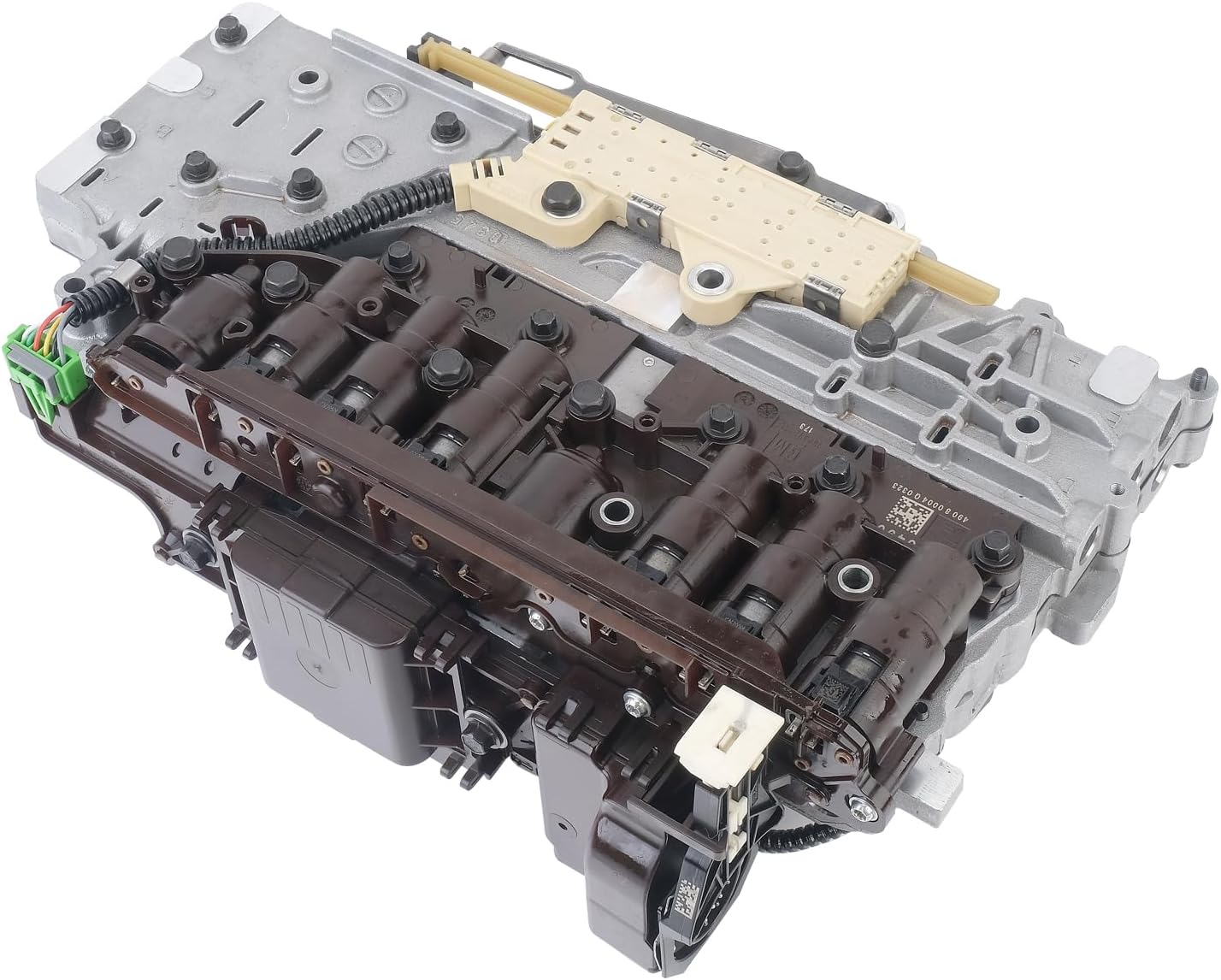
3. Valve body boss ID. When you are down to the valve body, the upper casting carries a set of machined-down bosses that identify the unit: "A" boss reads MYA/6L45, "B" reads MYB/6L50, "C" reads MYC/6L80, and "D" reads MYD/6L90. Sonnax cautions that this is helpful but not foolproof, because some castings have no boss machined down at all, so use it to confirm, not as your only check.
Interchange: What Swaps and What Does Not
This is where the "many parts interchange" reputation gets people into trouble. Plenty of soft parts, seals, and small hard parts do cross between the 6L80 and 6L90. But the things that matter most for a running unit do not, and the failures they cause are easy to misdiagnose.
The valve body trap
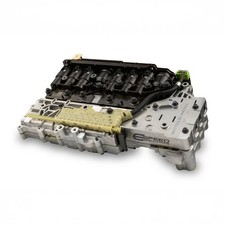
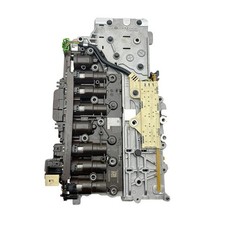
A 6L80 valve body will bolt straight onto a 6L90 case, and vice versa. It will look right, torque down fine, and the checkballs will all seat. It is still the wrong part. Per Sonnax, the center support holes in the upper valve body casting have a different offset between the two models. Bolt a 6L80 valve body onto a 6L90 (or the reverse) and the case ports do not align with the ports in the upper casting, so you end up with Forward but no Reverse. If a no-Reverse complaint shows up immediately after a valve body swap, this offset is the first thing to suspect. Confirm the casting by boss ID and RPO before it goes back together.
Case, gear train, and output shaft
The 1 3/8-inch case-length difference means the cases are not interchangeable, and the longer 6L90 output section, wider output gears, and revised output shaft do not drop into a 6L80. That also affects driveline: a 6L90 will not simply substitute for a 6L80 in a chassis without accounting for the different overall length and output. Treat the two as separate on anything downstream of the input.
Converter
Match the converter to the unit and the application, not to whatever fits in the bell. The 6L family was offered with more than one converter size, and torque converter failure is the number one problem these units come in with (more on that below). When you rebuild, replace the converter, and make sure it is the correct unit for the transmission and vehicle rather than reusing an unknown core.
Shop 6L80/6L90 parts →
The Failures They Share
Because the architecture is common, the failure patterns are common too. Knowing which unit you have changes the part numbers you order, but the diagnosis is largely the same.
Torque converter first, every time
Keith Clark's teardown write-up in Gears (ATRA) is blunt about it: torque converter failure is the number one issue that brings these units to the shop, and it is the pump that pays the price. When the converter comes apart, the debris and the resulting damage force pump-area machine work. Clark notes a typical pump repair removes about 0.010 to 0.015 in. of material from the stator support and bell housing to restore the sealing surfaces and pump-pocket depth. The practical lesson for a diagnosis: when one of these comes in slipping or with pressure problems, do not skip the converter and the pump while chasing a clutch.
The 4-5-6 clutch and backing-plate coning
The 4-5-6 clutch is the pattern failure inside the unit. Per Sonnax, the OE assembly has two related weak points: not enough clutch piston-to-plate apply surface area, which burns plates when apply pressure climbs above OE spec, and flexing/bowing of the backing plate, called coning, which is a primary source of clutch failure. This is where the extra 6L90 plate matters. If you are building either unit for anything beyond stock, a more rigid backing plate and an improved apply piston are the fix, and the high-capacity route eliminates the OE waved plate to fit an additional friction. Whichever unit you have, inspect that backing plate for coning before you reuse anything.
Stator support gasket leaks
Steve Garrett's Gears (ATRA) piece on 6L80/90 clutch failure points at a part most people overlook: the stator support gasket. The stator support feeds the apply oil for the 1-2-3-4, 3-5-R and 4-5-6 clutches plus the compensator circuits. When that gasket leaks, which clutch fails depends on where it is leaking, and cross-leaks between circuits cause tie-up while a leak at the compensator feed shows up as shift-feel complaints. The failure is common on high-mileage units because hot/cold cycling etches the gasket. If you have burned a clutch and cannot explain why, pull and inspect that gasket rather than just replacing the friction.
No-Reverse and no-movement
No-Reverse is common on these units. Beyond the valve body offset already covered, Sonnax lists an out-of-place #5 checkball, an incorrect separator plate or gaskets, an improperly indexed snap ring, cracked welds in the 3-5-R drum, a stuck 3-5-R clutch regulator valve, and TEHCM solenoid faults. For a full no-movement, Jim Mobley's Sonnax analysis flags the electronics and pump first: a TEHCM line pressure solenoid stuck in exhaust holds line pressure at roughly 60 to 68 psi with no rise off idle, a stuck pump TCC control valve can block converter charge, and a missing pump pressure relief ball and spring gives no line pressure at all. Confirm line pressure with a gauge before you condemn hard parts.
Rebuilding a 6L80 or 6L90 this week?
4-5-6 clutch packs and rigid backing plates, valve body components, stator support gaskets, solenoids, filters and fluid — matched to your exact unit and shipped from the USA.
Shop 6L80 parts →FAQ
Is the 6L90 just a bigger 6L80?
Roughly, yes. They share the architecture, ratios and DEXRON VI fluid, but the 6L90 is the heavy-duty variant. About 25% of its internals are upgraded, the case is 1 3/8 in. longer to fit a stronger input and output gearset and a different output shaft, and each clutch pack carries an extra plate. The 6L90 4-5-6 pack runs seven frictions where the 6L80 runs six.
Will a 6L80 valve body work in a 6L90?
It bolts up, but do not run it. The center support holes in the upper casting have a different offset between the two, so the wrong valve body gives Forward with no Reverse because the case ports do not align. Verify the unit by RPO and by the machined boss (A=6L45, B=6L50, C=6L80, D=6L90) before you install.
How do I tell which one I have?
Check the RPO code first: MYC is a 6L80, MYD is a 6L90. On the bench, the 6L90 case is about 1 3/8 in. longer. The vehicle helps too: 2500/3500 HD trucks and vans, the CTS-V and the Camaro ZL1 ran the 6L90.
Do the 6L80 and 6L90 use the same fluid?
Yes, both call for DEXRON VI. Capacity varies with converter size and application, roughly 10 to 13 quarts on a dry fill, so set the level by the temperature-referenced check procedure rather than a fixed quart count.
What fails on both units?
The torque converter is the number one reason these come in, and it damages the pump. Beyond that: the 4-5-6 clutch from backing-plate coning and a marginal apply piston, the stator support gasket, and no-Reverse or no-movement traced to checkballs, separator plates, the 3-5-R and 1-2-3-4 clutch regulator valves, and the TEHCM.
Sources
- Sonnax — "Addressing GM 6L80, 6L90 No Reverse Condition," Tory Royce, January 12, 2026. Backs the 6L80 2006 introduction to replace the 4L60-E, the ~25% upgraded internals in the 6L90, the case lengthened by 1 3/8 in. for stronger input/output gearsets and a different output shaft, the valve body upper-casting center-support offset causing Forward-but-no-Reverse when the wrong valve body is installed, the A/B/C/D boss identification (MYA/MYB/MYC/MYD), and no-Reverse causes including the #5 checkball, separator plate, snap ring, 3-5-R drum welds, 3-5-R clutch regulator valve and TEHCM. sonnax.com
- Sonnax — "Heavy Duty 4-5-6 Clutch Apply Piston Kit (104960-01K)," product/tech page. Backs the 4-5-6 clutch as a pattern failure from insufficient piston-to-plate apply surface area and backing-plate coning, the OE clutch capacity of six frictions in the 6L80 and seven in the 6L90, and OE friction (~0.063 in.) and steel (~0.086 in.) thicknesses. sonnax.com
- Sonnax — "GM 6L45/50, 6L80/90 No Movement Conditions: Analysis & Repair Tips," Jim Mobley. Backs the no-movement diagnostics: TEHCM line pressure solenoid stuck in exhaust holding line pressure at ~60–68 psi with no rise, stuck pump TCC control valve blocking converter charge, and a missing pump pressure relief ball and spring giving no line pressure. sonnax.com
- Gears Magazine (ATRA) — "The Devil's in the Details! A Machinist's Look at the 6L80/6L90 Units," Keith Clark, January 14, 2021. Backs torque converter failure as the number one issue bringing these units in and the pump-area machine work it forces, including removing roughly 0.010–0.015 in. from the stator support and bell housing to restore surfaces and pump-pocket depth. gearsmagazine.com
- Gears Magazine (ATRA) — "Tackling Clutch Failure in the GM 6L80/90," Steve Garrett, June 3, 2019. Backs the 1-2-3-4, 3-5-R and 4-5-6 clutches as the most common apply components to fail and the stator support gasket as a shared supply for all three clutch circuits plus the compensator feed, where a leak causes clutch failure, cross-circuit tie-up, or shift-feel complaints depending on location. gearsmagazine.com