Shift complaints on an Expedition come in two kinds, and they are easy to tell apart once you have a scan tool on the truck. One kind is electrical: the truck takes off in 5th, drops into 1st at highway speed, loses Reverse, or lights the wrench lamp. On 2011-2013 trucks that is almost always the molded lead frame, and Ford has a bulletin, a recall and two extended coverage programs that prove it. The other kind is shift quality with no codes: a 2-3 that flares one time and binds the next, a soft 1-2, or a bump after a valve body swap. That is solenoid calibration, adaptives or valve body wear.
This guide covers the 2009-2017 Expedition and Navigator with the 6R80. The 2018-up trucks use the 10R80, which is a different transmission. For slips that show up as a ratio problem in one gear, see our 6R80 Expedition slipping guide. Every source is linked at the bottom.
Start with the complaint, not the parts
Before anything comes apart, pull codes from the PCM (not just the generic OBD list), check open recalls on the VIN, and road test with turbine shaft speed (TSS), output shaft speed (OSS), commanded gear, transmission fluid temperature and the solenoid PIDs on the graph. The complaint usually sorts itself into one of these rows:
| Complaint | Most likely cause | First check |
|---|---|---|
| Starts out in 5th, speedometer reads zero, odometer shows dashes, wrench light | Lead frame OSS signal lost (2012-2013) | P0720, P0722; Ford TSB 13-6-8 |
| Sudden downshift into 1st while moving | OSS fault plus the PCM strategy of the time | Open recall 16S19 or program 19B05; P0720, P0722, P0731, P1500 |
| No Reverse, no R on the PRNDL display, backup lamps or camera out | Transmission range sensor in the lead frame | Compliance recall 12C23; range sensor PID |
| 2-3 sometimes flares, sometimes binds; 1-2 slow or bumps at the end | Shift solenoid output drift, adaptives | Solenoid current and pressure PIDs during the shift |
| Harsh or flared shifts right after a valve body or solenoid job | Solenoid strategy and body ID codes not programmed | Codes on the valve body and case tag vs. what the PCM has |
The lead frame: 5th-gear starts and lost speed signal
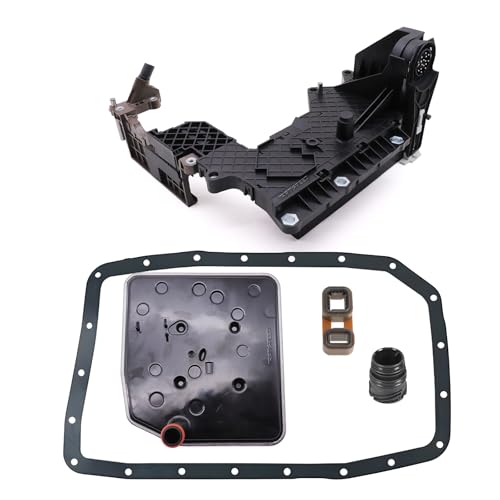
The molded lead frame is the plastic carrier on the main control that holds the internal wiring, the speed sensors and the range sensor. On 2011-2013 trucks it is the most common cause of an Expedition that "shifts wrong."
Ford TSB 13-6-8 (June 2013, superseding 13-4-9) covers 2012-2013 Expedition and Navigator trucks built on or before April 8, 2013. The complaint is exactly what owners describe: the truck engages 5th gear when starting from a stop, the wrench light and seat belt minder may light, the speedometer reads zero and the odometer shows dashes while driving. The symptoms may clear after a key cycle, and P0720 and P0722 may or may not be stored. The repair is the molded lead frame, AL3Z-7G276-A at the time, and the bulletin states that the shift solenoids do not need to be replaced. Ford allowed 2.1 hours for the job on the Expedition.
Why 5th? With no output speed signal the PCM cannot calculate vehicle speed, so it falls back to a failsafe gear. That is also why the speedometer drops to zero: on these trucks the speedometer runs off that same signal.
Ford later wrapped the same failure into Customer Satisfaction Program 19N01, which extended lead frame coverage to 10 years or 150,000 miles on 2012-2013 Expedition and Navigator trucks built at Kentucky Truck from April 11, 2011 through August 19, 2013. The qualifying codes are P0720, P0722, P0731 and/or P1500, and the part listed in the 2020 supplement is AL3Z-7G276-D. Most of these trucks have now aged out of the 10-year window, so in practice this is a customer-pay repair today, but the bulletin is still the best diagnostic map you have.
Doing the lead frame job
- Have the part before you drop the pan. Ford's 12C23 procedure warns that 5 to 8 quarts can come out once the pan, filter and main control are removed.
- Six long bolts hold the lead frame to the main control assembly.
- Align the range sensor pin with the manual control valve when you set the new lead frame on.
- Refill with MERCON LV (Motorcraft XT-10-QLVC, the fluid Ford lists for this program) and set the level at the fill plug, engine running, at the temperature the workshop manual calls for. There is no conventional dipstick.
Sudden downshift into 1st
The dangerous version of the OSS fault is the downshift. In April 2016 Ford recalled about 202,000 2011-2012 F-150 and 2012 Expedition, Mustang and Navigator vehicles under Safety Recall 16S19 because the transmission controls could force a temporary downshift into 1st when the OSS signal faulted. Depending on road speed, the abrupt slowdown could make the rear tires slide or lock. The Expeditions in that recall were built at Kentucky Truck from August 19 to December 19, 2011, and the Navigators from August 19 to December 17, 2011.
The fix was a PCM software update that stops the downshift into 1st if an OSS fault occurs, plus a lead frame if the related codes were present. Program 19B05 later did the same reprogramming for more 2012-2013 Expedition and Navigator trucks, and 19N01 requires 19B05 to be done or closed before the lead frame is replaced. My order on any 2012-2013 Expedition with a downshift complaint is: check the VIN for open campaigns, flash the PCM, then diagnose the lead frame. A new lead frame on old software only fixes half of it.
Reverse problems and the range sensor
The transmission range sensor is also part of the lead frame. Ford compliance recall 12C23 (NHTSA 12V190) covered 2011-2013 F-150, Expedition, Navigator and Mustang vehicles for a range sensor that could give a bad Reverse signal. The complaints: Reverse does not engage, the electronic PRNDL does not show R, the backup lamps do not come on, and the rear camera works only some of the time.
On the scan tool, watch the range sensor PID as you move the selector slowly through every position. A position that reads wrong or drops out while the lever sits still is the sensor, not the manual valve linkage.
Shift quality problems with no codes
This is where most comebacks live. The 6R80 shifts clutch-to-clutch: on the 2-3, the 3-5-R (B) clutch has to apply as the 2-6 (C) clutch releases, and the PCM controls each with its own variable bleed solenoid. If either solenoid's output drifts, the overlap is wrong and you get a flare (release too early) or a bind-up (apply too early).
Sonnax's Jim Dial published a 6R80 case that matches what I see in Expeditions. The complaint was a 2-3 that sometimes flared and sometimes bound up, plus a 1-2 that was sometimes slow and sometimes bumped at the end. Resetting the adaptives and driving 20 to 25 start-and-stop cycles through all six gears did not fix it. On the scan tool, the C solenoid (normally low, 2-6 clutch) sat at 1.0 A at the start of the shift, while the B solenoid (normally high, 3-5-R clutch) dropped to about 0.56 A as its pressure built to 14.6 psi. At the end of the shift the B solenoid was near 0.07 A with about 50 psi, and C stayed off through 3rd. The command pattern was consistent every time, so the electronics were doing their job. Replacing the B and C solenoids together, resetting adaptives and repeating the drive cycle fixed it.
If the commanded currents follow the same pattern every shift but the shift feel changes, the solenoid's actual output does not match what the PCM thinks it is getting. Dial explains why: the 6R80 variable bleed solenoids lose their calibration, or banding, over time. Bands run from 1 to 5 on both normally low and normally high units, and a band 3 solenoid can drift to a 5 or to a 1.5. The PCM also expects to see TSS drop within a split second of its command. When it does not, the shift flares and the adaptive tables chase it.
Two rules come out of that. First, unless you are programming a new calibration code, replace a solenoid with one of the same band number as the original. Second, keep clutch clearances close to the OE specification during a rebuild. Dial warns that tightening a pack to "firm up" shifts can cause binding, and the unit may be back out soon after.
Identifying the solenoids
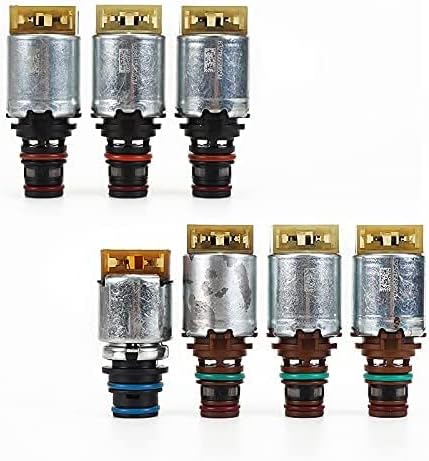
GEARS Magazine (ATRA) gives the visual IDs on the 2011-up unit. The normally vented solenoids, VFS 1, 3 and 6, have a brown snout with green and red O-rings. The normally applied units, VFS 2, 4 and 5, have a black snout with orange and red O-rings. The on/off SSE solenoid has blue O-rings, and its resistance changed during production: about 10.5 ohms on units built before November 4, 2010 and about 18 ohms after. A 2011-up Expedition should read near 18 ohms.
After any valve body or solenoid work: program it
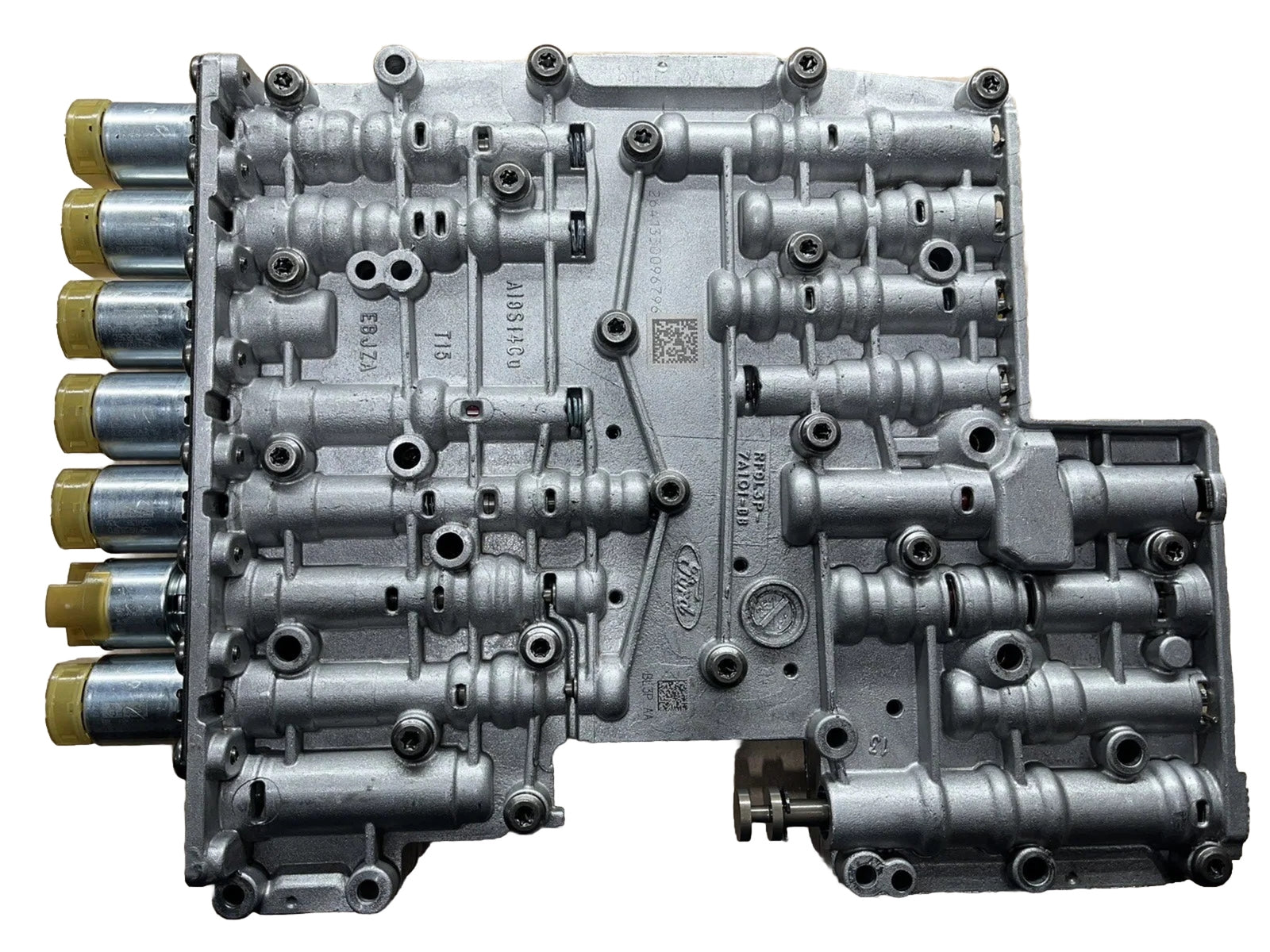
An Expedition that shifts harsh or flares right after a valve body or solenoid replacement usually has nothing wrong with the new parts. The PCM needs the solenoid strategy code and solenoid body ID code, which are printed on the valve body and on a tag on the case, to know each solenoid's band, whether it is normally low or normally high, and which clutch it controls. Load those codes with a capable scan tool, clear the adaptives, then drive through every gear up and down so the PCM can learn. Sonnax says the relearn can sometimes be done in three to five shift cycles. Tell the customer the shifts may feel firm for the first few days.
One fitment trap on Expeditions: the 2015-2017 EcoBoost trucks use the later valve body. Sonnax lists its 6R80L-6R100 zip kit for 2015-later 6R80 units and states it does not fit 2014-and-earlier units, so a 2014 valve body is not a drop-in for a 2016 truck. Order by year.
The fix, by what you found
- 5th-gear start, dead speedometer, P0720/P0722: lead frame (current part AL3Z-7G276-D), after any open PCM campaign is done.
- Sudden downshift into 1st: PCM reflash under 16S19 or 19B05 if open, then the lead frame if the OSS codes are stored.
- No Reverse, PRNDL and backup lamp faults: range sensor, which means the lead frame.
- Inconsistent 2-3 or 1-2 with no codes: reset adaptives and run the drive cycle first; if the solenoid command pattern is steady but the shift is not, replace the B and C solenoids with matching band numbers.
- Harsh after valve body work: program the strategy and body ID codes, then relearn.
- Bore wear with flare and ratio codes: a remanufactured valve body for the year, programmed and relearned.
6R80 lead frame with temp and range sensor
The fix for the 5th-gear start, lost speedometer, sudden downshift and Reverse range complaints on 2011-up Expeditions. Sold by our sister store, CoreTransmissionParts.
Shop the part for this fix →Chasing solenoid band drift instead? The solenoids collection has the 6R80 kits.
Need parts for this job?
Expedition 6R80 lead frames, solenoid sets, remanufactured valve bodies by year and MERCON LV are on our 6R80 parts page, with checkout on site.
FAQ
Why does my Ford Expedition start out in 5th gear?
On 2012-2013 Expedition and Navigator trucks with the 6R80, a lead frame fault that drops the output shaft speed signal makes the PCM fall back to 5th gear. Ford TSB 13-6-8 lists the 5th-gear start with a zero speedometer, dashed odometer and wrench light, with P0720 or P0722 possibly stored. The repair is the molded lead frame; the solenoids do not need to be replaced.
Why does my Expedition suddenly downshift into first gear?
An output shaft speed sensor fault on the lead frame could force a temporary downshift into 1st on certain 2012 Expedition and Navigator trucks, which Ford covered under Safety Recall 16S19. The remedy is a PCM software update, plus a new lead frame if P0720, P0722, P0731 or P1500 are stored. Check the VIN for open campaigns, including program 19B05, before replacing parts.
Can bad solenoids cause harsh or flared shifts on a 6R80 Expedition?
Yes. The 6R80 variable bleed solenoids lose their calibration, or band, over time, so the clutch-to-clutch overlap goes wrong and the 2-3 can flare one time and bind the next. If the solenoid command pattern on the scan tool is steady but the shift is not, replace the affected solenoids with ones of the same band number, then reset adaptives and relearn.
Do I need to program the PCM after replacing a 6R80 valve body?
Yes. The PCM needs the solenoid strategy and body ID codes printed on the valve body and the case tag so it knows each solenoid's band, type and clutch. Load them, clear the adaptives and drive through every gear up and down. Skipping this step is the most common reason a good valve body still shifts harsh or flares.
Related guides
- 6R80 Expedition Common Problems and Fixes
- 6R80 Expedition Slipping: Causes and Fix
- 6R80 Shift Solenoid Symptoms
- 6R80 Harsh Shift Causes
- 6R80 P0720 Fix
Sources
- Ford Motor Company — Technical Service Bulletin 13-6-8, "6R80 Transmission High Gear Engagement From A Stop," June 2013, hosted by NHTSA. Backs the 2012-2013 Expedition and Navigator coverage for trucks built on or before April 8, 2013, the 5th-gear start, wrench light, zero speedometer and dashed odometer symptoms, P0720/P0722, the AL3Z-7G276-A lead frame, the note that solenoids are not required, and the 2.1-hour labor time. static.nhtsa.gov (PDF)
- Ford Motor Company — Customer Satisfaction Program 19N01, Supplement #3, "Transmission Molded Leadframe Extended Coverage," November 2020, hosted by NHTSA. Backs the 10-year/150,000-mile coverage, the 2012-2013 Expedition/Navigator build dates, DTCs P0720, P0722, P0731 and P1500, part AL3Z-7G276-D, MERCON LV XT-10-QLVC, and the requirement to complete 19B05 first. static.nhtsa.gov (PDF)
- Ford Motor Company — recall announcement, April 27, 2016 (Safety Recall 16S19, NHTSA 16V-248). Backs the forced downshift into 1st on an OSS fault, the risk of rear tire slide or lockup, the 2012 Expedition and Navigator build dates, about 202,000 vehicles, and the PCM software remedy. static.nhtsa.gov (PDF)
- Ford Motor Company — Compliance Recall 12C23 dealer letter and technical instructions (NHTSA 12V190), 2012. Backs the Reverse, PRNDL, backup lamp and rear camera symptoms, the range sensor being part of the lead frame, the 5 to 8 quarts recovered when the main control is removed, the six long lead frame bolts, and aligning the TRS pin with the manual control valve. static.nhtsa.gov (PDF) · dealer letter (PDF)
- Sonnax — Jim Dial, "Troubleshooting Ford 6R80 & 6R140 2-3 Shift Quality Issues" (September 2022) and "Troubleshooting Ford 6R80 & 6R140 Timing-Related Shift Issues" (August 2022). Back the 2-3 flare/bind case with B and C solenoid current and pressure values, the 20-25 cycle relearn attempt, the same-band replacement rule, clutch clearance warning, band 1-5 drift, strategy and body ID codes, the three-to-five-cycle relearn, the TSS response expectation, and the 6R80L-6R100 zip kit fitment. 2-3 shift article · timing article
- GEARS Magazine (ATRA) — David Chalker, "Updates to the Ford 6R80 Part 2," May 2017. Backs the normally vented and normally applied solenoid IDs and O-ring colors, the SSE resistance change at November 4, 2010 (about 10.5 to about 18 ohms). gearsmagazine.com