A 6R80 in limp mode usually shows up one of two ways. Either the truck pulls away from a stop in a high gear, feels like it has no power and holds that gear at every speed, or it drives normally for a while and then suddenly stops shifting. In both cases the wrench light is often on. On a lot of these trucks the speedometer also drops to zero at the same moment. That last detail tells you more than any other symptom, and it points to one part that Ford has written bulletins, a customer satisfaction program and a safety recall about.
This guide explains what limp mode actually is on a 6R80, the causes in the order they show up on real trucks, how to separate them with a scan tool, and what fixes each one. Ford bulletin numbers and part numbers are quoted where they exist, and every source is listed at the bottom.

What limp mode means on a 6R80
The 6R80 is Ford's build of the ZF 6HP26. Early units ran with a TCM mounted inside the transmission on the conductor plate. GEARS Magazine's update series notes that on the 2011-later units that got the rear one-way clutch, the PCM took over control of line pressure, shifting and braking. Either way, the controller shifts the transmission by timing clutch-to-clutch handoffs with variable bleed solenoids. To do that it needs to know three things at every moment: how fast the input is turning (turbine speed, TSS), how fast the output is turning (output shaft speed, OSS), and which range the driver has selected (the TR sensor). It also watches fluid temperature (TFT) to adjust pressure and shift timing.
When one of those inputs drops out or stops making sense, the controller cannot calculate gear ratio or clutch slip. It cannot shift safely, so it stops trying. It holds a fixed gear, raises line pressure to protect the clutches, and turns on the wrench light. That is limp mode. It is a protection strategy, not a failure in itself. The job is to find out which input, output or circuit made the controller give up.
Ford's own bulletin describes the classic 6R80 version. TSB 13-6-8 ("6R80 Transmission High Gear Engagement From A Stop") covers 2011-2014 Mustang, 2011-2013 F-150 and 2012-2013 Expedition and Navigator units built on or before 4/8/2013. It says the transmission may engage in 5th gear when starting, the wrench light and/or seat belt minder may be on, the speedometer reads zero and the odometer shows dashes while driving. The bulletin also notes that the symptoms may clear after a key cycle, and that DTCs P0720 and P0722 may or may not be stored.
Cause 1: The molded lead frame (the big one)
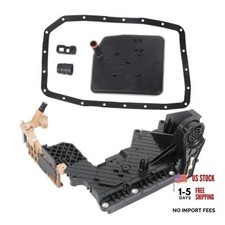
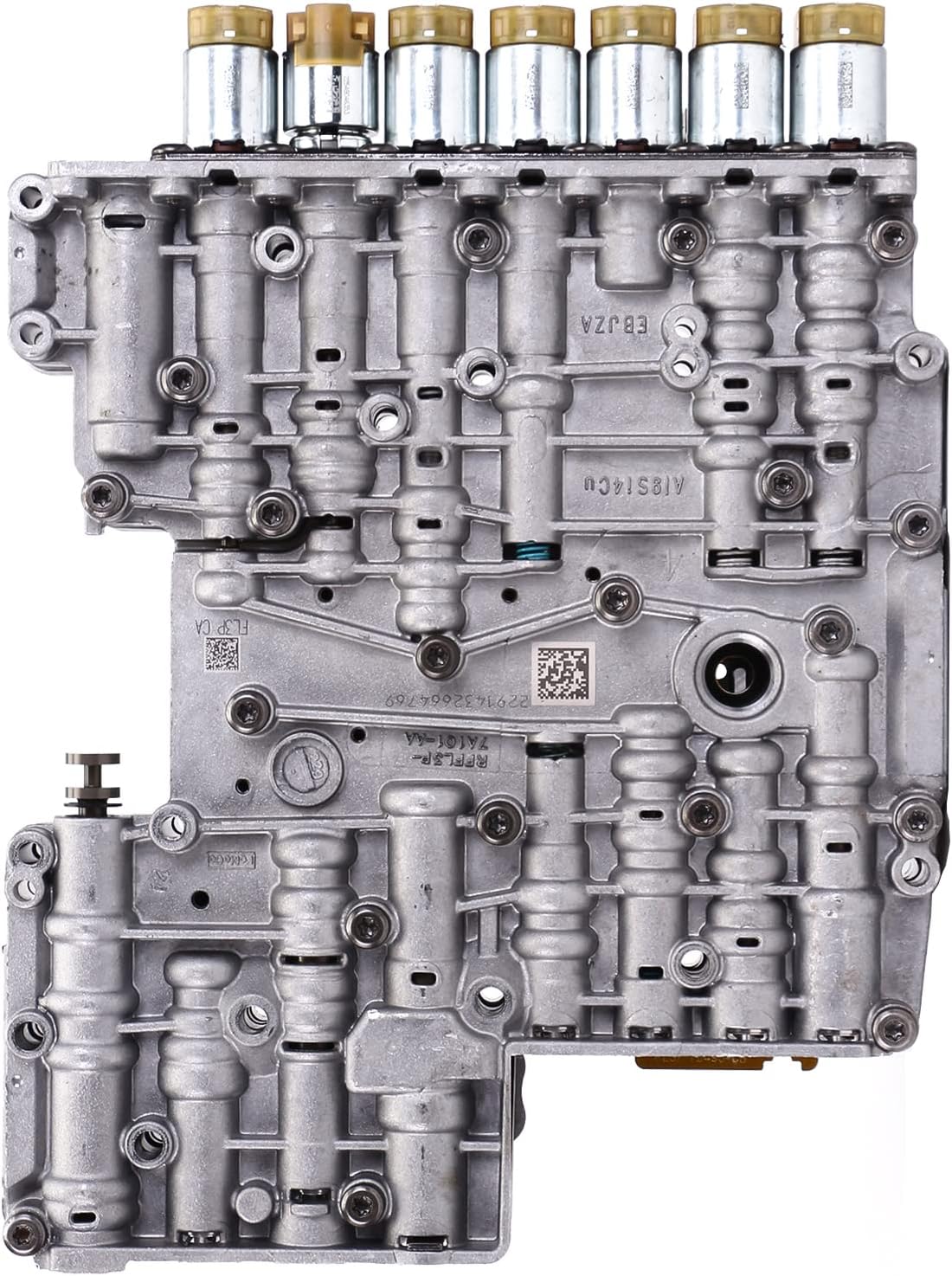
On the 6R80, the output shaft speed sensor is not a separate screw-in sensor like it is on older Ford units. It is built into the molded lead frame, the plastic-and-copper assembly bolted to the top of the main control (valve body). The lead frame also carries the turbine speed sensor, the TR sensor and the fluid temperature sensor, and routes the solenoid circuits to the case connector. When its internal circuits fail, several inputs can go bad at once, which is why these trucks set such a confusing mix of codes.
Ford dealt with this failure three separate times:
- TSB 13-6-8 (June 2013) covers the 5th-gear start with a dead speedometer and calls for replacing the molded lead frame, part number AL3Z-7G276-A, on the main control assembly. The bulletin states that replacing the shift solenoids is not required. Labor is 2.1 hours on F-150 and Expedition/Navigator and 2.2 hours on Mustang.
- Safety Recall 19S07 (NHTSA 19V-075) covers 2011-2013 F-150 and Mark LT trucks built from April 2010 through November 2013. Ford's recall notice explains that an intermittent OSS failure may cause an unintended downshift into first gear. At speed that can briefly slide or lock the rear tires. The remedy is a PCM reprogram (IDS release 112.04 or higher) so the truck no longer reacts that way to a bad OSS signal.
- Customer Satisfaction Program 19N01 extends lead frame coverage on 2011-2013 F-150 and 2012-2013 Expedition/Navigator to 10 years or 150,000 miles. The program applies only when the truck has the MIL and/or wrench light with P0720, P0722, P0731 and/or P1500 stored. The service part in the supplement is AL3Z-7G276-D, and Ford requires the recall reflash to be done first.
Note what the recall did and did not do. The 19S07 reflash changes how the PCM reacts to a failed OSS signal, which is a safety fix. It does not repair the lead frame. A truck that had the recall done can still go into limp mode and set P0720/P0722 when the lead frame fails, and on that truck the fix is still a lead frame.
How to confirm it
Pull codes from the PCM (the TCM on early units), not a generic code reader that only shows emissions codes. The lead frame pattern is P0720 (OSS circuit) and P0722 (OSS no signal), often with P0715/P0717 (TSS) or P0705-series TR codes, and sometimes P0731 (gear 1 ratio) or P1500 (vehicle speed sensor). A ratio code set with a speed sensor code is usually a result of the bad speed signal, not a clutch problem.
Then watch the data while you drive. Graph TSS, OSS and vehicle speed together. On a healthy unit, OSS tracks vehicle speed smoothly and the calculated gear ratio stays steady between shifts. On a failing lead frame, OSS drops to zero or spikes while the truck is still rolling, usually after the fluid is fully warm. That dropout lines up with the speedometer dropping to zero, because on these trucks the vehicle speed comes from the transmission. If the problem is intermittent, tap on the pan or drive until the fluid is hot. If the symptom clears after a key cycle, that also matches the Ford bulletin.
The repair
Ford's CSP procedure is straightforward once the main control is out. Follow Workshop Manual section 307-01 to remove the main control, then remove the six long bolts holding the lead frame and lift it off. When you install the new lead frame, the procedure specifically notes that the TR sensor pin must be aligned with the manual control valve. Torque the six bolts to 53 lb-in (6 Nm) in the sequence Ford shows, then reinstall the main control. The special tools listed are the 307-717 Kostal sleeve remover (for the case connector sleeve), a fill tube and a vacuum pump kit. The program allows MERCON LV, a filter and a pan gasket as needed.
Two things catch people out. First, if the TR pin is not engaged with the manual valve, the new lead frame will report the wrong range and you will be chasing TR codes or a no-start. Second, the 13-digit solenoid body strategy stays with the main control, not the lead frame. Swapping only the lead frame does not change the solenoid calibration. If you replace the whole valve body instead, you have to program the new strategy (see Cause 4).
Cause 2: The case connector and sleeve
All the lead frame circuits leave the case through one connector sleeve. If its seals leak, fluid wicks out into the vehicle harness connector, and a corroded or loose pin there causes the same intermittent speed and solenoid codes as a bad lead frame. Before you drop the pan, unplug the transmission connector and look for ATF in the harness side, green corrosion or pushed-back terminals. If you find fluid, replace the sleeve seals or the sleeve (Ford lists the 307-717 Kostal sleeve remover for this). Clean and dry the harness connector, then recheck. A lead frame installed into a wet, corroded connector will set the same codes again.
Cause 3: Solenoid electrical faults
A shorted or open solenoid coil sets a circuit code in the P0750-P0775 range, and most of those put the unit in limp mode immediately. GEARS Magazine documented a detail on the 6R80 that matters here. The shift solenoid E resistance changed partway through production, from about 10.5 ohms on units built before November 4, 2010 to about 18 ohms on later units. Install the wrong one and the controller can read it as a circuit fault. GEARS also notes the connector snouts are color coded: brown for normally vented solenoids and black for normally applied ones. Check both before you reuse or mix solenoids.
Solenoid performance is a different case. A solenoid can test fine electrically and still deliver the wrong pressure. Sonnax technical specialist Jim Dial explains that the 6R80 solenoids are banded, and a solenoid that drifts from its original band makes the PCM time shifts with the wrong data. That usually shows up as harsh shifts, flares and ratio codes rather than a hard limp. But if the ratio error gets large enough, the controller will set a ratio code and default. If you see a ratio code (P0731-P0736) without a speed sensor code, test the solenoids and clutch circuits. Do not replace the lead frame for that pattern.
Cause 4: Wrong or missing solenoid strategy
If the truck went into limp mode or started shifting badly right after a valve body or solenoid replacement, check the programming. In GEARS Magazine, Lance Wiggins explains that the 6R80 main control carries a 13-digit solenoid body strategy and a 12-digit solenoid body ID, and the PCM has to be given those numbers after the part is changed. The truck may not set a code for a mismatch. But combined with a used valve body that has its own worn bores, it is a common source of comebacks. Read the tag on the case, compare it with the scan tool, and program it under Module Programming before you diagnose anything else.
Cause 5: Low fluid and overheating
Low fluid starves the pump when the truck brakes and turns. The pressure drop causes slip, the slip shows up as a ratio error, and the controller defaults. Heat makes it worse. Ford's CSP 19N01 supplement ties the lead frame failures to OSS sensor failures, and anything that runs the fluid hot for long periods adds stress to that plastic assembly. The 6R80 has no dipstick on most trucks. Check the level at the fill/check plug with the fluid at operating temperature and the engine running, using the procedure in our 6R80 fluid guide. Top up only with MERCON LV. If the truck tows, check that the cooler and thermostat are doing their job.
Diagnosis flow, in order
- Read codes with a scan tool that talks to the PCM/TCM, and save the freeze frame before clearing anything.
- Speedometer drops out, P0720/P0722 present: check recall 19S07 and CSP 19N01 status by VIN first. Then inspect the case connector for fluid. If it is clean, replace the lead frame and torque it to 53 lb-in with the TR pin aligned to the manual valve.
- TSS or TR codes alone: the lead frame is still the prime suspect, because it carries both sensors.
- Solenoid circuit code (P0750-P0775): measure coil resistance at the case connector, then at the solenoid. Check for the 10.5 vs 18 ohm SSE mismatch on rebuilt units.
- Ratio code with no sensor code: check fluid level first, then solenoid performance and clutch circuits. Our 6R80 slipping guide covers this.
- Limp mode right after a valve body job: verify the 13-digit strategy and 12-digit ID, then run the adaptive drive cycle.
After any repair, clear codes, reset adaptives and complete the drive cycle. Recheck the OSS graph on a hot road test before the truck goes back to the customer. An intermittent lead frame fault that you have not actually fixed will come back once the fluid is hot.
6R80 lead frame temp/range sensor assembly
The part for the most common 6R80 limp mode fault: a replacement lead frame assembly that carries the speed, range and temperature sensors. Sold by our sister store, CoreTransmissionParts. If the case connector was leaking, change the sleeve at the same time.
Shop the part for this fix →Need the connector sleeve or other electrical parts? See the 6R80 case connector sleeve or the wiring and electronics collection.
Need parts for this job?
Our 6R80 parts page has lead frames, internal harnesses, solenoid sets, complete valve bodies with solenoids, filter kits and Motorcraft MERCON LV. Checkout is on site.
FAQ
What causes a Ford 6R80 to go into limp mode?
The most common cause is a failed molded lead frame, which carries the output and turbine speed sensors, the range sensor and the temperature sensor. When the output speed signal drops out, the controller cannot calculate gear ratio and holds a fixed gear. Other causes are a leaking case connector, solenoid circuit faults, a missing solenoid strategy after a valve body swap, and low or overheated fluid.
Why does my F-150 start in 5th gear and the speedometer stop working?
That exact combination is described in Ford TSB 13-6-8 for 2011-2013 F-150 and related 6R80 vehicles. The bulletin calls for replacing the molded lead frame on the main control assembly. P0720 and P0722 may or may not be stored, and the symptom can clear after a key cycle.
Is the 6R80 lead frame covered by Ford?
Customer Satisfaction Program 19N01 extended coverage on 2011-2013 F-150 and 2012-2013 Expedition/Navigator lead frames to 10 years or 150,000 miles, as long as P0720, P0722, P0731 and/or P1500 are stored. Many trucks are now past those limits, so check the VIN with a Ford dealer to see what is still open, including recall 19S07.
Can I drive a 6R80 in limp mode?
Only far enough to get it off the road and to a shop. The truck holds one gear with high line pressure, so it has poor acceleration and extra heat. On 2011-2013 F-150s that have not had recall 19S07, an OSS dropout can also cause a sudden downshift into first gear at speed, which Ford identified as a crash risk.
Related guides
- 6R80 P0720 Output Speed Sensor Fix
- 6R80 P0715 Turbine Speed Sensor Fix
- 6R80 Shift Solenoid Symptoms and Replacement
- 6R80 Won't Shift Into Overdrive
- 6R80 Common Problems and Fixes
Sources
- Ford Motor Company, TSB 13-6-8, "6R80 Transmission High Gear Engagement From A Stop," June 7, 2013. Backs the 5th-gear start, wrench light, zero speedometer and dashed odometer, P0720/P0722 that may or may not be stored, symptoms clearing after a key cycle, molded lead frame AL3Z-7G276-A, no solenoid replacement required, and the 2.1/2.2 hour labor times. static.nhtsa.gov (PDF)
- Ford Motor Company, Customer Satisfaction Program 19N01 Supplement #1, June 25, 2019. Backs the 10-year/150,000-mile lead frame coverage, the P0720/P0722/P0731/P1500 requirement, the OSS failure description, service part AL3Z-7G276-D, the six long bolts torqued to 53 lb-in (6 Nm), TR sensor pin alignment with the manual control valve, and the 307-717 Kostal sleeve remover. static.nhtsa.gov (PDF)
- Ford Motor Company, Safety Recall 19S07 (NHTSA 19V-075), February 12, 2019. Backs the intermittent OSS failure causing an unintended downshift into first gear, the affected 2011-2013 F-150/Mark LT build dates, and the PCM reprogram remedy with IDS 112.04 or higher. static.nhtsa.gov (PDF)
- GEARS Magazine (ATRA), David Chalker, "Updates to the Ford 6R80 Part 2." Backs the internal TCM on early units and the PCM taking over pressure, shift and braking control on later units, the SSE resistance change from about 10.5 to about 18 ohms around November 2010, and the brown/black solenoid snout color coding. gearsmagazine.com
- GEARS Magazine (ATRA), Lance Wiggins, "Controlling the 6R80," July 2015. Backs the 13-digit solenoid body strategy and 12-digit ID that must be programmed after a main control change. atracom.blob.core.windows.net (PDF)
- Sonnax, Jim Dial, "Troubleshooting Ford 6R80 & 6R140 Timing-Related Shift Issues." Backs the banded solenoids and how drift away from the original band throws off the PCM's shift timing. sonnax.com