"It's slipping" is the most common complaint a 6R80 truck comes in with, and it covers at least four different failures. Some slips are a worn clutch. Others come from a valve body that bleeds off apply pressure, or from a solenoid that has drifted off its calibration so the PCM can no longer time the shift. Some are not slips at all: a truck that pulls away in 5th feels like it is slipping when it is really in the wrong gear. Each one has a different fix, and guessing wrong usually means doing the job twice.
This guide covers how to sort out which one you have before the pan comes off: which gear it slips in, what the scan data shows, and which parts actually fix each cause. Every Ford and trade source is listed at the bottom.


First, which gear is it slipping in?
The 6R80 is Ford's build of the ZF 6HP26. Five clutches do all the work, and every gear uses exactly two of them. The letters follow ZF: A is the 1-2-3-4 (forward) clutch, B the 3-5-R (direct) clutch, C the 2-6 (intermediate) clutch, D the low/reverse clutch and E the 4-5-6 (overdrive) clutch. GEARS Magazine confirms the key pairs in its failsafe write-up: 3rd is A plus B, and 5th is B plus E.
| Range | Clutches applied | Nominal ratio | If it slips only here, suspect |
|---|---|---|---|
| 1st | A + one-way clutch in D (D clutch added in manual 1 for engine braking) | 4.17 | A clutch, or the one-way clutch if it slips only in 1st in Drive and holds in manual 1 |
| 2nd | A + C | 2.34 | C clutch and its regulator valve |
| 3rd | A + B | 1.52 | B clutch (direct drum) |
| 4th | A + E | 1.14 | E clutch |
| 5th | B + E | 0.87 | B or E, whichever also misbehaves in 3rd or 4th |
| 6th | C + E | 0.69 | C or E |
| Reverse | B + D | 3.40 | B or D |
This table is the most useful 6R80 slip tool you have, because a clutch that slips will slip in every gear that uses it. If the truck slips in 1st through 4th, the only clutch those gears share is A. Slipping in 3rd, 5th and Reverse points at B. Slipping in 4th, 5th and 6th points at E. If it slips in every gear, including Reverse, no single clutch explains it, so look at line pressure, the pump, the fluid level or the converter.
Use the scan tool to prove it is slipping
A slip is the turbine turning faster than the output shaft times the gear ratio. Graph turbine shaft speed (TSS) against output shaft speed (OSS) and commanded gear during the complaint. In 3rd, for example, TSS should sit at about 1.52 times OSS. If TSS flares above that while the commanded gear stays the same, a clutch is slipping. If the numbers match and the engine still flares, look at the converter clutch: compare engine rpm with turbine speed while TCC is commanded on.
Codes can lag well behind the symptom. According to Lance Wiggins in GEARS, a shift error code sets only after the failure happens four consecutive times, and a continuous TCC code only after five. Expect ratio codes such as P0730 through P0736 and P0729 (6th gear) on a slipping unit, or TCC slip codes if the slip is in the converter clutch. If the truck slips and has no codes, it still has a real fault. The PCM just has not counted enough failures yet.
Rule out the failures that only feel like a slip
Starting in 5th: the lead frame
A truck that feels gutless and "slips" off the line may simply be starting in the wrong gear. Ford TSB 13-6-8 covers 2011-2014 Mustang, 2011-2013 F-150 and 2012-2013 Expedition and Navigator units built on or before April 8, 2013. It describes engagement in 5th gear when starting, a lit wrench light, a speedometer reading zero and dashes on the odometer. Symptoms may clear after a key cycle, and P0720 and P0722 may or may not be stored. The fix is molded lead frame AL3Z-7G276-A, and the bulletin states that the shift solenoids do not need to be replaced. Our 6R80 P0720 guide covers the test.
Failsafe: stuck in 3rd or 5th
If the PCM loses control, GEARS explains, it drops to 5th gear when the failure happened in 5th or 6th, and to 3rd for everything else. In 3rd gear failsafe all the solenoids are off, SSB applies the B clutch, the A clutch is applied hydraulically, and line pressure goes to maximum. A truck in failsafe pulls away slowly, and owners often describe that as slipping. Check the codes, power, grounds and connector before you condemn any clutch.
Low or burnt fluid
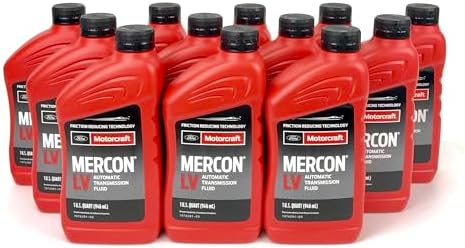
The 6R80 takes MERCON LV, and it has no conventional dipstick. You check the level through the fill plug on the side of the case, with the truck level, the engine running and the fluid at operating temperature on the scan tool's TFT reading. Just a little low is enough to cause a slip on hard turns and a delayed engagement when it is hot. The full procedure and capacities are in our 6R80 fluid type and capacity guide. Burnt, dark fluid with friction material in the pan means a clutch has already slipped long enough to damage itself. A fluid change will not fix that.
An engine surge that looks like converter slip
TCC slip on the scan tool is engine speed minus turbine speed, so anything that makes the engine surge also makes the converter look like it is slipping. Troy Hopp of Certified Transmission wrote up a 2015 Expedition with the 3.5L EcoBoost in Transmission Digest that had a replacement transmission and a second converter installed for TCC slip and RPM fluctuation. A brief stall test reproduced the surge with the vehicle standing still, P0234 set, and replacing the left turbocharger fixed it. If the "slip" shows up with the truck not moving, look at the engine first. On the converter side, check calibration before hardware: TCRA bulletin TCB27 documents a 25-45 mph light-throttle shudder on some 2010 F-150 4.6L trucks that Ford corrected with a PCM calibration under TSB 10-25-13. More F-150 specifics are in our 6R80 F-150 slipping guide.
Cause 1: Solenoids that have lost their calibration
This is the most common reason a 6R80 with healthy clutches still flares. Sonnax technical specialist Jim Dial writes that the 6R80 and 6R140 variable bleed solenoids tend to lose their calibration, or band, over time. The PCM then programs shift overlap using a band number that no longer matches what the solenoid actually delivers. Dial's example: a solenoid that left the factory as band 3 now behaves like a band 5, or a band 1.5.
The C (2-6) clutch shows the problem most clearly. Its regulator valve does not go through a latch valve. SSC output and a balance circuit tied to C clutch apply pressure are all that position it. A slow solenoid gives a 1-2 that slides, and an aggressive one gives a harsh 1-2. Because the same solenoid also controls how fast C releases, the same fault can cause a 2-3 flare or a 2-3 bind-up. Dial also ties 6R80 comebacks after overhaul to reused solenoids. The adapts would not settle, and the flares moved from shift to shift.
How to tell: the slip happens mostly during shifts (flare, then catch), it changes from one day to the next, and the pan is clean. Our 6R80 shift solenoid guide covers the current-versus-pressure test and band matching.
Cause 2: Valve body wear bleeding off apply pressure
A clutch can only hold as hard as the oil feeding it. On a high-mileage 6R80, the valves and bores that set line pressure and clutch apply pressure wear, and apply oil leaks past them.
The pressure regulator valve deserves special attention. Sonnax's Maura Stafford notes that the 2015-later 6R80 added a fourth pressure regulator valve and sleeve size to the ZF6HP/6R60/6R80 family. You can identify the late sleeve by two grooves, one on the outer face and one on the diameter. If you mix up sizes or repair the bore without measuring both the valve and the sleeve, you get main line pressure problems. For the late units, Sonnax lists "slips in Forward and Reverse", flare shifts, delayed Reverse and TCC slip among the complaints the oversized pressure regulator valve repair helps cure. That list is a good description of how a worn main regulator shows up on the road: slipping in every gear, including Reverse.
On a unit with good clutches and a clean pan, the repair is either a valve body with its worn bores sealed or a remanufactured valve body. Program the solenoid body strategy afterward, as described below.
Cause 3: A clutch that has actually failed
Once there is friction material in the pan and the slip follows one clutch through every gear that uses it, the transmission has to come out. Two field cases show why you should inspect the whole clutch pack, not just the frictions.
A cracked E clutch piston. Wayne Colonna of Transmission Digest wrote up an ATSG hotline case on a 2014 Expedition 5.4L that slipped in 5th and stored a 5th gear ratio code. On teardown the only visible damage was a slight burn on the 4-5-6 (E) clutch plates. The drum was heated and crack-checked and came up clean. After the rebuild, the truck came back shifting in and out of 5th. On the third teardown the shop found the real cause: the 4-5-6 piston was cracked, and the crack had grown since the first rebuild. Transmission Digest notes that this failure usually shows up on the shift into 4th, not 5th. If E clutch plates are even slightly burned, inspect the piston under magnification before you reuse it.
No 4th through 6th that was not a clutch at all. GEARS published two 6R80 trucks with P0771 and no 4th, 5th or 6th, which feels like the E clutch has let go. On a 2014 F-150 the fix was the valve body with its solenoids. On a 2015 Transit, the E clutch air-checked fine, and the cause was stripped splines on the rear planet where the 4-5-6 hub engages. The shop found it by applying air to the A and E clutches together while turning the output shaft by hand, which produced grinding. Run that test before you order an E clutch pack.
The fix, and what to do after it
- Correct the fluid level with MERCON LV first, clear codes and re-test. A slip that goes away with the correct level was a fluid problem.
- Clean pan, flares that change from day to day: fix the solenoids and valve body. Use a matched solenoid set or a remanufactured valve body with solenoids, and seal the worn bores on a unit you are rebuilding.
- Friction material in the pan, and the slip follows one clutch: overhaul it. Use a master rebuild kit, replace the pistons you find cracked, inspect the planet splines, and replace the valve body while the unit is out.
- Program and relearn. GEARS is clear that a new solenoid body needs its 13-digit strategy and 12-digit ID entered under Module Programming. The strategy etched on the main control has to match the scan tool, or you can get harsh shifts. Then run Ford's drive cycle: from a stop in D, accelerate moderately to 50 mph so it reaches 6th, hold steady for 15 seconds, tap the brake for 5 seconds, stop for 20 seconds, and repeat five times. GEARS warns that skipping the drive cycle leaves erratic shifts behind. That residual flare can make a good repair feel like the original slip.
To prevent a repeat, service the fluid and filter on severe-duty trucks rather than trusting "filled for life", keep the cooler clean on tow rigs, and do not reuse high-mileage solenoids in a rebuilt unit.
6R80 overhaul transmission rebuild kit with overhaul gaskets
For a 6R80 with burned frictions and friction material in the pan: the seals, gaskets and soft parts to overhaul the unit. Replace any cracked pistons, and program the solenoid body afterward. Sold by our sister store, CoreTransmissionParts.
Shop the part for this fix →Need a bushing set, steels or a full kit for another unit? The rebuild kits collection lists the other options.
Need parts for this job?
Our 6R80 parts page has master and overhaul rebuild kits, clutch drums, pumps, Sonnax valve body kits, remanufactured valve bodies with solenoids, and Motorcraft MERCON LV. Checkout is on site.
FAQ
Why is my Ford 6R80 slipping?
The most common causes are low fluid, solenoids that have lost their calibration, valve body wear that bleeds off clutch apply pressure, and a burned or damaged clutch. Some complaints are not a slip at all. A truck that starts in 5th because of a failed lead frame, or one stuck in failsafe, feels like it is slipping.
How do I tell which 6R80 clutch is slipping?
Note which gears slip, because a slipping clutch slips in every gear that uses it. Slipping in 1st through 4th points at the A clutch, 3rd, 5th and Reverse at the B clutch, and 4th, 5th and 6th at the E clutch. Confirm it on the scan tool: turbine speed rising above output speed times the gear ratio while the commanded gear stays the same is a clutch slip.
Can a 6R80 slip without setting a code?
Yes. GEARS Magazine notes that shift error codes set only after the failure happens four consecutive times, and continuous TCC codes after five. An intermittent slip can go on for a while before the PCM stores anything, so graph turbine and output speed instead of waiting for a code.
Will new solenoids fix a slipping 6R80?
Only if the slip is a timing or pressure problem and the clutches are healthy, which usually means a clean pan and flares that change from day to day. If the pan has friction material in it, a clutch is burned and the transmission needs an overhaul. After any solenoid body replacement, program the 13-digit strategy and 12-digit ID and drive the relearn cycle.
Related guides
- 6R80 P0730: Incorrect Gear Ratio Causes and Fix
- 6R80 Shift Solenoid Symptoms and Replacement
- 6R80 Valve Body Wear and Fix
- 6R80 P0741: Torque Converter Clutch Slip Fix
- 6R80 Common Problems and Fixes
Sources
- GEARS Magazine (ATRA), Lance Wiggins, "Controlling the 6R80," July 2015. Backs the 3rd gear failsafe (all solenoids off, SSB applying B, A applied hydraulically, maximum line pressure) and the 5th gear failsafe, codes setting after four consecutive shift failures or five TCC failures, the 13-digit strategy and 12-digit ID programming, and the drive cycle. atracom.blob.core.windows.net (PDF)
- Sonnax, Jim Dial, "Troubleshooting Ford 6R80 & 6R140 Timing-Related Shift Issues," August 2022. Backs the solenoids losing their band over time, the C/26 regulator valve with no latch valve, the 1-2 slide, harsh 1-2, 2-3 flare and bind-up caused by solenoid output, and comebacks from reused solenoids. sonnax.com
- Sonnax, Maura Stafford, "Spotting the Changes to Ford 6R80 '15-Later Valve Bodies." Backs the fourth pressure regulator valve and sleeve size, the two-groove sleeve identification, measuring the valve and sleeve before bore repair, and the listed complaints for the oversized PR valve kit (slips in Forward and Reverse, flares, delayed Reverse, TCC slip). sonnax.com
- Transmission Digest, Wayne Colonna (ATSG), "Transmission slipping in fifth gear: An elusive cause of a common problem," December 2022. Backs the 2014 Expedition 5.4L 5th gear slip, the slightly burned E clutch plates, and the cracked 4-5-6 piston found on the third teardown. transmissiondigest.com
- GEARS Magazine (ATRA), "Same Code, NOT The Same Problem! A 6R80 With A Code P0771." Backs the no 4th-6th cases, the valve body fix on the 2014 F-150, and the stripped rear planet splines found by air-applying A and E while turning the output shaft. gearsmagazine.com
- Ford Motor Company, TSB 13-6-8, "6R80 Transmission High Gear Engagement From A Stop." Backs the affected models and build date, the 5th gear start symptoms, P0720/P0722, lead frame AL3Z-7G276-A, and that the shift solenoids do not need replacing. static.nhtsa.gov (PDF)
- Transmission Digest, Troy Hopp (Certified Transmission), "6R80 whirring noise: TCC slip or engine surge?" May 2024. Backs the 2015 Expedition 3.5L case where TCC slip readings came from an engine surge, the stall test, P0234 and the turbocharger fix. transmissiondigest.com
- TCRA / ATRA, Technical Bulletin TCB27, "Torque Converter Shudder 25-45 MPH," September 2012. Backs the 2010 F-150 4.6L light-throttle shudder and the Ford TSB 10-25-13 calibration fix. tcraonline.com (PDF)