P0730 is the code that gets a good 6R80 condemned. It reads "Incorrect Gear Ratio," the truck feels like it is slipping, and the next thing that happens is somebody quotes a rebuild. Sometimes that is the right call. Often it is not, because P0730 is not a failure report. It is an arithmetic complaint.
The PCM knows turbine speed. It knows output speed. It divides one by the other, compares the answer to the ratio it commanded, and if the two do not agree it sets a code. That is the whole mechanism. Everything useful about diagnosing P0730 on a Ford 6R80 comes from working backward through that division problem and asking which of the three inputs lied: the turbine signal, the output signal, or the clutch that was supposed to be holding.
The short version: P0730 is the generic ratio code. On a 6R80 the more useful information is which gear it happens in, because each gear is two clutches and only one of them is shared with its neighbors. Get the ratio error to repeat in a single gear and the clutch application chart tells you the suspect list in about ten seconds. Before you pull the unit, rule out the cheap causes: fluid level and condition, a worn direct clutch bushing that bleeds apply pressure, valve body circuit leakage, and a solenoid body strategy that was never programmed after the last repair.
What the PCM Actually Measures
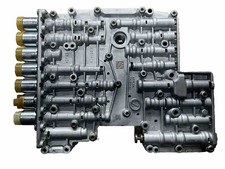
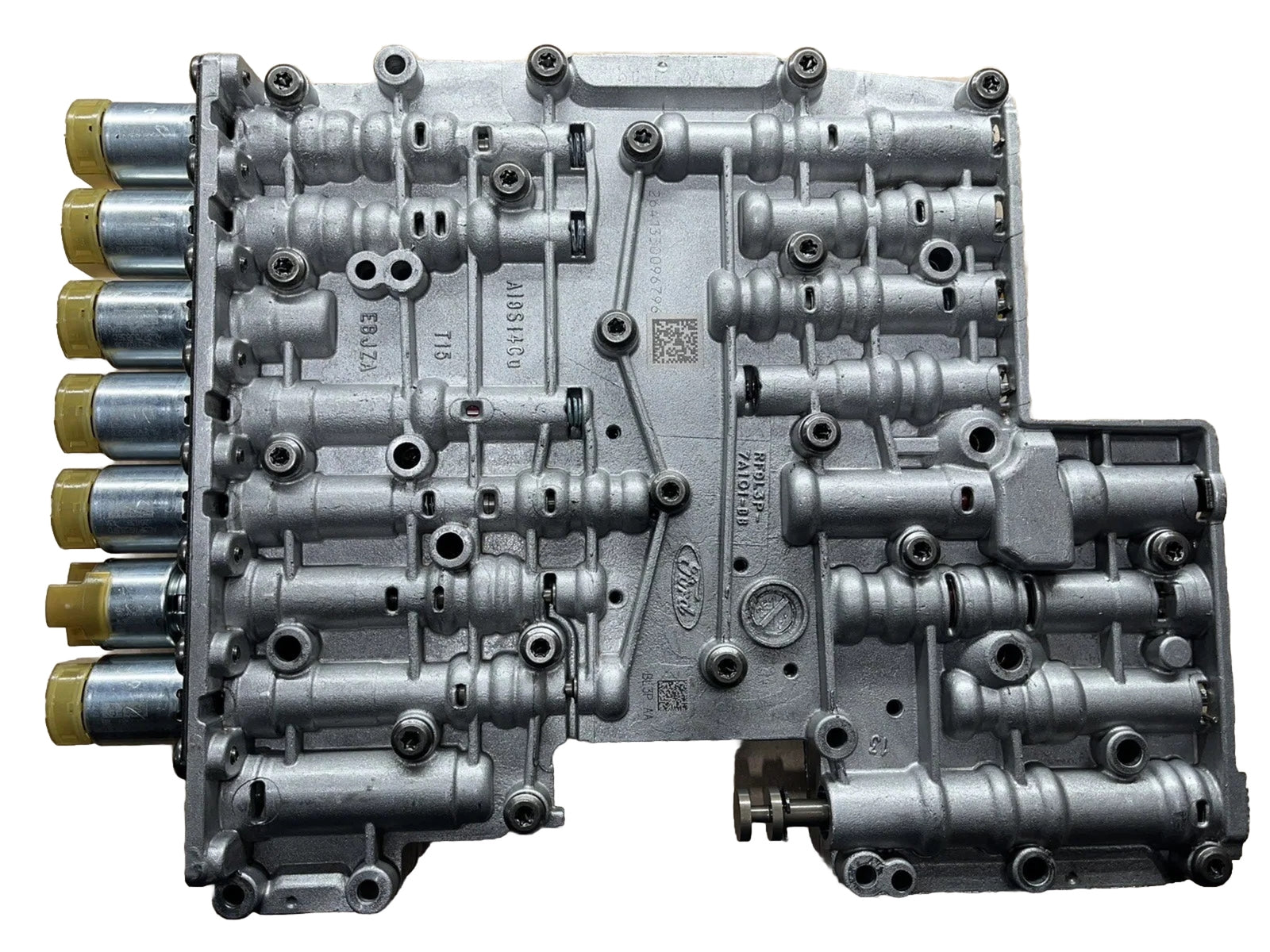
The 6R80 carries every sensor it needs for this math on the valve body assembly. Per ATRA's GEARS technical breakdown of 6R80 control, the unit mounts turbine speed (TSS), output speed (OSS), internal transmission range (ITRS) and transmission fluid temperature (TFT) all on the solenoid body, and the PCM handles gear selection and shift pressure directly.
Ford's own Powertrain Engineering Diagnostic Aid for the 2013 Mustang 6R80 lays out the case connector, which is worth knowing before you start back-probing. It is a 16-pin connector, silver plated, and the two signals that build the ratio are on opposite ends of it: pin 1 is Turbine Shaft Speed (TSS), running to PCM pin T-1, and pin 15 is Output Shaft Speed (OSS), running to PCM pin T-14. Transmission fluid temperature is pin 6 (T-20), the range sensor is pin 4 (T-12), and the pressure control solenoids occupy pins 3, 9, 10, 13, 14 and 16.
So on the scan tool, watch TSS and OSS as raw RPM, not just the calculated gear. Divide TSS by OSS while cruising at a steady throttle. In a locked ratio that quotient should be rock steady. If it wanders while both signals look clean, something inside is slipping. If one signal drops out, glitches, or reads zero while the truck is clearly moving, you have a sensor or wiring problem masquerading as a mechanical one.
Ford has put that in writing. Its Customer Satisfaction Program 16N02 (June 2016) covers an intermittent output shaft speed sensor failure on certain 2011-2012 F-150s and 2012 Expedition, Navigator and Mustang units, and the codes it lists are P0720, P0722, P0731 and P1500, with some trucks also making an unintended downshift into 1st. P0731 is a gear 1 ratio code, the same family as P0730, set here by a lost OSS signal rather than a slipping clutch. The repair is a molded lead frame, not an overhaul: AL3Z-7G276-B, with the six long bolts torqued to 53 lb-in (6 Nm) in sequence. The later 19N01 Supplement #3 (November 2020) widens the window to 2011-2013 F-150 and 2012-2013 Expedition and Navigator, calls for lead frame AL3Z-7G276-D, and requires P0720, P0722, P0731 and/or P1500 to be stored. Before you quote a rebuild on a ratio code from one of those trucks, run the VIN for these programs and graph OSS against ABS wheel speed.
That distinction matters because Ford has already documented one version of it. Bulletin 13-6-8 covers 2011–2014 Mustang, 2011–2013 F-150 and 2012–2013 Expedition and Navigator built on or before 4/8/2013, where a 6R80 engages in 5th gear from a stop, the speedometer reads zero, the odometer shows dashes, and DTCs P0720 and P0722 may or may not be stored. The fix is not a rebuild. It is replacing the molded leadframe, Ford part AL3Z-7G276-A, and Ford's note is explicit that shift solenoid replacement is not required for the procedure. A speed signal problem in this unit can absolutely present as a ratio complaint, and the leadframe is a known cause.
Two Clutches Per Gear: The Chart That Narrows It
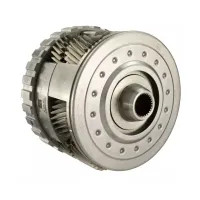
The 6R80 is Ford's licensed build of the ZF 6HP26, and it uses the same five holding elements. Each forward gear is a pair. Alto's rebuild documentation for the 6R80 and ZF6HP26 names them by the gears they serve, which is exactly how you want to think about them when a ratio code shows up:
| Element | Alto designation | Applied in |
|---|---|---|
| A | 1-2-3-4, Forward | 1st, 2nd, 3rd, 4th |
| B | 3-5-R, Direct | 3rd, 5th, Reverse |
| C | 2-6, Intermediate | 2nd, 6th |
| D | Low/Reverse | 1st, Reverse |
| E | 4-5-6, Overdrive | 4th, 5th, 6th |
Read it as pairs and the diagnosis writes itself. 1st is A and D. 2nd is A and C. 3rd is A and B. 4th is A and E. 5th is B and E. 6th is C and E.
ATRA confirms the same pairs in Technical Bulletin 1861, its clutch and solenoid apply chart for the 2011-up 6R80, with one correction that matters for ratio codes: on 2011-later units the D clutch applies only until about 3 mph and then releases, and the low one-way clutch holds first gear from there. Manual 1st still applies A and D [12]. So a first-gear ratio error in Drive that disappears when you select manual 1st points at the one-way clutch, not the D pack. Reverse is B and D [12].
When you do the TSS-divided-by-OSS math, this is what the answer should be. ZF's 6HP26 type sheet, the gear set the 6R80 shares, lists 4.17, 2.34, 1.52, 1.14, 0.87 and 0.69 for 1st through 6th and 3.40 in reverse [13]. A steady reading above the commanded number means the input is outrunning the output: something in that gear's pair is slipping. Our 6R80 gear ratios and specs page has the full apply and solenoid charts.
Now put a ratio error against it. If the unit reports a bad ratio in 2nd and 6th only, both of those gears share exactly one element, and it is C. If the error shows up in 4th, 5th and 6th, the common element is E. If it is wrong in every forward gear, look at A, or stop looking at clutches and look at line pressure and fluid. That single filter is the difference between an intelligent teardown and an expensive guess.
This is why chasing bare P0730 is frustrating and chasing the gear-specific ratio codes is productive. Force the failure into one gear on a road test and let the chart do the elimination.
The Bushing That Sets Ratio Codes
Here is a cause that does not show up on a scan tool and gets missed constantly.
Sonnax documents that the ZF6HP26 and ZF6HP28 "B" clutch and Ford 6R80 direct clutch OE bushings wear out prematurely because of sub-optimal material composition, and their published consequence list is worth reading twice: bushing failure, ratio codes, and loss of correct pressure to the B/Direct clutch pack, resulting in burned clutches. That is a mechanical wear item quietly bleeding apply pressure until the clutch it feeds can no longer hold torque, and the PCM reports the result as a ratio error.
The replacement is Sonnax bushing 95030-07, which fits units with 1.337 in (33.97 mm) diameter shaft journals only. Installation detail that matters: Sonnax specifies an arbor press, and warns against a hydraulic press or a bushing driver and hammer, because either will distort the bushing and cause fitment problems. If your ratio complaint lives in 3rd, 5th and Reverse, the B clutch is the common element and this bushing belongs on the suspect list before the unit comes apart.
Sonnax Zip Kit ZF6-6R60-ZIP for 6R80 (2009–2017)
Seals the main line, solenoid regulator, reverse, clutch control and solenoid apply circuits in the valve body. This is the part that addresses pressure loss as the root cause of a ratio code, rather than replacing clutches that were only starving. No special tools required, and it does not fit units with an 053 separator plate.
See the 6R80 Zip Kit at CoreTransmissionParts →If the bushings are your suspect instead, the matching Sonnax bushing set is the 6R80 Sonnax bushing kit 95030-80K, and the broader valve body catalog covers reman units if yours is past repair.
Valve Body Circuit Loss
A clutch that cannot hold because it never got full pressure looks identical, from the PCM's side of the math, to a clutch that is burned. The 6R80 valve body is a known pressure-loss offender, and Sonnax built a kit specifically around it.
The Zip Kit ZF6-6R60-ZIP covers ZF6HP19/26/32 Generation 1 units without an 053 separator plate, plus Ford 6R60, 6R75 and 6R80 from 2009–2014. Sonnax describes the target directly: it seals critical circuit pressure losses to prevent the loss of pressures within the main line, solenoid regulator, reverse, clutch control and solenoid apply circuits, with no special tools required. Their published complaint list for the circuits it addresses includes broken parts from excessive line pressure and loss of oil pressure from worn components in critical oil circuits.
Two identification points before you buy anything for this valve body. First, the 053 separator plate split is real and it changes which parts fit, so confirm your plate code before ordering. Sonnax publishes a generation identification guide for exactly this reason, since valve components differ between Generation 1 and Generation 2 castings. Second, some Sonnax kits for this family explicitly do not fit 2nd, 3rd or 4th design 6R80 valve bodies. Identify the casting first, order second.
Solenoid Banding and the Strategy Code Nobody Programmed
This one causes ratio codes on freshly rebuilt units and it costs nothing but attention.
Sonnax technical specialist Jim Dial writes that 6R80 and 6R140 transmissions have had their share of shift complaints after overhaul, with trouble getting adapts to lock in, and that the variable bleed solenoids on both units tend to lose their calibration or banding over time, creating calibration problems within the PCM for shift control, overlap and adaptation. His description of the control loop is the part that matters for P0730: the PCM looks for an RPM drop on the turbine speed sensor within a split second of the solenoid command, and solenoid flow rate and banding are integral to positioning the regulator valve for clutch apply.
Slow that apply down enough and the turbine RPM drop arrives late or shallow. The PCM sees a ratio that does not match the command during the window it was watching, and it logs the discrepancy. Nothing is burned. The timing is simply wrong.
ATRA's 6R80 control article puts numbers on the parts side. The transmission has seven solenoids, the case tag carries a 13-digit solenoid body strategy and a 12-digit solenoid body identification, and the 13-digit strategy is also stamped on the valve body casting. Solenoids come in five different calibrations, and you can replace them individually only with a solenoid that has an injector nozzle and band number matching the original. The band number sits next to the matrix barcode on the side of the solenoid and reads 1 through 5. If the strategy etched on the main control does not match what the scan tool displays, the strategy needs updating or you get harsh shifts, and ATRA's caution is that incorrect solenoid body information can cause transmission damage or driveability problems.
So on any 6R80 that set a ratio code after a valve body swap, a solenoid replacement, or a rebuild, read the tag and read the scan tool before doing anything else. A mismatch there explains the code by itself.
Failsafe Behavior Tells You Something
How the truck limps is a diagnostic clue, not just a symptom. Per ATRA, the 6R80 in failure mode effect management gives you P, R, N, D and M, where D holds 5th gear for a high gear failure and M holds 3rd gear for all other failures.
The hydraulics behind that are informative. In 3rd gear failsafe, all solenoids are off, and in the off state SSB sends high pressure to the clutch B regulator and latch valves to apply the direct clutch, while the forward clutch A applies hydraulically. In 5th gear failsafe, the PCM supplies low current to SSD, sending regulated pressure through the solenoid multiplex valve to the clutch E regulator and latch valves to apply the overdrive clutch, and once those latch valves move they stay put, locking the unit in 5th.
The practical read: if a 6R80 drops to 3rd gear failsafe and the ratio in 3rd is correct, then A and B are both holding, which quietly clears two of your five elements. If it falls into failsafe and the ratio is still wrong there, you have a mechanical problem in a clutch that is being applied with full hydraulic pressure and no electronic control at all. That is a much shorter conversation about whether the unit comes out.
Fluid, and the Part Everyone Skips
Ford's Customer Service Division fluid application chart specifies MERCON LV for the 6R80 across the F-150, Expedition, Mustang, Navigator and Transit, with service part numbers XT-10-QLV (1 quart), XT-10-5Q3LV (5 quart jug) and XT-10-DLV (55 gallon drum). MERCON V, MERCON SP and universal fluids are not substitutes. Viscosity changes how the clutch circuits fill and how fast the valves damp, which changes apply timing, which is precisely what the ratio monitor is watching.
Fluid that is dark or smells scorched has already told you a clutch is cooking. Fluid that is simply low starves the circuit and gives you the same ratio math with none of the damage yet.
The skipped part is the code-setting threshold. ATRA documents that for the system to set a code on this unit, failures must occur four consecutive times for shift error codes and five consecutive times for continuous TCC codes. A stored P0730 is not a one-time hiccup. It repeated. That also means a single road test after a repair proves nothing, which is why ATRA's drive cycle exists: with the selector in D, accelerate moderately from a stop to 50 mph and let it reach 6th, hold speed and throttle steady for at least 15 seconds, tap the brake lights and hold another 5 seconds, then brake to a stop and sit for at least 20 seconds. Repeat that sequence five times, then run the self-test. Fix any non-transmission DTCs first, because they directly affect transmission operation.
Clutch Clearances When It Does Come Apart
If the diagnosis lands on a clutch pack, the clearances are where a rebuild lives or dies, and they are not the same pack to pack. Alto publishes these specs for the 6R80 and ZF6HP26, all measured with the pack seated by applying air at 40 psi several times, then reading with a feeler gauge between the bottom of the snap ring and the top of the pressure plate:
| Clutch | 6R80 plate count | Clearance spec |
|---|---|---|
| A (1-2-3-4, Forward) | 6 frictions / 6 steels | 0.040–0.065 in (1.02–1.65 mm) |
| B (3-5-R, Direct) | 6 frictions / 6 steels | 0.040–0.065 in (1.02–1.65 mm) |
| C (2-6, Intermediate) | 7 frictions / 7 steels | 0.045–0.075 in (1.14–1.90 mm) |
| D (Low/Reverse) | 5 frictions / 5 steels | 0.039–0.062 in (1.00–1.60 mm) |
| E (4-5-6, Overdrive) | 9 frictions / 9 steels | 0.030–0.055 in (0.762–1.40 mm) |
Two notes from the same documentation. The D pack needs specialty tools to measure clearance in place, so measure the stack thickness on the bench without the pressure plate or wave plate, where it should come to 0.670 in (17.02 mm) plus or minus 0.020 in. And the E clutch has five selective-thickness snap rings available from Ford, which is how you dial that pack in rather than fighting it with plate counts. Pre-soak frictions at least 20 minutes in the fluid they will run in.
Look past the frictions: two ratio-code comebacks
A burned pack is not always the whole story. Transmission Digest wrote up an ATSG hotline case on a 2014 Expedition 5.4L that slipped in 5th and set a 5th gear ratio code. On teardown the only damage was a slight burn on the 4-5-6 (E) clutch plates, and the drum was heated and crack-checked with nothing found. The truck came back shifting in and out of 5th. On the third teardown the shop found the real cause: a cracked 4-5-6 piston, and the crack had grown since the first rebuild. GEARS Magazine published a related trap. A 2015 Transit with P0771 and no 4th through 6th had an E clutch that air-checked fine. The cause was stripped splines on the rear planet where the 4-5-6 hub engages, found by air-applying the A and E clutches together while turning the output shaft by hand. Inspect the pistons and planet splines before you close up a unit that set ratio codes.
The Order I Work It
- Read all codes, not just P0730. Companion P0720 or P0722 points at speed signals and the leadframe path in bulletin 13-6-8. Non-transmission codes get fixed first.
- Check fluid level hot and check its condition. Confirm MERCON LV was used. Burned fluid changes the plan.
- Read the solenoid body strategy tag and compare it to the scan tool. Any mismatch, especially after a recent repair, is a candidate cause on its own.
- Road test watching raw TSS and OSS. Divide them yourself. Note exactly which gears are wrong and whether the error is steady or intermittent.
- Apply the clutch chart. Find the element common to the failing gears. One element narrows it hard; all gears failing points at line pressure or fluid, not a single pack.
- Before condemning the unit, address pressure loss. Valve body circuit leakage and a worn B/direct clutch bushing both produce ratio codes with clutches that are still serviceable.
- Verify with the full drive cycle, five repetitions, then self-test. One lap around the block does not clear a code that needed four consecutive failures to set.
Need parts for this job?
Solenoid sets, valve body repair kits, lead frames, bushing kits, filter and pan gasket sets and MERCON LV, all matched to the 6R80 and shipped from the USA.
Shop 6R80 parts →FAQ
Does P0730 on a 6R80 always mean the transmission needs a rebuild?
No. P0730 only means measured gear ratio did not match commanded gear ratio. That gap can come from a speed sensor or leadframe fault, low or wrong fluid, valve body circuit pressure loss, a worn direct clutch bushing bleeding apply pressure, or a solenoid body strategy that was never programmed. All of those are repairable without opening the unit. Rule them out before quoting a rebuild.
Which clutch does a 6R80 ratio error point to?
It depends entirely on which gears fail. Per Alto's designations, A serves 1st through 4th, B serves 3rd, 5th and Reverse, C serves 2nd and 6th, D serves 1st and Reverse, and E serves 4th, 5th and 6th. Find the element common to every failing gear. If 2nd and 6th are both wrong, that is C. If 4th, 5th and 6th are wrong, that is E. If every forward gear is wrong, suspect line pressure or fluid before a single clutch pack.
Can a bad speed sensor set P0730 on a 6R80?
Yes, because the ratio is calculated from turbine speed and output speed. Ford bulletin 13-6-8 documents 2011–2014 Mustang, 2011–2013 F-150 and 2012–2013 Expedition and Navigator units built on or before 4/8/2013 that engage in 5th gear from a stop with a zero speedometer, dashed odometer, and DTCs P0720 and P0722 that may or may not store. The repair is the molded leadframe, AL3Z-7G276-A, and shift solenoid replacement is not required.
What fluid does a 6R80 take, and can the wrong fill cause a ratio code?
MERCON LV. Ford's fluid application chart lists LV for the 6R80 in the F-150, Expedition, Mustang, Navigator and Transit, with part numbers XT-10-QLV, XT-10-5Q3LV and XT-10-DLV. The wrong viscosity changes how fast the clutch circuits fill and how the valves damp, which shifts apply timing. Since the ratio monitor watches for a turbine RPM drop within a split second of the solenoid command, timing changes show up as ratio errors.
Do I have to program the solenoid body strategy after replacing a 6R80 valve body?
Yes. The case tag carries a 13-digit solenoid body strategy and a 12-digit solenoid body identification, and the 13-digit strategy is also stamped on the valve body casting. Per ATRA, if what is etched on the main control does not match what the scan tool shows, the strategy must be updated or you will get harsh shifts, and incorrect solenoid body information can cause transmission damage or driveability problems. Place the new tag over the original so the correct calibration data stays with the unit.
Shop the Part for This Fix
Ratio codes on a 6R80 usually trace back to pressure that never reached the clutch, not to a clutch that failed on its own. Fix the pressure loss and you keep the unit.
6R80 valve body, solenoid and bushing parts
Sonnax Zip Kits, bushing kits, remanufactured valve bodies with solenoids, lead frames and clutch plate kits for the 6R80, 6R60 and ZF6HP26 family.
Shop 6R80 valve body parts at CoreTransmissionParts →Sources
- ATRA / GEARS Magazine — "Controlling the 6R80," Lance Wiggins, July 2015. Backs the TSS, OSS, ITRS and TFT sensors mounted on the valve body assembly, the seven solenoids, the 13-digit solenoid body strategy and 12-digit solenoid body identification and where they are stamped, the five solenoid calibrations and the band number 1 through 5 next to the matrix barcode, the requirement to match injector nozzle and band on individual replacement, the warning that incorrect solenoid body information can cause transmission damage or driveability problems, the failsafe behavior (5th gear for high gear failure, 3rd for all others) and its SSB, SSD, clutch B and clutch E hydraulics, the four consecutive failures for shift error codes and five for continuous TCC codes, and the full drive cycle procedure. atracom.blob.core.windows.net/gears/2015/2015-07/2015_7_4.pdf
- NHTSA / Ford Motor Company — Technical Service Bulletin 13-6-8, "6R80 Transmission High Gear Engagement From A Stop," online publication date June 7, 2013, superseding TSB 13-4-9. Backs the affected models and build date (2011–2014 Mustang, 2011–2013 F-150, 2012–2013 Expedition and Navigator built on or before 4/8/2013), the 5th gear engagement from a stop with zero speedometer and dashed odometer, DTCs P0720 and P0722, the molded leadframe repair, part number AL3Z-7G276-A, and the note that shift solenoid replacement is not required. static.nhtsa.gov/odi/tsbs/2013/SB-10053419-7635.pdf
- Sonnax — "B"/Direct Clutch Bushing 95030-07 product and application data. Backs the statement that ZF6HP26 and ZF6HP28 "B" clutch and Ford 6R80 direct clutch OE bushings wear prematurely due to sub-optimal material composition, that this wear leads to bushing failure, ratio codes and loss of correct pressure to the B/Direct clutch pack resulting in burned clutches, the 1.337 in (33.97 mm) shaft journal fitment, and the arbor press installation requirement. sonnax.com/parts/3979-b-direct-clutch-bushing
- Sonnax — Zip Kit ZF6-6R60-ZIP product and application data. Backs the applications (ZF6HP19/26/32 Generation 1 without an 053 separator plate, plus Ford 6R60, 6R75 and 6R80 2009–2014), the circuits it seals (main line, solenoid regulator, reverse, clutch control and solenoid apply), the no-special-tools claim, the complaint list including broken parts from excessive line pressure and loss of oil pressure from worn components in critical oil circuits, and the separate kits for Generation 2 and 053-plate units. sonnax.com/parts/3052-zip-kit
- Sonnax — "Troubleshooting Ford 6R80 & 6R140 Timing-Related Shift Issues," Jim Dial, Sonnax technical specialist. Backs the statement that 6R80 and 6R140 variable bleed solenoids tend to lose calibration or banding over time, that this creates PCM calibration problems for shift control, overlap and adaptation, and that the PCM looks for an RPM drop on the turbine speed sensor within a split second of solenoid command with solenoid flow rate and banding integral to positioning the regulator valve for clutch apply. sonnax.com/tech_resources/1137
- Alto Products — Bulletin BM304 (01/2020), Hi-Performance G3 Friction and Steel Clutch Kit 183750PWR for 6R80 and ZF6HP26. Backs the clutch element designations (A = 1-2-3-4 Forward, B = 3-5-R Direct, C = 2-6 Intermediate, D = Low/Reverse, E = 4-5-6 Overdrive), the 6R80 plate counts, the 40 psi air-apply seating procedure, the clearance specs for each pack, the D pack bench stack thickness of 0.670 in plus or minus 0.020 in, the five selective snap rings available from Ford for the E clutch, and the 20-minute friction pre-soak. altousa.com/downloads/tech-drawings/BM304.pdf
- Ford Performance — Powertrain Engineering Diagnostic Aid, 2013 Model Year, S197 Mustang, 6R80 (ATX) / MT82 (MTX), 5.0L 4V TiVCT. Backs the 6R80 16-pin case connector pinout used for back-probing, specifically pin 1 Turbine Shaft Speed (TSS) to PCM T-1, pin 15 Output Shaft Speed (OSS) to PCM T-14, pin 6 Fluid Temperature (TFT) to T-20, pin 4 Range Sensor (TR-P) to T-12, and the pressure control solenoid assignments. Ford PDF (archived copy, web.archive.org)
- Ford Customer Service Division, Chemicals & Lubricants — Automatic Transmission Fluid Application Chart (US), Version 18, 10/2025. Backs MERCON LV as the specified fluid for the 6R80 in the F-150, Expedition, Mustang, Navigator and Transit, and the service part numbers XT-10-QLV, XT-10-5Q3LV and XT-10-DLV. fcsdchemicalsandlubricants.com/quickref/atf2US.pdf
- Sonnax — ZF6HP19/26/32 (Gen. 1), Ford 6R60, 6R75, '09–'14 6R80 & ZF6HP21/28/34 (Gen. 2) Identification Guide. Backs the statement that valve components differ between Generation 1 and Generation 2 valve bodies and that the generation must be identified to select correct valve kits, along with the 053 separator plate fitment split and the note that some parts do not fit 2nd, 3rd or 4th design 6R80 valve bodies. sonnax.com/tech_resources/249
- Transmission Digest — "Transmission slipping in fifth gear: An elusive cause of a common problem," Wayne Colonna (ATSG Shift Pointers), December 2022. Backs the 2014 Expedition 5.4L 6R80 5th gear slip and ratio code, the slightly burned E clutch plates, and the cracked 4-5-6 piston found on the third teardown. transmissiondigest.com
- ATRA / GEARS Magazine — "Same Code, NOT The Same Problem! A 6R80 With A Code P0771." Backs the 2015 Transit with no 4th through 6th, the E clutch that air-checked fine, and the stripped rear planet splines found by air-applying A and E while turning the output shaft. gearsmagazine.com
- ATRA — Technical Bulletin #1861, "6R80 Clutch and Solenoid Apply Charts," 2011-up 6R80, July 2018. Backs the clutch pair applied in each range, the D clutch releasing above about 3 mph on 2011-later units with the low one-way clutch holding first, A and D applied in manual 1st, and B and D in reverse. atracom.blob.core.windows.net/bulletins/2018/july/atb1861.pdf
- ZF Friedrichshafen AG — 6HP26 6-speed automatic transmission type sheet (1068 757 703a). Backs the standard ratios 4.17, 2.34, 1.52, 1.14, 0.87, 0.69 and R 3.40 used as the expected TSS/OSS values. ZF 6HP26 data sheet (PDF)
- Ford Motor Company — Customer Satisfaction Program 16N02, "Molded Leadframe Extended Coverage," June 16, 2016, hosted by NHTSA. Backs the intermittent OSS sensor failure on 2011-2012 F-150 and 2012 Expedition, Navigator and Mustang, the P0720/P0722/P0731/P1500 code list, the unintended downshift into 1st, lead frame AL3Z-7G276-B and the 53 lb-in (6 Nm) long-bolt torque. static.nhtsa.gov (PDF)
- Ford Motor Company — Customer Satisfaction Program 19N01 Supplement #3, "Transmission Molded Leadframe Extended Coverage," November 12, 2020, hosted by NHTSA. Backs the 2011-2013 F-150 and 2012-2013 Expedition/Navigator coverage, lead frame AL3Z-7G276-D, and the requirement that P0720, P0722, P0731 and/or P1500 be stored. static.nhtsa.gov (PDF)