When an F-150 owner says the transmission is slipping, they could be describing five different things. On a 6R80 F-150, only one of them is a burned clutch. The others are a converter clutch that will not hold, a turbocharged engine that surges and makes the converter look bad on the scan tool, a lead frame that starts the truck off in 5th, and a recall-era downshift that feels like the truck fell out of gear. Every one of those has been through my bay, and every one of them has been sold a transmission somewhere along the way that it did not need.
Our 6R80 slipping guide covers the clutch-by-gear logic for every vehicle that uses this unit. This one sticks to the F-150, 2009 through 2017, and the things that are specific to it: the 3.5L EcoBoost, the 2010 4.6L calibration, the 2011 design change, and how these trucks get used. A lot of them tow. Every bulletin and trade source is linked at the bottom.


What the customer means by "slipping"
Ask the driver one question before anything else: does the engine speed jump during a shift, or when the truck is not shifting at all? Then ask whether it happens loaded, hot or from a stop. The answers sort the truck into one of these rows.
| What the driver feels | What it usually is | First check |
|---|---|---|
| RPM flares during a shift, then catches | Shift timing: solenoid, valve body, or a clutch starting to go | Commanded gear vs. TSS/OSS ratio through the shift |
| RPM creeps up at steady cruise, no shift | Converter clutch slip, or an engine surge on an EcoBoost | TCC slip actual vs. desired, boost codes |
| Gutless from a stop, speedometer at zero | Starting in 5th: lead frame (TSB 13-6-8) | Commanded gear at launch, P0720/P0722 |
| Sudden drop to a low gear at speed | OSS or range sensor signal fault (recall territory) | VIN recall check, graph OSS and TRS |
| Slips only towing or hot, worse in turns | Low fluid, then real clutch wear | Fluid level at temperature, pan debris |
Rows two through four are not clutch problems, and rows three and four are covered by Ford documents you can pull by VIN. That is why I do not road test an F-150 for a slip complaint without a scan tool plugged in.
Prove it on the scan tool first
A clutch slip is the turbine turning faster than output shaft speed times the gear ratio. Graph turbine shaft speed (TSS), output shaft speed (OSS) and commanded gear together through the complaint. The 6R80 ratios are 4.17, 2.34, 1.52, 1.14, 0.87 and 0.69 for 1st through 6th, and 3.40 in Reverse. If OSS reads 2,000 rpm in 4th, TSS should sit close to 2,280. If TSS climbs above that while commanded gear holds steady, a clutch is slipping. If TSS tracks the ratio and engine speed still flares, the slip is between the engine and the turbine. That means the converter clutch, or something that is not the transmission at all.
For the converter, log engine rpm, turbine speed, TCC slip desired and TCC slip actual. With the converter commanded fully on, actual slip should settle close to desired and stay there. A small, steady controlled slip is normal on this unit. Slip actual that wanders, or keeps climbing under load while desired stays low, is the complaint. The trap on F-150s is assuming that a bad slip number always means a bad converter.
EcoBoost trucks: make sure it is the transmission
The most useful 6R80 case I have read on this came from Troy Hopp of Certified Transmission, writing in Transmission Digest. The vehicle was a 2015 Expedition with the 3.5L twin-turbo V6 and a 6R80, the same engine and transmission pairing as an EcoBoost F-150. A wholesale shop had already installed a remanufactured transmission to fix converter shudder. The truck came back with RPM fluctuation and an intermittent whirring noise, and the scan tool showed converter clutch slip at the same moment as the RPM swing, mostly under moderate throttle on highway grades. There were no codes.
The shop replaced the transmission under warranty, hot-flushed the coolers, updated the PCM software, programmed the solenoid strategy and body ID, and cleared KAM and the adaptive tables. Nothing changed. They fixed a broken ground left over from old collision damage and cleaned battery corrosion. Nothing changed. They installed a converter with a different clutch lining, and found an intercooler duct worn through by the crank pulley along the way. The breakthrough came from a brief stall test in the bay: the whir and the RPM surge appeared with the truck standing still, the TCC slip PID surged the same way it had on the highway, and the check engine light came on with P0234, turbo overboost. A TSB search turned up Ford TSB 16-0013 for turbocharger concerns, which lists surging and air rush, whoosh or whistle noises among its symptoms. Replacing the left turbocharger fixed the truck.
The lesson for F-150 work: TCC slip is a calculated value, engine speed minus turbine speed. An engine that surges on its own makes that number swing even when the converter clutch is holding. On any EcoBoost truck with a "slips at cruise" complaint and no transmission codes, I check for boost codes and pending codes, inspect the charge air ducts, and listen for the noise before I condemn anything in the bellhousing. If the surge shows up with the truck standing still, it is not a clutch.
Converter clutch slip that really is the transmission
2010 4.6L trucks: check the calibration
Some 2010 F-150s with the 4.6L and 6R80 have a documented converter shudder at light throttle between 25 and 45 mph, per TCRA technical bulletin TCB27. The bulletin notes the same complaint can show up on a downshift followed by a light throttle tip-in. Ford's fix, TSB 10-25-13, is a new PCM calibration. No parts. Owners often describe that shudder as a slip because the tachometer moves. The broader rule holds for every year: before replacing a converter or valve body on an F-150, make sure the PCM has the latest calibration Ford offers for it.
A worn converter release regulator valve
On high-mileage trucks with good fluid and current software, the next suspect is the valve body, not the converter. Sonnax lists an oversized converter release regulator valve kit (2671) for both the 2009-2014 and 2015-later 6R80. Per Sonnax, this valve regulates lube pressure and helps set the timing of converter clutch apply and release. When its bore wears, release or apply oil leaks to the sump and the lockup clutch slips. Sonnax's symptom list reads like an F-150 work order: excess TCC slip rpm and related codes, harsh TCC apply and release, low TCC release pressure, rough idle in Reverse, harsh downshifts, flare shifts and an overheated converter.
If the truck has TCC slip codes such as P0741 or P1744 along with flare shifts, the valve body is the common thread. A new converter will not hold if the circuit feeding it leaks, and a converter swap on a worn valve body is how these trucks end up back in the bay a few months later. The repair is a valve body with that bore restored, or a remanufactured valve body, followed by solenoid strategy programming and an adaptive relearn.
Gutless from a stop: the lead frame start in 5th
A 2011-2013 F-150 that pulls away like it is towing a house may not be slipping at all. Ford TSB 13-6-8 covers 2011-2013 F-150s with the 6R80 built on or before April 8, 2013 that engage 5th gear when starting from a stop. The bulletin describes the wrench light on, the speedometer at zero and dashes in the odometer. The symptoms may clear after a key cycle, and P0720 and P0722 may or may not be stored. The repair is the molded lead frame, AL3Z-7G276-A. The bulletin states the shift solenoids do not need to be replaced, and Ford allows 2.1 hours on the F-150.
On the scan tool this one is easy to separate. Commanded gear at launch reads 5th, and the speedometer is dead because the OSS signal is not reaching the PCM. A real 1st-gear slip shows commanded 1st with TSS running ahead of OSS times 4.17. The sudden downshifts on 2011-2017 F-150s also come from lead frame signals, and Ford has recalls on them. Those are mapped by year in our 6R80 F-150 common problems guide. Run the VIN before you quote anything.
Slipping when towing or hot: fluid first, then clutches
A 6R80 that slips only on a hot day with a trailer, or on hard turns, is very often low on fluid. The F-150 has no conventional dipstick tube. The level is checked at the fill plug with the truck level, the engine running and transmission fluid temperature read on the scan tool. A pint or two low is enough to cause a slip on a long grade. The procedure is in our 6R80 fluid type and capacity guide.
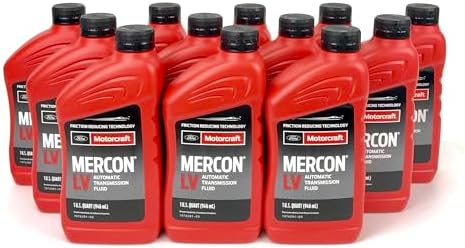
The fluid is MERCON LV, Motorcraft XT-10-QLVC, in every 6R80 F-150. Ford's fluid chart lists MERCON LV for the 6R80 rows of the F-150 and MERCON ULV only for the 10R80. The same chart warns against supplemental transmission additives, treatments and cleaners. Ford's 2014 F-150 owner's manual lists about 13.1 quarts dry fill, or 12.1 quarts with the 3.7L, but a pan service takes far less. If the fluid smells burnt and the pan has friction material in it, a fluid change will not fix the slip. It only tells you a clutch has already been damaged.
2009-2010 trucks are built differently from 2011 and later
For 2011, Ford added a one-way clutch to the rear planetary to smooth out harsh 1-2 and 2-1 shifts. GEARS Magazine explains that on the later design the D clutch applies only until about 3 mph and then releases, leaving the one-way clutch to hold 1st. That gives you a quick test on a 2011-2017 truck. If it slips in 1st in Drive but holds in manual 1, where the D clutch stays on for engine braking, the one-way clutch is the suspect, not a friction pack. The 2011 change also reached the case, the C and D support, the rear planetary, the valve body, the lead frame and the harness. Order parts by model year and transmission tag, not by "6R80 F-150."
When it is a clutch
Every 6R80 gear uses two of its five clutches, so a slipping clutch slips in every gear that uses it. Slipping in 1st through 4th points at the A clutch. Slipping in 3rd, 5th and Reverse points at B. Slipping in 4th, 5th and 6th points at E. The full table is in our 6R80 slipping guide. On towing F-150s with burned fluid, I expect to find more than one pack damaged. That means a full overhaul with every friction and steel, a cooler flush, and solenoid strategy programming afterward. A unit rebuilt with the old cooler oil left in the lines will slip again.
The fix, by what you found
- Surge with the truck standing still, boost codes: engine repair. Leave the transmission alone.
- 2010 4.6L shudder at 25-45 mph: PCM calibration per TSB 10-25-13.
- TCC slip codes plus flare shifts, clean fluid: valve body repair or a remanufactured valve body, then program and relearn.
- Starts in 5th, speedometer at zero: lead frame per TSB 13-6-8. The solenoids stay.
- Low fluid, clean pan: correct the level with MERCON LV, find the leak, recheck the adaptive shifts.
- Burnt fluid, friction material, slip follows one clutch: overhaul with a full master kit and a cooler flush.
6R80 master rebuild kit with clutch plates, 2011-2017
When the clutches are burned, this kit has the frictions, steels, seals and gaskets for a 2011-2017 F-150 overhaul. Sold by our sister store, CoreTransmissionParts.
Shop the part for this fix →Need a different year or kit? The rebuild kits collection covers the 2009-2010 units too.
Need parts for this job?
F-150 6R80 master rebuild kits, lead frame kits, valve bodies by year, solenoid kits and MERCON LV are on our 6R80 parts page, with checkout on site.
FAQ
Why is my F-150 6R80 slipping?
On a 6R80 F-150 the usual causes are low or burnt MERCON LV, a converter clutch that will not hold because the valve body leaks release or apply oil, solenoids or shift timing that cause flare shifts, and burned clutches on high-mileage or towing trucks. Some complaints are not slips at all: a 2011-2013 truck starting in 5th from a lead frame fault, or an EcoBoost engine surge that makes the TCC slip reading swing. Graph TSS, OSS and commanded gear before replacing anything.
Can an EcoBoost engine problem feel like transmission slipping?
Yes. Transmission Digest documented a 2015 3.5L EcoBoost 6R80 that had two transmissions and a converter installed for TCC slip and RPM surge. A stall test reproduced the surge with the truck standing still, P0234 set, and replacing the left turbocharger fixed it. TCC slip is engine speed minus turbine speed, so an engine surge moves that number even when the converter clutch is holding.
Is there a TSB for 6R80 F-150 shudder or slip?
For 2010 F-150s with the 4.6L, Ford TSB 10-25-13 is a PCM calibration for converter shudder at light throttle between 25 and 45 mph. For 2011-2013 F-150s built on or before April 8, 2013, TSB 13-6-8 covers trucks that start off in 5th gear, fixed with lead frame AL3Z-7G276-A. Sudden downshifts on 2011-2017 trucks are covered by recalls, so check the VIN with a Ford dealer.
Will a fluid change fix a slipping 6R80?
Only if the fluid was low or worn and the clutches are not damaged. Correct the level with MERCON LV at operating temperature and recheck. If the old fluid is burnt and the pan has friction material in it, the clutches have already slipped long enough to damage themselves, and the transmission needs an overhaul. Ford also warns against additives and cleaners in this transmission.
Related guides
- 6R80 Slipping: Causes and Fix
- 6R80 F150 Common Problems and Fixes
- 6R80 Torque Converter Shudder
- 6R80 P0720 Fix
- 6R80 Fluid Type and Capacity
Sources
- Transmission Digest — Troy Hopp, Certified Transmission, "6R80 whirring noise: TCC slip or engine surge?" May 2024. Backs the 2015 Expedition 3.5L case, the TCC slip reading during an engine surge, the steps taken (replacement unit, PCM update, solenoid strategy, ground repair, converter), the stall test, P0234, Ford TSB 16-0013 and the left turbocharger fix. transmissiondigest.com
- TCRA / ATRA — Technical Bulletin TCB27, "Torque Converter Shudder 25-45 MPH," September 2012. Backs the 2010 F-150 4.6L 6R80 shudder at light throttle, the downshift and tip-in variant, and the Ford TSB 10-25-13 calibration fix. tcraonline.com (PDF)
- Sonnax — Oversized Converter Release Regulator Valve Kit 2671. Backs the 2009-2014 and 2015-later 6R80 coverage, the valve's role in lube pressure and TCC apply/release timing, bore wear leaking to the sump, and the symptom list. sonnax.com
- Ford Motor Company — Technical Service Bulletin 13-6-8, "6R80 Transmission High Gear Engagement From A Stop," June 2013, hosted by NHTSA. Backs the 2011-2013 F-150 coverage, the April 8, 2013 build cutoff, the 5th-gear start symptoms, P0720/P0722, lead frame AL3Z-7G276-A, the no-solenoids note and the 2.1-hour labor. static.nhtsa.gov (PDF)
- GEARS Magazine (ATRA) — David Chalker, "Updates to the Ford 6R80." Backs the 2011 one-way clutch addition, the D clutch releasing at about 3 mph, and the part changes that separate 2009-2010 units from later ones. gearsmagazine.com
- Ford Customer Service Division — Motorcraft Automatic Transmission Fluid Chart by vehicle. Backs MERCON LV (XT-10-QLVC) for the 6R80 F-150, MERCON ULV for the 10R80 only, and the warning against supplemental additives, treatments or cleaners. fcsdchemicalsandlubricants.com (PDF)