The 10R80 has sat behind almost every F-150 since the 2017 model year: the 2.7L and 3.5L EcoBoost, the 5.0L, the 3.3L, the Raptor, and from 2021 the PowerBoost hybrid, which uses its own version called the 10R80 MHT. Our 10R80 common problems guide covers the transmission family as a whole. This post is narrower. It covers what goes wrong in the F-150 specifically, and the one detail that sorts most of it before you pick up a wrench: the truck's build date.
Ford has split its F-150 10R80 bulletins at two build dates, 15-Aug-2022 and 23-Sep-2024, and it treats the hybrid separately. A 2022 F-150 built in July and one built in September can have different failures with different fixes. Everything below comes from Ford's own technical service bulletins, NHTSA's defect files and Sonnax. The links are at the bottom.
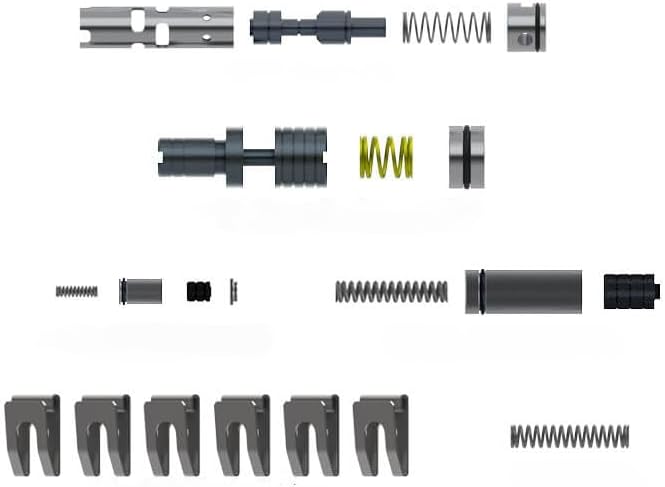
The F-150 10R80 bulletin map
Get the VIN, the build date off the door tag and the engine before you do anything else. Then find the truck in this table.
| F-150 | Complaint | Ford's stated cause | Bulletin |
|---|---|---|---|
| 2017-2020, 10R80 | Harsh engagement, harsh or delayed shift, shift DTCs | Keep alive memory in the PCM/TCM, or the main control valve body | TSB 23-2152 |
| 2021 PowerBoost built on or before 23-Apr-2021 | Harsh 1-3 upshift, harsh electric-to-gas transition | PCM software | TSB 21-2407 |
| 2021-2022, 10R80 (non-hybrid), built on or before 15-Aug-2022 | Harsh or delayed engagement and shifts, shift DTCs | CDF clutch cylinder (7H351) sleeve moving and leaking | TSB 24-2304 (supersedes 24-2254) |
| 2021-2023 PowerBoost (10R80 MHT), built on or before 15-Aug-2022 | Harsh or delayed engagement and shifts, shift DTCs | Software, solenoid ID strategy, sticking valves and/or the CDF sleeve | TSB 24-2252 |
| 2022-2024, 10R80 and MHT, built 16-Aug-2022 through 23-Sep-2024 | Harsh 3-4 and 4-5 upshifts, harsh 5-3 and 4-3 downshifts, harsh reverse, worse cold | F clutch friction plates brinelling into the clutch and planetary container cylinder (7B177) | TSB 26-2241 (supersedes 25-2587) |
The DTC list is the same on all the pre-August-2022 bulletins: P0751 through P0772 (shift solenoids A through F), P2700 through P2708 (friction element apply time), P0729 and P0731 through P0736 (gear ratio), and P076F, P07D9, P07F6 and P07F7. Those codes tell you a clutch is not applying when the TCM expects it to. They do not tell you why, and that is the reason the build date matters so much.
2017-2020 trucks: adaptives and the valve body first
On the first-generation trucks, TSB 23-2152 (May 2023, superseding 23-2123) names two causes for harsh engagement and harsh or delayed shifts: corrupted adaptive data in the keep alive memory, or the main control valve body. The repair branches the same way. Reprogram the transmission strategy and run the adaptive learning drive cycle, or overhaul the valve body. Ford's labor operations break this out by engine for the 2.7L and 3.5L EcoBoost, the 5.0L, the 3.0L diesel and the Raptor.
The order I work in on these trucks is simple. Load test the batteries, because a truck that has been sitting with a weak battery adapts badly and looks like a valve body. Then check the fluid level hot, update the software, and do the full relearn. I only take the valve body off when the truck still shifts badly after all of that. If it does come off, the bulletin calls for six new shift solenoid retaining clips (HL3Z-7G007-A). Do not reuse the old ones.
One note on 2017 trucks. A 2017 F-150 can have either the 6R80 or the 10R80. NHTSA's open engineering analysis EA26001 covers about 1.27 million 2015-2017 F-150s for unexpected downshifts and rear wheel lockup. It is limited to trucks with the 6R80, and the failure is signal loss from the transmission range sensor in the molded lead frame. If a customer brings in a 2017 10R80 truck after reading about that investigation, it does not apply. Confirm which transmission it has before you go down that road.
2021 to mid-August 2022: the CDF sleeve
On non-hybrid 2021-2022 F-150s built on or before 15-Aug-2022, TSB 24-2304 blames the same codes and complaints on axial movement of the CDF clutch cylinder (7H351) sleeve. When the sleeve walks, it opens a leak in the hydraulic circuit that feeds the clutches. The clutch the TCM commands then fills slowly or loses pressure, which shows up as a flare, a slide shift or a slow engagement, and then as a ratio or apply-time code.
What makes this bulletin worth reading is that Ford makes you prove the leak before you pull the transmission. The procedure, in short:
- Put a pressure transducer on the line pressure port. The port is M10x1.0. Ford warns that an NPT fitting will damage the case, so use an M10x1.0 to 1/8 in. FNPT adapter.
- With a bidirectional scan tool, monitor LINEDSD, RPM_DSD, the six shift solenoid current PIDs (SSA_AMP through SSF_AMP), TR_Corrected and TFT.
- Truck in park with the parking brake set and TFT at 50 C (122 F) or higher. Command all six shift solenoids to 0 mA, bring engine speed to 500-600 rpm, and command line pressure to 1900-2000 kPa (275-290 psi).
- Record, command SSA to 1.0 A for two seconds, then back to 0 mA. Repeat with SSC.
- Compare the pressure peaks and valleys before and during each apply. Ford runs those numbers through its CDF calculator tool. A circuit that drops pressure when its clutch is commanded on is leaking.
If the test passes, the bulletin bills it at 0.8 hours and the transmission stays in the truck. If it fails, the CDF cylinder gets replaced. Ford's F-150 labor times for a failed test run from 11.0 hours on a 4x2 3.3L to 13.1 hours on a 4x4 2.7L EcoBoost. That spread is why you prove it first. An independent shop can run the same test with any transducer and a scan tool that can command the solenoids. You do not need Ford's equipment.
PowerBoost trucks are a different transmission in the details
The 2021-2023 PowerBoost uses the 10R80 MHT. A hybrid drive unit sits where the torque converter would be. The bulletins treat it as a separate transmission. TSB 24-2252 says in so many words that it does not apply to the regular 10R80, and the CDF bulletin excludes the hybrid. On a PowerBoost built on or before 15-Aug-2022, Ford lists four possible causes of harsh or delayed shifts: PCM or TCM software, the solenoid ID strategy, sticking valves in the main control and CDF sleeve movement.
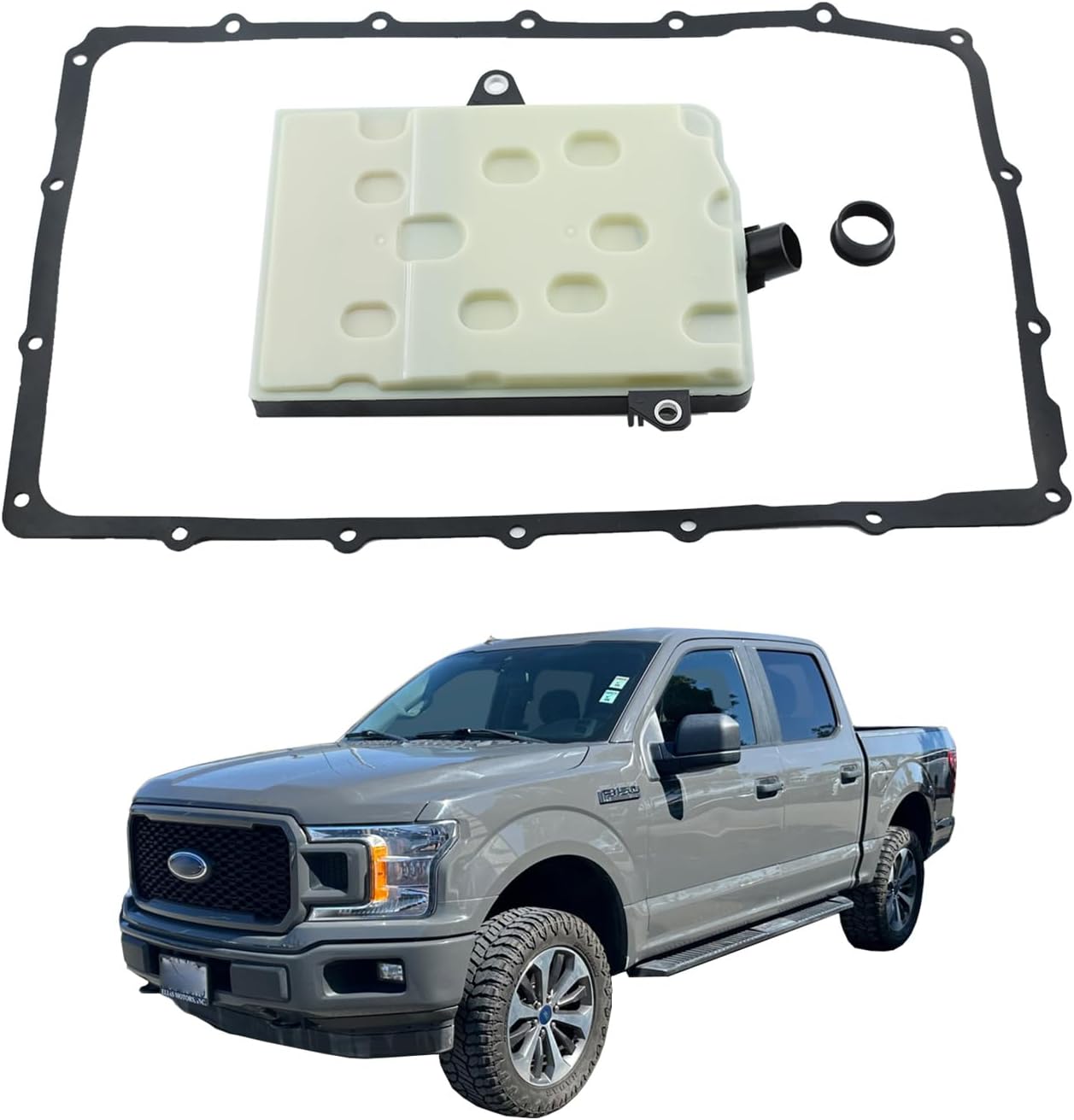
The parts are different too, and this is where people order wrong. The MHT takes its own fluid filter (L1MZ-7A098-B, against HL3Z-7A098-A for the non-hybrid F-150) and its own pan gasket (L1MZ-7F396-A, against HL3Z-7A191-B). In TSB 26-2241 it also has its own valve body separator plate for the F-150 (ML3Z-7Z490-C). Early 2021 PowerBoost trucks built on or before 23-Apr-2021 also have TSB 21-2407 for a harsh 1-3 upshift or harsh electric-to-gas transition. That one is a 0.3-hour PCM reprogram, so check it before anything else on an early truck.
Mid-August 2022 through September 2024: the F clutch
Trucks built on or after 16-Aug-2022 got an upgraded CDF clutch cylinder. TSB 26-2241 says those trucks do not need the cylinder replaced. They have their own problem. For 2022-2024 F-150s built 16-Aug-2022 through 23-Sep-2024, hybrid and non-hybrid, Ford describes harsh 3-4 and 4-5 upshifts, harsh 5-3 and 4-3 downshifts and harsh reverse engagement, often worse cold. The cause is the F clutch friction plates brinelling into the clutch and planetary container cylinder (7B177). Put simply, the plates wear dents into the container, so the F clutch pack hangs up when it should apply or release smoothly. The complaint shows up on the shifts where the F clutch changes state.
The first diagnostic step here is the pan, not the scan tool. Pull the filter and look at its top side. If there is gray silt on it, the bulletin applies. If there is not, Ford sends you back to normal diagnosis. The repair is a full removal: overhaul the valve body, replace the F clutch steels and frictions and the 7B177 container, and set F clutch clearance with a selective snap ring (1.5 to 2.3 mm). The teardown also replaces the input shaft seals, the sun gear No. 3 shaft seals and the front support bolt seals, so plan for a seal kit. Ford's F-150 labor for the filter inspection is 2.3 hours on gas trucks and 5.0 on the PowerBoost. A failed inspection runs 10.6 to 15.1 hours depending on engine and drive.
Pay attention to that cold complaint. A late-2022 or 2023 truck with a harsh 4-3 coasting down the first few miles of the morning, and gray silt on the filter, is a textbook case for this bulletin. A relearn will not cure it.
Fluid and level: the self-inflicted F-150 failure
Ford's special service message 47093 told dealers that 2017-2018 F-150 and Raptor 10R80s take MERCON ULV, Motorcraft XT-12-QULV (WSS-M2C949-A), and warned that the wrong fluid can damage the transmission. Sonnax lists 13.0 qt (12.3 L) of ULV for a dry 2020 F-150 4x4 unit. A pan drop takes far less, so set the level hot, not by quart count. Check it between 96 and 101 C (206-215 F) on level ground, because some units have a thermal valve.
Sonnax found that as little as one quart over full causes overheating and venting out the breather. It shows up most often after CDF repairs, when the unit is filled cold, topped to the full mark and ends up about a quart high once it is hot. If you are doing either of the teardown bulletins above, budget time for a hot level check before the truck leaves. Fluid part numbers and refill amounts are in our 10R80 fluid type and capacity guide.
How I triage an F-150 10R80
- Door tag first. Model year, build date, engine and whether it is a PowerBoost. That picks the bulletin.
- Batteries and codes. Load test and scan all modules. Fix network and engine faults first.
- Hot fluid level. MERCON ULV only, set at 206-215 F.
- Software and relearn. Mandatory on 2017-2020 trucks and early PowerBoosts before any hard parts.
- Prove it. Built on or before 15-Aug-2022, run the CDF pressure test. Built 16-Aug-2022 through 23-Sep-2024, pull the filter and look for gray silt.
- Only then pull the transmission. And order hybrid-specific parts for a PowerBoost.
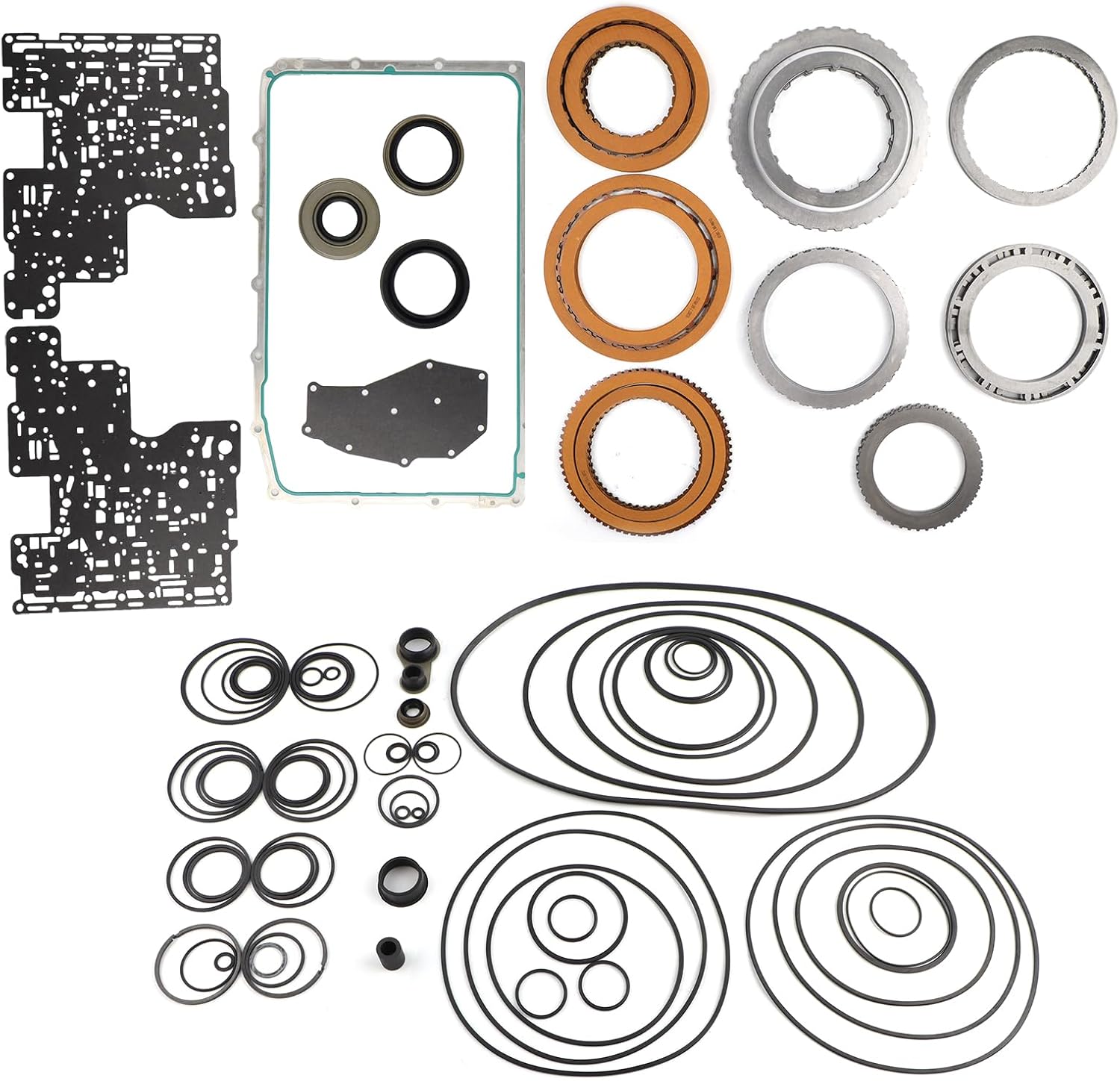
10R80 deluxe rebuild kit for the teardown bulletins
The CDF cylinder and F clutch repairs both pull the clutch and planetary assembly and replace a long list of input shaft, sun gear shaft and front support seals. This deluxe rebuild kit covers 2017-up 10R80s, so the seals are on hand when the unit is open.
Shop the part for this fix →Need valve body parts too? The 10-speed parts collection has the Sonnax valve body kits and parts the Ford and GM 10-speeds share.
Need parts for this job?
The 10R80 master rebuild kit, Sonnax valve body kit, filter and gasket kits, clutch drums and MERCON ULV-spec fluid are all on our 10R80 parts page, with checkout on site.
FAQ
What year F-150 has the 10R80 transmission?
The 10R80 has been used in the F-150 since the 2017 model year behind the 2.7L and 3.5L EcoBoost, 5.0L, 3.3L and Raptor engines, and the 2021-and-later PowerBoost uses the hybrid 10R80 MHT. A 2017 F-150 can have either the 6R80 or the 10R80, so confirm which one before diagnosing.
Is there a TSB for F-150 10R80 harsh shifting?
Yes, and which one applies depends on build date. 2017-2020 trucks fall under TSB 23-2152, non-hybrid 2021-2022 trucks built on or before 15-Aug-2022 under TSB 24-2304 (CDF sleeve), PowerBoost trucks built by that date under TSB 24-2252, and 2022-2024 trucks built 16-Aug-2022 through 23-Sep-2024 under TSB 26-2241 (F clutch).
Why does my 2023 F-150 shift hard from 4th to 3rd when cold?
Ford TSB 26-2241 covers harsh 3-4 and 4-5 upshifts, harsh 5-3 and 4-3 downshifts and harsh reverse, worse when cold, on trucks built 16-Aug-2022 through 23-Sep-2024. The cause is F clutch friction plates brinelling into the 7B177 container. Gray silt on top of the fluid filter confirms it, and the fix is an F clutch and container replacement, not a relearn.
Does the F-150 PowerBoost use a different transmission?
It uses the 10R80 MHT, which replaces the torque converter with a hybrid drive unit. Ford writes separate bulletins for it and it takes its own filter (L1MZ-7A098-B) and pan gasket (L1MZ-7F396-A), so do not order regular 10R80 service parts for a PowerBoost.
How much transmission fluid does an F-150 10R80 take?
Sonnax lists 13.0 qt (12.3 L) of MERCON ULV for a dry 2020 F-150 4x4 unit, but a pan service takes much less. Set the final level hot at 206-215 F, because as little as one quart overfilled causes overheating and venting.
Related guides
- 10R80 Common Problems and Fixes
- 6R80 vs 10R80 for the F-150
- 10R80 Harsh and Delayed Shifts
- 10R80 Valve Body Problems and Testing
- 10R80 Fluid Type and Capacity
Sources
- Ford Motor Company — Technical Service Bulletin 23-2152, "10R80 — Harsh Engagement And/Or Harsh/Delayed Shift" (May 2023). 2017-2020 F-150 applicability, DTC list, keep alive memory vs main control valve body causes, solenoid retaining clips HL3Z-7G007-A; plus Ford Special Service Message 47093 on MERCON ULV XT-12-QULV for 2017-2018 F-150/Raptor. TSB 23-2152 (PDF) · SSM 47093 (PDF)
- Ford Motor Company — Technical Service Bulletin 24-2304 (supersedes 24-2254), "Various Vehicles Equipped With A 10R80 Automatic Transmission — Harsh/Delayed Engagement And/Or Harsh/Delayed Shift — Built On Or Before 15-Aug-2022" (September 2024). CDF clutch cylinder 7H351 sleeve movement, the line pressure CDF test procedure and PIDs, M10x1.0 port warning, F-150 labor times. static.nhtsa.gov (PDF)
- Ford Motor Company — Technical Service Bulletins 24-2252, "10R80 MHT Transmission — Harsh/Delayed Engagement And/Or Harsh/Delayed Shift" (August 2024), and 21-2407, "10R80 MHT — Harsh 1-3 Upshift And/Or Harsh Electric To Gas Transition" (November 2021). PowerBoost causes, MHT-specific filter and pan gasket part numbers, early-build PCM reprogram. TSB 24-2252 (PDF) · TSB 21-2407 (PDF)
- Ford Motor Company — Technical Service Bulletin 26-2241 (supersedes 25-2587), "Harsh Shifts Between 3rd And 5th Gears And/Or Harsh Reverse Engagement, Symptoms Worse When Cold" (May 2026). 16-Aug-2022 through 23-Sep-2024 build window, F clutch brinelling into the 7B177 container, gray silt filter check, upgraded CDF cylinder note, selective snap rings, F-150 labor times. static.nhtsa.gov (PDF)
- NHTSA Office of Defects Investigation — Engineering Analysis EA26001 opening resume, "Unintended Transmission Downshift and Rear Wheel Lock-up" (January 2026). MY 2015-2017 F-150 population, limited to the 6R80, TRS signal loss in the lead frame, prior recalls 16V-248, 19V-075, 19V-433 and 24V-444. static.nhtsa.gov (PDF)
- Sonnax — Jim Mobley, "Tips for Troubleshooting Ford 10-Speed ATF Venting & Overheating." One-quart overfill causes venting and overheating, 96-101 C (206-215 F) check temperature, 13.0 qt dry fill for a 2020 F-150 4x4. sonnax.com