The 10R80 has been in F-150s since 2017, and by now the failure patterns are not a mystery. Most of what rolls into the bay falls into six buckets: harsh or delayed shifts from adaptive or valve body problems, the CDF drum sleeve walking out of place, TCC regulator valve sticking, overfill and overheating after a service, low roller clutch failure, and on diesels, pump drive gear damage. Knowing which bucket you are in before the pan comes down saves a lot of money.
This is how I sort them, what Ford's own bulletins say, and what Sonnax, ATRA's GEARS magazine and Transmission Digest have documented on the bench. Every source is listed with a link at the bottom.
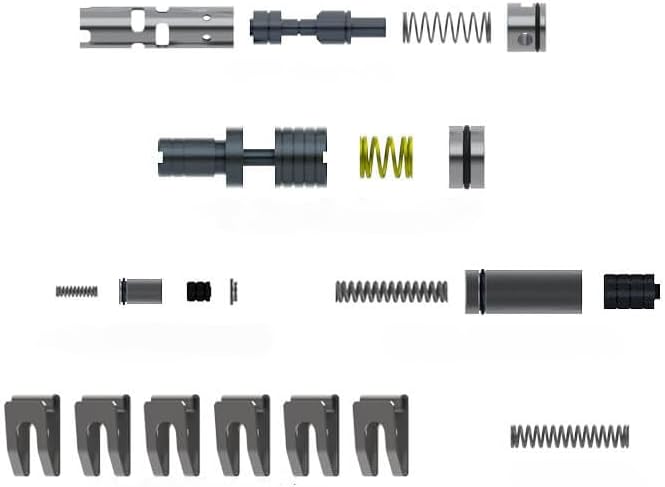
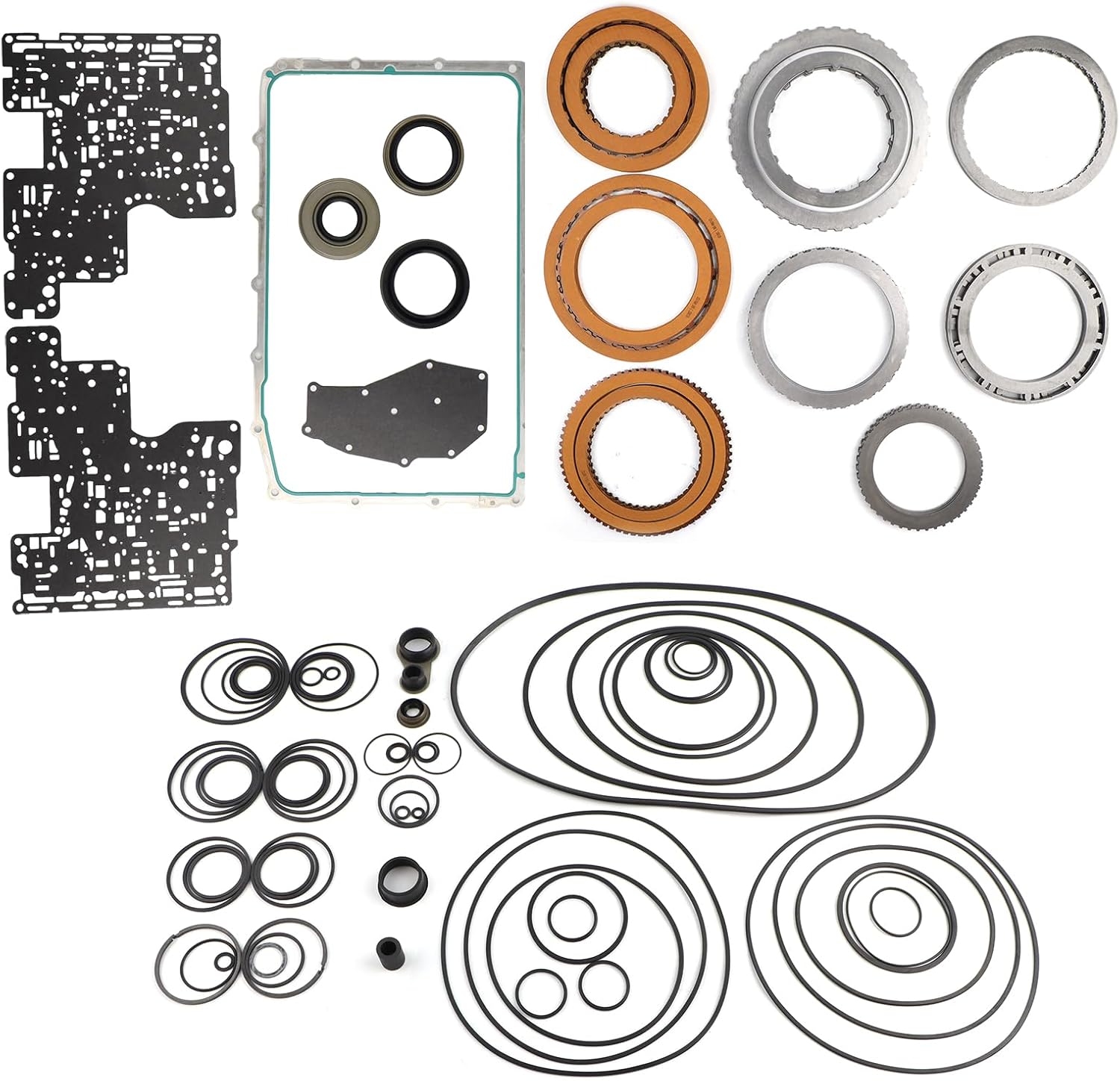
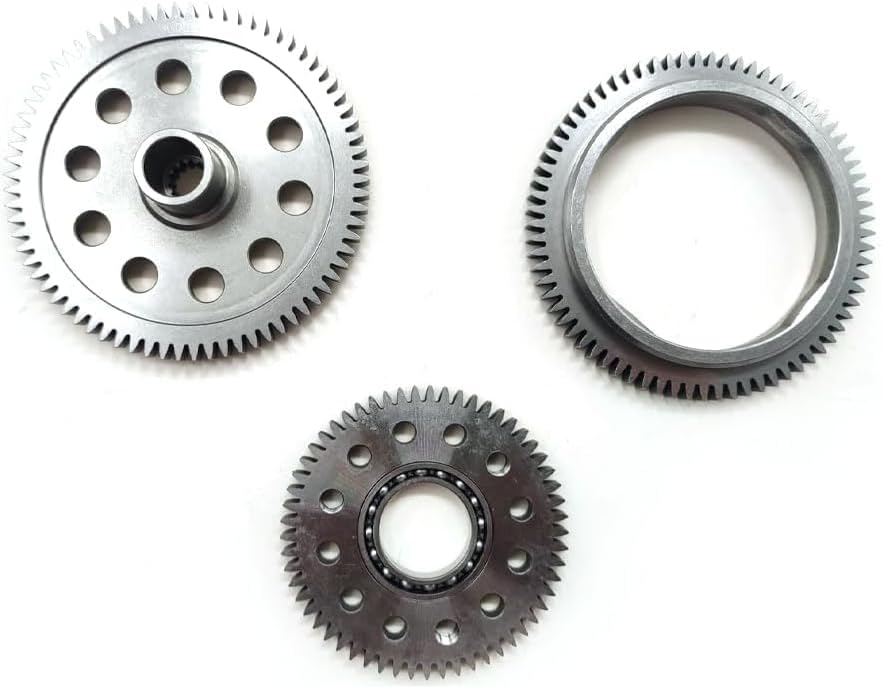
Quick reference: the six common 10R80 problems
| Problem | Typical complaint | Where it is documented |
|---|---|---|
| Adaptive / valve body shift quality | Harsh engagement, harsh or delayed shifts, P0751-P0772, P2700-P2708, P0729-P0736 | Ford TSB 23-2152 |
| CDF clutch cylinder sleeve movement | Same codes and symptoms, plus flares and slide shifts | Ford TSB 24-2254, Sonnax |
| Sticking TCC regulator valve | Erratic lockup, shudder, P0741 or P1744 | GEARS magazine |
| Overfill after service | Overheating, fluid out the vent | Sonnax |
| Low one-way roller clutch | Failure of the low OWC and springs | Transmission Digest |
| Pump drive gear failure | Debris in the pan, mostly diesels | GEARS magazine |
Before any of that, remember what the unit is. Per GEARS, the 10R80 makes ten forward speeds with four planetary gearsets, one mechanical one-way clutch, six friction clutches and a two-piece valve body with eight solenoids. Six of those are the A through F shift solenoids, one per clutch. They are casting-integrated direct-acting solenoids (CIDAS), normally low, so zero current means zero clutch pressure. If the solenoid power circuit opens, every clutch drops and there is no limp mode. A no-move with no pressure is an electrical check first, not a teardown.
1. Harsh or delayed shifts: adaptives and the valve body
This is the most common complaint by a mile, and Ford covers it in TSB 23-2152 (May 2023, superseding 23-2123). It applies to 2017-2020 F-150, 2018-2021 Expedition, Navigator and Mustang, and 2019-2023 Ranger. The symptoms are harsh engagement, harsh shift or delayed shift, sometimes with a MIL and one of a long DTC list: P0751, P0752, P0756, P0757, P0761, P0762, P0766, P0767, P0771, P0772, P2700 through P2708, P0729, P0731 through P0736, P076F, P07D9, P07F6 and P07F7.
Ford names two causes: the keep alive memory in the PCM/TCM, or the main control valve body. The repair branches accordingly. Ford's labor times tell you how often the cheap branch works: 0.8 hours to reprogram and run the adaptive drive cycle, against 4.9 hours on a 2018-2020 F-150 4x4 5.0L when the valve body has to be overhauled. The bulletin calls for six new solenoid retaining clips (HL3Z-7G007-A) whenever the valve body comes apart.
GEARS puts a number on the software side: about 80 percent of erratic shift complaints on these units are cured by updating the TCM strategy and running the Adaptive Learning Drive Cycle. So the order of operations is always the same. Scan every module, fix non-transmission codes first, check for a calibration update, then relearn. GEARS lists the failure-management behavior that fools people: with a Type A or B code, adaptive pressure and shift values freeze, TCC control and manual shift mode shut off, and you can get high line pressure, early TCC apply or limited shift range. That feels like a bad transmission and is not.
The adaptive drive cycle, done right
- Record and clear DTCs, then drive until engine and transmission are at operating temperature.
- From a stop on a level road, accelerate at about 15 percent throttle so the 1-2 through 7-8 upshifts happen between 1300 and 1600 rpm.
- After the 7-8 shift at 32-38 mph, keep accelerating to 55 mph so the 8-9 and 9-10 shifts complete.
- Brake gently to a stop, hold the brake five seconds, then shift N (1 s), R (2 s), N (1 s), D (2 s).
- Repeat the acceleration and garage shift steps six more times, then park, key off, and wait 3-5 minutes before driving.
One thing Sonnax flags that saves real grief: check the batteries. On 10R80 work trucks that sat in the shop for a few days, a weak battery makes the unit adapt badly, with harsh engagements and erratic shifts that look like a valve body fault and then clear up once the truck is warm. Sonnax notes Ford and GM batteries last about three years. Load test before you condemn anything.
When the valve body really is the problem
If programming and a clean relearn do not fix it, GEARS reports that sticking valves and sticking CIDAS solenoids are becoming common as mileage builds. Sonnax lists the wear points to check on any 10R80 valve body, new or used: the main pressure regulator valve, TCC priority valve, TCC regulator valve, boost valve, and the latch valves, which get beaten up by their retainer clips. Also check the separator plate. The impregnated filters on the plate can come loose and stick valves, and a new OE plate is available from Ford.
Two traps when buying a valve body. Sonnax reports shops receiving used cores sold as new; the current new Ford separator plate is light brown, and a yellow plate on a "new" unit is a red flag. And do not forget the steel-and-rubber pump seal between the valve body and case. Left out or out of position, it causes no movement and no line pressure. Our 10R80 valve body testing guide covers the bench side.
2. The CDF drum sleeve
This is the hard-parts failure that shows the same codes as problem 1, which is why it gets misdiagnosed as a valve body. Ford TSB 24-2254 (August 2024) says it plainly: axial movement of the CDF clutch cylinder (7H351) sleeve causes hydraulic circuit leaks. It covers 2020-2022 Explorer, 2020-2023 Transit, 2021-2022 F-150, 2021-2022 Mustang and 2022 Expedition and Navigator built on or before August 15, 2022, excluding the hybrid. The DTC list matches 23-2152.
Ford's procedure confirms the leak before anything comes apart. The dealer uses a pressure-vacuum transducer (Rotunda 164-R9833) with the VCMM extension kit, commands line pressure up to 1900-2000 kPa (275-290 psi), and runs the results through a leakage calculator. If the circuit leaks, the CDF cylinder gets replaced along with a long list of seals: input shaft seals, sun gear No. 3 shaft seals, C and D clutch piston seals, the D clutch balance dam and more. For F-150, Expedition and Navigator the cylinder is ML3Z-7H351-B.
Sonnax adds a useful point for the rebuilder: drum sleeve movement and sealing ring damage are caused by shift issues, not the valve body, so a unit that arrives with a failed CDF drum, flares and bumpy downshifts can often keep its original valve body. On the bench, Sonnax offers CDF drum saver kit 129910-01K, a stepped sleeve with a set screw that stops it walking and rotating, as either a repair or a preventive fix. Air check every drum before the assembly goes in the case, and check the main shaft plugs while you are there; Sonnax lists loosening shaft plugs among the recurring 10-speed issues.
3. TCC regulator valve: shudder and P0741 / P1744
GEARS reports that on 2017-2018 F-150 and Raptor, 2018 Expedition, Mustang and Navigator, erratic torque converter clutch operation or a TCC shudder may be caused by a sticking TCC regulator valve, with P0741 or P1744 that may or may not set depending on application. If the fluid is discolored or carries debris, GEARS recommends replacing the converter and flushing the cooler system as part of the repair. A valve body fix on top of contaminated fluid and a damaged converter clutch just comes back.
Because the Ford converter applies differently from most (fluid pressure pushes the lockup piston away from the engine, and the friction material rides on the turbine), a loss of charge pressure from worn sealing rings and bushings upstream also shows up as lockup and heat complaints. Full diagnosis is in our 10R80 converter shudder guide and the P0741 guide.
4. Overfill and overheating after service
This one is self-inflicted and common after CDF drum work. Sonnax found that as little as 1 quart over full causes both overheating and fluid venting on Ford 10-speeds. The usual story: the unit is filled cold on the lift to the top of the mark, and once it reaches operating temperature it is a quart high.
The numbers to work from, per Sonnax's 2020 F-150 4x4 example: 13.0 qt (12.3 L) of Motorcraft MERCON ULV (XT-12-QULV) for a dry unit, and the level is only valid at normal operating temperature, 96-101 C (206-215 F), on a level surface. Sonnax notes some units have a thermal valve, which makes a hot check even more important. Fill specs and dipstick marks vary by application and year, so confirm against the service info for the exact truck.
Separately, GEARS notes that 2018-and-later models with the transmission warmer mounted on the transmission can leak engine coolant, usually after the vehicle sits hot. A coolant puddle under the bellhousing is not always a radiator hose.
5. Low one-way roller clutch failure
Wayne Colonna, writing in Transmission Digest, identifies failure of the low one-way roller clutch and its springs as a common 10R80 problem, and explains why. The cam is the outer race and the smooth inner race is part of the stationary front cover. The assembly starts to freewheel in third and stays freewheeling up through seventh before the B clutch holds it in ninth and tenth. All that high-speed freewheeling stresses the rollers and springs, the same mechanism GM fixed on the 4T60-E in 1996 by moving the cam.
There is no repair for it. Colonna's advice is new parts, which Ford supplies. If you find spring or roller debris in the pan, check this assembly before blaming a clutch pack.
6. Pump drive gear failure
GEARS reports pump drive gear failure as a newer issue, with most cases on diesel applications. Since the pump is driven by straight-cut gears, some whine is normal, and GEARS notes Ford considers a converter-type whine normal. What is not normal is metal in the sump. Inspect the pan on any diesel 10R80 for gear debris before the damage spreads to the rest of the unit.
How I triage a 10R80 in this order
- Battery and codes first. Load test the batteries, scan all modules, fix engine and network codes.
- Fluid level hot. MERCON ULV only, checked at 96-101 C (206-215 F). An overfilled unit will vent and run hot.
- Software. Check for a strategy update, then run the full adaptive drive cycle. Per GEARS, this fixes most erratic shift complaints.
- Check the build date and bulletin. 2017-2020 F-150 and other early units point to TSB 23-2152 (valve body / adaptives). 2020-2022 builds on or before August 15, 2022 point to TSB 24-2254 (CDF sleeve).
- Look in the pan. Clutch material, roller clutch springs or gear debris change the job from a valve body to a rebuild.
- Prove the leak before tearing down. A pressure test tells you whether it is a CDF circuit leak or a valve body problem.
Sonnax Zip Kit for the 10R80 valve body
If your 10R80 shifts badly after the update and relearn, the valve body bores are the next place to look. This Sonnax Zip Kit fits the 10R80 and the Gen. 1 GM 10L80, and it is in stock at our sister store, CoreTransmissionParts.
Shop the part for this fix →Need more than the kit? The 10-speed parts collection has the Sonnax valves, solenoid retainers, filters and clutch packs the Ford and GM 10-speeds share.
Need parts for this job?
Valve body kits, the 10R80 master rebuild kit, pump drive gears, filters and MERCON ULV-spec fluid are all on our 10R80 parts page, with checkout on site.
FAQ
What are the most common problems with the Ford 10R80?
Harsh or delayed shifts and engagements are the most common, covered by Ford TSB 23-2152 and usually fixed with a software update and adaptive relearn or a valve body repair. After that come CDF drum sleeve leaks (TSB 24-2254), a sticking TCC regulator valve causing shudder and P0741 or P1744, overheating from overfill, low roller clutch failure and, on diesels, pump drive gear failure.
Is there a TSB for 10R80 harsh shifting?
Yes. TSB 23-2152 covers 2017-2020 F-150, 2018-2021 Expedition, Navigator and Mustang and 2019-2023 Ranger for harsh engagement and harsh or delayed shifts. TSB 24-2254 covers 2020-2022 builds on or before August 15, 2022 where the CDF clutch cylinder sleeve moves and leaks. Both list the same shift solenoid, ratio and pressure-control DTCs.
Will a reset or relearn fix a 10R80 that shifts hard?
Often, yes. GEARS magazine reports that about 80 percent of erratic shift complaints on the 10R80 are cured by updating the TCM programming and running the Adaptive Learning Drive Cycle. Check the batteries first, since a weak battery makes the unit adapt poorly and mimics a valve body fault.
What fluid does the 10R80 use and how much?
Motorcraft MERCON ULV, part XT-12-QULV. Sonnax lists 13.0 qt (12.3 L) for a dry 2020 F-150 4x4 unit, but final level must be set at 96-101 C (206-215 F). Sonnax found as little as 1 qt overfilled causes overheating and venting.
Can you fix a 10R80 CDF drum without replacing it?
Ford's TSB procedure replaces the CDF clutch cylinder when the leak test fails. On the bench, Sonnax offers CDF drum saver kit 129910-01K, a stepped sleeve with a locking set screw that stops the sleeve from walking, as a repair or a preventive fix.
Related guides
- Ford 10R80 10-Speed Transmission Guide
- 10R80 Harsh and Delayed Shifts
- 10R80 Valve Body Problems and Testing
- 10R80 Torque Converter Shudder Fix
- 10R80 Slipping Under Load
Sources
- Ford Motor Company — Technical Service Bulletin 23-2152, "10R80 — Harsh Engagement And/Or Harsh/Delayed Shift," 22 May 2023 (supersedes 23-2123), via NHTSA. Backs the 2017-2020 F-150, 2018-2021 Expedition/Navigator/Mustang and 2019-2023 Ranger coverage, the DTC list, keep alive memory and main control valve body as causes, the HL3Z-7G007-A solenoid retaining clips, XT-12-QULV fluid, and the 0.8 and 4.9 hour labor operations. static.nhtsa.gov (PDF)
- Ford Motor Company — Technical Service Bulletin 24-2254, "10R80 Transmission — Harsh/Delayed Engagement And/Or Harsh/Delayed Shift — Built On Or Before 15-Aug-2022," 23 August 2024, via NHTSA. Backs axial movement of the CDF clutch cylinder (7H351) sleeve as the leak path, the affected models and build date, the Rotunda 164-R9833 and 164-R9534 test equipment, the 1900-2000 kPa (275-290 psi) commanded line pressure, and CDF cylinder ML3Z-7H351-B. static.nhtsa.gov (PDF)
- GEARS Magazine (ATRA) — "The More You Know About The 10R80... The Better Off You Are!" Backs the component layout, CIDAS normally-low solenoid behavior and no fail-safe on power loss, the Type A/B/C failure-management strategies, the Adaptive Learning Drive Cycle steps, about 80 percent of erratic shift issues cured by programming, the TCC regulator valve and P0741/P1744 concern, the transmission warmer coolant leak, and pump drive gear failure on diesels. gearsmagazine.com
- Sonnax — Jim Mobley, "Tackling Ford & GM 10-Speed Valve Body Problems, Failing Batteries & More!" (March 2025). Backs CDF drum sleeve movement, stove-pipe failure and loose main shaft plugs as recurring issues, drum sleeve damage being caused by shift issues rather than the valve body, CDF drum saver kit 129910-01K, the valve wear points, loose separator plate filters, the brown vs. yellow separator plate, the pump seal no-move trap, and the battery advice. sonnax.com
- Sonnax — Jim Mobley, "Tips for Troubleshooting Ford 10-Speed ATF Venting & Overheating" (March 2023). Backs the 1 qt overfill causing overheating and venting, the 13.0 qt (12.3 L) MERCON ULV dry fill for a 2020 F-150 4x4, and the 96-101 C (206-215 F) check temperature. sonnax.com
- Transmission Digest — Wayne Colonna, "The root cause of 10R80 low roller clutch failure" (April 2025). Backs the low one-way roller clutch failure, its freewheeling from third through seventh with the B clutch holding it in ninth and tenth, and new parts as the only repair. transmissiondigest.com