The Ford 10R80 is the ten-speed behind an enormous slice of Ford's lineup — F-150, Mustang GT, Expedition, Ranger, and the Raptor, plus its GM twin the 10L80. It's a strong unit, but when a 10R80 starts shifting badly, the complaint almost always leads back to one place: the valve body, which Ford calls the main control. Harsh 1-2 shifts, erratic or "confused" shifting, delayed engagement into Drive or Reverse, and torque-converter-clutch shudder are the signatures, and they share a root cause more often than most people expect.
The trap on this transmission is twofold. First, the 10R80's solenoids are unusual, so a lot of shops misread how they fail. Second, replacing the main control on a 10R80 is not just bolt-on-and-drive — there's a programming step that, if skipped, leaves you with a car that shifts worse than before. This is how the valve body actually fails, how to test it before you condemn it, and how to replace it correctly.
The short version: Most 10R80 shift-quality complaints are hydraulic wear in the main control bores — the main pressure regulator valve and the TCC regulator valve wear their aluminum bores and lose pressure control. That produces harsh/delayed shifts and converter shudder that mimic bad solenoids. The 10R80's solenoids are direct-acting (CIDAS) and rarely the true fault. Test the hydraulics before you buy a main control, and whenever you install a different valve body, you must program the solenoid strategy characters into the PCM or it will shift poorly.
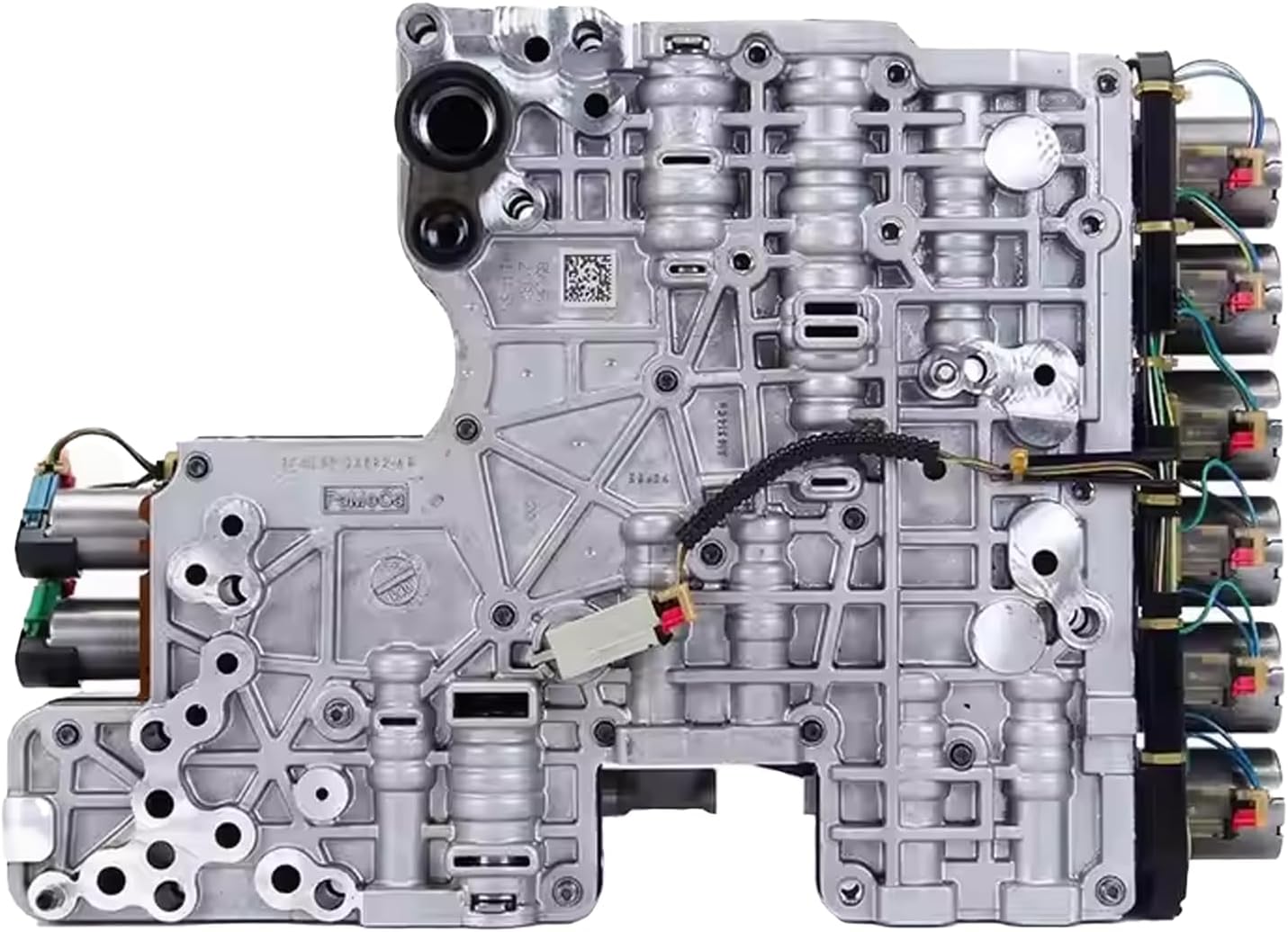
How the 10R80 Main Control Works (and Why Its Solenoids Are Different)
The 10R80 is a clutch-to-clutch ten-speed. Its main control (valve body) meters line pressure to six friction elements through a bank of six shift solenoids plus supporting regulator valves. What makes it unusual is the solenoid design. Ford uses CIDAS solenoids — Casting Integrated Direct-Acting Solenoids. Unlike a conventional variable-force solenoid that pulses fluid through itself, no transmission fluid flows through a CIDAS solenoid at all; the solenoid's pintle moves a control valve mechanically, and varying the voltage moves the pintle a varying amount.
Per Transmission Digest, shift solenoids 1–6 are normally-low linear solenoids that handle shifts and regulated line-pressure clutch control. With a solenoid off, it provides pressure to stroke its clutch control valve, letting controlled line pressure into the apply-clutch circuit; when the solenoid is commanded on, that pressure is removed and line pressure is blocked from the clutch. Because the solenoid acts on a valve rather than flowing fluid, the valve and its bore become the wear item — and that is exactly where 10R80 driveability problems live.
The Symptoms, and What Actually Causes Them
When a 10R80 comes in with a driveability complaint, the pattern is consistent. The symptoms below all point back to the main control, but they come from different worn circuits inside it.
Harsh, erratic, or delayed shifts
This is the number-one complaint: clunky, poorly timed, or "confused" shifting, a harsh bang on the 1-2 or the 3-5 range, or a long delay when you select Drive or Reverse. The cause is usually the main pressure regulator valve. Sonnax notes that wear in the main pressure regulator bore and on the outboard spool of the valve is common on the 10R80, and that this wear reduces line-pressure control — producing delayed shift engagement, poor shift quality, and, left alone, burnt clutches. When a regulating valve can no longer seal its worn aluminum bore, pressure bleeds between circuits, apply timing goes wrong, and the shift feels harsh or erratic even though the solenoid commanding it is electrically fine.
TCC shudder and converter slip
A shudder on lockup, or a converter that won't hold full lockup, ties directly back to the valve body on this unit. Sonnax attributes 10R80 TCC complaints to bore wear around the TCC regulator valve, which reduces converter apply flow, release flow, and cooler flow, and to boost sleeve wear that loses signal fluid and prevents lockup. Low apply pressure is what makes the converter clutch shudder and slip. It feels like an engine miss or a vibration at light throttle around 40–50 mph, and people chase spark plugs and torque converters when the real fault is a leaking valve bore in the main control.
Solenoid performance codes that aren't the solenoid
Because the solenoids act on valves, a worn or sticking valve makes the controller see a circuit that won't build or hold the commanded pressure — and it sets a solenoid-performance or pressure-control code. Ford's own harsh-shift bulletin makes the point: TSB 23-2123 lists the shift solenoid performance codes (P0751 through P0772, P2707, P2708) and the friction element apply-time codes (P2700 through P2705), and its correction for them is to overhaul the main control valve body, not to replace a solenoid. Same code, hydraulic cause. Ford TSB 24-2254 goes further: on 2020-2022 builds the same code set can come from a leaking CDF clutch cylinder sleeve (7H351), downstream of the valve body entirely. This is why condemning a solenoid or the whole main control off a code alone is how money gets wasted on a 10R80.
Shop 10R80 main control / valve bodies, valve-body repair and reseal kits, TCC and main pressure regulator valve kits, Mercon ULV, and the tools to install them — shipped fast from the USA.
Shop 10R80 parts →The Circuits That Wear, at a Glance
The Sonnax Ford 10R60/10R80 valve body layout maps the main control and identifies the valves and bore plugs whose wear drives these complaints. The three that matter most for driveability are:
| Circuit / valve | What it does | Failure signature when worn |
|---|---|---|
| Main pressure regulator valve | Sets line pressure for the whole unit | Harsh/delayed shifts, poor shift quality, burnt clutches |
| TCC regulator valve (and boost sleeve) | Controls converter apply, release, and cooler flow | TCC shudder, converter slip, no full lockup |
| Clutch control / shift valves | Route line pressure to each apply clutch | Cross-leaks, wrong-gear or flare shifts, solenoid performance codes |
All three share the same failure mode: the aluminum bore wears, the valve stops sealing, and the circuit can't hold the pressure the controller commands. The fix is to restore the bore, not to keep throwing electronic parts at it.
How to Test Your 10R80 Valve Body / Main Control
Work this in order. The point is to prove whether the fault is hydraulic (bore wear), electrical (a genuinely bad solenoid or lead frame), or mechanical (worn clutches) before you spend money, because the price difference between a valve-body repair and a full main control or teardown is large.
- Pull codes and record the exact DTC. Note whether it names a specific shift solenoid (A–F / 1–6), a pressure-control fault, or a TCC code. Do not act on the word "solenoid" in the description alone — on the 10R80 that circuit is very often hydraulic.
- Check the fluid first. The 10R80 uses Mercon ULV. Dark, burnt fluid with clutch debris points toward worn frictions and a mechanical failure. Clean fluid with a shift-quality or TCC complaint leans hard toward valve-body bore wear.
- Verify the basics before condemning the main control. Confirm correct fluid level at temperature, battery/charging health, and that the latest PCM/TCM calibration is installed. Ford's own procedure in TSB 23-2123 starts with a reprogram and an adaptive-learn drive cycle when no codes are stored, booked at 0.8 hours, against 3.9 to 5.5 hours for a main control overhaul, so rule that out first.
- Watch live data during a road test. Log commanded vs. actual line pressure and each clutch's commanded vs. actual pressure. A circuit whose actual pressure can't build or hold while the solenoid is commanded correctly indicts the valve and its bore, not the solenoid.
- Scope the solenoid circuit to separate electrical from hydraulic. As Transmission Digest describes, scope-testing the 10R80 lets you confirm the solenoid is receiving and responding to command electrically. A solenoid that commands cleanly on the scope but still won't produce pressure is a hydraulic (bore/valve) fault.
- Isolate with the solenoid and clutch-apply charts. Use the 10R80 solenoid ring / clutch-apply chart to tie the specific failed shifts to the specific clutch and control valve involved. This is what turns "it shifts bad" into "the C circuit valve is leaking."
- Drop the pan and inspect the main control. With the unit accessible, check the suspect valves — main pressure regulator, TCC regulator, and the indicated clutch control valve — for a worn, scored, or loose-fitting bore and for leaking bore plugs. Free-fit valves should move without drag but without side play. This is where a targeted valve kit or a reman main control decision gets made.
- Confirm before reassembly. If the bores check good and the frictions are clean but the complaint persists, only then look harder at the solenoid body / lead frame electrically. On this unit that is the exception, not the rule. Replace the six solenoid retaining clips while you are in there: Ford's TSB 23-2123 parts list calls for new HL3Z-7G007-A clips with every main control overhaul. Our 10R80 shift solenoid guide covers bench testing and band numbers.
Repair or Replace the Main Control
Once you've isolated the fault, you have three paths, cheapest to most expensive:
1. Repair the bores in place. If the frictions are good and the fault is bore wear, the economical fix is a valve-body repair: recondition the worn bore and install an oversized or extended-spool valve kit. Sonnax's main pressure regulator kit uses a front spool roughly 270% longer than the OE spool so it actuates in unworn bore area and restores line-pressure control; the oversized TCC regulator valve kit reconditions that bore to correct circuit pressure loss and restore proper apply lockup. This addresses the actual cause — a leaking aluminum bore — rather than masking it.
2. Install a reman or replacement main control. If multiple bores are worn or the casting is damaged, a remanufactured main control is the cleaner route. Reman units have the known wear circuits already corrected, which is why they solve harsh/flare shifts, wrong-gear starts, and solenoid-performance complaints that a used unit would just re-introduce.
3. Program the solenoid strategy — this step is not optional. The 10R80's PCM stores a solenoid strategy (a set of characters unique to that valve body's solenoid characteristics). Whenever you install a new or different main control, you must write the correct strategy characters into the PCM/TCM with a capable scan tool, then run the adaptive-learn drive cycle. Skip it and the transmission commands the wrong pressures for the solenoids actually installed — you'll get harsh or erratic shifting on a brand-new part and chase your tail. Match the strategy to the valve body, relearn, and road-test. Per GEARS Magazine, the strategy is a 13-digit solenoid body strategy plus a 12-digit solenoid body identification. Entering only the 12-digit number gives a partial file download, and the vehicle should sit at least 10 minutes after programming before the 30-45 minute adaptive drive cycle.
Doing the job? Our line pressure testing walkthrough covers the pressure-logging steps referenced above, and the fluid inspection guide covers reading Mercon ULV condition before you commit to a repair path.
Sources
- Sonnax — Ford 10R60, 10R80 Valve Body Layout, the main-control diagram identifying the main pressure regulator valve, TCC regulator valve, clutch control valves, and bore plugs whose wear affects apply and line pressure. sonnax.com/tech_resources/1305-ford-10r60-10r80-valve-body-layout
- Sonnax — Ford 10R80 Transmission (unit overview), reference for the 10R80 clutch-to-clutch architecture and solenoid-controlled valve body. sonnax.com/units/631-10r80
- Sonnax — Main Pressure Regulator Valve Kit (105740-12K), on main-pressure-regulator bore and outboard-spool wear causing delayed engagement, poor shift quality, and burnt clutches, and the extended-spool correction. sonnax.com/parts/5619-main-pressure-regulator-valve-kit
- Sonnax — Oversized TCC Regulator Valve Kit (105740-15K), on TCC regulator bore wear and boost-sleeve signal loss causing converter shudder, slip, and loss of lockup, and the reconditioning fix. sonnax.com/parts/5774-oversized-tcc-regulator-valve-kit
- Transmission Digest — 10R80/10L90 10-Speed Solenoid Function, on the normally-low linear/CIDAS direct-acting solenoids, how they stroke the clutch control valves, and programming the solenoid strategy into the TCM/PCM. transmissiondigest.com/10r80-10l90-10-speed-solenoid-function
- Transmission Digest — Scope Testing the Ford 10R80, on isolating hydraulic, electrical, and mechanical faults with scope and solenoid/clutch-apply charts (scope captures of all eight solenoids, variable PWM frequency, and why a meter misleads). transmissiondigest.com/scope-testing-ford-10r80
- Ford Motor Company — Technical Service Bulletin 23-2123, "10R80 - Harsh/Delayed Engagement And/Or Harsh/Delayed Shift," 13 April 2023, via NHTSA. Backs the solenoid performance and friction element DTC list, the reprogram-first path (0.8 hr) versus main control overhaul (3.9-5.5 hr), and the six HL3Z-7G007-A solenoid retaining clips. static.nhtsa.gov (PDF)
- Ford Motor Company — Technical Service Bulletin 24-2254, "10R80 Transmission - Harsh/Delayed Engagement And/Or Harsh/Delayed Shift," 23 August 2024, via NHTSA. Backs the same DTC set caused by CDF clutch cylinder (7H351) sleeve movement. static.nhtsa.gov (PDF)
- GEARS Magazine (ATRA) — "Direct Connection: 10R60, 10R80, and 10R140 Solenoids Make Shifts Happen!" Backs the 13-digit strategy and 12-digit identification, the partial download warning, and the 10-minute rest before the 30-45 minute adaptive drive cycle. gearsmagazine.com