If you own a 2017-or-newer F-150, Mustang, Expedition, Ranger, or Bronco and you feel a fine vibration at a steady 30 to 55 mph — like you drifted onto the rumble strip on the shoulder — you are almost certainly feeling torque converter clutch (TCC) shudder in the 10R80 ten-speed. It is the single most common complaint on this transmission, and it is also the one most often "fixed" the expensive way when a cheaper fix would have held. Here is what is actually happening and the order to work it so you spend money once.
The 10R80 is a ten-speed automatic Ford co-developed with General Motors (GM's near-identical unit is the 10L80), in production since 2017. It is a strong transmission. The shudder is not a sign it is grenading; it is a sign that one specific clutch — the one inside the torque converter — has started to slip when it is supposed to be locked solid.
The short version: TCC shudder is the converter clutch micro-slipping during lockup. Rule out the cheap causes in order — wrong or cooked fluid, then an out-of-date TCM calibration — before you condemn the converter. Only after a proper Mercon ULV fluid exchange and the latest reflash fail to cure it do the torque converter and the valve body's TCC regulator circuit become the answer.
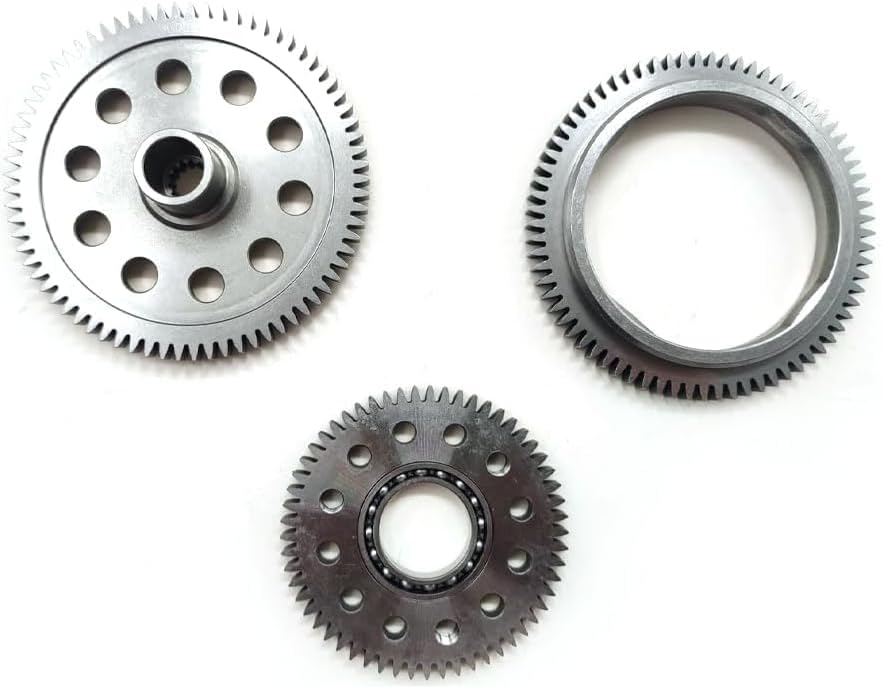
What TCC Shudder Actually Is
The torque converter connects the engine to the transmission through fluid. That fluid coupling always has a little slip in it, which wastes fuel, so every modern automatic has a clutch inside the converter — the TCC — that clamps the converter solid once you are up to a cruising speed. When it is locked, engine and transmission turn as one unit and mileage improves.
One design detail matters when you are picturing what is happening in there. Per Sonnax, the early Ford and GM 10-speed converters work backwards from what most of us are used to: fluid pressure pushes the lockup piston away from the engine, not toward it, with the friction material mounted to the turbine and the reaction surface in the impeller. So the apply pressure holding that clutch together is coming off a circuit whose charge pressure is easily lost to sealing ring and hub bushing wear, which Sonnax names as a primary cause of lockup and overheat complaints on these units.
Shudder happens when that clutch can no longer clamp cleanly. Instead of grabbing and holding, the friction surface slips and catches, slips and catches, many times a second. You feel that as a buzz or vibration through the seat and floor, and it shows up in a very specific situation: light, steady throttle at cruise, in a gear where the converter is commanded to lock. Tip into the throttle or let off, the converter unlocks, and the shudder disappears. That on-during-lockup, gone-when-unlocked pattern is how you tell TCC shudder from a driveline vibration or an engine misfire.
Rule out the engine first
Worn spark plugs, a weak coil, or a lean misfire can mimic converter shudder closely on these trucks, because a misfire under light load feels like the same buzz. Before you chase the transmission, confirm the ignition system is healthy and there are no misfire counts on the scan tool. A five-minute look at plug condition and misfire PIDs has saved more than one 10R80 converter from getting blamed for an engine problem.
Fix #1: The Fluid — and It Has to Be Mercon ULV
The 10R80 is engineered around Ford Mercon ULV (Ultra Low Viscosity, Ford spec WSS-M2C949-A, license number MULV160703). "Ultra low" is not marketing: per Motorcraft's own product typicals sheet it runs 4.5 cSt at 100°C and 19.2 cSt at 40°C, with a viscosity index of 152 and a Brookfield viscosity of 4500 cP at -40°C. For comparison, that 100°C number is thinner than most older ATFs on the shelf. Its friction chemistry is what lets the converter clutch apply smoothly and hold. When that fluid shears down, oxidizes, or gets contaminated with clutch material, it loses the exact friction property the TCC depends on — and micro-slip shudder is the result. Run the wrong fluid (an older Mercon LV, or a generic "compatible" ATF) and you get the same outcome faster, because the friction modifiers are wrong for this clutch. Sonnax puts it plainly for the whole 10-speed family: use the fluid designed to reduce friction and pump workload, because universal or previous-generation fluid results in shift complaints and premature failure.
That is why the first real corrective step, and the one Ford's own service bulletins center on, is a complete Mercon ULV fluid exchange — not a pan drop, a full exchange that replaces the fluid in the converter too. Fresh, correct fluid restores the friction chemistry, and on an early-stage shudder it frequently is the fix. It will not, however, rescue a converter whose clutch lining is already worn away. If a proper exchange quiets the truck for a few hundred miles and the shudder returns, the fluid was a symptom, not the disease.
Fix #2: The TCM Calibration (Reflash)
Ford has revised the 10R80's transmission control module (TCM) calibration repeatedly over the life of the transmission, and several of those updates specifically retune torque converter clutch apply and shift scheduling to reduce shudder, surge, and harsh engagement. A truck running early software can shudder purely because the converter is being commanded to lock in a way the latest calibration no longer does.
So step two, after the fluid, is to verify the TCM is on the current calibration and reflash it if it is not. This is a dealer or capable-shop step with the right software. It costs little, it is reversible, and pairing a fresh Mercon ULV exchange with the latest calibration resolves a large share of shudder complaints on trucks that were caught before the friction lining was destroyed. If you are going to do the fluid, do the reflash in the same visit.
Fix #3: The Converter and the TCC Regulator Valve
When fluid and calibration do not cure it, the shudder has gone mechanical, and there are two places to look.
The torque converter
If the TCC friction lining is worn or glazed, no fluid or software will bring it back — the clutch simply cannot hold, and the converter has to come out and be replaced (or rebuilt with a fresh clutch). This is the expensive end of the diagnosis, which is exactly why you do the two cheap steps first. Sonnax builds replacement components for the 10R80 converter, including its torque converter parts line and a documented thrust washer (FD-WP-29) that Transmission Digest highlighted as a fix for worn or damaged converter thrust washers on these units — a reminder that "converter problem" does not always mean a blind, full-assembly guess.
The TCC regulator valve in the valve body
There is a hydraulic contributor people miss: the valve that controls TCC apply pressure lives in the aluminum valve body, and its bore wears. When the TCC regulator valve bore eggs out, the valve can no longer hold steady apply pressure to the converter clutch, and the clutch chatters even if its friction surface is still serviceable. Sonnax addresses this directly with an oversized TCC regulator valve kit (part 105740-16K) that reams the worn bore and fits an oversized valve to restore pressure control — a bench repair to the valve body rather than a converter replacement. On a shudder that survived fluid and calibration, checking the TCC regulator circuit before condemning the converter can save the customer real money.
Order matters because the price swings hard. A Mercon ULV exchange and a reflash are inexpensive and cure a big share of early shudder. A TCC regulator valve kit is a modest valve-body part. A torque converter is the costly repair. Work them in that order and you replace the converter only on the trucks that genuinely need it — not on the ones a bottle of the right fluid would have fixed.
The Diagnostic Order, Start to Finish
- Confirm it is TCC shudder. Light steady throttle at 30–55 mph, present only in lockup, gone the instant the converter unlocks. Rule out ignition misfire first with plug condition and misfire PIDs.
- Check the fluid and do a full Mercon ULV exchange. Correct spec (WSS-M2C949-A), correct volume including the converter, then re-drive. On early shudder this alone often clears it.
- Verify and update the TCM calibration. Reflash to the latest Ford software; several updates retune TCC apply specifically for shudder.
- Inspect the TCC regulator circuit. If shudder persists, worn TCC regulator valve bore gets the Sonnax oversized kit — a valve-body fix, not a converter swap.
- Replace the converter only when the friction lining is gone. That is the correct call once the cheaper causes are ruled out, and only then.
Follow that order and the 10R80 shudder stops being a mystery or a blank-check repair. Most early cases are fluid and software; the mechanical cases reveal themselves clearly once those are off the table.
Working on the truck yourself? Our torque converter clutch shudder diagnosis guide and automatic transmission fluid change walkthrough cover the hands-on steps, and the full 10R80 service guide covers the rest of the unit.
Sources
- Sonnax — Ford 10R80 Torque Converter, on Sonnax's replacement/repair components for the 10R80 converter. sonnax.com/units/604-10r80
- Sonnax — Ford 10R60, 10R80 Valve Body Layout, identifying the TCC regulator and other pressure-control valves whose bore wear affects apply control. sonnax.com/tech_resources/1305-ford-10r60-10r80-valve-body-layout
- Sonnax — Oversized TCC Regulator Valve Kit 105740-16K, on restoring worn TCC regulator valve bores to hold steady converter-clutch apply pressure. sonnax.com/parts/5762-oversized-tcc-regulator-valve-kit
- Transmission Digest — "Sonnax Highlights Ford 10R80 Thrust Washer," on the FD-WP-29 converter thrust washer as a targeted fix. transmissiondigest.com/sonnax-highlights-ford-10r80-thrust-washer
- Ford Motor Company / Motorcraft — MERCON ULV Automatic Transmission Fluid, Product Typicals data sheet (FCSD Chemicals & Lubricants). Backs the MERCON ULV specification and license number MULV160703, and the published fluid properties that make this an ultra-low-viscosity fluid: 4.5 cSt at 100°C, 19.2 cSt at 40°C, 4500 cP Brookfield at -40°C, viscosity index 152, specific gravity 0.841 at 60°F, density 7.00 lb/gal, flash point 190°C (370°F) and pour point below -51°C (-60°F). fcsdchemicalsandlubricants.com (PDF)
- Sonnax — "Troubleshooting Pressure Loss in 10-Speed Clutch Packs," Caleb Perham, April 2025. Backs the early Ford and GM 10-speed converter design in which fluid pressure pushes the lockup piston away from the engine rather than toward it, with the friction material mounted to the turbine and the reaction surface in the impeller; sealing ring and hub bushing wear as a primary cause of charge pressure loss leading directly to lockup and overheat concerns; and the requirement to run MERCON ULV or DEXRON ULV specifically, because universal or previous-generation fluid results in shift complaints and premature failure. sonnax.com