P1744 is the code that gets a good 6R80 torque converter thrown in the scrap barrel. The definition reads Torque Converter Clutch System Performance, the customer says it shudders or buzzes at light throttle around 40 mph, and the path of least resistance is a converter and a flush. Sometimes that works. More often the truck comes back with the same code in three weeks, because P1744 is not a converter code. It is a torque capacity code, and torque capacity has more than one owner.
This is the companion diagnosis to 6R80 P0741, and the two codes point in genuinely different directions. Knowing which direction you are looking is most of the job.
The short version: P0741 means the converter clutch never applied. P1744 means it did apply and could not hold, or held inconsistently. That difference sends you down a different road: instead of hunting a stuck valve that will not vent release pressure, you are hunting the things that bleed away torque capacity — an internal circuit leak, a worn pump stator or "E" clutch bushing, a solenoid regulator bore that has all solenoid output out of range, or friction lining that is genuinely gone. On a unit that was just rebuilt, look at the sealing rings on the 4-5-6 clutch housing before you look at anything else.
P1744 vs P0741: What the PCM Is Actually Measuring
Both codes come out of the same arithmetic. The PCM compares engine speed against turbine shaft speed and calls the difference converter slip. What separates them is the shape of the failure the strategy is looking for.
P0741 is a pass/fail test at the moment of command. Clutch commanded on, slip should collapse, it did not, set the code. P1744 is a performance test that runs across the whole apply window. The slip does drop when the clutch is commanded, so the circuit is functioning, but the slip stays above the calibration limit or drifts back up under load. That is a clutch applying against less clamping force than the calibration expects.
This is why P1744 so often arrives with a driveability complaint rather than a dead symptom. Slip that is small but present at highway cruise reads to the driver as a shudder, a low-frequency buzz, or a sensation people describe as driving over rumble strips. Slip that opens up under load reads as an RPM flare on a grade with no shift happening.
The corollary is worth stating plainly: if P1744 and P0741 set together on a 6R80, stop thinking about the valve body first. A circuit that both fails to apply and fails to hold is usually losing volume somewhere upstream of the converter, not losing control of a single valve.
The Post-Rebuild Case Worth Memorizing
Transmission Digest published a 6R80 case from Wayne Colonna that is the cleanest illustration of the point. A 2015 Ford Transit 150 came in setting P0741 for TCC stuck off and P1744 for Torque Converter Clutch System Performance together. Nothing was wrong with the converter and nothing was wrong with the valve body.
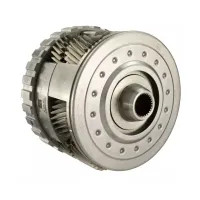
The cause was that the forward-most sealing ring on the 4-5-6 clutch housing / input shaft had not been installed during the build. That shaft requires three sealing rings. With one missing, the converter circuit could not hold pressure or volume, and both codes set exactly as you would predict.
If a 6R80 sets P1744 within a few hundred miles of an overhaul or a converter replacement, that is the first place to look. Missing, nicked, or mis-seated input shaft sealing rings, a converter hub seal cut on installation, or a converter that was not fully seated into both pump lugs before the bellhousing was pulled up will all produce a performance-flavored TCC complaint on a unit with brand-new clutches.
The Test That Sorts It: WK Pressure Against Solenoid Command
The 6R80 is Ford's licensed build of the ZF 6HP26, and it inherits the ZF converter control architecture along with ZF's valve names. Critically, this converter is released by pressure, not applied by it. The circuit ZF calls WK holds the friction ring off the cover. To lock the converter, the TCC solenoid dumps that pressure toward zero.
Both Ford and ZF give the case exactly one pressure tap and it is the WK port, on the driver side of the bellhousing just above the cooler lines. ZF cases stamp it AUF WK; Ford leaves it unmarked. The fitting is a 10 x 1.00 mm ZF thread, so plan on an adapter or a modified ZF5/ZF6 pressure plug. Use a 100 psi gauge or transducer, not a line-pressure gauge — WK never exceeds about 80 psi (5.5 bar) and you need to read all the way down to zero.
What makes this test decisive for P1744 rather than P0741 is the combination you read. Per Sonnax technical vice president Bob Warnke, the TCC solenoid on these units is normally vented: as commanded amperage rises, apply rises and WK pressure falls. So you watch both together.
| What you see | What it means for P1744 |
|---|---|
| Clutch commanded on, WK still 30 psi or higher | Not a P1744 problem. The clutch is hydraulically stuck off — chase the WD-V and WK-V bores per the P0741 diagnosis |
| Clutch commanded on, WK at 0 to 2 psi, but engine RPM and turbine RPM still will not converge | This is the true P1744 signature. Hydraulic control did its job. The clutch is being clamped and still slipping, so you are looking at torque capacity: lining, internal leak, or lost volume |
| WK drops to zero, then creeps back up under load while still commanded on | Circuit is losing supply as demand rises. Suspect a leak path, a worn pump stator or input bushing, or the main regulator robbing converter charge |
| Rough idle only in Reverse, WK low at 50 to 60 psi | Release problem, not a capacity problem. The clutch is dragging because release pressure is low |
| Rough idle only in Reverse, WK normal, solenoid command low | Warnke's call: converter lining is suspect. Verify the engine mounts are not blown first, then road test watching slip under high torque |
For reference, healthy WK sits at 70 to 75 psi cold, 65 to 68 psi at operating temperature with the clutch released, and dips sharply to roughly 50 psi when Reverse is selected before returning — that dip is normal and simply shows line pressure taking priority over converter charge.
If your scan tool offers a Torque Converter Amplification parameter, use it. Once the converter is fully applied and WK is at zero, amplification should also read zero. A non-zero amplification value with zero WK pressure is P1744 in one line.
Sonnax ZF6/6R60/6R80 Valve Body Zip Kit (ZF6-6R60-ZIP)
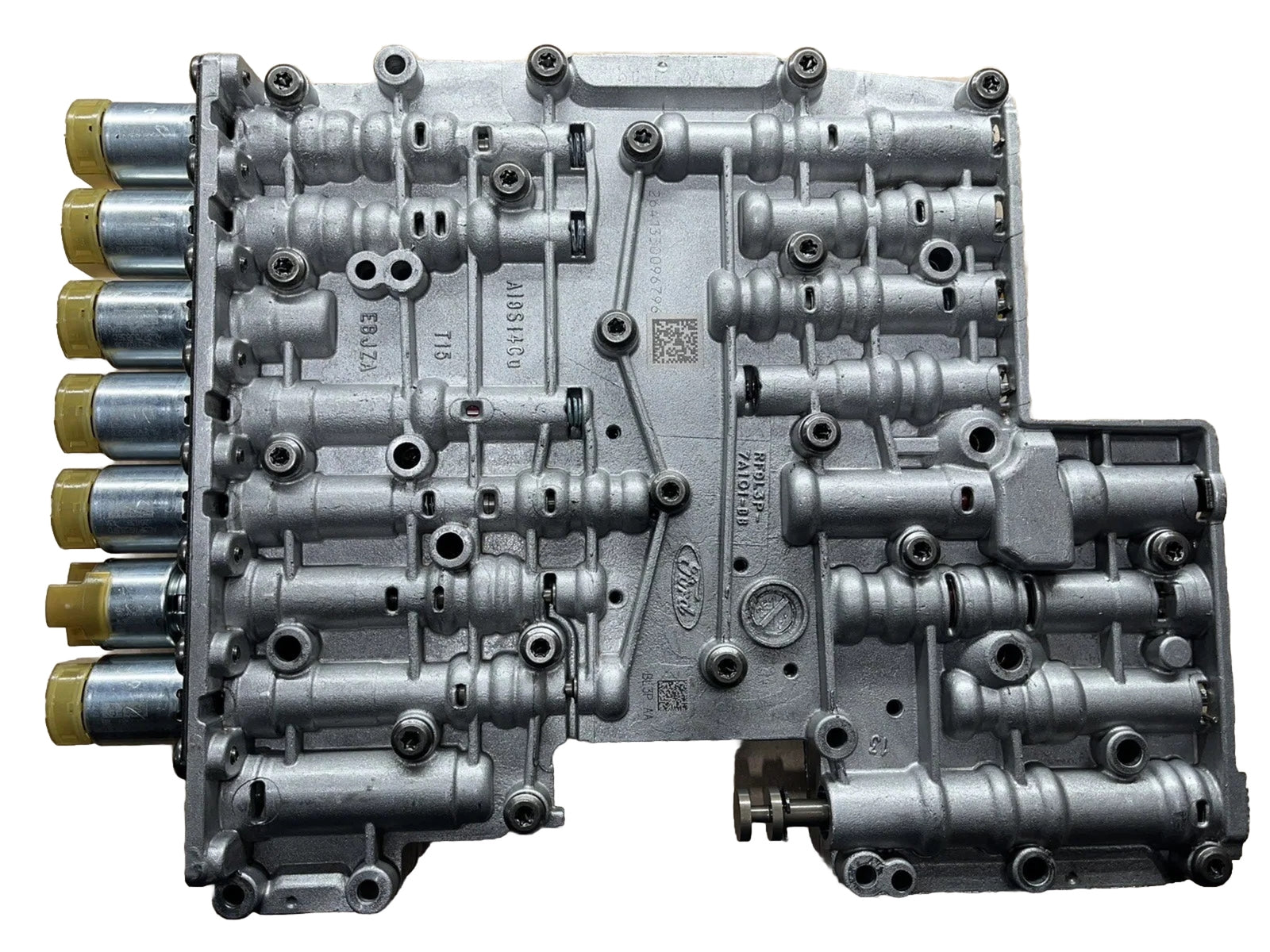
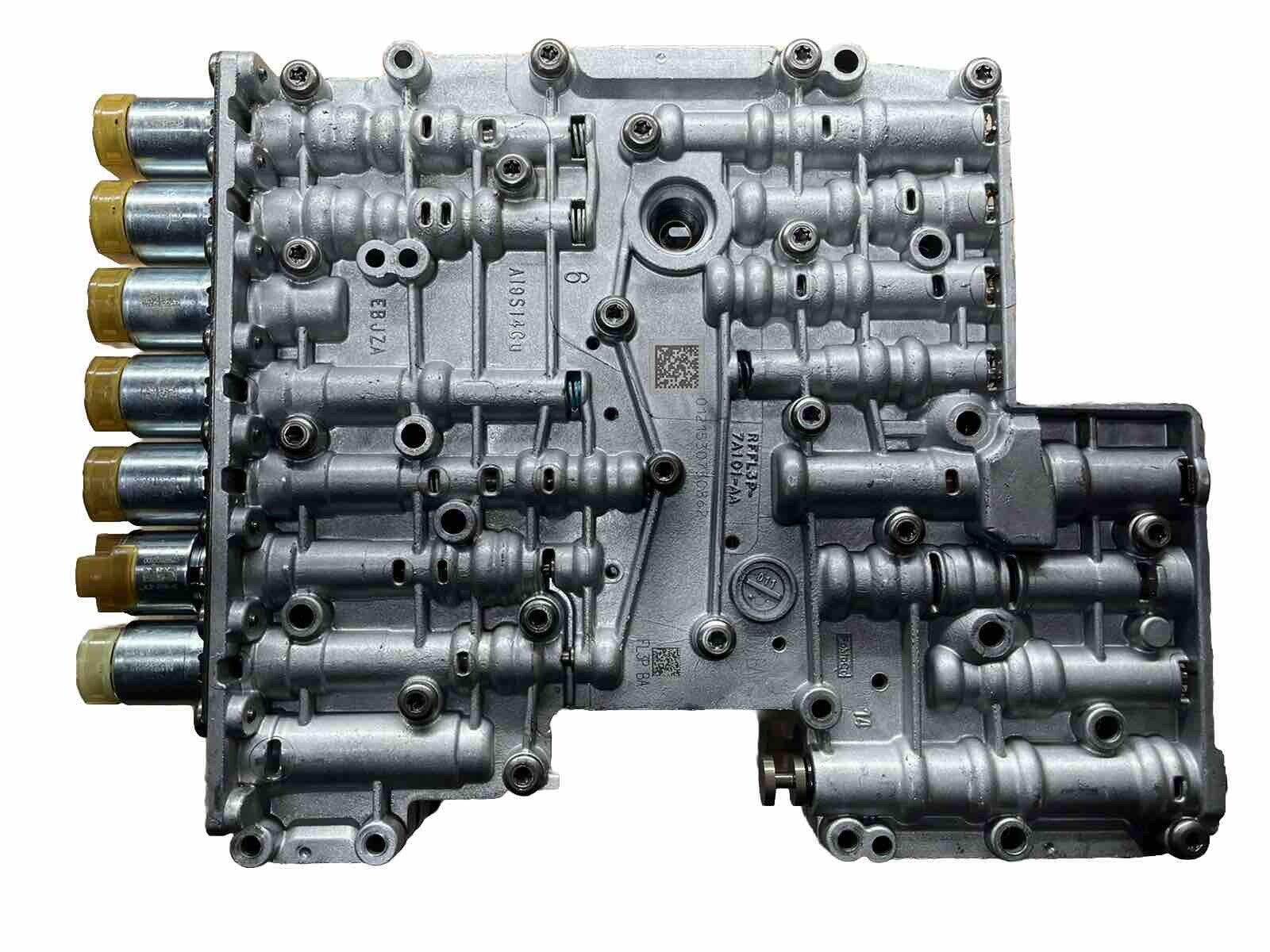
If your vacuum testing turns up wear at the bypass clutch control or converter release regulator bores, this kit restores the whole converter control circuit instead of one valve at a time. Fits 2009-2017 6R80. Our sister store stocks it.
Shop the 6R80 Zip Kit at CoreTransmissionParts →Not sure which generation you have? Browse the full valve body collection.
The Four Root Causes, In the Order I Check Them
1. Fluid level and the thermal element trap
The 6R80 takes MERCON LV, Ford specification WSS-M2C938-A, Motorcraft part number XT-10-QLV. Ford's own product data sheet lists it at 6.0 cSt at 100°C, 29.6 cSt at 40°C, viscosity index 155, flash point 216°C (421°F), under MERCON LV license number MLV070701. That low viscosity is not incidental — converter clutch apply behavior is calibrated around it. MERCON V and MERCON SP are different fluids and are not substitutes here.
The trap is the fill procedure. The 6R80 carries a thermal element in the converter circuit ahead of the case outlet, the same idea Ford used on the 5R55W and 5R110W. Below roughly 125°F, that element sends converter oil back to the bushings instead of out to the cooler. Sonnax is blunt about the consequence: service one of these without letting converter oil get hot enough to open the element and the cooler never fills, leaving the unit low after the first drive cycle. A 6R80 a quart or two down will slip its converter clutch under load and set P1744 with nothing else wrong.
2. Internal leak paths and bushings
This is where most genuine P1744 units live. Warnke calls out the bushings at the "E" clutch interface — the input/output bushing — and the pump stator support bushing as critical to converter control and shift quality, noting they fail notoriously and are often the cause of TCC and shift concerns as well as ratio errors. A worn stator bushing lets the converter charge circuit leak internally. The clutch gets commanded, WK goes to zero, and there simply is not enough volume behind the piston to hold the lining against torque.
Pull the pump and measure. Sonnax lists the rear stator support bushing for a 1.180 in (29.96 mm) input shaft journal and the input/output shaft bushing for a 0.669 in (16.98 mm) journal. If either is scored, out of round, or spun, the converter clutch complaint is not going away with a new converter.
3. The solenoid pressure regulator bore
There is one bore that can put every solenoid in the unit out of range at once, and it gets missed constantly. The solenoid pressure regulator valve (DR.REO-V) supplies regulated feed to all solenoids, including the TCC solenoid. Per Sonnax, if that bore is worn, all solenoid output is either too high or too low. On the scan tool the TCC solenoid commands normally and its resistance checks fine; it simply is not delivering the pressure the calibration assumes.
Vacuum test it. Sonnax's ZF6HP19/26/32 Gen. 1 and Ford 6R60/6R75/6R80 (2009-2014) vacuum test guide prints the exact port locations on the casting drawing along with the replacement part for each bore. For the converter circuit specifically, the two that matter are the bypass clutch control valve (OE name WD-V), served by Sonnax kit 95740-13K, and the converter release regulator valve (WK-V), served by 95740-05K. The 13K kit requires reamer F-95740-TL13 and the VB-FIX fixture; Sonnax's own description of the failure is that as the bore wears, clutch apply rate slows and release pressure will not vent.
Note that these solenoids typically fail mechanically rather than electrically — wear or contamination, not an open winding. That is precisely why a resistance check passes on a bad one.
4. The converter itself
Last, not first. Condemn the lining when WK reaches zero on command, the bores vacuum test good, the bushings are in spec, the fluid is correct and full, and slip still will not close under load. At that point you have eliminated every circuit that could be starving it.
Do Not Skip the Programming Step
A P1744 that survives a correct repair is often a calibration problem, not a hardware problem. Sonnax's Jim Dial documents that the variable bleed solenoids on the 6R80 and 6R140 lose their calibration or banding over time, and that the solenoid strategy codes and solenoid body ID codes stamped on the valve body and the case tag must be programmed into the PCM so it knows which band each solenoid sits in. Skip that after a valve body or solenoid replacement and the adapt process fights you; do it correctly and the relearn can complete in as few as three to five shift cycles.
Ford's own service path acknowledges the same principle. TSB 20-2060 addresses a separate 6R80 concern on 2015-2017 F-150s with a PCM reprogram, and its service procedure requires performing the Adaptive Learning Drive Cycle per Workshop Manual Section 307-01 afterward, with a note to warn the customer that shifts will feel firmer than normal for several days while the strategy relearns. Reset the adapts, drive the cycle, then recheck the code.
One more caution from Sonnax that saves expensive mistakes: you cannot swap mechatronic units or valve bodies between these transmissions. They are mechanical/electronic assemblies with an integral control module programmed to a specific VIN, and hydraulics, solenoids and TCM mapping change with capacity across the family. Mixing and matching will not mask a P1744.
Prevention
Ford called this fill "filled for life," and a slipping converter clutch is the invoice for that phrase. Change the fluid with MERCON LV on a real interval rather than a marketing one. Service it hot enough that the thermal element opens and the cooler actually fills. Flush both coolers any time a converter or a unit is replaced — debris from a failed lining goes straight back into the new one. Vacuum test the valve body during an overhaul instead of trusting a clean-looking casting. And measure the pump stator and input bushings on every build, because those two parts quietly decide whether the converter clutch has anything to hold with.
Valve body kits, solenoid sets, pump bushings, filter and pan gasket kits, master rebuild kits and MERCON LV — matched to your 6R80 and shipped fast from the USA.
Shop 6R80 parts →FAQ
What is the difference between P1744 and P0741 on a Ford 6R80?
P0741 means the converter clutch was commanded on and never applied at all, which is a pass/fail test at the moment of command. P1744 means the clutch did apply but could not hold the torque, so slip stayed above the calibrated limit. P0741 sends you after a stuck valve that will not vent WK release pressure. P1744 sends you after lost torque capacity: an internal leak, a worn pump stator or input bushing, or worn friction lining.
Can a 6R80 set P1744 right after a rebuild?
Yes, and it is a known build error rather than bad luck. Transmission Digest documented a 2015 Transit 150 that set P0741 and P1744 together because the forward-most sealing ring on the 4-5-6 clutch housing and input shaft was never installed. That shaft takes three sealing rings. Check the rings, the converter hub seal, and full converter engagement into the pump before you suspect anything else on a fresh unit.
Do I need to replace the torque converter to fix 6R80 P1744?
Only after you have ruled out everything that starves it. Verify WK pressure actually reaches zero to 2 psi when the clutch is commanded on, vacuum test the bypass clutch control and converter release regulator bores, measure the pump stator and input bushings, and confirm the fluid is correct MERCON LV at the proper hot level. If all of that passes and slip still will not close under load, the lining is genuinely gone and the converter is the fix.
Why does my 6R80 shudder at highway speed with P1744 stored?
A converter clutch that is clamping with less force than the calibration expects will slip a small amount continuously at light throttle cruise. That small, steady slip transmits as a low-frequency shudder or buzz, which drivers commonly describe as rumble strips. It is not a misfire, and it is not a driveline vibration, because it appears only in the speed and load range where the clutch is commanded fully applied.
Will clearing codes and driving fix 6R80 P1744 after a valve body replacement?
Not on its own. The solenoid strategy codes and solenoid body ID codes from the valve body and case tag have to be programmed into the PCM so it knows the banding of each variable bleed solenoid. After that, perform the Adaptive Learning Drive Cycle from Workshop Manual Section 307-01. Expect firmer than normal shifts for several days during the relearn, which can complete in as few as three to five shift cycles once the strategy codes are correct.
Sources
- Sonnax — "Six Ways from Sunday: Diagnosing ZF6 & Ford 6R60/80 TC-Related Drivability Concerns," Bob Warnke, March 23, 2016. Backs the WK release-circuit description, the single case pressure tap on the driver side of the bell above the cooler lines and its AUF WK label, the 10 x 1.00 mm ZF thread, the 80 psi ceiling and 100 psi gauge recommendation, the 70 to 75 psi cold / 65 to 68 psi hot / Reverse dip to 50 psi / applied 0 to 2 psi ranges, the normally vented TCC solenoid and rising-amperage relationship, the Torque Converter Amplification check, the rough-idle-in-Reverse decision path and engine mount caveat, the DR.REO-V solenoid regulator bore affecting all solenoid output, the mechanical rather than electrical solenoid failure mode, the "E" clutch and pump stator bushings as critical to converter control, the 125 degree F thermal element fill warning, and the prohibition on swapping VIN-programmed mechatronic assemblies. sonnax.com/tech_resources/325
- Transmission Digest — "Ford 6R80 DTC P0741: Cause and Correction," Wayne Colonna, April 29, 2026. Backs the 2015 Ford Transit 150 case that set P0741 for TCC stuck off together with P1744 for Torque Converter Clutch System Performance, the cause being the forward-most sealing ring on the 4-5-6 clutch housing / input shaft not installed by the builder, and the requirement for three sealing rings on that shaft. transmissiondigest.com/ford-6r80-dtc-p0741-cause-correction
- Sonnax — Oversized Bypass Clutch Control Valve Kit 95740-13K product and application data. Backs the WD-V OE valve name, the applications covering 6R60, 6R75, 6R80 (2009-2014), 6R80 (2015-later), 6R100 and ZF6HP19/26/32 Gen. 1, the stated cause that as the bore wears the clutch apply rate slows and release pressure will not vent, the TCC codes / excess TCC slip / overheated converter symptom list, and the F-95740-TL13 reamer and VB-FIX fixture requirement. sonnax.com/parts/2677
- Sonnax — "ZF6HP19/26/32 (Gen. 1), Ford 6R60, 6R75, 6R80 (2009-2014) Vacuum Test Guide," January 21, 2013. Backs the vacuum test method and printed port locations for the bypass clutch control, converter release regulator, solenoid pressure regulator and main pressure regulator bores, and the Sonnax replacement part number called out at each bore including 95740-13K and 95740-05K. sonnax.com/tech_resources/436
- Sonnax — "Troubleshooting Ford 6R80 & 6R140 Timing-Related Shift Issues," Jim Dial, August 15, 2022. Backs the variable bleed solenoids losing calibration or banding over time, the solenoid strategy codes and solenoid body ID codes on the valve body and case tag needing to be programmed into the PCM, the band 1 through 5 designation, and the three to five shift cycle relearn. sonnax.com/tech_resources/1137
- Ford Customer Service Division / Motorcraft — MERCON LV Automatic Transmission Fluid Product Typicals data sheet. Backs the MERCON LV license number MLV070701, viscosity of 6.0 cSt at 100°C and 29.6 cSt at 40°C, viscosity index 155, flash point 216°C (421°F), specific gravity 0.842 and density 7.01 lb/gal. fcsdchemicalsandlubricants.com — MERCON LV Product Data Sheet
- NHTSA / Ford Motor Company — Technical Service Bulletin 20-2060, "6R80 Transmission - Intermittent No Engagement/Neutral State During Manual Shift to Reverse Events With No DTCs," 06 March 2020. Backs the requirement to perform the Adaptive Learning Drive Cycle per Workshop Manual Section 307-01 after a PCM reprogram, and Ford's note that the adaptive strategy relearn produces firmer than normal upshifts and downshifts for several days. static.nhtsa.gov/odi/tsbs/2020/MC-10172940-0001.pdf