"It shifts funny" is the most common thing I hear about a Navigator, and on the 6R80 that phrase covers at least five different faults. A harsh 1-2 bump, a 2-3 that flares one time and binds the next, a downshift at highway speed that hangs and then slams, a truck that pulls away from a light in 5th, and a sudden drop to 1st at speed. Each one has its own cause, and two of them have Ford bulletins with build-date cutoffs that you need to check before you price anything.
This guide covers the 2009-2017 Navigator with the 6R80 (5.4L 3V through 2014, 3.5L EcoBoost 2015-2017); the 2018-up truck uses the 10R80. If the complaint is a slip at steady speed, see our Navigator slipping guide. This one is about shift timing and feel. Sources are at the bottom.
How the 6R80 makes a shift
You cannot diagnose shift quality on this unit without knowing what the shift is. GEARS Magazine lays out the 6R80 as a Lepelletier geartrain with three driving clutches (A, B and E), two brake clutches (C and D), a four-element converter with a multi-plate lockup clutch, and a valve body run by variable force solenoids. Every gear uses two clutches, and every upshift releases one clutch while applying another. That overlap is the whole game. If the release side lets go too early you get a flare, the engine flaring up between gears. If the apply side comes on too early, or the release side hangs on too long, you get a bind-up: the truck feels like it hit a wall for a split second.
Sonnax publishes the clutch logic in its 2-3 troubleshooting write-up: 1st uses the 1-2-3-4 clutch, 2nd adds the 2-6 clutch, and on the 2-3 upshift the 3-5-R clutch applies as the 2-6 releases. The C solenoid (normally low) controls 2-6 and the B solenoid (normally high) controls 3-5-R. Write those down, because on the scan tool you will be watching exactly those two commands.
The other piece of history that matters on a Navigator is the 2011 change. GEARS documents that Ford added a one-way clutch to the rear planetary for 2011-up units to smooth the 1-2 and 2-1, after the earlier trucks drew harsh 1-2 and 2-1 complaints that Ford first tried to fix with calibration. On 2011-up units the D clutch holds only until about 3 mph, then releases and the one-way clutch carries 1st. The D/E solenoid is normally high, applying D at about 50 mA and releasing it at about 850 mA. A 2009-2010 Navigator holds D through all of 1st. A clunky 2-1 coastdown means something different on a 2010 than on a 2012.
Sort the complaint first
| What the driver feels | Navigator years most likely | First place to look |
|---|---|---|
| Delayed, then harsh downshift above 40 mph | 2009-2010 5.4L, built before the TSB cutoff | Ford TSB 10-12-4 calibration and adaptive relearn |
| Pulls away in 5th, speedometer at zero, odometer dashes | 2012-2013, built on or before 4/8/2013 | TSB 13-6-8 molded lead frame |
| Sudden downshift toward 1st at speed, OSS codes | 2012-2013 | PCM program 19B05, then lead frame under CSP 19N01 |
| 2-3 that flares one time, binds the next | All | B and C solenoid timing, clutch clearance |
| Slow 1-2 that ends in a bump, or harsh 1-2 | All, worse on 2009-2010 | Solenoid banding, C/26 regulator circuit, adaptives |
The bulletin cases
2009-2010: delayed, then harsh downshift (TSB 10-12-4)
Ford TSB 10-12-4 covers 2009-2010 Expedition and Navigator trucks built on or before May 1, 2010 (and F-150s built on or before February 1, 2010) with the 5.4L 3V and 6R80 that hang on a commanded downshift above 40 mph and then drop it hard. The fix is a PCM/TCM reflash. The TCM cannot be programmed by itself. The bulletin calls for verifying the TCM calibration is AL3P-7J104-AC afterward.
The part most shops skip is the relearn, and the bulletin calls it critical. Clear the TCM keep-alive memory, then clear the transmission adaptive tables as a separate step. Disconnecting the battery does not clear the TCM KAM, and the bulletin says not to clear the PCM KAM. Then confirm the transmission fluid temperature PID reads at least 175 F before you start; if it does not, drive about three miles first. On a level road:
- Accelerate from a stop with light throttle to 15 mph, release the pedal, brake gently to a full stop and wait at least six seconds. Do this five times.
- Accelerate from rest with light throttle so the 1-2, 2-3 and 3-4 shifts happen between 1,700 and 2,000 rpm, and keep going to 50 mph or the 5-6 upshift.
- Brake gently to a stop and hold the brake 10 seconds. Do this three times.
Ford says full adaptation takes several days of normal driving. Tell the owner up front. I use this same sequence after any valve body or solenoid work on a Navigator.
2012-2013: 5th-gear launch and sudden downshift
Ford TSB 13-6-8 covers 2012-2013 Navigators built on or before 4/8/2013 that engage 5th from a stop. The wrench light or seat belt minder may be on, the speedometer reads zero and the odometer shows dashes. P0720 and P0722 may or may not be stored, and the symptom can clear after a key cycle. The fix is a molded lead frame; the bulletin specifically says shift solenoids are not required. Ford allows 2.1 hours on a Navigator.
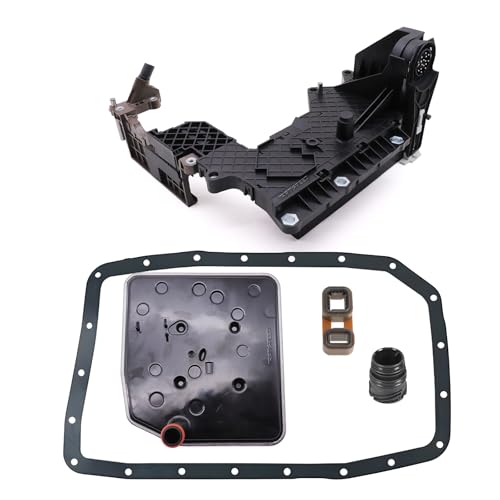
The same lead frame is behind the sudden-downshift campaign. Ford's Customer Satisfaction Program 19N01, Supplement #3, covers 2012-2013 Expedition and Navigator trucks built at Kentucky Truck from April 11, 2011 through August 19, 2013. An output shaft speed sensor failure in the lead frame sets P0720, P0722, P0731 and/or P1500, and PCM reprogramming under program 19B05 must be done or closed first. The replacement lead frame is AL3Z-7G276-D. Coverage was 10 years or 150,000 miles, and it ended October 31, 2019 for trucks already past those limits. The supplement is explicit that if those codes are not stored, the program does not apply and you follow normal workshop manual diagnosis.
The PCM schedules shifts off output speed. When OSS drops out, it picks a gear for a speed you are not going. Graph OSS against an ABS wheel speed PID; if OSS drops or spikes while wheel speed stays smooth, fix the signal before touching shift quality.
Flares and bind-ups: solenoid timing
With the bulletins ruled out, most Navigator shift-feel complaints come down to timing between the releasing and applying clutch. Sonnax's Jim Dial lists the causes of timing-related harshness, flare and bind-up as an adaptation problem, a clutch clearance problem, a worn valve train in the valve body that leaks the clutch control circuit, or a solenoid with a mechanical or flow-rate problem. He also points out that these variable bleed solenoids tend to lose their calibration over time. A band 3 solenoid can end up acting like a band 5 or a band 1.5, and the PCM keeps commanding it as a band 3.
That is why the 6R80 has solenoid strategy and body ID codes. The PCM needs to know each solenoid's banding (1 through 5, on both normally low and normally high solenoids) and which clutch it runs. The PCM also expects a turbine speed drop within a split second of commanding a shift. When the solenoid is slow, the drop comes late and you feel a flare; when it is aggressive, you feel a bind.
The 2-3 case on the scan tool
Sonnax documented a 6R80 whose 2-3 flared sometimes and bound up other times, with a slow 1-2 that ended in a bump. On a good 2-3, the scan data showed C solenoid amperage around 1.0 A at the start of the shift, then dropping off as C pressure fell to zero while B pressure built, finishing near 50 psi on B. The problem truck showed the C solenoid going fully off just before the B solenoid did, every time. A consistent mismatch like that points at the solenoid mechanically, not the wiring.
The fix was both the C (2-6) and B (3-5-R) solenoids in one valve body removal, an adaptive reset, and 20 to 25 stop-and-go cycles through all six gears. The article's rule is to replace each solenoid with the same band number you took out unless you program a new calibration code. It also warns against overtightening clutch packs on a rebuild: stay at OE clearance, because a tight pack binds on the shift and the PCM cannot adapt it out.
The 1-2 case
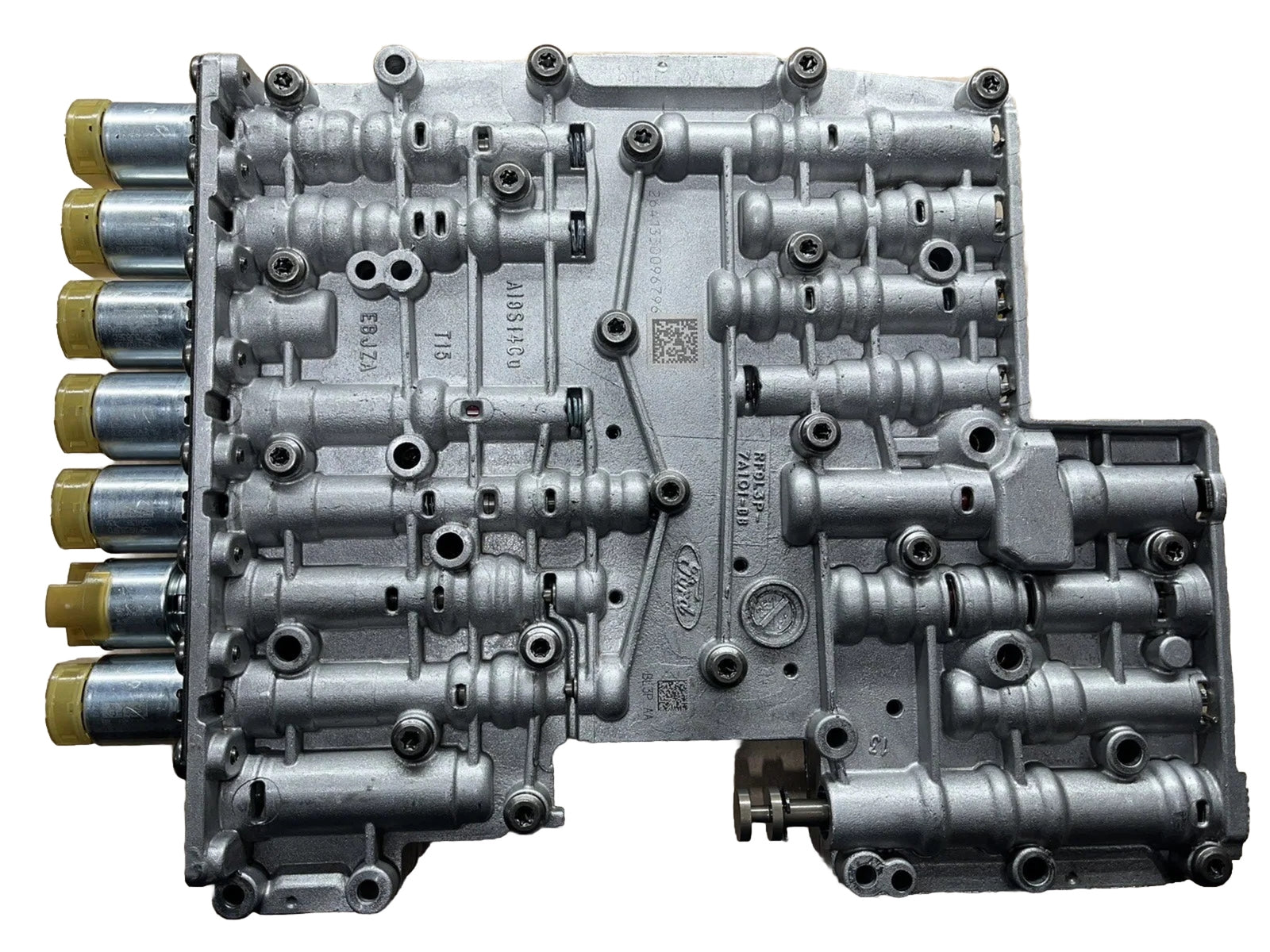
On the 6R80, Sonnax notes the C/26 clutch regulator valve has no latch valve. Its position comes from SSC solenoid output plus a balance circuit fed from C/26 apply pressure. So a solenoid that is slow or aggressive, or a worn regulator bore leaking that circuit, shows up as a 1-2 slide or a harsh 1-2. Ford's own guidance agrees that the valve body has to be inspected, not just swapped: service message 46451 updated the 2009-2017 6R80 main control overhaul procedure and states that not all valve bodies require replacement, and that bores, springs and valves should be inspected during diagnosis.
A diagnostic order that does not waste time
- Check fluid level and condition. MERCON LV only; Ford's lead frame program specifies Motorcraft XT-10-QLVC. Burnt fluid with friction material in the pan is a hard-parts job. See our 6R80 fluid guide.
- Pull codes and freeze frame. P0720, P0722, P0731 or P1500 on a 2012-2013 sends you to the lead frame and the VIN lookup.
- Check calibration level. On a 2009-2010 5.4L built before the cutoff, confirm TSB 10-12-4 was done.
- Verify the solenoid strategy and body ID codes in the PCM match the valve body in the truck. A valve body swapped at some point without programming is a common source of flares.
- Reset adaptives and run the relearn above, with fluid at temperature.
- Graph the problem shift. Turbine speed, OSS, commanded gear, and the solenoid commands for the two clutches in that shift. A flare shows turbine speed rising between gears; a bind shows turbine dropping faster than the new ratio calls for.
- If the pattern repeats after relearn, pull the valve body. Replace the solenoids in that shift with matching bands, inspect the regulator bores per SSM 46451, and reprogram the codes if anything changed.
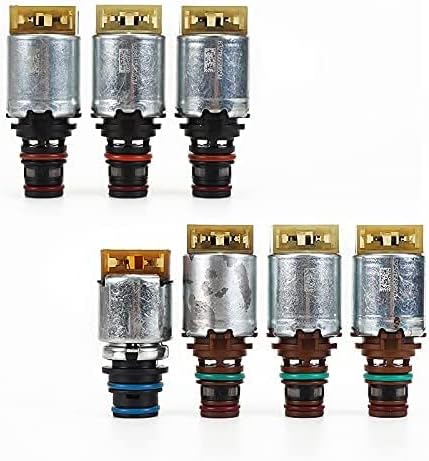
6R80 7-piece solenoid kit, 2007-2014 (OEM AL3P-7G276-AF)
For a 2009-2014 Navigator whose flare or bind follows the shift solenoids: a full 7-piece set for one valve body removal. Program the codes after install. Sold by our sister store, CoreTransmissionParts.
Shop the part for this fix →Working on a 2015-2017 EcoBoost truck? Check the solenoids collection for the later kits.
Need parts for this job?
Navigator 6R80 solenoid sets, lead frames, remanufactured valve bodies by year and MERCON LV are on our 6R80 parts page, with checkout on site.
FAQ
Why does my Lincoln Navigator shift hard?
On a 2009-2017 Navigator with the 6R80, harsh shifts usually come from adaptive tables that have learned around a worn part, a shift solenoid whose output no longer matches its band code, valve body bore wear, or out-of-date PCM calibration. On 2009-2010 5.4L trucks built before the TSB cutoffs, Ford TSB 10-12-4 covers a delayed then harsh downshift above 40 mph with a calibration update and adaptive relearn.
What causes a 2-3 flare on a 6R80?
The 2-3 shift is a clutch swap: the 2-6 clutch releases while the 3-5-R clutch applies. Sonnax traced a repeatable 2-3 flare and bind-up to the C solenoid (2-6, normally low) and B solenoid (3-5-R, normally high) responding mechanically out of time, and fixed it by replacing both with the same band numbers and resetting adaptives. Clutch clearance that is too tight can also cause bind-up.
How do you reset the transmission adaptives on a 6R80 Navigator?
With a Ford-capable scan tool, reset the transmission keep-alive memory and adaptive tables. Disconnecting the battery does not clear them. Then warm the fluid to at least 175 F and run the drive cycle: five light-throttle launches to 15 mph with a full stop and six-second wait, then three light-throttle runs through the 5-6 upshift with a 10-second stop. Full adaptation takes several days of normal driving.
Why does my Navigator start out in high gear?
Ford TSB 13-6-8 covers 2012-2013 Navigators built on or before 4/8/2013 that engage 5th gear from a stop, with the speedometer reading zero and the odometer showing dashes. The cause is the molded lead frame losing the output shaft speed signal. The fix is a new lead frame, and the bulletin says the shift solenoids do not need replacing.
Do I need to program anything after replacing 6R80 solenoids?
Yes. Each 6R80 solenoid has a band rating and the PCM stores the solenoid strategy and body ID codes so it knows how each one behaves. Sonnax recommends replacing a solenoid with the same band number unless you program a new calibration code. After that, reset adaptives and drive it through its relearn.
Related guides
- 6R80 Navigator Common Problems and Fixes
- 6R80 Navigator Slipping: Causes and Fix
- 6R80 Expedition Shift Problems
- 6R80 Harsh Shift Causes
- 6R80 Shift Solenoid Symptoms
Sources
- Sonnax — "Troubleshooting Ford 6R80 & 6R140 2-3 Shift Quality Issues." Backs the 1-2-3-4 / 2-6 / 3-5-R clutch logic, C (2-6, normally low) and B (3-5-R, normally high) solenoid roles, the scan data on the 2-3 shift, replacing both solenoids with matching band numbers, the 20-25 cycle road test and the clutch clearance warning. sonnax.com
- Sonnax — Jim Dial, "Troubleshooting Ford 6R80 & 6R140 Timing-Related Shift Issues." Backs the four causes of flare and bind-up, solenoid banding drift, strategy and body ID codes, the expected turbine speed drop, and the C/26 regulator valve with no latch valve on the 1-2. sonnax.com
- Ford Motor Company — TSB 10-12-4, "Delayed then harsh downshift above 40 mph," reprinted by Vehicle Service Pros. Backs the 2009-2010 Navigator build cutoff, PCM/TCM reprogramming, TCM calibration AL3P-7J104-AC, the KAM and adaptive table reset, the 175 F requirement and the full relearn drive cycle. vehicleservicepros.com
- Ford Motor Company — TSB 13-6-8, "6R80 Transmission High Gear Engagement From A Stop," June 2013, hosted by NHTSA. Backs the 2012-2013 Navigator built on or before 4/8/2013, the 5th-gear launch symptoms, P0720/P0722, the lead frame repair, the no-solenoids note and 2.1 hours labor. static.nhtsa.gov (PDF)
- Ford Motor Company — Customer Satisfaction Program 19N01, Supplement #3, November 12, 2020, hosted by NHTSA. Backs the Kentucky Truck build window, OSS failure codes P0720/P0722/P0731/P1500, PCM program 19B05, lead frame AL3Z-7G276-D, MERCON LV XT-10-QLVC and the coverage terms. static.nhtsa.gov (PDF)
- GEARS Magazine (ATRA) — "Updates to the Ford 6R80." Backs the A, B, E and C, D clutch layout, the 2011 one-way clutch added to smooth 1-2 and 2-1, D clutch release at about 3 mph, and the D/E solenoid at about 50 mA apply and 850 mA release. gearsmagazine.com