P0700 is the code that makes shops chase their tail. It reads like a verdict on the transmission, so somebody quotes a rebuild, and then the truck comes back doing exactly what it did before. The problem is that P0700 is not a fault description at all. It is a request to turn a light on.
On a Ford 6R80 that distinction matters more than usual, because this unit has a handful of specific, well-documented failures that all funnel into the same generic code. Once you know what P0700 actually is, the diagnostic path gets short.
The short version: P0700 means the transmission control strategy set a code and asked for the MIL. It never appears alone and it never tells you the failure. Pull the transmission-specific subcodes, and on a 6R80 work them in this order: lead frame and sensor circuits, then solenoid identity and strategy codes, then valve body bore wear. Finish with the strategy programming and adaptive relearn or the codes come straight back.
What P0700 Actually Is
Generic OBD-II reserves P0700 for a transmission control system malfunction with a MIL request. It is a handshake code. The transmission control strategy has stored something in its own memory and is asking for the dash light so the driver comes in. That is the entire content of the code.
On the North American 6R80 applications, F-150, Expedition, Navigator and Mustang, transmission control lives inside the powertrain control module rather than in a separate box bolted to the transmission. Ford's own service documents reflect this: Customer Satisfaction Program 19N01 repeatedly describes the qualifying trouble codes as stored in the powertrain control module, not in a TCM. So when P0700 shows up on these trucks, you are not chasing a missing module. You are being told to go read the rest of the list.
Where that gets confusing is with a generic scan tool. Plenty of cheap readers pull generic powertrain codes only and hand you P0700 with nothing beside it. That is a tool limitation, not a diagnosis. You need a scanner that reads the manufacturer-specific transmission codes and, ideally, live transmission PIDs.
Step One: Read What Is Underneath It
Before you touch a wrench, get the full code set with the freeze frame data. On a 6R80 the companions cluster into four families, and each one points somewhere different.
| Companion codes | What they describe | Where to look first |
|---|---|---|
| P0715, P0716, P0717 | Turbine shaft speed sensor circuit and performance | Molded lead frame, case connector, wiring |
| P0720, P0722, P1500 | Output shaft speed sensor circuit and no signal | Molded lead frame (see the Ford program below) |
| P0731 to P0736 | Gear ratio incorrect, per gear | Clutch apply, valve body bore wear, solenoid flow |
| P0741, P0742, P1744 | Torque converter clutch slip or stuck applied | Bypass clutch control valve, converter, TCC solenoid |
| Pressure control solenoid performance codes | Commanded versus actual pressure out of range | Solenoid banding, strategy code, pressure regulator valve |
Notice how many of those rows land on the same two hardware items. That is not an accident, and it is the reason a 6R80 P0700 is usually a shorter job than it looks.
The Lead Frame: One Part, Four Sensors
The 6R80 does not have individual bolt-in speed sensors. The turbine speed sensor, the output shaft speed sensor, the transmission fluid temperature sensor and the transmission range sensor are all molded into a single internal lead frame that also carries the wiring to every solenoid. One cracked trace, one corroded pin, one bit of fine metal debris bridging a contact, and you can generate speed sensor codes, ratio codes and solenoid codes at the same time, all reported to the driver as P0700.
Ford took this seriously enough to write a warranty extension around it. Customer Satisfaction Program 19N01 extends coverage on the automatic transmission molded lead frame to 10 years of service or 150,000 miles from the warranty start date on specific builds: 2011 to 2013 F-150 out of Dearborn (April 28, 2010 through October 28, 2013) and Kansas City (May 18, 2010 through November 18, 2013), plus 2012 to 2013 Expedition and Navigator out of Kentucky Truck (April 11, 2011 through August 19, 2013). The replacement part is AL3Z-7G276-D at a 2.2 hour labor allowance.
Two things about that program are worth knowing even though the calendar has run out on most of these trucks. First, coverage was conditional on codes: Ford's own instruction is that if P0720, P0722, P0731 or P1500 are not stored in the PCM, the program does not apply and you follow standard workshop manual diagnostics. Second, Ford required the PCM software updates from field service actions 19S07, 19S19 or 19B05 to be performed or closed out before replacing the lead frame. That reflash-first order is still good practice. A calibration update sometimes changes how the PCM reacts to a momentary sensor dropout, and running the flash first tells you whether the hardware is genuinely at fault.
The Solenoid Trap Almost Nobody Checks
Here is the one that costs shops real money on this transmission. Shift solenoid E on the 6R80 received a mid-production design change that raised its coil resistance, and the two versions are not interchangeable.
| Build date | Resistance | Snout color | Part number |
|---|---|---|---|
| Before November 4, 2010 | 10.5 ohms | Tan | 6L2Z-7G484-AA |
| After November 3, 2010 | 18 ohms | Gray | AL3Z-7G484-B |
The later solenoid has additional coil windings, and the PCM in those vehicles has a driver built to handle the higher resistance. The O-ring seals are blue on both design levels, so the seals tell you nothing. The snout color and a meter across the terminals are your only quick checks. Put a 10.5 ohm solenoid into a truck expecting 18 ohms, or the reverse, and the current the driver sees is wrong. You get a solenoid circuit or performance code, the PCM requests the lamp, and you are back at P0700 with a brand new part in your hand.
This is exactly why buying a matched solenoid set for the specific build is cheaper than buying the same solenoid twice.
6R80 7-Piece Transmission Solenoid Set, OEM AL3P-7G276-AF
A complete matched set for the later 6R80 solenoid body, so you are not mixing design levels or guessing at resistance values across seven positions. From our sister store CoreTransmissionParts.
Shop the part for this fix →Browse all transmission solenoids at CoreTransmissionParts →
Solenoid Strategy and Banding
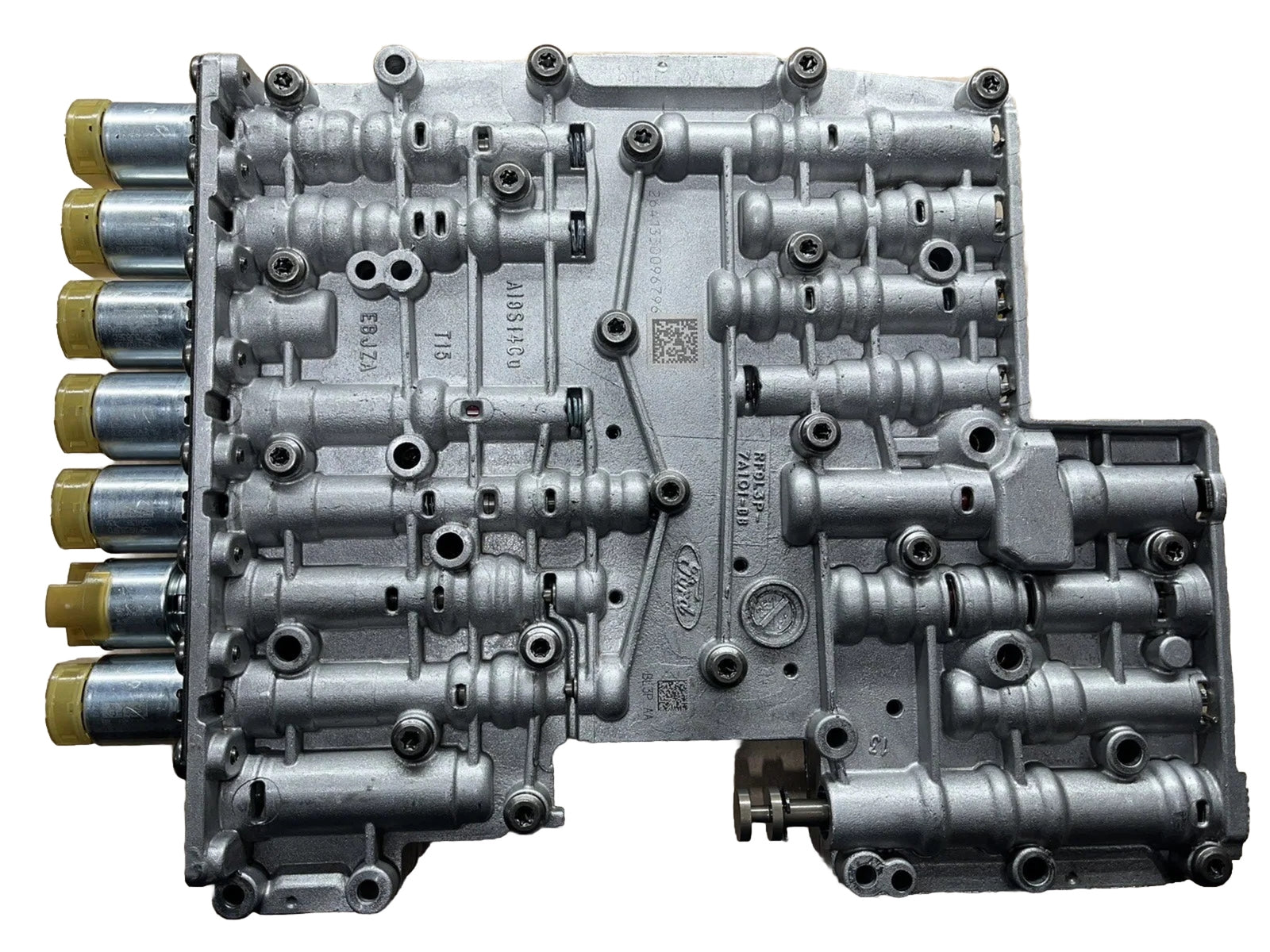
The 6R80 uses variable bleed solenoids, and no two come off the line identical. Ford's answer is a calibration system: each solenoid is assigned a banding number from 1 to 5 based on its measured flow characteristics, and those numbers are grouped into a solenoid strategy code plus a solenoid body identification code. Both are printed on the valve body and on the tag on the driver's side of the case near the bell housing, and both have to be programmed into the PCM.
Per ATRA's GEARS magazine, the strategy number appears on the solenoid assembly's lead frame and can also be retrieved with a scan tool through Mode $9 in generic OBD, or through a VIN-specific health check. Programming it takes a Motorcraft subscription with a J2534 passthrough device, Ford IDS, or a remote access programming service.
Why it matters for P0700: the PCM is looking for a specific turbine speed drop within a split second of commanding a solenoid, and solenoid flow rate and banding are what position the clutch regulator valve. Sonnax's technical write-up on 6R80 shift timing puts it directly, noting that these variable bleed solenoids tend to lose their calibration or banding over time, which creates calibration problems inside the PCM for shift control, overlap and adaptation. A solenoid that was band 3 when it left the factory and now behaves like a band 5 will produce a flare or a bind, then a ratio or pressure code, then your P0700.
Sonnax also points out something useful about the 1-2 shift on this unit: the C/26 clutch regulator valve does not connect to a latch valve like most of the other valve trains in the 6R80. Its regulating position is set by the SSC solenoid output and a balance circuit tied to C/26 apply pressure. So a solenoid with slow or overly aggressive output shows up as a 1-2 slide or a hard 1-2 hit, and the same bad output also changes the release rate, which can throw a 2-3 flare or a 2-3 bind on top of it. One out-of-band solenoid, three complaints, one generic code on the dash.
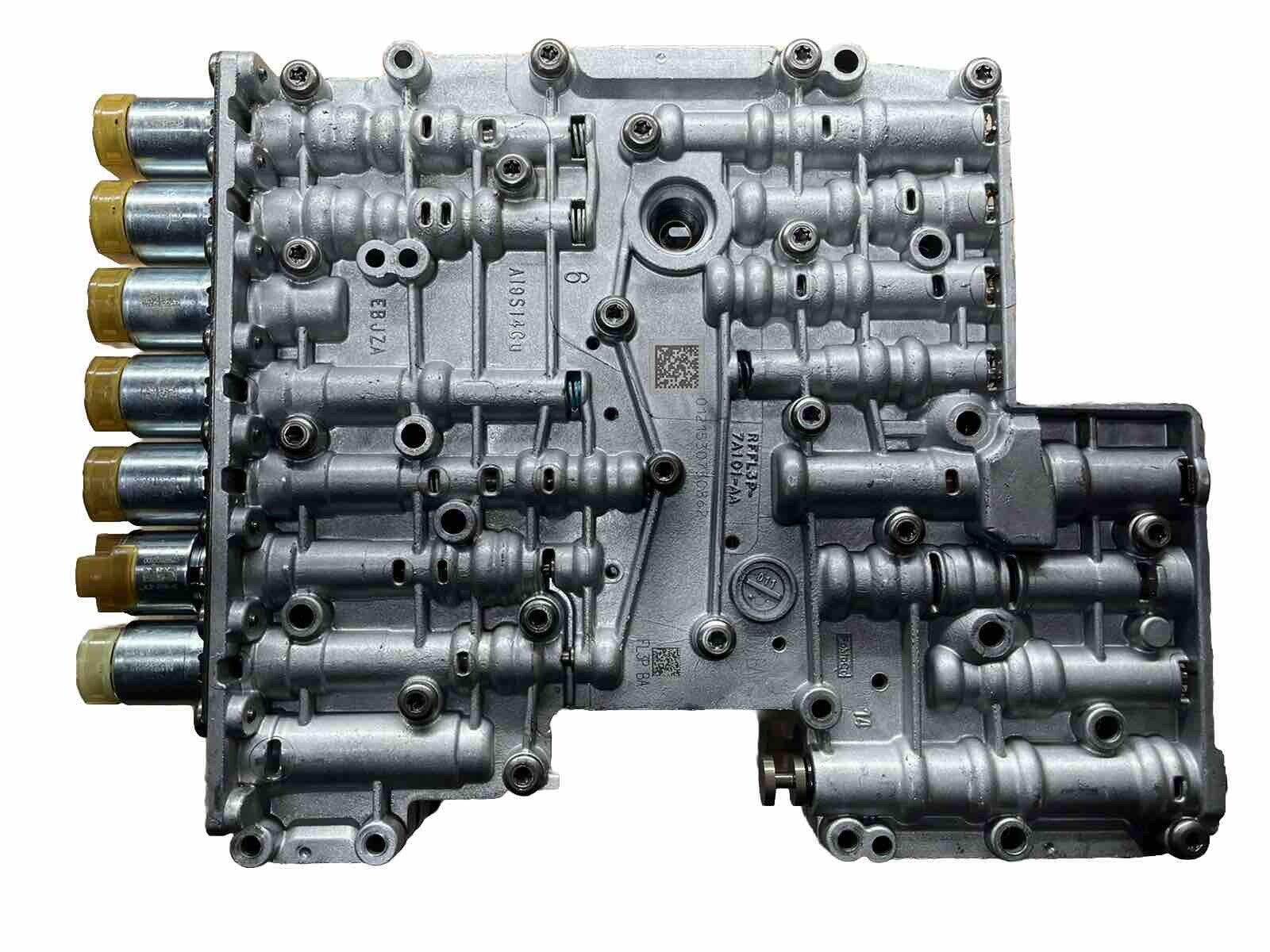
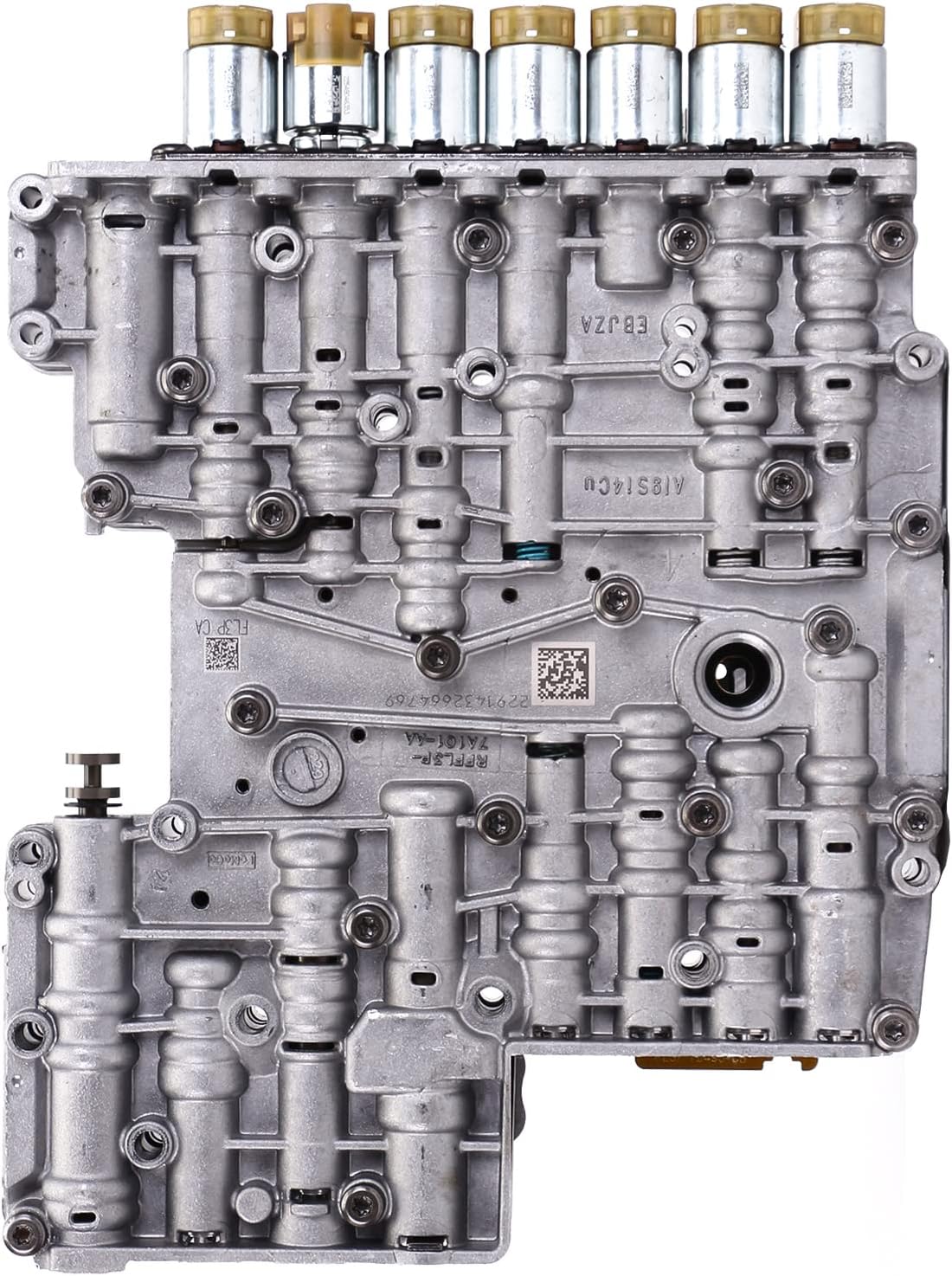
When It Is the Valve Body, Not the Electronics
If the codes are ratio or pressure related and the solenoids and lead frame check out, the bores are next. The 6R80 shares its architecture with the ZF 6HP family and it wears in predictable places. Vacuum testing is the fastest way to find it, because a worn bore leaks under vacuum long before it produces a repeatable pressure complaint on the road.
Sonnax publishes a vacuum test guide for the 2009 to 2014 6R60, 6R75 and 6R80 that maps every test port and pairs each one with the symptoms it produces. The high-value locations for a P0700 chase:
- Solenoid pressure regulator valve — inconsistent shift quality, flare and harsh shifts, gear ratio codes, solenoid performance codes, delayed forward and reverse. Sonnax offers 95740-17A and 95740-17K here.
- Main pressure regulator valve — erratic line pressure, delayed or no reverse, excess TCC slip and related codes. Kit 95740-01K covers 2009 to 2014 units; 95740-46K covers 2015-later and 6R100.
- Bypass clutch control regulator valve — TCC codes, excess TCC slip, cycling rpm, low TCC release pressure. Kit 95740-13K.
- Clutch A control valve — downshift bind-ups, flare shifts, excess clutch overlap and clutch distress. Kit 95740-09K.
- End plugs, multiple locations — inconsistent shift quality, harsh upshifts and downshifts, solenoid performance codes. Kits 95740-19K and 95740-25K.
One identification note before you order: 2009 to 2014 units with an 053 separator plate have a significantly different valve lineup, and the 2015-later 6R80 changed again. On the later castings, look for FL3P rough forging numbers on the upper and lower valve body and on the separator plate. The pressure regulator valve and sleeve dimensions changed with that revision, so measure both before doing any bore repair rather than assuming interchange.
Lead frames and conductor plates, solenoid sets, remanufactured valve bodies, Zip Kits, filter and pan gasket kits, and MERCON LV — matched to your 6R80 and shipped fast from the USA.
Shop 6R80 parts →Doing the Repair Without Creating the Next One
Whether you end up replacing a lead frame, a solenoid set or the whole main control, the finishing steps are the same and they are where most comebacks are born.
Fluid
The 6R80 is a MERCON LV transmission, Ford specification WSS-M2C938-A, per Ford Customer Service Division's own ATF application chart. Do not substitute MERCON V or MERCON ULV. Ford's fill tooling for this job is special tool 307-570 transmission fluid fill tube with 307-D465 fluid evacuator and injector. Check level at operating temperature with a scan tool reading fluid temperature, not by guess.
Lead frame torque
Six long bolts hold the molded lead frame to the main control assembly. Ford specifies 53 lb-in (6 Nm), tightened in the numbered sequence shown in the 19N01 technical attachment. That is a quarter-inch torque wrench job, not a ratchet-and-feel job, because you are threading into plastic. Before the bolts go down, confirm the transmission range sensor pin is aligned with the manual control valve. Miss that and the truck comes back with range and neutral safety complaints on top of everything else.
Strategy codes, then relearn
Program the solenoid strategy and solenoid body ID codes any time the solenoid body or valve body is replaced. Then run the adaptive relearn. Sonnax's published procedure for this family is straightforward: fluid above 175 degrees F, clear the trouble codes, clear keep alive memory and the adaptive tables with a scan tool, then drive the vehicle up through the gears holding 1300 to 1800 rpm, brake gently to a stop and hold the brake for 15 seconds, and repeat that cycle at least five times. With correct strategy codes in the PCM, adaptation usually settles inside three to five shift cycles.
Skip the relearn and the PCM keeps using fill times and pressure modifiers it learned from worn hardware. The shifts will be wrong, the adaptive limits will trip, and P0700 will be back on the dash before the customer gets home.
Keeping It From Coming Back
Three habits keep 6R80 electrical codes from returning:
- Cut the pan filter open every service. Fine metal debris is what bridges lead frame contacts and kills solenoid bands. If the filter is loaded, the electronics you just replaced are living in the same environment that killed the last set.
- Inspect the case connector, not just the harness. The external connector and its sleeve are a known moisture path into the internal wiring on this unit. Water in that joint produces intermittent, heat-sensitive faults that read as sensor or solenoid problems.
- Service the fluid on a real interval. MERCON LV shears and oxidizes like any other fluid, and thin, dark fluid changes solenoid flow behavior long before it burns a clutch. On a truck that tows, treat 50,000 miles as the outside limit rather than the lifetime fill the brochure claims.
FAQ
Does P0700 on a 6R80 mean the transmission is bad?
No. P0700 is a malfunction indicator lamp request, not a description of a failure. It only tells you the transmission control strategy stored something else and wants the light on. On a 6R80 the useful information is in the companion code, which is usually a speed sensor, ratio, pressure control or torque converter clutch code. Clear P0700 without reading what is underneath it and you have learned nothing.
What codes usually set alongside 6R80 P0700?
The common pairings are P0715, P0716 and P0717 for the turbine shaft speed sensor, P0720 and P0722 for the output shaft speed sensor, P0731 through P0736 for gear ratio errors, P0741 and P0742 for torque converter clutch slip or stuck-on, and the pressure control solenoid performance codes. Ford lists P0720, P0722, P0731 and P1500 together as one qualifying set in Customer Satisfaction Program 19N01, which tells you how often those four travel as a group on this unit.
Can a bad shift solenoid cause P0700 on a 6R80?
Yes, and there is a trap. Shift solenoid E changed design partway through production: transmissions built before November 4, 2010 use a 10.5 ohm solenoid with a tan snout, part 6L2Z-7G484-AA, and units built after November 3, 2010 use an 18 ohm solenoid with a gray snout, part AL3Z-7G484-B. The two are not interchangeable because the PCM driver expects a specific current draw. Fit the wrong one and you get solenoid circuit or performance codes, and P0700 comes along with them.
Do I have to program solenoid strategy codes after replacing a 6R80 solenoid body?
Yes if you want the truck to shift correctly and stay code free. Ford assigns each solenoid a banding number from 1 to 5 based on its measured flow, and the PCM uses that banding to time clutch apply and release. The strategy code lives on the solenoid assembly lead frame and can also be read through Mode $9. Skip the programming and you invite poor shift quality, engagement complaints and torque converter clutch faults, all of which will re-set P0700.
What is the relearn procedure after a 6R80 valve body or solenoid repair?
Get the fluid above 175 degrees F, clear the codes, then clear keep alive memory and the adaptive tables with a scan tool. Drive the vehicle so it shifts up through the gears with engine speed held between 1300 and 1800 rpm, brake gently to a stop and hold the brake for 15 seconds, then repeat that cycle at least five times. With the correct strategy codes entered, adaptation typically settles inside three to five shift cycles.
Sources
- Ford Motor Company, Customer Satisfaction Program 19N01 — Supplement #1, Transmission Molded Leadframe Extended Coverage (hosted by NHTSA). Backs the 10 year / 150,000 mile coverage terms, the qualifying DTCs P0720, P0722, P0731 and P1500 stored in the powertrain control module, part number AL3Z-7G276-D, the 2.2 hour labor allowance, the 53 lb-in (6 Nm) lead frame bolt torque and sequence, the TR sensor pin alignment note, the reflash-before-leadframe order, and Ford special tools 307-570, 307-D465, 307-717 and 416-D002. static.nhtsa.gov/odi/tsbs/2019/MC-10162411-0001.pdf
- Transmission Digest, "Ford 6R80 shift solenoid E resistance change: How to tell the difference." Backs the 10.5 ohm versus 18 ohm split, the November 4, 2010 build-date break, tan versus gray snout identification, blue O-rings on both designs, and part numbers 6L2Z-7G484-AA and AL3Z-7G484-B. transmissiondigest.com/ford-6r80-shift-solenoid-e-resistance-change-difference
- Sonnax (Jim Dial), "Troubleshooting Ford 6R80 & 6R140 Timing-Related Shift Issues." Backs variable bleed solenoids losing calibration and banding over time, bands 1 to 5 on normally low and normally high solenoids, strategy and solenoid body ID codes on the valve body and case tag, relearn completing in three to five shift cycles, and the C/26 clutch regulator valve behavior on the 1-2 shift. sonnax.com/tech_resources/1137
- GEARS Magazine (ATRA), "Ford Solenoid Strategy Numbers: Is It Necessary to Program?" Backs what strategy numbers are, that they cover the 6R80 family, that the number appears on the solenoid assembly lead frame and can be read via Mode $9, the J2534 / IDS / RAP programming requirement, and the shift quality and TCC consequences of skipping it. gearsmagazine.com/magazine/ford-solenoid-strategy-numbers-is-it-necessary-to-program
- Sonnax, "ZF6HP19/26/32 (Gen. 1), Ford 6R60, 6R75, 6R80 (2009–2014) Vacuum Test Guide." Backs the vacuum test locations and the symptom-to-valve mapping for the solenoid pressure regulator, main pressure regulator, bypass clutch control regulator, clutch A control valve and end plugs, the listed Sonnax part numbers, and the 053 separator plate valve lineup warning. sonnax.com/tech_resources/436
- Sonnax, "Ford 6R60: Clearing the KAM, Shift Adapt & Relearn Procedure." Backs the relearn steps: fluid above 175°F, clear codes, clear KAM and adaptive tables, drive at 1300–1800 rpm through the gears, brake to a stop and hold 15 seconds, repeat at least five times. sonnax.com/tech_resources/246
- Sonnax (Maura Stafford), "Spotting the Changes to Ford 6R80 '15-Later Valve Bodies." Backs the FL3P rough forging numbers on the later upper and lower castings and separator plate, and the pressure regulator valve and sleeve dimension change that makes measuring mandatory before bore repair. sonnax.com/tech_resources/803
- Ford Customer Service Division, Chemicals & Lubricants — Automatic Transmission Fluid Application Chart. Backs MERCON LV (Ford specification WSS-M2C938-A) as the specified fluid and the separate MERCON ULV specification used on later units. fcsdchemicalsandlubricants.com/quickref/atf2US.pdf
Get the next diagnostic write-up
Real shop-floor diagnostics, fluid spec updates, and bench notes. Start with our free transmission fluid spec chart.
Get the fluid spec chart →Related 6R80 guides
- 6R80 P0720: Output Speed Sensor Circuit Causes and Fix
- 6R80 P0715: Input/Turbine Speed Sensor Circuit Causes and Fix
- 6R80 P0741: Torque Converter Clutch Circuit Performance Causes and Fix
- 6R80 Valve Body Problems: Symptoms, How to Test, and Replacement
- Ford 6R80 Complete Service Guide: Fluid Intervals, Common Codes, and What to Watch