Most of the 6T70 and 6T75 units that come in cooked after a camping trip were not overloaded on paper. The owner checked the brochure number, hooked up a camper that weighed less than it, and drove it up a long grade in August with fluid that had never been changed. Towing with this family is less about bolting on one magic part and more about knowing which transaxle you actually have, what GM rated it for, and how little thermal margin it was designed with.
This guide covers what GM and ATRA say about towing with the 6T70/6T75, the difference the factory trailering package makes, how to add cooling the right way on a Lambda crossover, and the service and driving habits that keep a towing unit alive. Facts come from GM's owner's manual and ATRA's 6T70 service notes, listed in the Sources at the end.
Know which transaxle is pulling the load
The 6T70 and 6T75 look nearly identical from under the vehicle, but they were not rated the same. ATRA's 6T70 introduction course lists the early ratings side by side: the 6T70 at 1,000 lb (454 kg) of towing, 280 lb-ft maximum engine torque and 300 hp, and the 6T75 at 4,500 lb (2,041 kg), 299 lb-ft and 300 hp. Per the same course, the 6T75 is the heavy-duty version, and the extra strength is in specific hard parts:
- A shot-peened output carrier
- A 5-pinion carrier
- A wider transfer gear
- A heavier-duty differential carrier
- A heavier ribbed case
That list matters when a customer asks to "upgrade" a 6T70 for towing. None of those parts is a bolt-on. The honest answer for a 6T70 car or small crossover is that it was never meant to pull much, and no cooler or tune changes the carrier and differential inside it. Early codes are MH2/MH4 for the car 6T70 and MY9/MH6 for the truck 6T75, per ATRA. Later units use M7U/M7W (6T70) and M7V/M7X (6T75). If you are not sure which one is in front of you, our 6T70 identification guide walks through the RPO lookup, and the 6T70 vs 6T75 breakdown covers the hardware differences.
What the trailering package actually changes
On the Lambda crossovers the tow rating is set by the option code, not the engine. GM's 2017 Traverse owner's manual lists four ratings:
| Vehicle | Max trailer weight | GCWR |
|---|---|---|
| FWD | 2,000 lb (907 kg) | 7,500 lb |
| FWD, V92 Trailer Towing Package | 5,200 lb (2,359 kg) | 10,250 lb |
| AWD | 2,000 lb (907 kg) | 7,700 lb |
| AWD, V92 Trailer Towing Package | 5,200 lb (2,359 kg) | 10,450 lb |
Same vehicle, same 6T75, and the rating more than doubles with V92. The difference is the supporting equipment around the transaxle, which is why the check starts at the Service Parts Identification label: look for V92 in the RPO list. If it is not there, the vehicle is a 2,000 lb tow vehicle no matter what hitch someone bolted to it afterward. GM also notes that the maximum trailer weight assumes only the driver in the vehicle with the required trailering equipment. Passengers, cargo and optional equipment come off the top.
A few other ratings from the same manual that come up in the shop:
- Tongue weight: 10 to 15 percent of the loaded trailer weight with a weight-carrying or weight-distributing hitch. Too little tongue weight gives sway; too much overloads the rear axle.
- Trailer brakes: any loaded trailer over 1,000 lb (450 kg) needs its own brakes. A trailer without brakes turns every stop into extra heat in the vehicle's brakes and, on a grade, a reason to hold a lower gear longer.
- Break-in: no towing during the first 500 miles (800 km), and for the first 500 miles of towing, stay under 50 mph and avoid full-throttle starts. That applies to a fresh rebuild as much as to a new vehicle.
Why heat is the real limit on this family
ATRA's introduction course describes the design goals of the 6T70 generation in plain terms: reduced sump volumes, higher fluid turnover rates, increased energy densities and reduced cooling capacity, with clutch-to-clutch shifting and a fluid (DEXRON-VI) with about 50 percent better film strength to handle it. In other words, the unit carries less fluid and works it harder than older GM automatics. Total fill on the 6T70/6T75 is only 7.0 to 9.0 liters (7.4 to 9.5 quarts) at overhaul per GM service data, and a drain-plug fluid change replaces just 4.0 to 6.0 liters (4.2 to 6.3 quarts).
Heat also reaches the electronics. The TEHCM lives inside the side cover, and ATRA notes that a spring-loaded bracket holds it against a heat sink on the valve body. Leave that bracket out and the TCM goes into thermal shutdown. On a unit that only acts up after twenty minutes of towing, confirm the bracket is there before chasing solenoids.
The driver sees the limit as a DIC message. The owner's manual lists TRANSMISSION HOT IDLE ENGINE, which displays with a chime when the fluid gets hot. GM's instruction is to stop, let it idle to cool, and not drive while the fluid is overheating, and it warns that the resulting damage may not be covered by warranty. If a customer tells you they have seen that message more than once, treat it as a history item in the diagnosis, not a curiosity.
Adding cooling to a 6T70/6T75
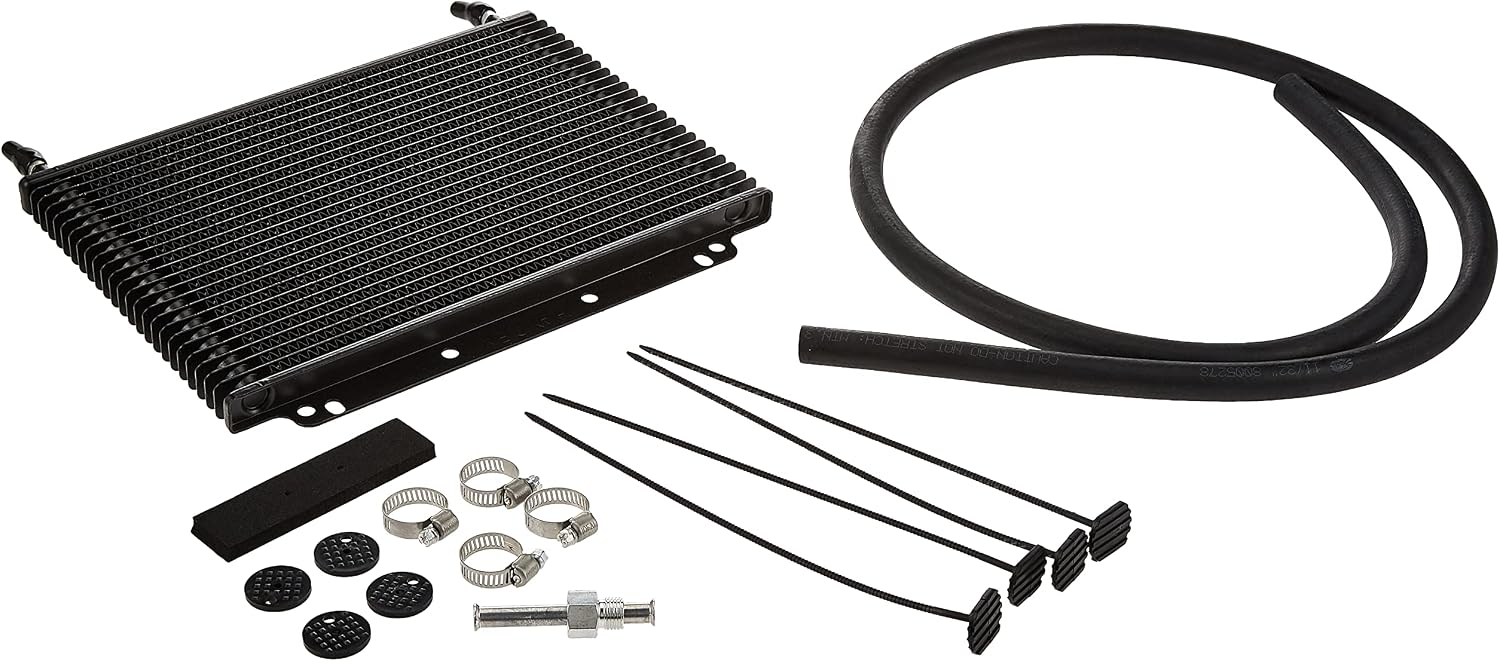
If the vehicle was not built with V92, or it tows near the limit in hot country, an auxiliary cooler is the upgrade that actually addresses the weak spot. A few builder notes:
- Plumb it in series, after the radiator cooler. Fluid leaves the transaxle, passes through the radiator tank cooler, then through the add-on cooler before it returns. The radiator cooler warms cold fluid in winter; the add-on pulls the peak temperature down when towing.
- Size it for the load, not the biggest one on the shelf. In our experience a plate-and-fin or stacked-plate cooler in the 20,000 to 24,000 GVW class is the practical size for a Lambda pulling up to its 5,200 lb rating, and it fits ahead of the condenser without choking it. Measure the opening before you order. Leave room for condenser airflow; the A/C and engine cooling share that air.
- Mind the lines. ATRA flags that the cooler line design was updated for 2008 and later cases with longer snouts, and that the update does not backservice to earlier cases. Tap into the lines at a hose section or with the correct fittings. Do not swap case-end lines between years.
- Re-torque the side cover. ATRA also notes the studded side cover bolts need to be re-torqued any time the cooler lines are removed. It is a simple step that heads off a seep at the side cover a week later.
- Flush before you connect. If the unit has already been hot or failed, the radiator cooler is full of debris. Flush the cooler and lines, and if the lines will not flow freely, replace them. A new cooler fed by a plugged radiator tank is money wasted.
Fluid: the cheapest towing upgrade
GM's own schedule treats towing as severe service. The 2017 Traverse manual puts "frequently towing a trailer" alongside heavy city traffic in hot weather and hilly or mountainous driving as the conditions for its Additional Required Services - Severe chart, and that chart calls for an automatic transmission fluid change at 72 000 km/45,000 miles intervals. The normal-service chart has no scheduled fluid change at all in its 150,000-mile span. ATRA's product-issues notes give the same split in round numbers: a fluid-only service at 100,000 miles regular service, 50,000 miles severe service.
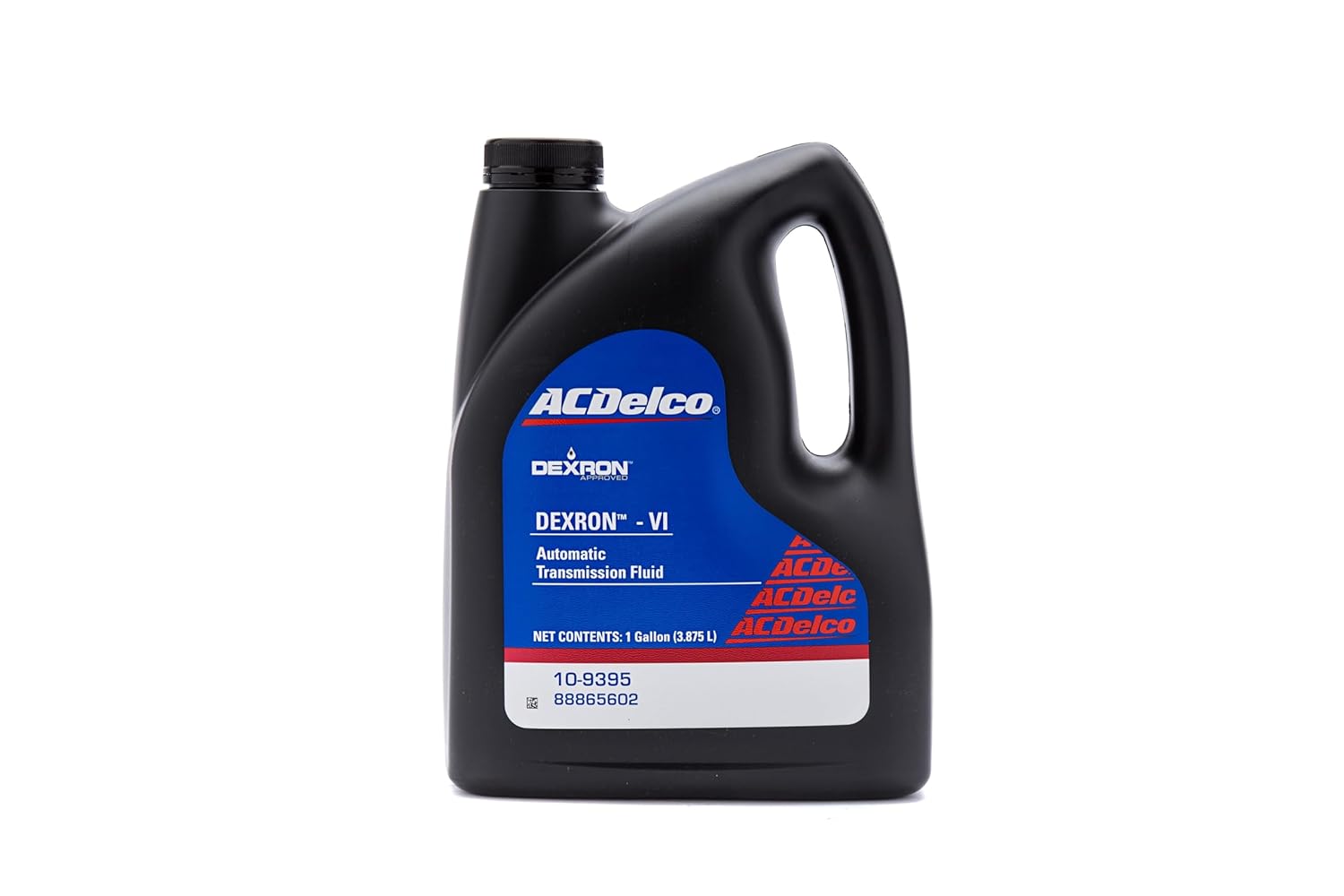
- Fluid: DEXRON-VI, per GM's recommended fluids chart. Do not top off with a multi-vehicle fluid of unknown spec after a heat event.
- Filter: ATRA lists the filter as non-serviceable, replaced only after internal repair. A towing service is fluid only, so expect to do more than one drain-and-fill to exchange most of the fluid, since one drain only gets about half.
- Level check: ATRA's procedure is level ground, parking brake set, engine running, move the selector through the gears, idle one minute, then check with TFT between 180 and 200 degrees F. Driving in 2nd helps bring it up to temperature. Reset the transmission oil life monitor after a change.
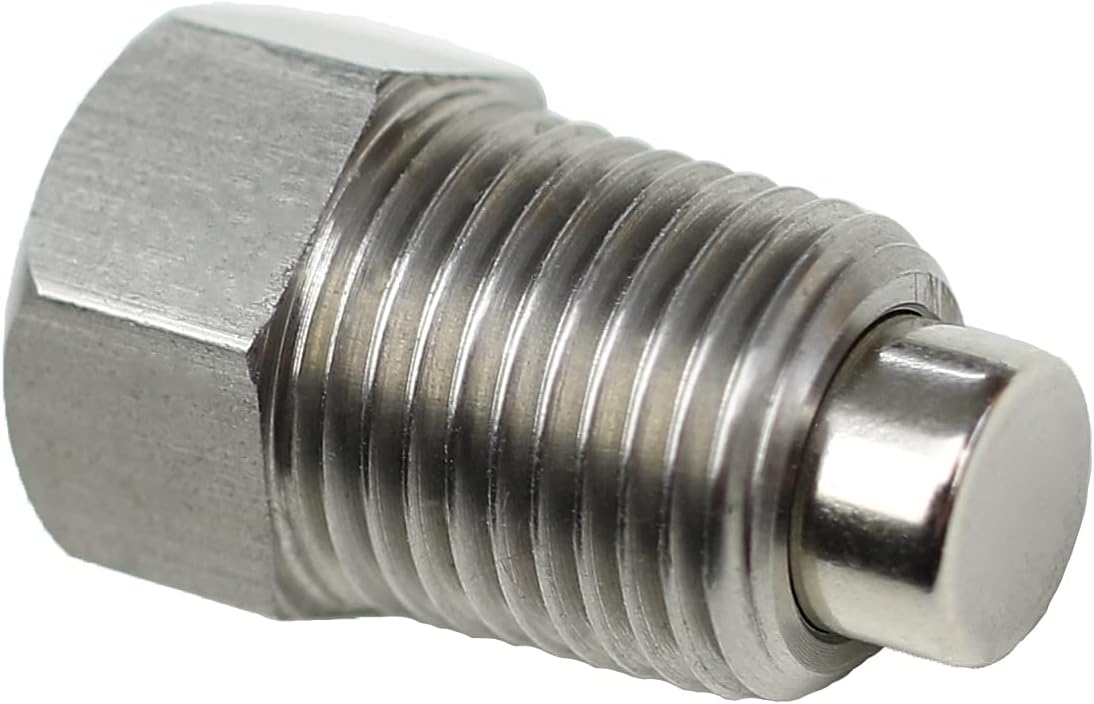
- Drain plug: pull the plug and look at the magnet. A gray paste is normal wear. Flakes or bronze-colored material on a towing vehicle means the conversation moves to a teardown.
For the full procedure and pricing, see our 6T70 fluid change cost guide.
How to drive it when towing
Driving habits matter more on this unit than on older four-speeds, because the TCM will happily hold 6th with a trailer behind it until the converter starts slipping and the fluid heats up. GM's guidance:
- Use Tow/Haul on vehicles equipped with it. GM describes it as a mode that assists when towing or hauling a heavy load, and recommends it if the transmission shifts too often.
- Use a lower gear on grades. The manual says the vehicle can tow in D, but recommends Manual Mode and a lower gear if the transmission hunts, and says to reduce speed and shift down before a long or steep downgrade so the brakes do not overheat.
- No 3rd-gear starts with a trailer. The Electronic Range Select system allows 2nd and 3rd gear starts. ATRA's course warns that a 3rd-gear start while towing can overheat and damage the transmission. Starting a loaded trailer in 3rd leaves the converter slipping far longer than it should.
- Let it idle after a hard pull. GM advises letting the engine run a few minutes in Park, preferably on level ground, after climbing steep grades at altitude. That also moves fluid through the cooler while the unit is not making heat.
Reading the damage on a unit that was towed hard
When a towing vehicle comes in with a slip or flare, the fluid and converter tell you how much heat it has seen. ATRA's product-issues notes offer one useful caution here: some early 6T70s (RPO MH2, MH4, MH6 or MY9) show a dark or bluish tint on the converter, usually on the hub side, sometimes as dark circles. If the whole converter is not discolored and there is no other evidence of overheating, ATRA says do not replace it on color alone. Real heat damage shows up as burnt fluid, glazed or flaked frictions and discolored steels, not just a blue hub.
From there the failure path is the familiar one for this family. Heat and load are hard on the 3-5-R and 4-5-6 clutch packs and on the 3-5-R wave plate, which GM updated under bulletin 09-07-30-012F. If the unit slips under load, start with our 6T70 slipping under load guide; if it shudders at cruise with the trailer, see 6T70 torque converter shudder.
A towing checklist for the 6T70/6T75
- Confirm 6T70 or 6T75 by RPO, and look for V92 on the label.
- Weigh the trailer loaded. Keep it under the rating for the equipment actually on the vehicle, and set tongue weight at 10 to 15 percent.
- Add an auxiliary cooler in series after the radiator cooler if the vehicle lacks V92 or tows near the limit in heat. Flush the old cooler first and re-torque the side cover studs.
- Change the DEXRON-VI on the severe schedule, about every 45,000 to 50,000 miles, and check level at 180 to 200 degrees F.
- Tow in Tow/Haul, downshift before grades, never launch a trailer in 3rd, and let it idle after a hard climb.
- Treat a TRANSMISSION HOT message as a warning to stop, not something to drive through.
6T70 Master Transmission Rebuild Kit, Gen. 1
If the towing damage is already done, this kit covers the frictions, steels, seals and gaskets for a Gen. 1 6T70/6T75 rebuild. Confirm the generation by RPO before ordering.
View at Core Transmission Parts →Browse 6T70 parts at Core Transmission Parts →
Need parts for this job?
Auxiliary coolers, DEXRON-VI, 6T70/6T75 drain plugs, master kits and valve bodies, shipped from the USA.
Shop 6T70 parts →FAQ
Can a 6T70 tow a trailer?
Only a light one. ATRA's 6T70 course lists the 6T70 at 1,000 lb of towing and the heavy-duty 6T75 at 4,500 lb, with a stronger output carrier, 5-pinion carrier, wider transfer gear and heavier differential and case. A cooler does not change those internal parts, so a 6T70 car or small crossover should stay light.
What does the V92 trailering package do on a Traverse, Acadia or Enclave?
It raises the tow rating. GM's 2017 Traverse owner's manual lists 2,000 lb maximum trailer weight without V92 and 5,200 lb with the V92 Trailer Towing Package, on both FWD and AWD models. Check the Service Parts Identification label for V92 before trusting a hitch that was added later.
How often should 6T70 fluid be changed when towing?
GM treats frequent towing as severe service, and the severe maintenance chart in the 2017 Traverse manual calls for an automatic transmission fluid change at 45,000-mile intervals. ATRA's notes give 50,000 miles for severe service and 100,000 for regular service. Use DEXRON-VI and check the level with fluid at 180 to 200 degrees F.
Should I add an auxiliary transmission cooler to a 6T75?
If the vehicle lacks V92 or tows near its limit in hot weather, yes. Plumb it in series after the radiator cooler, flush the old cooler first, and re-torque the studded side cover bolts after the cooler lines are disturbed, as ATRA notes. Leave enough room ahead of the condenser for airflow.
What does TRANSMISSION HOT IDLE ENGINE mean?
It is the driver information center message GM uses when the transmission fluid is overheating. GM's instruction is to stop, let the engine idle so the fluid cools, and not drive while it is hot, since the damage may not be covered by warranty. A vehicle that shows it repeatedly needs its cooling and load checked.
Sources
- General Motors — 2017 Chevrolet Traverse Owner's Manual. Backs the maximum trailer weight and GCWR by drivetrain and V92 Trailer Towing Package, the driver-only rating assumption, 10-15 percent tongue weight, trailer brakes over 1,000 lb, the 500-mile towing break-in, Tow/Haul mode and grade guidance, the TRANSMISSION HOT IDLE ENGINE message, towing as a severe-service condition, the severe-schedule automatic transmission fluid change, and DEXRON-VI as the specified fluid. chevrolet.ca (PDF)
- ATRA — "6T70 Introduction" technical course. Backs the 6T70 (1,000 lb, 280 lb-ft) and 6T75 (4,500 lb, 299 lb-ft) towing ratings, the 6T75 heavy-duty parts list, RPO codes MH2/MH4/MY9/MH6, the reduced-sump and reduced-cooling-capacity design notes, the side cover re-torque after cooler line removal, the TEHCM heat sink bracket and thermal shutdown, and the warning against 3rd-gear starts when towing. atracom.blob.core.windows.net (PDF)
- ATRA — "6T70 Product Issues and Updates," Steve Garrett. Backs the fluid check procedure at 180-200 degrees F TFT, the non-serviceable filter, the 100,000-mile regular and 50,000-mile severe fluid-only service, the converter discoloration guidance, and the 2008-later cooler line update that does not backservice. atracom.blob.core.windows.net (PDF)
- GM service information (Saab 9-4X, Automatic Transmission 6T70/6T75) — Fluid Capacity Specifications. Backs the 4.0-6.0 L drain-plug, 5.0-7.0 L valve body cover and 7.0-9.0 L overhaul capacities. saabwisonline.com
- ACDelco — GM Original Equipment DEXRON-VI Transmission Fluid. Backs DEXRON-VI as the GM-specified fluid for these automatics. acdelco.com
- General Motors — Service Bulletin 09-07-30-012F, "No Reverse, 3rd or 5th, Check Engine Light Illuminated, DTC P0776" (via NHTSA). Backs the updated 3-5-R waved plate on 2007-2009 6T70/75 applications. static.nhtsa.gov (PDF)