A 6T70 that shudders like it is driving over a rumble strip at 40 mph is one of the most common drivability complaints on GM's big front-drive crossovers: the Traverse, Acadia, Enclave, Equinox and Terrain with the 3.6, plus the SRX, XTS, Impala, LaCrosse and V6 Malibu. The driver says "the converter is going out." Sometimes that is right. Just as often it is a fluid problem that a drain and fill fixes, a valve body problem GM has a bulletin on, or a bad engine mount that has nothing to do with the transmission.
This guide walks through how the 6T70 controls its converter clutch, how to prove the shudder is TCC and not something else, how to grade it with a scan tool the way GM does, and what to replace at each level. The bulletin numbers, part numbers and procedures come from GM service bulletins filed with NHTSA, ATRA, Sonnax and Transmission Digest, listed at the end.
How the 6T70 converter clutch works
The 6T70 converter is a four-element unit: impeller, turbine, stator and clutch. Per Sonnax technical specialist Ed Lee writing in Transmission Digest, it came out of the joint Ford and GM six-speed program and is built by ZF Sachs, which is why you can find a four-pad converter in a GM vehicle; the unit exists with three, four or six mounting pads. The Ford 6F50 and 6F55 are its siblings, and a lot of the hydraulic hardware crosses over.
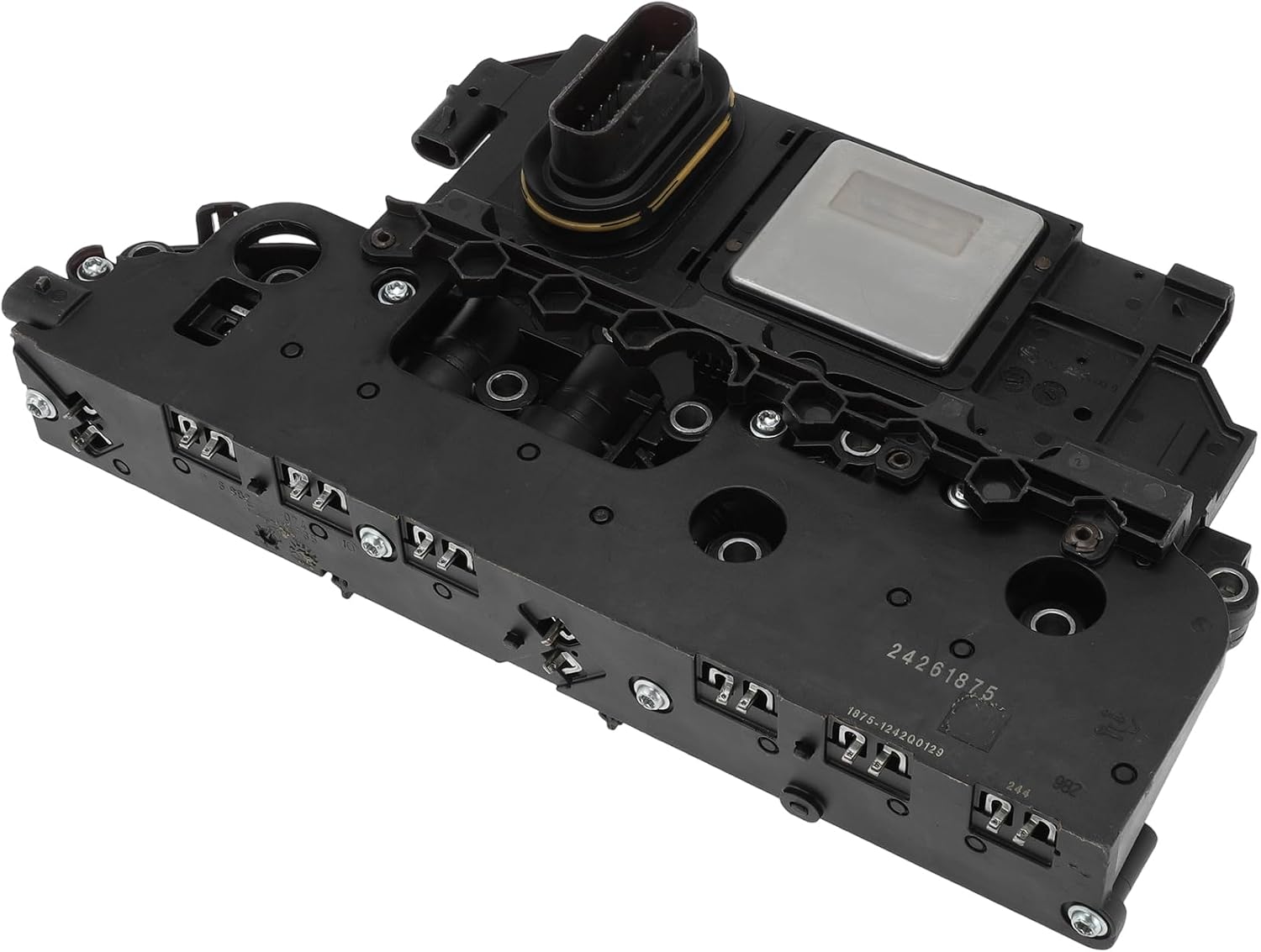
Converter clutch apply is controlled by the TCM through a TCC solenoid housed in the TEHCM (the transmission electro-hydraulic control module, which bolts to the valve body inside the side cover). That solenoid feeds the TCC regulator valve in the valve body, and the regulator sets how hard the clutch is clamped. The TCM does not simply lock and unlock the converter. In normal cruise it holds a small, controlled amount of slip, which smooths out firing pulses without the fuel penalty of an open converter.
Shudder is that controlled slip going unstable. The friction lining and the fluid are supposed to give a friction coefficient that falls as slip speed rises, which damps itself. Once the fluid's friction modifiers are used up, that curve flips: the clutch grabs, slip collapses, it lets go, slip rises again, and the cycle repeats several times a second. The driver feels it as a low-frequency shake at light throttle, usually in a lightly loaded cruise gear, that goes away the moment they get into the throttle hard enough to unlock the converter.
Step 1: Prove it is converter clutch shudder
GM's 6T70/6T75/6T80 bulletin 18-NA-358 covers a shudder that is not in the converter at all. It lists the 2014-2017 Enclave, Equinox, Terrain and Traverse, the 2014-2019 Acadia, the 2014-2016 SRX, the 2014-2019 XTS and Impala, the 2016 LaCrosse, the 2017 Regal and the 2015 Malibu, and describes a severe launch shudder in 1st, a shudder cruising in 4th, or a shudder on the 2-3 upshift or 3-2 downshift. GM's cause is debris in the upper and lower valve bodies, or valves that are scratched or scored and do not move properly. Before any of that, the bulletin tells the tech to do two things:
- Validate that the concern is not an engine misfire or driveability problem.
- Confirm the shudder is not TCC shudder by monitoring TCC slip when the TCC is engaged during the event.
That second step is the whole diagnosis in one line. Log TCC slip speed while the complaint is happening. If the shudder shows up with the converter clutch released and slip speed high, the converter clutch is not the cause, and you are looking at the valve bodies, a clutch pack, a misfire or the mounts. GM notes that the launch version can be duplicated by power braking in first gear, but for no more than five seconds so the 1-2-3-4 clutch is not damaged. If you can make it shudder that way, the bulletin calls for replacing both the upper (24281084) and lower (24257450) valve bodies together, and it states plainly that TEHCM replacement has not been an effective repair for that condition.
Two quick non-transmission checks before you plug in:
- Misfire counters and fuel trims. A weak coil on the 3.6 at light cruise feels a lot like TCC shudder from the driver's seat.
- Mounts and tires. A collapsed or oil-soaked mount will pass engine roughness straight into the body near the same road speed where the converter clutch applies. A tire with a shifted belt shakes at a road speed regardless of gear or throttle. True TCC shudder depends on gear and throttle.
Step 2: Grade it with the scan tool
GM published a clear method for grading converter clutch shudder in bulletin 23-NA-072. That bulletin is written for the nine-speed that replaced the 6T75 in the 2018-up Traverse and Enclave, but the PIDs are the same GM transmission PIDs the 6T70 TCM broadcasts, and the failure is the same clutch-in-controlled-slip failure. It is the best documented way to put a number on this complaint.
Test A: launch test
Set up a graph with four channels: Engine Speed, TCC Slip Speed, Engine Torque and ISS (turbine speed). Launch from a stop at 15-20 percent pedal and hold it to 30 mph. The condition is present when TCC slip is under 150 RPM maximum and the ISS trace oscillates. Read the ISS swing peak to peak:
- Under 50 RPM: normal. Not a converter or fluid problem. Look elsewhere.
- 50 to 200 RPM: degraded. The fluid has broken down. Check fluid condition and drain and refill.
- Over 200 RPM: damaged. Hardware damage has likely occurred. Replace the converter.
Test B: steady-state slip control test
Collect TCC data at a steady 30-50 mph and steady throttle for at least 15 seconds, then read TCC slip peak to peak:
- Below 20 RPM: normal. Do nothing.
- Near 60 RPM and repeating: degraded fluid.
- Near 100 RPM and erratic: damaged converter.
A regular, rhythmic ripple means the fluid quit. An erratic, irregular trace means the lining or cover surface is damaged. Save the log. It is the difference between a fluid job (GM pays 1.1 hours for the drain and fill in that bulletin) and a transaxle-out converter replacement, and it is the best thing you can show the customer.
Step 3: Check the fluid before you change it
23-NA-072 has a fluid condition check that is worth doing on any 6T70 with this complaint. Red or brown fluid you can see through is fine. Very dark or black fluid alone is still acceptable for a drain and fill. Very dark or black fluid with a burnt odor means clutch damage has already happened inside, and the unit needs to come out. Milky or cloudy fluid means coolant or water contamination (GM points to bulletin 08-07-30-035 for testing). A small amount of friction material and fine silver streaks from manufacturing are normal; large metal pieces, or fluid that feels gritty between your fingers, means hardware damage.
Check the level correctly while you are there. ATRA's 6T70 procedure is: level ground, parking brake on, engine running, run the selector through the ranges, idle one minute, and read the dipstick with transmission fluid temperature between 180 and 200 degrees F. ATRA also notes the filter is not serviceable in a normal fluid service. It is only replaced after internal repair, and the maintenance schedule is a fluid-only service at 100,000 miles normal or 50,000 miles severe. A lot of the shudder cars we see have towed a camper or run stop-and-go their whole life on the 100,000-mile schedule, which is exactly how the fluid wears out early.
Step 4: The fix for each grade
Degraded: drain and refill with DEXRON VI
If the scan data grades it as degraded and the fluid check shows no burnt odor, metal or coolant, GM's correction is a drain and refill with DEXRON VI per the service information. The 6T70 was filled with DEXRON VI from launch, and GM's 18-NA-358 parts list calls for it as well. Do not put a "universal" multi-vehicle ATF in it to save a few dollars; the friction modifier package is the whole point of this repair. One drain and fill only replaces part of the fluid because much of it stays in the converter and cooler, so many shops do two or three drain and fills with a drive cycle in between. After the service, GM requires at least 200 miles of driving before you call the repair confirmed. Then reset the transmission oil life monitor.
Damaged: replace the converter, and look at why it failed
If the data says damaged, the converter is replaced. Pulling a 6T70 converter has its own trap: ATRA points out there is no seal on the turbine shaft. The lip seal lives inside the converter, and it can be cut if the converter is removed or installed horizontally. Lift it out vertically with J-46409 or an equivalent tool, and install it the same way.
While it is out, check the flex plate from the engine side. Ed Lee reports that most 6T70/75 converters arriving at rebuilders came in for vibration or leak complaints, traced to the way the pilot is welded to the cover. When the pilot is cracked or broken, the flex plate usually is too, and the 6T70 flex plate has a thin 0.035-0.040 in. shim permanently attached at the bolt area that hides cracks until the plate breaks in two. You cannot inspect it properly from the transmission side. A cracked flex plate shakes too, and it will destroy a new converter.
Do not condemn a converter for color alone. ATRA notes that some 6T70 applications (RPO MH2, MH4, MH6 or MY9) show a dark or blue tint with dark circles on the hub side. If the whole converter is not discolored and there is no other sign of overheating, it should not be replaced for that.
When the converter keeps failing: the TCC regulator valve
A converter that shudders again after replacement, or a 6T70 that also runs hot and sets P0741 or P0742, usually has a hydraulic problem upstream. Sonnax documents wear at the TCC regulator valve bore on the 6T70/6T75/6T80 and Ford 6F50/6F55. Bore wear lowers TCC apply and converter charge pressure, and results in a slipping TCC, no TCC apply, fluid overheating and poor fuel economy. If the valve sticks in the apply position, the result is a harsh apply; if it sticks in release, the result is no apply or TCC slip. The repair is to ream the bore and install the oversized TCC regulator valve kit (Sonnax 124740-24K with tooling F-124740-TL24, or the alternate 124740-31K). Low converter charge pressure lets the clutch slip and overheat, which is how a new converter gets cooked by the same worn valve that killed the old one.
Stalls at a stop: the stuck TCC solenoid
The opposite failure is a converter that will not release. GM service update 13120 (revised as 13120C) covers 2013 Enclave, SRX, XTS, Equinox, Malibu, Traverse, Acadia and Terrain with the 6T70/6T75. The TCC solenoid in the TEHCM can stick because of debris in the transmission. At the end of a coast-down, the stuck solenoid holds the converter clutch applied, pulls the engine below idle, and can stall it. GM's fix was a TCM reprogram with a revised calibration. Any 2013 in the shop with a stall-at-stop complaint should get its calibration checked first. If the solenoid is sticking on a car with current software, find where the debris is coming from before replacing the TEHCM.
After any repair
ATRA's 6T70 notes are specific. The TCM is internal to the transaxle, so a replacement unit or TEHCM has to be programmed. Then run Service Fast Learn Adapts from the scan tool so the TCM learns each clutch's characteristics. When it finishes, shut the engine off, power down the TCM until the scan tool loses communication, and restart. Recheck the level hot at 180-200 degrees F TFT. Then re-run the same 23-NA-072 graph you started with and save both logs in the repair order.
Order of attack
- Road test and reproduce it. Note the gear, speed and throttle.
- Rule out misfire, mounts and tires.
- Log TCC slip during the event. If the converter clutch is released when it shudders, go to 18-NA-358 and the valve bodies, not the converter.
- Run the launch test and the steady-state slip test and grade the result: normal, degraded or damaged.
- Check fluid condition. Burnt, metallic or milky fluid means the unit comes out.
- Degraded: drain and refill with DEXRON VI, repeat as needed, and drive 200 miles to confirm.
- Damaged: replace the converter vertically, inspect the flex plate from the engine side, and vacuum test the TCC regulator bore.
- Program, run Fast Learn, power down, and re-log.
Sonnax 124740-31K TCC regulator valve kit for the 6T70
If a new converter starts shuddering again or P0741 keeps coming back, the TCC regulator bore is the usual culprit. This kit restores converter apply pressure.
View at Core Transmission Parts →Browse 6T70 parts at Core Transmission Parts →
Need parts for this job?
6T70/6T75 TEHCMs, valve bodies, filter kits and master rebuild kits, shipped from the USA. Confirm Gen. I or Gen. II by year and RPO before you order.
Shop 6T70 parts →FAQ
What causes torque converter shudder on a 6T70?
Most 6T70 TCC shudder is the converter clutch losing stable slip control because the DEXRON VI friction modifiers are worn out. Less often the converter lining or cover is damaged, or a worn TCC regulator valve bore lets converter pressure drop so the clutch slips and overheats. GM bulletin 18-NA-358 also describes a valve body shudder that feels similar but happens with the converter clutch released.
Will a fluid change fix 6T70 shudder?
It will if the shudder is graded as degraded, meaning an ISS swing of 50 to 200 RPM on the launch test or a repeating TCC slip ripple near 60 RPM at steady cruise in GM's 23-NA-072 method, and the fluid has no burnt odor, metal or coolant. Use DEXRON VI and drive at least 200 miles before judging the result.
How do I know if the torque converter needs to be replaced?
In GM's method, an ISS swing over 200 RPM on the launch test or erratic TCC slip near 100 RPM at steady cruise means hardware damage, and the converter is replaced. Burnt-smelling fluid, large metal pieces or gritty fluid means the transmission needs to come out and be inspected, not just the converter.
Why does my Traverse or Acadia stall when coming to a stop?
On 2013 6T70/6T75 models, GM service update 13120 found the TCC solenoid in the TEHCM could stick from debris and keep the converter clutch applied at the end of a coast-down, pulling the engine below idle. GM's fix was a TCM reprogram with a revised calibration.
Sources
- General Motors — Service Bulletin 23-NA-072, "Shudders or Shakes at Low Speeds," May 2023 (via NHTSA). Backs the TCC shudder graphing setup (Engine Speed, TCC Slip Speed, Engine Torque, ISS), the 15-20 percent pedal launch to 30 mph with TCC slip under 150 RPM, the ISS peak-to-peak grades (under 50 normal, 50-200 degraded, over 200 damaged), the 30-50 mph 15-second steady-state slip test (below 20 normal, near 60 repeating degraded, near 100 erratic damaged), the fluid condition check and bulletin 08-07-30-035 reference, the DEXRON VI drain and refill, the 200-mile confirmation drive and the 1.1-hour labor operation. Written for GM's M3W/M3V nine-speed; used here for the method. static.nhtsa.gov (PDF)
- General Motors — Service Bulletin 18-NA-358, "Shudder, 2-3 Upshift or 3-2 Downshift Concern," August 2022 (6T70, 6T75, 6T80, via NHTSA). Backs the covered models and years, the launch, 4th gear and 2-3/3-2 shudder symptoms, the valve body debris and scored valve cause, the instructions to rule out misfire and to confirm the shudder is not TCC shudder by monitoring TCC slip, the five-second power-brake limit, replacing upper 24281084 and lower 24257450 valve bodies together, TEHCM replacement not being effective, and DEXRON VI as the fluid. static.nhtsa.gov (PDF)
- General Motors — Service Update Bulletin 13120C, "Torque Converter Clutch Sticking," May 2014 (via NHTSA). Backs the 2013 Enclave, SRX, XTS, Equinox, Malibu, Traverse, Acadia and Terrain 6T70/6T75 coverage, the TCC solenoid in the TEHCM sticking from debris, the failure to release at the end of a coast-down with engine speed pulled below idle and possible stall, and the TCM reprogram with a revised calibration. static.nhtsa.gov (PDF)
- ATRA — "6T70 Product Issues and Updates," Steve Garrett. Backs TCM programming after replacement, Service Fast Learn Adapts and the power-down step, the fluid check at 180-200 degrees F, the non-serviceable filter and the 100,000/50,000-mile fluid-only service, vertical converter removal with J-46409 and the lip seal inside the converter, and the RPO MH2/MH4/MH6/MY9 converter discoloration guidance. atracom.blob.core.windows.net (PDF)
- Sonnax — Oversized TCC Regulator Valve Kit 124740-24K. Backs TCC regulator valve bore wear on the 6T70/6T75/6T80 and 6F50/6F55, its effect on TCC apply and converter charge pressure, the slipping TCC, no apply, overheat and fuel economy symptoms, the stuck-in-apply versus stuck-in-release behavior, P0741/P0742, tooling F-124740-TL24 and alternate kit 124740-31K. sonnax.com
- Transmission Digest — "6T70/75 Converter Pilot Issues," Ed Lee (Sonnax). Backs the four-element ZF Sachs converter from the Ford-GM program, the three, four and six pad versions, vibration and leak complaints traced to the welded pilot, the link between a cracked pilot and a cracked flex plate, and the 0.035-0.040 in. shim that hides flex plate cracks unless inspected from the engine side. transmissiondigest.com