A 6T75 that sits in Drive or Reverse and simply does not go is one of the few transmission complaints where guessing is genuinely expensive. Pull a valve body that was never the problem and you have burned an afternoon and a gasket set. The useful thing about a true no-movement-in-any-gear complaint is that it narrows the suspect list by itself: whatever is wrong has to be common to both Drive and Reverse, which rules out anything that lives downstream of a single clutch circuit. That points the diagnosis at the case, the linkage, or the hydraulic supply that feeds every clutch at once — mainly the pump.
This guide walks the GM's own fault-diagnosis checklist for "No Drive in All Ranges" on the 6T70/6T75, the OEM line pressure check procedure that has to come before any part gets replaced, and the specific pump and valve body wear patterns that put a 6T75 in this spot in the first place.
Rule out the free stuff before you pull anything
GM's own fault-diagnosis document for "No Drive in All Ranges" on the 6T70/6T75 starts outside the transmission, not inside it. The Case Assembly checks come first: a cracked or broken case, stripped or sheared splines, a missing lube orifice plug, a binding Manual Shift Detent Lever Assembly, or a missing Manual Shift Shaft Pin. That last pair matters more than it sounds — if the external shift linkage or cable isn't actually moving the internal manual valve to the commanded position, every hydraulic circuit downstream can be perfect and the vehicle still won't move. Check the linkage before you check anything hydraulic.
Next is the fluid itself. Confirm it's DEXRON-VI, confirm the level is correct with the engine running and the transmission at operating temperature, and look at its condition. Low fluid lets the pump draw air; burnt or metal-contaminated fluid points at a failure that's already happened rather than one that's starting. This is also the point to pull codes with a scan tool, since GM's own procedure requires inspecting for active or stored DTCs before the next step.
Run the line pressure check before you replace anything
This is the step that gets skipped the most, and it's the one GM's own documentation treats as mandatory. The Line Pressure Check procedure calls for a scan tool and a mechanical pressure gauge (GM's special tool DT 21867-A) installed at the line pressure test port, with the engine running in Park or Neutral. The scan tool commands the Line PC Solenoid up and down in roughly 200 kPa (29 psi) increments — engine speed is held below 1500 RPM during this test specifically to protect the clutches from extreme pressure swings — and the gauge reading at each commanded step gets compared against the expected value on the solenoid valve pressure chart for that calibration. GM calls for running the full sequence at least three times to get a uniform reading before trusting the result. When you're done, the test plug goes back in torqued to 12 Nm (106 lb-in), not just snugged by feel.
Readings that come in low or that won't rise as commanded point at either a damaged pump or a line pressure control problem upstream of the clutches. Readings that look correct shift the suspect list toward the case-level and linkage causes instead, or toward a clutch circuit that's actually isolated to Reverse or to Drive rather than truly affecting both — which is worth double-checking, since a car that creeps weakly in one direction but not the other is a different diagnosis than true no-movement.
What the oil pump assembly checklist actually flags
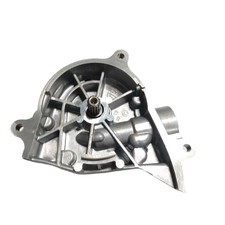
When the pressure check points at the pump, GM's "No Drive in All Ranges" documentation gets specific rather than just saying "replace the pump." The Oil Pump Assembly section calls for checking: fluid leaks or improper fluid level, a disengaged, worn, binding or failed Drive Sprocket, Driven Sprocket or Drive Link, a leaking Fluid Outlet Seal Assembly, damaged or worn drive and driven sprocket thrust washers, loose or missing oil pump bolts, stripped or sheared splines on the oil pump shaft or driven sprocket, and a damaged, clogged or improperly installed oil filter assembly with a damaged or leaking filter neck seal.
That level of detail matters because the 6T75's pump isn't a conventional gerotor bolted directly behind the torque converter. It's a remote-mounted, off-axis, chain-driven vane-type pump, turned through a sprocket-and-link assembly rather than straight off the converter hub. A drive link that's worn or has jumped a tooth doesn't necessarily destroy the pump outright; it can simply stop turning it fast enough to build and hold line pressure, which produces exactly the kind of system-wide, every-gear symptom a no-movement complaint describes. This is also the design that explains why a 6T75 pump problem can show up as a whine before it ever shows up as no movement — the wear progresses through the drive components first.
A handful of other case-level items round out GM's checklist and are worth a quick look while things are apart: a disengaged or broken Park Pawl Actuator Assembly or 1-2-3-4 Clutch Piston Spring Retainer, stripped or sheared splines on the torque converter turbine shaft or missing converter-to-flywheel bolts, a damaged input shaft thrust bearing, and stripped or sheared splines on the input shaft to the 3-5 Reverse/4-5-6 clutch housing. None of these are common, but they're mechanical, not hydraulic, and a line pressure check that comes back normal with a confirmed-good linkage is exactly when they move up the list.
Why the valve body and TEHCM get blamed first, and shouldn't
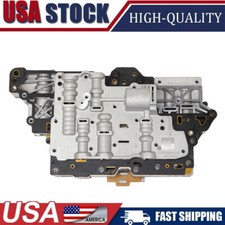
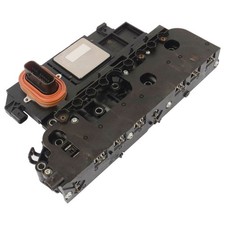
The 6T75's TEHCM (the GM term for the control solenoid valve assembly) runs two on/off shift solenoids and up to six pressure control solenoids on a Bosch-built 32-bit control module mounted directly to the valve body. On Gen 1 units, four fluid pressure switches monitor the clutch regulator valves for adaptive learn calculations, and those switches have a documented high failure rate from delamination and contamination, typically setting DTCs P0752, P0872, P0877 or P0989 rather than a no-movement complaint on their own. Valve body wear is also well documented across the 6T70/75/80 family, concentrated in the pressure regulator and actuator feed limit (AFL) valve bores, where erratic line pressure, burnt clutches and poor shift quality are the more typical symptoms, rather than a total loss of movement in both directions.
None of that means the valve body or TEHCM can't cause a true no-drive complaint — a stuck line pressure control valve or an incorrectly programmed TEHCM can do it. It means those parts are commonly condemned and replaced before the cheaper, more likely pump and linkage causes have actually been ruled out, which is exactly the order GM's documentation and the line pressure check exist to prevent.
Diagnose it in this order
- Check the linkage and shift cable. Confirm the manual valve is actually reaching Drive and Reverse. A binding detent lever or a disconnected cable will mimic an internal failure perfectly.
- Check fluid level and condition. Confirm DEXRON-VI, correct level at operating temperature, and look for burnt or metal-contaminated fluid.
- Pull codes. Note any active or stored DTCs before doing anything else, per GM's own procedure order.
- Run the Line Pressure Check. Compare the gauge readings at each commanded Line PC Solenoid step against the solenoid valve pressure chart. Do not replace the TEHCM or valve body first.
- If pressure is low or won't rise, inspect the pump drive. Drive sprocket, driven sprocket, drive link, thrust washers, and the oil filter and its neck seal, in that order.
- If pressure checks out normal, move to case-level and mechanical causes. Park pawl actuator, 1-2-3-4 clutch piston spring retainer, torque converter-to-flywheel attachment, and input shaft splines.
When the diagnosis points to worn internals, not one part
If the line pressure check and a teardown show general wear across the pump, valve body and clutch packs rather than one isolated failure, a full rebuild kit is the more honest fix than chasing individual components. Sold by our sister store, CoreTransmissionParts.
Shop the 6T75 Master Rebuild Kit at CoreTransmissionParts →Need parts for this job?
Our 6T75 parts page has the pump, valve bodies, solenoid kits and filter/pan gasket kits for when the line pressure check points at a specific component instead of a full rebuild. Checkout is on site.
FAQ
What is the most common cause of a 6T75 not moving in any gear?
GM's own Oil Pump Assembly checklist for "No Drive in All Ranges" on the 6T70/6T75 points first at the fluid level and the drive sprocket, driven sprocket and drive link that run this transmission's offset, chain-driven pump. A disengaged or worn drive link, a clogged oil filter, or a leaking fluid outlet seal all starve the whole hydraulic system of line pressure at once, which is why the symptom shows up in every gear rather than just one.
Should I replace the TEHCM or valve body first if a 6T75 won't move?
No. GM's diagnostic order on this family of transmissions is to run a Line Pressure Check before replacing the TEHCM (the control solenoid valve assembly) or the valve body. A related GM bulletin for the shared 6T30/6T40/6T45/6T50 architecture is explicit that these no-movement complaints are often caused by a damaged fluid pump, and that TEHCM or valve body replacement should wait until line pressure has actually been measured.
Can a bad linkage or shift cable cause a 6T75 no-movement complaint?
Yes, and it should be ruled out before anything is removed. GM's fault diagnosis lists a binding Manual Shift Detent Lever Assembly and a missing Manual Shift Shaft Pin as case-level causes of no drive in all ranges. If the manual valve inside the transmission is not actually reaching the commanded position because the external linkage is binding or disconnected, no amount of internal diagnosis will find the problem.
What line pressure should a healthy 6T75 show?
There is no single number without the solenoid valve pressure chart for the specific calibration, which is why GM's own Line Pressure Check procedure has the scan tool command the Line PC Solenoid up and down in roughly 200 kPa (29 psi) increments in Park or Neutral, below 1500 RPM, and compares the gauge reading at each commanded step against the expected chart value rather than checking for one fixed idle number.
What fluid does a 6T75 use?
DEXRON-VI only. GM developed DEXRON-VI as the service-fill upgrade to DEXRON-III specifically because the earlier fluid's performance no longer matched what units like the 6T70/6T75 needed, and using anything else risks the exact kind of pressure and clutch-apply problems this guide is sorting through.
Related guides
- 6T75 Common Problems and Fixes
- 6T75 Torque Converter Shudder: Diagnosis and Fix
- 6T70 vs 6T75: Differences, Interchange & Which Is Stronger
- GM 6T70/6T75 Service Guide: Chain Wear, Valve Body
- 6T70 Pump Failure Symptoms and Replacement
Sources
- GM service information (Saab 9-4X, Automatic Transmission 6T70/6T75) — "No Drive in All Ranges." Backs the full Case Assembly, Oil Pump Assembly, Low & Reverse Clutch Assembly and Input Carrier Assembly checklist, including the specific drive sprocket, driven sprocket, drive link, thrust washer, oil filter and neck seal checks. saabwisonline.com
- GM service information (Saab 9-4X, Automatic Transmission 6T70/6T75) — "Line Pressure Check." Backs the DT 21867-A pressure gauge procedure, the Line PC Solenoid command increments of approximately 200 kPa (29 psi), the sub-1500 RPM test requirement, and the 12 Nm (106 lb-in) test plug torque. saabwisonline.com
- General Motors, Preliminary Information Bulletin PI0324F, "No Forward, No Reverse, No Crank, Engine Cranks But Will Not Start (Perform Transmission Line Pressure Check)," December 2013. Covers the related 6T30/6T40/6T45/6T50 architecture; backs the GM-wide diagnostic doctrine of a line pressure check before TEHCM or valve body replacement, and that a damaged fluid pump is the typical root cause of this symptom pattern. static.nhtsa.gov (PDF)
- Sonnax, "GM Gen. 1 6T70/75/80, Ford 6F50/55 Concerns & Repair Techniques" (technical webinar). Backs the 6T70/75's remote-mounted, off-axis, chain-driven vane-type pump design, the TEHCM solenoid and pressure switch architecture (including the P0752/P0872/P0877/P0989 DTCs), and the valve body wear concentrated in the pressure regulator and AFL valve bores. sonnax.com (PDF)
- SAE International, Technical Paper 2006-01-3242, "General Motors DEXRON-VI Global Service-Fill Specification." Backs DEXRON-VI as the GM service-fill specification that superseded DEXRON-III for units including the 6T70/6T75. saemobilus.sae.org