The 6T75 is the heavy-duty tier of GM's transverse six-speed. It is the unit behind the 3.6 in the Lambda crossovers — Enclave, Acadia, Traverse and Outlook — and ATRA rates it at 299 lb-ft of maximum engine torque and 4,500 lb of towing, against 280 lb-ft and 1,000 lb for the 6T70. It shares the 6T70's gear train, clutch names, off-axis chain-driven pump and the TEHCM (the TCM and solenoid body assembly) bolted inside the case. So it fails in most of the same places, but it does it in heavier vehicles that tow, which makes the hard failures show up sooner.
This is the list of what actually comes across the bench on these units, in the order I see it, with the GM bulletin or ATRA reference behind each one and the check that confirms it before you pull the unit.

First: Which 6T75 Is It?
Every parts decision on this unit depends on generation. Per ATRA's product-issues seminar, the 6T70 (RPO M7W or M7U) and 6T75 (RPO M7V or M7X) got a major controls update for the 2013 model year, but because of parts availability the other RPO codes did not get it until 2014 production. That means 2013 was built both ways. Gen 1 6T75s carry RPO MY9 (FWD) or MH6 (AWD); Gen 2 carries M7V or M7X. Read the RPO off the Service Parts Identification label in the glove box before you order anything. Our 6T70 vs 6T75 guide covers the ID tells in more detail.
| Symptom | Most likely cause | First check |
|---|---|---|
| No reverse, slip or flare in 3rd and 5th, P0776 | Broken 3-5-R wave plate (mostly 2007-2010) | Pan magnet for steel fragments |
| No reverse, 3rd or 5th, pre-2010 build | Input sun shell weld break | Unplug the transmission, retry reverse |
| Bind on the 3-4 or 4-3 shift, P0797 | Worn ring groove on case cover hub sleeve | Ring-to-groove clearance, max .007 in. |
| Launch shudder, 2-3/3-2 shudder, flare or slip (2014-up) | Debris or scored valves in upper/lower valve body | 5-second first-gear power brake, TCC slip log |
| No movement after a rebuild, P2723 | Input ring gear left off the reaction carrier | Teardown — nothing to scan |
| Delayed engagement, slips in 1st after a rebuild | Gen 1 1-2-3-4 piston in a Gen 2 unit | Measure piston apply finger height |
1. Broken 3-5-Reverse Wave Plate: No Reverse, No 3rd or 5th
This is the failure the family is known for, and the 6T75 Lambdas are all over the bulletin. GM bulletin 09-07-30-012F covers 2008-2009 Enclave, 2009 Traverse, 2007-2009 Acadia and 2007-2009 Outlook with RPO MH6 or MY9, alongside the 6T70 cars. The complaint: check engine light, no reverse, and a slip, flare or harsh shift in 3rd and/or 5th. The code you usually find is P0776 (Clutch Pressure Control Solenoid 2 Stuck Off), and GM warns that P0777, P2723, P0717, P0716, P2715 and P2714 can set independently as a result of the same failure.
The mechanism is simple. The 3-5-R waved plate cracks, the apply piston over-strokes, the piston seal leaks and the clutch loses apply. GM says it normally does not happen before about 20,000 miles. The debris is the real problem — GM notes it can affect the speed sensors and the other clutches, which is why you see the speed sensor codes ride along.
The repair
GM released updated plate P/N 24254103 and recommends installing it any time the transmission is apart for any reason. The bulletin is blunt about cleanup: separate the case halves, clean debris from the entire unit, and replace the pump fluid filter and the control solenoid filter plate, or expect repeat damage. It also says not to wash the TEHCM assembly in a parts cleaner and not to replace it for any DTC unless SI diagnostics say so. Inspect the case in the 3-5-R area for damage; GM notes the snap ring groove sits well below the wave plate and is rarely hurt, but check it.
ATRA recommends going further on a rebuild: install the updated wave plates in every clutch to protect the new gear set — 1-2-3-4 (24259063), 2-6 (24259816), 3-5-R (24254103) and low-reverse (24259817). The 3-5-R is the one that breaks most, but the others are made the same way.
Budget for collateral damage. GM's Special Coverage 14404B estimated that roughly 25 percent of these repairs also needed parts like the reaction sun gear. That coverage ran 10 years or 120,000 miles from the in-service date on 2007-2009 units, so on anything still running today it has expired and the job lands on an independent shop.
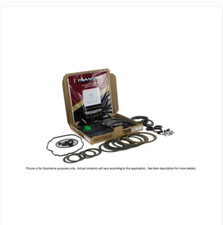
6T75 Master Transmission Rebuild Kit
A broken 3-5-R plate usually takes the piston seals with it, and GM wants every clutch cleaned and resealed. This master kit covers the frictions, steels, seals and gaskets for the full job.
Shop the 6T75 master kit at Core Transmission Parts →2. Input Sun Shell Weld Break: Same Symptoms, Different Part
Early units have a second failure that looks exactly like the wave plate on a road test: no reverse, 3rd or 5th, with P0776, P2723 or P2715 possible. ATRA's seminar says it primarily affects transmissions built before the 2010 model year, and the cause is a broken weld on the input sun shell. The updated shell comes with the #3 thrust bearing.
ATRA's advice for telling the two apart is to keep it simple: unplug the transmission and see whether reverse is being prevented electrically. With the TEHCM unplugged the unit goes to its hydraulic default. If reverse engages with it unplugged, the shell is not the problem, and the 3-5-R clutch is your suspect. A pan drop showing steel fragments on the magnet finishes the diagnosis.
3. Bind on the 3-4 or 4-3 Shift, P0797
ATRA documents this one on both the 6T70 and 6T75. The customer complains of a bind on the 3-4 or 4-3 shift, and P0797 may set. The cause is a worn ring groove on the case cover hub sleeve. When the groove wears, fluid leaks between the 3-5-Reverse clutch circuit and the 4-5-6 clutch circuit, so the outgoing clutch does not fully release while the oncoming one applies. That is a tie-up, and the driver feels it as a bind.
The check is a feeler gauge. Remove the hub from the rear case cover, inspect the rings and grooves, and measure between the edge of the groove and the ring. Per ATRA, maximum clearance is .007 in. If it is over that, replace the case cover. New rings in a worn groove will not hold.
4. Valve Body Debris: Shudder, Flare and Slip on 2014-Up Units
On the Gen 2 6T75, the big bulletin is 18-NA-358. It covers 2014-2017 Enclave and Traverse with RPO M7V or M7X and 2014-2019 Acadia, and describes a severe launch shudder in 1st from a stop, shudder in 4th, or shudder during the 2-3 upshift or 3-2 downshift, sometimes with flare, slide/bump, slip or harsh shift complaints. GM's cause: debris in the upper and/or lower valve bodies, or scratched and scored valves that do not move properly.
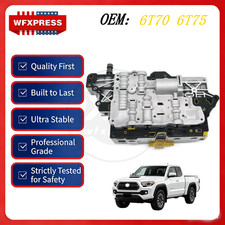
Before you buy anything, GM wants two things ruled out: an engine misfire or driveability concern, and TCC shudder, confirmed by watching TCC slip on the scan tool while the converter clutch is applied during the event. Then the induce test: power brake in first gear, for five seconds or less so you do not distress the 1-2-3-4 clutch. If the shudder shows up there, GM says to replace both the upper and lower valve bodies at the same time. The valve body kit is 24264343 for M7V, M7X, M7U and M7W.
Two more lines in that bulletin save a lot of money. First, GM states that TEHCM replacement has not been an effective repair for this condition — do not hang a TCM on it. Second, inspect the ISS and OSS for collected debris. Debris on the sensors means an internal component is failing. If the sensors are clean but the valves and bores are scratched, GM says to check for final drive bearing failure. If the complaint is TCC shudder at cruise rather than a launch or 2-3 shudder, see our 6T75 TCC shudder diagnosis instead.
5. No Movement After a Repair, P2723
This one is self-inflicted, and ATRA calls it out on the Traverse, Acadia, Outlook and Enclave specifically. After a repair that included a reaction planetary carrier — usually the aftermath of a broken 3-5-R wave plate that chewed up the carrier — the vehicle has no drive and may set P2723.
The trap is the parts catalog. Many publications show the reaction carrier and input ring gear as one piece. In reality the reaction carrier, input ring gear and ring gear snap ring are serviced separately. If the ring gear does not get installed onto the new carrier, the unit will not move. The fix is to go back in and install it. ATRA also notes that snap ring is very difficult to remove, so plan the time.
6. Gen 1 Parts in a Gen 2 Unit: Delayed Engagement and a Slip in First
Mixing generations causes comebacks. In Transmission Digest, Wayne Colonna describes a 2015 Equinox 3.6 with a 6T75 that came back with delayed engagement into drive and a slip in first. Someone had installed a Gen 1 1-2-3-4 clutch apply piston in the Gen 2 unit. The Gen 1 piston's apply fingers measure 0.638 in.; the Gen 2 piston's measure 0.785 in. That 0.147 in. difference is all clutch clearance. The frictions differ too — 0.058 in. on Gen 2 against 0.061 in. on Gen 1.
The lesson for a 2013 or 2014 unit: go by the RPO, measure the piston, and do not assume a kit or a used drum is right because it fits. Gen 2 parts started going into production selectively in 2013, and every 2014-and-later unit should be Gen 2.
7. Fluid: The Failure You Cause by Not Checking It Right
The level on this unit only means something hot, so a cold check tells you nothing. The fluid is DEXRON VI. ATRA's procedure for checking it: vehicle level with the parking brake set, start the engine, move through the gear selector, idle one minute, and read the level only when transmission fluid temperature is between 180°F and 200°F on the scan tool. After a fluid change, reset the transmission oil life monitor; ATRA suggests driving in 2nd to bring the temperature up.
GM's service information gives the approximate capacities:
| Procedure | Approximate capacity |
|---|---|
| Fluid change — drain plug | 4.0-6.0 L (4.2-6.3 qt) |
| Valve body cover removal | 5.0-7.0 L (5.3-7.4 qt) |
| Overhaul | 7.0-9.0 L (7.4-9.5 qt) |
Those are ranges, not fill targets. Put in the low number, then set the level hot. ATRA lists the service interval as 100,000 miles for regular service and 50,000 miles for severe service, and notes the filter is non-serviceable — it only gets replaced after an internal repair. On a Lambda that tows or sees short-trip winter driving, treat it as severe service. A drain-plug service swaps roughly half the fluid, so two or three changes in a row are what actually refresh it.
After the Repair: Programming and Fast Learn
Two steps get skipped and cause most of the "rebuilt but still shifts bad" calls. ATRA points out that any time you replace the transaxle you must reprogram the TCM, because the TCM lives inside the transaxle. Then run the Service Fast Learn Adapts from the scan tool. It runs a series of tests so the TCM learns each clutch's characteristics and writes them to the adaptive cells. When it finishes, shut the engine off and let the TCM power down — you will lose communication with the scan tool — then restart the engine to complete the procedure.
One thing not to replace: ATRA notes some 6T70/6T75 converters show dark or blue discoloration on the hub side. If the whole converter is not discolored and there is no other evidence of overheating, do not replace the converter.
Rebuild kits, valve bodies, solenoid kits, pumps, filters and pan gaskets for the 6T75 — shipped fast from the USA.
Shop 6T75 parts →FAQ
What is the most common 6T75 problem?
The broken 3-5-Reverse clutch wave plate. It causes no reverse plus a slip, flare or harsh shift in 3rd and 5th, usually with code P0776, and GM covered it in bulletin 09-07-30-012F. It mainly hits 2007-2010 builds, and the fix is updated plate 24254103 plus a full debris cleanup.
Which vehicles use the 6T75?
Mainly GM's Lambda crossovers with the 3.6 — Buick Enclave, GMC Acadia, Chevrolet Traverse and Saturn Outlook. Gen 1 units carry RPO MY9 (FWD) or MH6 (AWD), and Gen 2 units carry M7V or M7X. Check the RPO label in the glove box to confirm.
How much fluid does a 6T75 take?
GM lists about 4.0-6.0 liters for a drain-plug fluid change, 5.0-7.0 liters with the valve body cover removed and 7.0-9.0 liters for an overhaul. It takes DEXRON VI, and the level must be checked with the engine running and fluid temperature between 180 and 200 degrees F.
Should I replace the TCM for a 6T75 shudder?
No. GM bulletin 18-NA-358 states that TEHCM replacement has not been an effective repair for launch or 2-3/3-2 shudder on these units. Rule out misfire and TCC shudder first, then replace the upper and lower valve bodies if the shudder can be induced with a five-second first-gear power brake.
Sources
- General Motors — Service Bulletin 09-07-30-012F, "No Reverse, 3rd or 5th, Check Engine Light Illuminated, DTC P0776," October 2012 (via NHTSA). Backs the covered 2007-2009 Enclave, Acadia, Traverse and Outlook applications with RPO MH6 or MY9, the no reverse and 3rd/5th slip, flare or harsh shift complaint, DTC P0776 and the related P0777, P2723, P0717, P0716, P2715 and P2714, the broken 3-5-R wave plate over-stroking the piston, the roughly 20,000-mile onset, the updated plate P/N 24254103, the case-half separation, pump filter and control solenoid filter plate replacement, and the instruction not to wash or replace the TEHCM without SI diagnostics. nhtsa.gov (PDF)
- General Motors — Special Coverage Adjustment 14404B, "Transmission Clutch Wave Plate," August 2016 (via NHTSA). Backs the 10-year/120,000-mile coverage on 2007-2009 6T70/6T75 applications and GM's estimate that about 25 percent of repairs also require parts such as the reaction sun gear. nhtsa.gov (PDF)
- General Motors — Service Bulletin 18-NA-358, "Shudder, 2-3 Upshift or 3-2 Downshift Concern," August 2022 (via NHTSA). Backs the 2014-2017 Enclave and Traverse (M7V, M7X) and 2014-2019 Acadia coverage, the launch, 4th-gear and 2-3/3-2 shudder complaint, the valve body debris cause, the misfire and TCC-slip rule-outs, the five-second first-gear power brake induce test, the statement that TEHCM replacement has not been effective, replacement of both valve bodies with kit 24264343, and the ISS/OSS debris and final drive bearing checks. nhtsa.gov (PDF)
- ATRA — Steve Garrett, "6T70 Product Issues and Updates," ATRA technical seminar (covers 6T70 and 6T75). Backs the Gen 1/Gen 2 RPO split and 2013-2014 phase-in, the TCM reprogramming and Service Fast Learn Adapts procedure, the fluid check procedure at 180-200°F, the 100,000/50,000-mile service intervals and non-serviceable filter, the converter discoloration guidance, the 3-4/4-3 bind with P0797 and .007 in. maximum ring clearance, the input sun shell weld break and unplug test, the four updated wave plate part numbers, and the P2723 no-movement condition from a missing input ring gear. atra.com (PDF)
- ATRA — "Introduction to the GM 6T70," ATRA technical seminar material. Backs the 6T75 rating of 299 lb-ft and 4,500 lb towing against the 6T70's 280 lb-ft and 1,000 lb, the MY9/MH6 RPO codes and DEXRON VI as the specified fluid. atra.com (PDF)
- GM Service Information — Automatic Transmission 6T70/6T75, Fluid Capacity Specifications. Backs the approximate capacities of 4.0-6.0 L for a drain-plug fluid change, 5.0-7.0 L with valve body cover removal and 7.0-9.0 L for overhaul. GM SI (saabwisonline.com)
Also referenced: Wayne Colonna, "GM 6T70/75 Slips and Delays in First," Transmission Digest, November 2023 — the Gen 1 vs Gen 2 1-2-3-4 piston finger heights (0.638 vs 0.785 in.) and friction thicknesses.