On a 700R4 the cooler lines get treated like plumbing: two steel tubes from the case to the radiator that only matter when they drip. That is the wrong mental model for this transmission. Everything that comes back through the return line is what lubricates the back half of the unit, so a kinked, crushed, or half-plugged line is not a leak problem, it is a lube problem. Most of the cooked rear planets and burned-up bushings I see on these units started outside the case.
This guide covers what the lines actually feed, how to identify the case fittings before you order anything, which line size to run, how to bend or plumb the replacement, and the flow test that tells you whether the job is really done. It applies to the 1982-1993 hydraulic 700R4 (RPO MD8) in trucks, Camaros, Firebirds, Corvettes, Caprices and the swap cars it ended up in afterward.
What the Cooler Lines Actually Do on a 700R4
Sonnax's technical write-up on the pump, pressure regulator, converter and cooler-lube circuits puts it plainly: in most automatics those circuits are connected in series. The pump feeds the pressure regulator (PR) valve, the PR valve meters oil into the converter, converter-out oil goes to the cooler, and what comes back from the cooler becomes lube oil. A change anywhere in that chain shows up everywhere downstream of it. The PR valve also acts as a priority valve, so line pressure always wins and converter/lube oil gets whatever is left.
That has two practical consequences for line work. First, any restriction in the lines raises back-pressure in the converter circuit and cuts the volume that reaches the lube passages. Second, the lube oil the rear planetary, the output bushing, and the reaction carrier depend on has already been through the cooler. If it does not come back, those parts are running on splash. The 700R4's rear planetary already lives on marginal oil to begin with, which is why the reaction sun shell and planet pins are such a well-known failure point on this unit.
Transmission Digest ran a case from ATSG's Wayne Colonna that makes the point better than any diagram. A JR403-E (a different unit, same principle) came back with the rear planets "totally cooked" 50 miles after a repair, was rebuilt, and cooked them again 50 miles later. The cooler line had good flow at the transmission end and zero flow at the radiator. The cause was an aftermarket inline filter installed in the wrong direction, so it worked as a one-way check valve against the cooler circuit. Two rebuilds were lost to a part costing a few dollars outside the case.
Identify the Case Fittings Before You Order Anything
The 700R4 case has two cooler ports on the passenger side, stacked one above the other near the front of the case. They are 1/4-inch straight pipe thread ports, not tapered. Adapter manufacturers list the same port as 1/4 NPS, 1/4 NPSM or 1/4 NSPT depending on the catalog, and that inconsistency is where wrong orders come from. Bowler Transmissions' fitting guide gives the cleanest way to check: pull the stock adapter and measure the threads. If it measures about 0.521 inch, it is the 1/4 NSPT fitting, the most common case port. If it measures about 0.5568 inch, you have a 9/16-18 port, which you will see on other GM cases, not a stock 700R4.
The factory adapters are straight thread on the case side and take a 5/16 inverted-flare tube nut on the line side. Do not thread a tapered NPT fitting into a straight-thread case port. It will feel tight before it seals, and if you keep cranking on it you load the case boss like a wedge. The aftermarket -6AN adapters made for this case use the correct straight thread with a sealing washer or O-ring.
Which port is which. On the 700R4/4L60-family case, builders commonly document the lower port as the feed to the cooler and the upper port as the return. Treat that as a starting point and prove it on the vehicle. Disconnect the line at the radiator end, put the loose end into a marked bottle, and run the engine for a few seconds in Park. Whichever line flows is the feed. Plumbing it backward through an add-on cooler with an inline filter or a check valve is exactly how you build the failure in the Transmission Digest case above.
Line Size: 5/16 Is Stock, Smaller Is Never Acceptable
Factory 700R4 lines are 5/16-inch steel tube, and it is the size Sonnax uses for its flow spec (covered below). Stepping up to 3/8 tube or to -6AN braided hose on a swap or tow rig is fine. The wider inside diameter lowers restriction, which is what this circuit wants. What causes trouble is going smaller, using a fitting with a reduced bore, or putting in a hose barb that necks the passage down. The line volume difference between 5/16 and 3/8 over two six-foot runs is small, a fraction of a quart, so a bigger line will not throw off your fluid level in any meaningful way.
Steel tube or braided hose
Steel is what the factory used and still the best answer on a stock-routed truck: it does not chafe through, it does not age, and it holds the routing away from the exhaust. Braided PTFE -6AN lines make sense on swaps where the factory routing no longer exists, or when you are adding a remote cooler. Two rules if you mix them:
- Do not mix flare angles. GM tube nuts use a 45-degree double (inverted) flare. AN fittings seal on a 37-degree flare. A 45 nut on a 37 cone, or the other way around, contacts on a line instead of a face and seeps no matter how hard you tighten it.
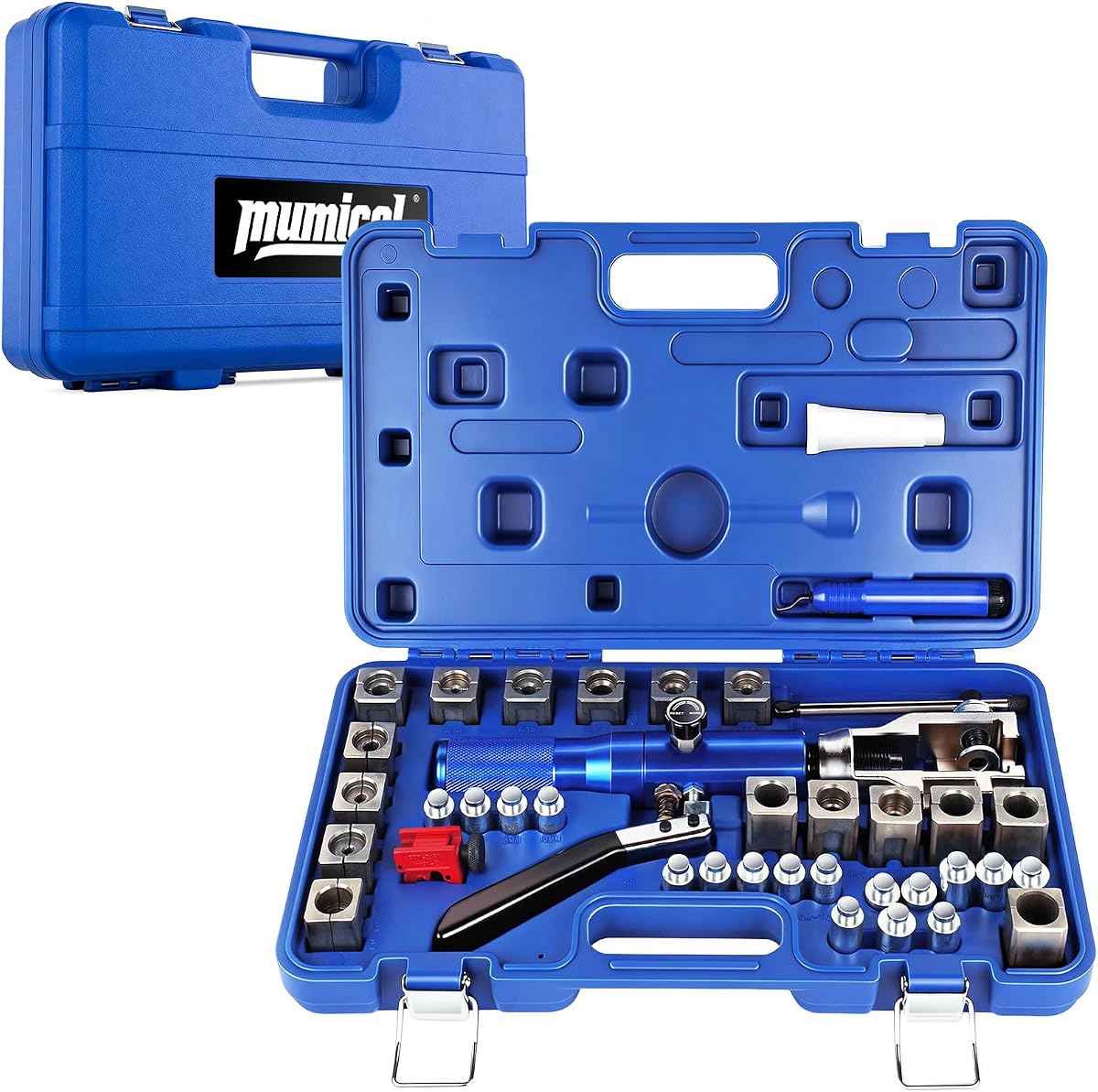
- Double-flare steel tube. A single flare on cooler tube will split under heat cycling. If you are making lines, use a proper double-flare tool and practice on scrap first.
Step-by-Step Replacement
- Confirm the leak source. Degrease the case, pan rail, both fittings and the line runs. Drive a short loop, then look again with a light. On this unit the TV cable seal, the pan gasket and the speedometer gear housing all weep in the same area as the lines and get misdiagnosed for each other.
- Measure the case adapters as described above before ordering. If an adapter is weeping at the case threads rather than at the tube nut, replace the adapter and its sealing washer. Do not just put sealant on it.
- Break the tube nuts with a flare-nut wrench only. Sonnax's own after-overhaul checklist is specific about this: always use a line (flare-nut) wrench to loosen and tighten cooler line nuts, never an open-end or adjustable wrench, because an open-end wrench rounds both the nut and the fitting. Hold the adapter with a second wrench so you do not turn it in the case.
- Inspect the old line. Look for flattened sections where it was clamped or jacked against, rub-through at frame crossings, and any spot that touches the exhaust. Cut the old line open if it came off a failed transmission. Friction material or metal in the tube means the cooler needs attention too (next section).
- Form or fit the new lines. Use a tube bender, keep the bends gentle, and match the factory clips. On braided hose, route it away from the headers and support it at least every 18 inches or so with cushioned clamps.
- Assemble clean. Seat each flare by hand first. If the nut will not start by hand, something is cross-threaded or the flare is the wrong angle. Snug it with the flare-nut wrench. A flare seals on its cone face, not on clamp force.
- Refill and check hot. A pair of lines holds well under a quart. Top up with DEXRON-VI, run the selector through every range, and check the level hot on the dipstick.
- Flow test. This is the step people skip, and it is the only one that proves the job.
The Flow Test That Proves the Job
Sonnax's after-overhaul checklist gives the number: for a transmission with 5/16-inch cooler lines, cooler flow should be a minimum of one quart in 20 seconds, and most transmissions working correctly will produce a quart in about 10 seconds. Check it only after the vehicle is at operating temperature. Cold, thick fluid will read low and send you looking for a restriction that is not there.
Where you measure matters. Sonnax TASC Force member Ed Lee, writing in Transmission Digest about repeat lube-related failures, says the first test is flow at the cooler return line where it meets the return fitting at the transmission, with one quart in 20 seconds as a good minimum. If the return is weak, check flow as it leaves the transmission before the cooler circuit. Good output and weak return means the restriction is in the lines or cooler. Weak output means the problem is inside the unit (PR valve, pump, converter feed). From there, isolate each component: the radiator tank cooler, any auxiliary cooler, inline filters, inline check valves, and check valves built into cooler fittings.
Two more points from the same article. Cooler flow drops as line pressure rises with throttle, so a truck towing on a long grade can see flow fall to almost nothing, which is a strong argument against restrictive add-ons on a towing 700R4. And a cooler that flows well on a flush machine proves very little. Sonnax notes the flusher pushes more pressure through the cooler than the transmission does. A cooler can look clear on the machine and start restricting again once normal transmission pressure is moving debris around.
When the Cooler Has to Go Too
New lines into a contaminated cooler is a waste of a day. If the line work is part of a rebuild, or the old line had debris in it, Sonnax recommends flushing the cooler in the direction of flow for half an hour, back-flushing for half an hour, then flushing forward again, ideally with a hot, pulsing flusher, and accepting that not every cooler can be cleaned. If it will not meet the flow spec afterward, replace it. Sonnax also recommends an inline filter on the return line for any unit that has contaminated its cooler, changed at the first follow-up visit, installed in the correct flow direction.
GM's own service guidance for its later transmissions follows the same logic. Warranty bulletin 17-NA-066 specifies flushing and flow-testing the cooler and cooler pipes with the DT-45096 TransFlow machine using DEXRON-VI. GM's later revision dropped the requirement to do it on every repair but kept it for overheating complaints or a suspected restriction. The 700R4 predates that bulletin, but the procedure maps directly onto a unit this old.
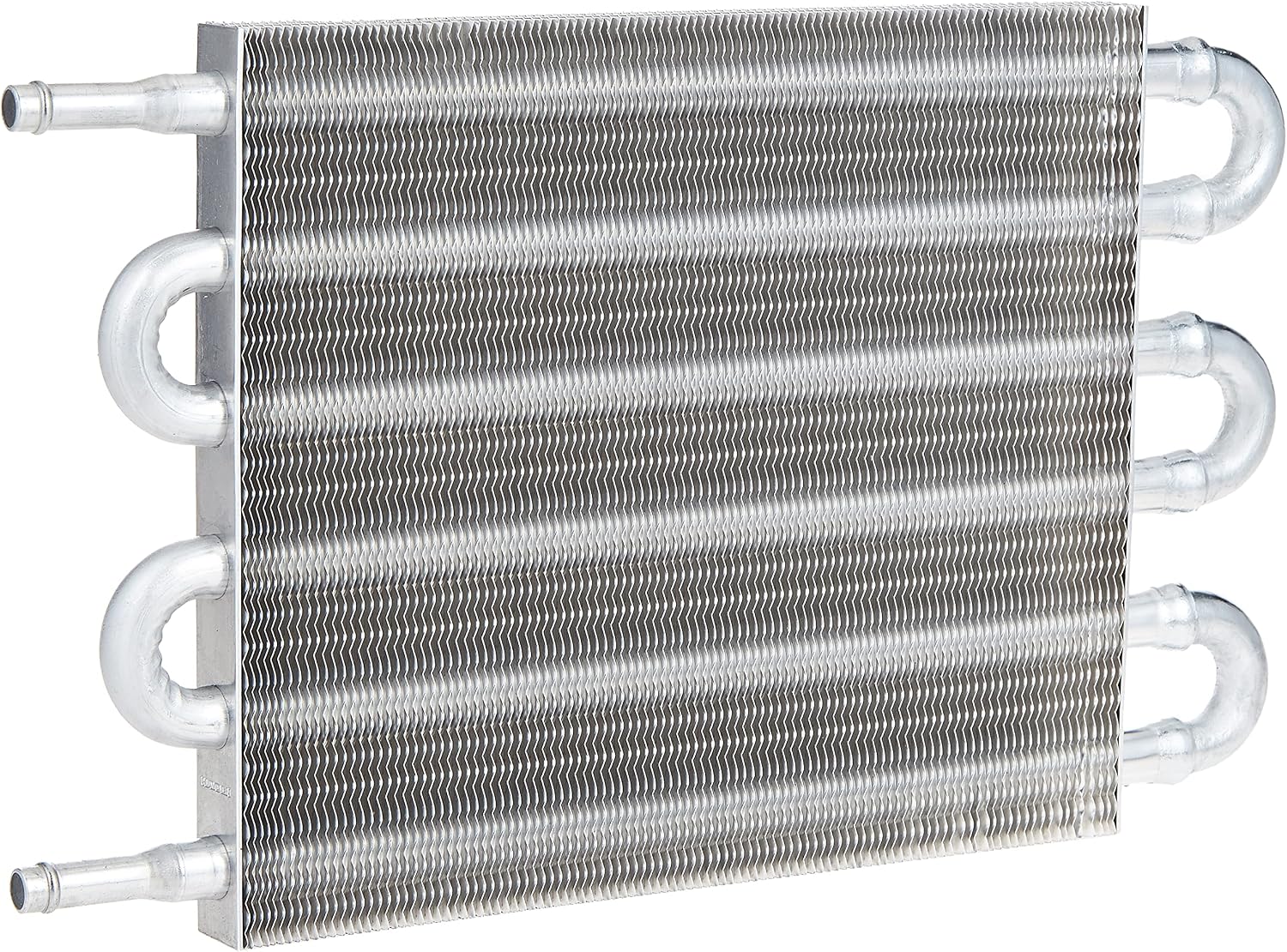
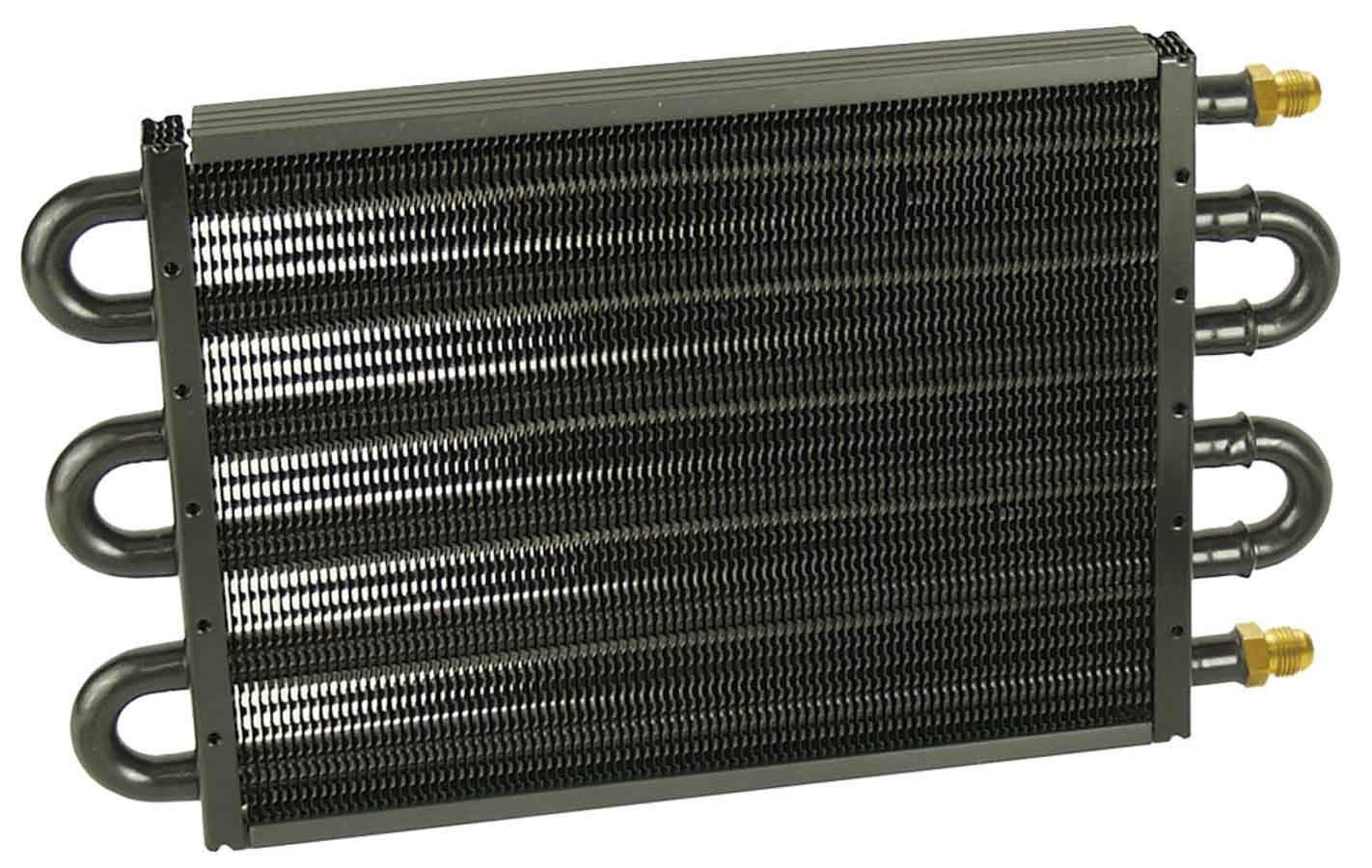
On a hot-running truck or anything that tows, this is also the time to add an auxiliary cooler. Plumb it in series after the radiator tank cooler so fluid is warmed by the radiator first and then cooled below coolant temperature before it returns as lube oil. Use the same line size or larger the whole way through.
Cooler line flaring tools, auxiliary coolers, filters, pan gaskets and rebuild parts for the 700R4, shipped fast from the USA.
Shop 700R4 parts →FAQ
What thread are the 700R4 cooler line fittings?
The 700R4 case ports are 1/4-inch straight pipe thread, which adapter makers list as 1/4 NPS, NPSM or NSPT. Bowler Transmissions recommends pulling the stock adapter and measuring it; about 0.521 inch across the threads confirms the 1/4 NSPT port. Do not thread a tapered NPT fitting into the case.
Which 700R4 cooler line goes to the radiator?
Builders commonly document the lower case port as the feed to the cooler and the upper port as the return. Confirm it on the vehicle by disconnecting a line at the radiator, running it into a bottle, and idling the engine for a few seconds in Park. The line that flows is the feed.
What size cooler line does a 700R4 use?
Factory 700R4 lines are 5/16-inch steel tube. Going up to 3/8-inch tube or -6AN braided hose is fine because it lowers restriction. Never go smaller than stock or use fittings with a reduced bore.
How much cooler flow should a 700R4 have?
Sonnax's spec for a transmission with 5/16-inch cooler lines is a minimum of one quart in 20 seconds at operating temperature, and most healthy units produce a quart in about 10 seconds. Measure at the return line where it meets the transmission. Do not judge it on a cooler flush machine.
Can a bad cooler line damage a 700R4?
Yes. Oil returning from the cooler becomes lube oil for the rear of the unit, so a kinked, crushed or blocked line starves the rear planetary and bushings. Transmission Digest documented repeat rear-planetary meltdowns caused by nothing more than a reversed inline cooler filter.
Sources
- Sonnax — "Avoiding After-Overhaul Problems" (R&R checklist). Backs the cooler flow spec for 5/16-inch cooler lines (minimum one quart in 20 seconds; most healthy units about one quart in 10 seconds, checked at operating temperature), the warning not to judge flow on a cooler flusher, the forward/back/forward half-hour flush procedure, the return-line inline filter recommendation, and the line (flare-nut) wrench requirement for cooler line nuts. sonnax.com
- Sonnax — "Anatomy of a Transmission: Oil Flow in the Pump-PR-Converter-Cooler Lube Circuits" (Gregg Nader). Backs the explanation that pump, pressure regulator, converter charge and cooler/lube oil are connected in series, and that the PR valve prioritizes line pressure over converter/lube oil. sonnax.com
- Transmission Digest — "Repeat Catastrophic Lube-Related Failures" (Ed Lee, Sonnax TASC Force). Backs testing flow at the cooler return line at the transmission (one quart in 20 seconds minimum), the isolate-each-component method including auxiliary coolers, inline filters and check valves in cooler fittings, and the observation that cooler flow drops as line pressure rises under load. transmissiondigest.com
- Transmission Digest — "No Rear Lubrication" (Wayne Colonna, ATSG). Backs the repeat rear-planetary meltdown case caused by a reversed inline cooler filter acting as a one-way check valve, with good flow at the transmission and none at the radiator. transmissiondigest.com
- General Motors — Warranty Bulletin 17-NA-066, "Automatic Transmission Oil Cooler Flush and Flow Test." Backs the DT-45096 TransFlow flush and flow-test procedure for the cooler and cooler pipes using DEXRON-VI. static.nhtsa.gov (PDF)
- Bowler Transmissions — -06AN male to 1/4 NSPT cooler fitting (BPT-64052) fitment notes. Backs the 1/4 NSPT case port identification and the measure-the-stock-adapter method (about 0.521 inch for 1/4 NSPT versus the 9/16-18 alternative). bowlertransmissions.com