The 700R4 was never built around towing. It was GM's fuel-economy overdrive answer to the gas crunch, dropped behind trucks that previously ran a TH350 or TH400, and its 0.70 fourth gear exists to drop cruise RPM, not to carry trailer load. Hook a loaded trailer to one and the weak points show up fast: a 3-4 band and servo sized for light duty, a torque converter clutch circuit that is easy to starve of signal oil, and a cooling system that was adequate for commuting and nothing more.
None of that means the 700R4 can't tow. It means the fixes have to target the actual failure points — apply area, converter clutch integrity, and heat rejection — instead of throwing a generic "performance" part at it and hoping. Here is what actually moves the needle, in the order that matters.
Why the Factory Band and Converter Give Up First
Fourth gear on a 700R4 is carried by the 3-4 clutch and the overdrive band working together, applied by a small second-gear servo that was designed around a light-duty apply, not a loaded trailer pulling a grade. When that apply is marginal — weak line pressure, a slow-filling servo, worn friction material — the band and clutch spend more time in a partial slip condition before they fully lock. Partial slip under load is where heat comes from, and heat is what kills a 700R4, not mileage.
The torque converter clutch (TCC) compounds the problem. The 700R4 does not modulate the converter clutch the way a later electronic unit does — it is commanded fully on or fully off. If the TCC apply circuit is even slightly compromised, the clutch can end up in the same kind of partial-apply condition the band suffers from, except now it is happening inside the converter, right where the engine's full towing torque is passing through a fluid coupling that was never meant to slip for long. Every upgrade below is aimed at one of these two things: making the band/clutch apply fully and quickly, or making sure the TCC applies fully and stays applied.
1. The Corvette-Ratio 2nd Gear Servo
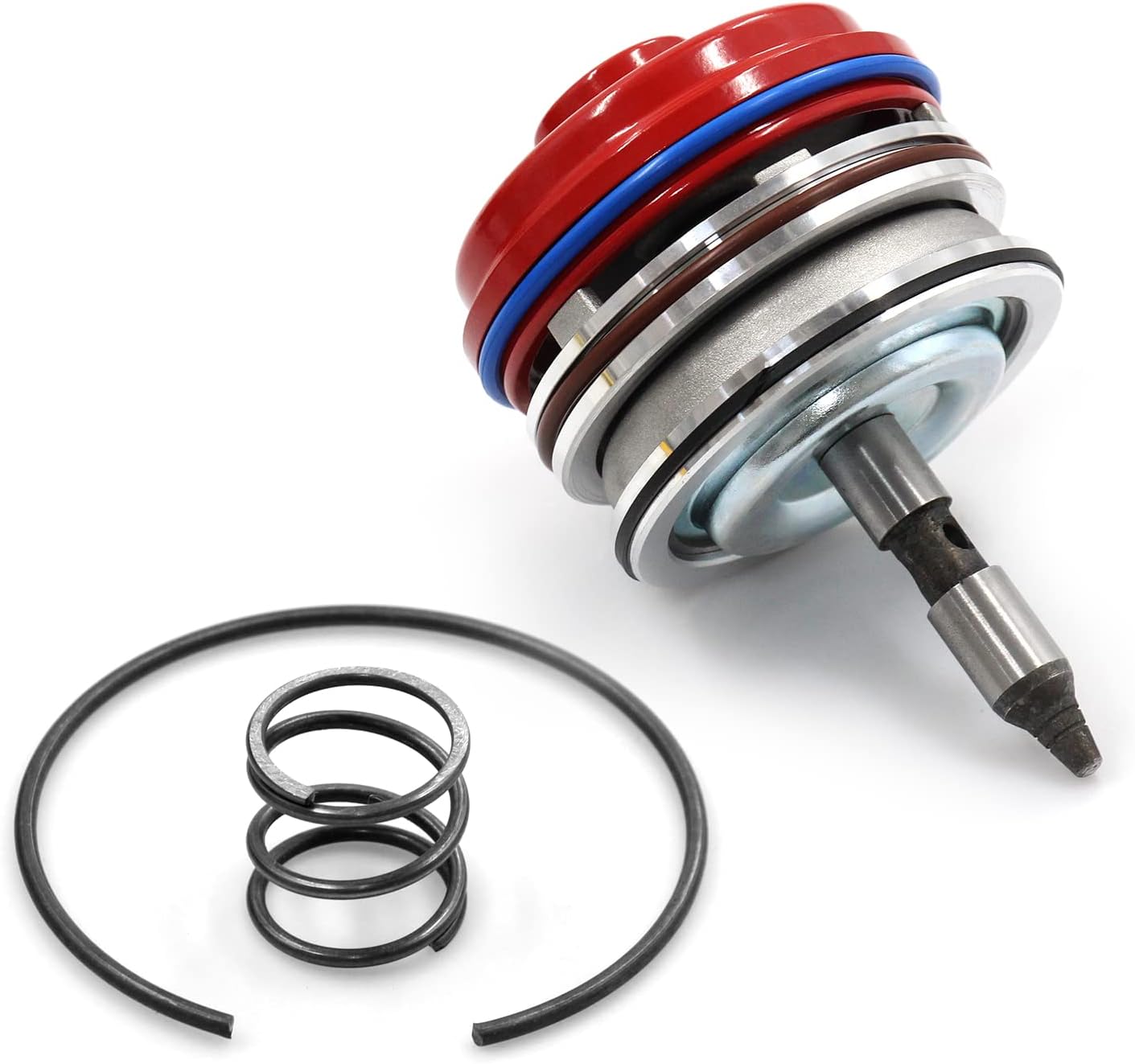
The common first move, and for good reason. Sonnax's 2nd Gear "Corvette" ratio servo kit (part 77701-04K) increases the servo's apply area to give firmer 1-2 and 3-4 shifts in the 4L60 (700-R4) and 4L60-E family, and Sonnax specifically lists it for high-performance and heavy-duty towing applications. The kit swaps in Viton D-ring seals in place of the factory seal rings for better sealing during apply and release, which matters as much as the extra area — a servo that applies fast and seals well spends less time in the partial-apply zone that burns friction material.
Sonnax also sells a matching 4th-gear dual-servo kit (77767K) specifically called out as compatible with the Corvette servo, built to address the same poor 3-4 shift quality and band wear this article is about. Running the two together gives both halves of the fourth-gear apply — the clutch pack and the overdrive band — more clamping force at the same time, instead of upgrading one and leaving the other as the new weak link.
2. A Shift Kit That Shortens the Slip Phase
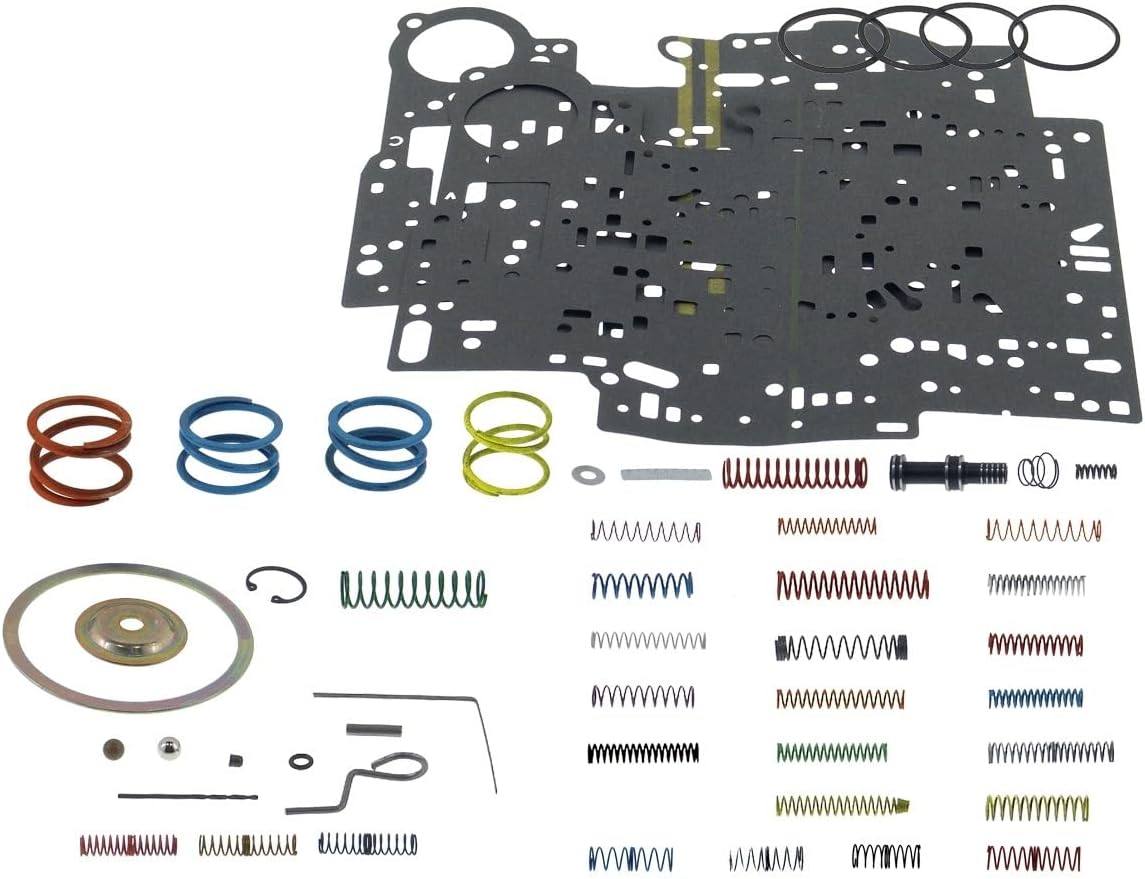
A servo adds area; a shift kit changes the timing and pressure curve that fills it. Shift kits modify the springs and check-ball circuits in the valve body so that line pressure ramps to full apply faster and more completely during a shift, rather than easing in gradually the way the factory calibration does for a soft, passenger-car shift feel. Under a trailer load that soft ramp-in is exactly what overheats a band or clutch pack, because the friction material is absorbing slip energy the entire time pressure is building.
Pair a shift kit with the Corvette and 4th-gear servos and you get a 3-4 shift that applies harder and faster, which sounds rough on paper but is the difference between the band working for half a second under full load versus a second and a half. That difference is most of the heat.
3. Fix the TCC Apply Circuit Before You Touch the Converter
This is the step towing guides skip, and it is the one that actually controls how hot the transmission runs on a long pull. The 700R4's TCC apply valve lives in the pump cover, and Sonnax documents that excessive pump bore-to-valve clearance lets TCC signal oil leak past the spool, which can prevent lockup, cause it to disengage when hot, or let the valve float to a mid-way position that restricts cooler flow and overheats the converter. That last symptom is the one towing exposes: a clutch that applies, slips slightly, and reapplies is generating heat continuously while the driver thinks the converter is simply "locked."
The second common point of failure is the plastic TCC solenoid snout used on the 700R4 and pre-1997 4L60E, which Sonnax documents as cracking where it contacts the plunger valve. A cracked snout leaks the oil meant for the TCC apply valve, and Sonnax lists the resulting symptoms as TCC apply concerns, an overheated converter, and loss of lube oil — all three of which are also exactly what a tow rig complains about. The fix is an aluminum replacement snout that does not crack, and it is cheap to inspect any time the pan is already off for a servo or shift kit install.
700R4 Governor Adjustment Kit with Springs and Weights
A loaded trailer changes the shift points you actually want. If the factory governor is worn or set up for an unloaded truck, fourth gear can engage earlier than it should under load — right into the band and converter weak points above. Correcting governor response is a cheap companion to the servo and TCC work.
See the governor kit →TV Cable and Line Pressure: Non-Negotiable Under Load
The 700R4 sets line pressure through the TV cable rather than a true throttle-position sensor, and that cable is unforgiving under tow load. The adjustment procedure documented at 73-87.com is straightforward: locate the cable's D-shaped locking button on its manifold bracket, press it, slide the sleeve fully toward the firewall, then move the throttle to wide-open with the engine off and listen for the sleeve to ratchet into its self-adjusted position, confirming it returns smoothly with no binding when the throttle releases.
What towing actually exposes is what happens when that cable is even slightly loose: TV pressure that's too low produces main line pressure that's too low, and the same source is direct about where that leads — it will eventually burn the transmission's clutches. A cable adjustment that was "close enough" for commuting is not close enough once the engine is working harder against a trailer and asking the transmission for proportionally more clamping force it isn't getting. Check and correct the cable before any servo or cooler upgrade; a misadjusted cable will undo all of them.
Cooling: The Lever That Decides How Long Any of This Lasts
Every mechanical fix above reduces how much heat gets generated. Cooling decides how much of that heat sticks around. Automatic transmission fluid's working life is brutally temperature-sensitive: fluid run at a normal operating temperature gives roughly 100,000 miles of service, but for every 20-degree rise above that baseline, the oxidation rate doubles and useful fluid life is cut in half — so a transmission running 40 degrees hot on a long tow isn't just uncomfortable, it's burning through fluid life on a curve, not a line.
| Approximate ATF Temperature | Approximate Fluid Life |
|---|---|
| 175°F | 100,000 miles |
| 195°F | 50,000 miles |
| 212°F | 25,000 miles |
| 235°F | 12,000 miles |
| 255°F | 6,250 miles |
| 275°F | 3,000 miles |
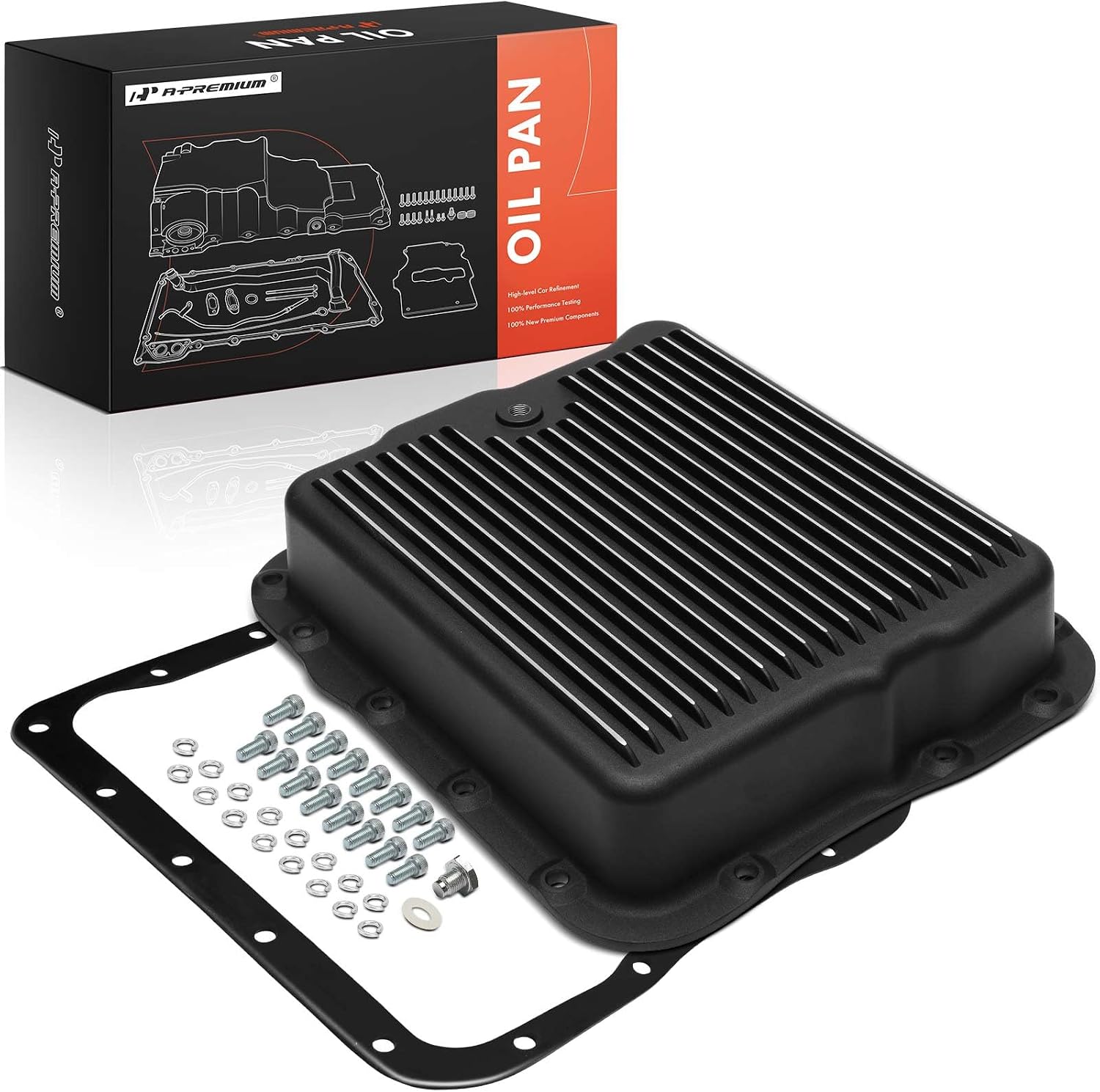
Two changes address this directly. First, a deeper finned aluminum pan adds standing fluid volume and exposes more surface area to airflow, which lowers the average running temperature before the fluid ever reaches a cooler. Second, run that fluid through an auxiliary cooler in series with the factory in-radiator cooler rather than relying on the factory cooler alone — the factory circuit was sized for a passenger car's heat load, not a loaded trailer on a grade in August. A transmission temperature gauge is the only way to know whether either change actually worked; don't guess.
Cooler size only helps if oil is actually moving through it, and under tow load that flow drops. Sonnax TASC Force member Ed Lee, writing in Transmission Digest, notes that cooler flow falls as line pressure rises with throttle, and that a heavy truck towing on a long grade can see cooler flow fall to almost zero. On a 700R4 that return oil is also the lube supply for the back of the unit, so a restrictive add-on (an undersized line, a reduced-bore fitting, an inline filter installed backward) costs you cooling and lubrication at the same time. Before trusting any cooler upgrade, flow-test it hot. Sonnax's after-overhaul checklist puts the minimum for a transmission with 5/16-inch cooler lines at one quart in 20 seconds, with most healthy units producing a quart in about 10 seconds. Measure at the return line where it meets the transmission, and do not judge it by how the cooler flowed on a flush machine. The 700R4 cooler line replacement guide covers the fittings, line sizes and test procedure step by step.
Don't Tow in Overdrive on a Load
This is the habit that undoes every upgrade above if it isn't broken. Fourth gear is the 700R4's smallest-margin gear for a reason — it exists for light-load highway cruise, not for carrying trailer weight up a grade. Running overdrive loaded puts maximum torque through the weakest band apply and asks the TCC to hold lockup at the point where it's least likely to be fully clamped if anything upstream (the valve bore, the solenoid snout, the TV cable) is even slightly off. Manually holding 3rd (direct, 1:1) on grades and under sustained pull keeps torque multiplication in the gear built to handle it and takes the band and converter out of their worst-case condition entirely. It costs a little fuel economy. It's free compared to a rebuild.
Order of Operations
- Set the TV cable correctly and confirm line pressure rises with throttle before changing anything else.
- Pull the pan, inspect the TCC solenoid snout for cracks, and vacuum-test or replace the TCC apply valve if the bore is worn.
- Install the Corvette 2nd gear servo and the matching 4th-gear dual servo together, not one without the other.
- Add a shift kit to shorten the slip phase during the 3-4 shift.
- Check governor response against the loaded vehicle's actual shift points.
- Add a deeper finned pan and a series auxiliary cooler, and verify the result with a temperature gauge.
- Change driving habit: hold 3rd under load, use overdrive only on light, flat cruise.
None of this turns a 700R4 into a heavy-duty unit. It turns a transmission that was never designed to tow into one that can do it without quietly cooking itself on every grade.
FAQ
Should I tow in overdrive with a 700R4?
Not on a grade or under sustained load. Overdrive is a 0.70 ratio handled by the smallest, lowest-apply-area band, and pulling heavy in that gear is the fastest way to cook the 3-4 band and the converter. Hold 3rd (direct) when loaded and climbing, and save overdrive for flat, light-load cruise.
What's the single best upgrade for towing with a 700R4?
A verified, fully-applying torque converter clutch. A locked converter removes fluid-coupling slip, the single biggest heat source in the drivetrain under load. Check the TCC apply valve bore and solenoid snout before spending money on anything else — a converter that lightly slips while "locked" makes heat exactly when towing load is highest.
How big should my auxiliary cooler be?
Big enough that it's never the bottleneck. The factory cooler was sized for a passenger car, and running 20 to 40 degrees hotter than the roughly 175°F design point cuts fluid life in half for every 20-degree step. Run a stacked-plate auxiliary cooler in series with the factory cooler, add a deeper finned pan for more standing volume, and confirm the gain with a temperature gauge.
Does a shift kit help with towing?
Yes. The failure mode under load is a clutch or band that takes too long to fully apply, not one that shifts too hard. A shift kit changes the spring and check-ball circuits that control how fast line pressure ramps to full apply, shortening the slip phase where friction material absorbs the most heat.
What torque converter should I run for towing?
One matched to the stock stall range and the 700R4's non-modulated TCC apply strategy, not a loose high-stall unit borrowed from a street build. A converter built for the wrong apply strategy is a documented cause of clutch shudder on this transmission. If the current converter has towed for years, have the TCC clutch and apply components inspected before assuming a new converter alone fixes a heat complaint.
Related 700R4 guides
Sources
- Sonnax — 2nd Gear "Corvette" Ratio Servo Kit (77701-04K) product information, GM 4L60 (700-R4), 4L60-E, 4L65-E, 4L70-E. Backs the increased apply area for firmer 1-2 and 3-4 shifts, the listing for high-performance and heavy-duty towing applications, the Viton D-ring seal upgrade over the factory seal rings, and compatibility with the matching 4th Gear Super Hold Dual Servo Kit (77767K) addressing the same band wear and shift-quality issue. sonnax.com
- Sonnax — TCC Apply Valve Kit (77805-K) product information, GM 200-4R, 4L60 (700-R4), 4L60-E (non-PWM). Backs the cause statement that excessive pump bore-to-valve clearance lets TCC signal oil leak past the spool, preventing lockup or causing disengagement when hot, and the mid-way valve float that restricts cooler flow and can overheat the converter. sonnax.com
- Sonnax — TCC Solenoid Snout Kit (77942-01K) product information, GM 4L60 and 1996-and-earlier 4L60-E. Backs the factory plastic snout cracking where it contacts the plunger valve, the resulting TCC apply concerns, overheated converter, and loss of lube oil symptoms, and the aluminum replacement snout as the fix. sonnax.com
- 73-87.com — "700R4 Throttle Valve (TV) Cable Adjustment." Backs the TV cable adjustment procedure (D-button release, sleeve slide to the firewall, wide-open-throttle ratchet-in, smooth return check) and the direct statement that low TV pressure produces low main line pressure and will eventually burn the transmission's clutches. 73-87.com
- Niehoff Automotive Technical Tips, ATF temperature vs. fluid life data, as reproduced at v8sho.com. Backs the approximate ATF service-life-versus-temperature figures (100,000 miles at 175°F down to 3,000 miles at 275°F) and the doubling of oxidation rate, halving of fluid life, for every 20-degree temperature increase. v8sho.com
- Transmission Digest — "Repeat Catastrophic Lube-Related Failures" (Ed Lee, Sonnax TASC Force). Backs the statement that cooler flow decreases as line pressure rises with throttle, falling to almost zero when towing on a long grade, and the method of testing flow at the cooler return line (one quart in 20 seconds minimum). transmissiondigest.com
- Sonnax — "Avoiding After-Overhaul Problems." Backs the cooler flow specification for transmissions with 5/16-inch cooler lines (minimum one quart in 20 seconds at operating temperature; most healthy units about one quart in 10 seconds) and the warning not to judge cooler flow on a flush machine. sonnax.com