Heat is what actually kills a 700R4. Not mileage, not age — heat. The unit was built in the early 1980s with a converter clutch that is either fully on or fully off, a cooler circuit that shares its heat sink with the engine's cooling system, and two specific internal wear points that quietly turn "locked up" into "slipping and generating heat" without the driver ever seeing a warning light. Most of the overheating complaints that end with a cooked converter or a burnt clutch pack trace back to one of those two wear points, a cooling system that was never sized for anything beyond stock duty, or both at once.
This is not a generic "add a cooler" article. It covers the actual mechanism — why the 700R4 runs hot, where the heat comes from internally, what to check before buying a cooler, and the fluid-life math that explains why it matters as much as it does.


Why the 700R4 Runs Hotter Than It Should
The 700R4's torque converter clutch is a simple on/off device, not the pulse-width-modulated, gradually-applying lockup used on the later 4L60E. When it's commanded to lock, it either locks cleanly or it doesn't — there's no partial-apply strategy by design. The problem is that two specific internal wear points can create partial apply by accident, and a converter that's "locked" but still slipping even a little generates heat continuously, right at the point where the engine's full torque is passing through what's supposed to be a solid mechanical connection instead of a fluid coupling.
On top of that, the factory cooling circuit is an oil-to-water (OTW) design built into the radiator's end tank. It's compact and efficient, but it transfers transmission heat into engine coolant that is itself commonly running 210 degrees F or more. That creates a hard floor on how cool the fluid can get through the factory circuit alone, no matter how healthy the transmission is internally. Add a worn internal leak point on top of that floor, and the fluid temperature climbs fast.
The Two Internal Leak Points That Cause Most Overheating
Before buying a bigger cooler, these two wear points need to be ruled out, because neither one is fixed by adding cooling capacity — they create heat internally, inside the converter circuit, regardless of how good the cooler is downstream.
1. TCC Apply Valve Bore Wear
Sonnax documents this as a well-known issue on the GM 200-4R, 700R4, and non-PWM 4L60E: excessive pump bore-to-valve clearance lets TCC signal oil leak past the factory spool valve. That cross-leak can prevent lockup entirely, cause the converter to disengage once the fluid is hot, or — the version that actually overheats the unit — let converter feed oil combine with orificed signal oil and float the valve into a mid-way position that restricts cooler flow and burns up the converter. This is the failure mode to suspect when a 700R4 runs fine cold and gets progressively hotter the longer it's driven, especially under load, because the restriction gets worse as the valve settles into that mid-way position.
Sonnax's fix (kit 77805-K, non-PWM units only) is a precision hardened-steel valve with a PTFE seal that eliminates the cross-leak between converter signal oil and converter feed oil. It's a drop-in replacement that doesn't require machining, and it's worth checking any time the pan is off for another reason — this wear point doesn't announce itself until the heat has already been building for a while.
2. The Cracked TCC Solenoid Snout
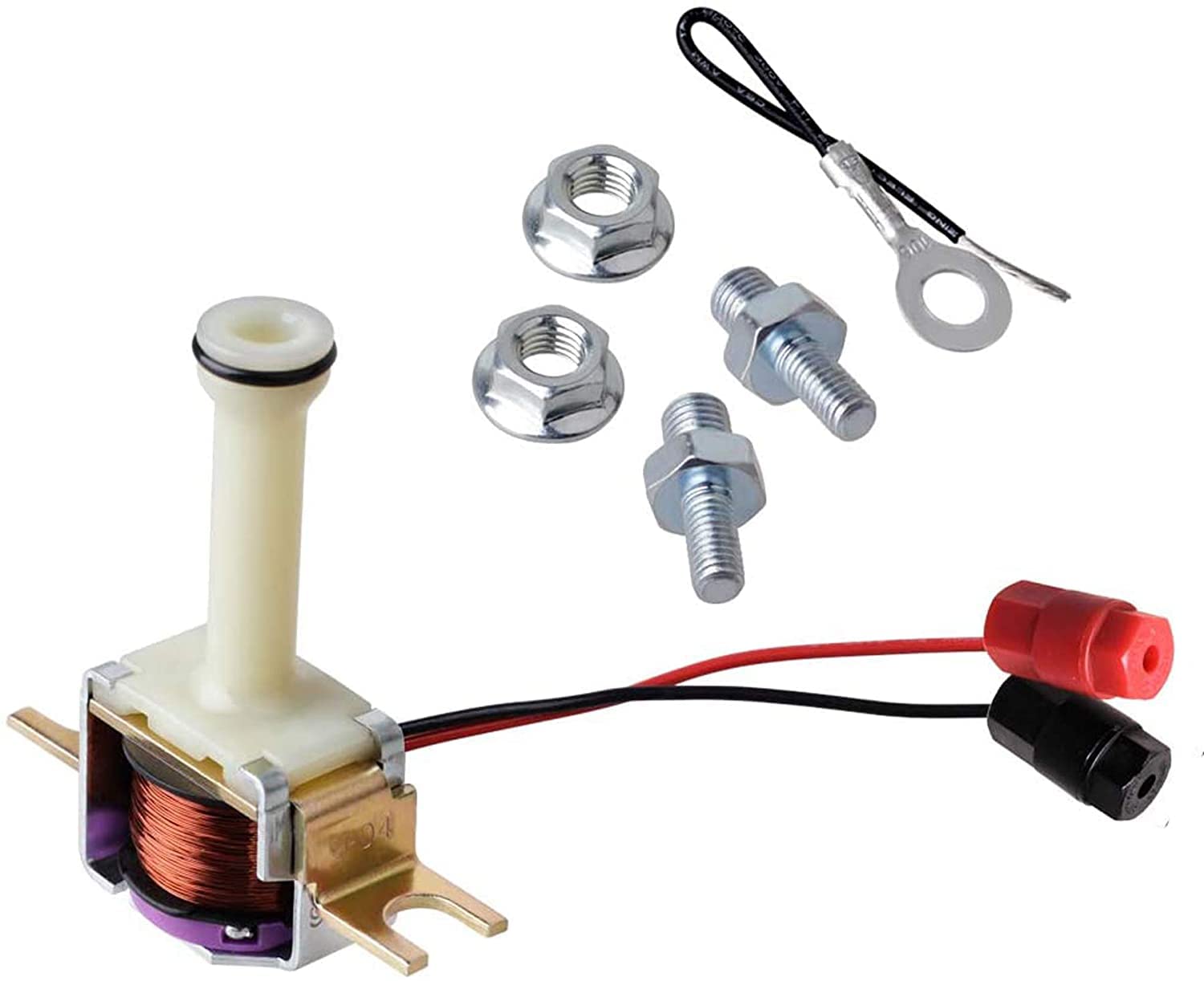
The second common failure is specific to the 700R4 and pre-1997 4L60E: a plastic TCC solenoid snout that Sonnax documents as cracking where it contacts the plunger valve. A cracked snout leaks the oil meant for the TCC apply valve, and Sonnax lists the resulting symptoms as TCC apply concerns, an overheated converter, and loss of lube oil — all three at once, because the same leak path feeds all three problems. This one is cheap to inspect (pull the pan, look at the solenoid snout for a visible crack at the plunger contact point) and cheap to fix with Sonnax's aluminum replacement snout (kit 77942-01K), which doesn't crack the way the factory plastic part does.
700R4 Torque Converter Lockup Control Kit
If TCC apply has been intermittent or absent for a while, the converter has likely been slipping instead of locking longer than anyone noticed, and the heat has been compounding that whole time. A lockup control kit restores a clean, reliable apply signal once the internal leak points above are confirmed and addressed.
See the lockup control kit →Why Bigger Isn't Always Better on Coolers
Transmission Digest's TASC Force Tips column on cooler sizing makes a point that gets missed constantly: the GVW rating printed on most aftermarket coolers is the total rating when that cooler is used in addition to the factory cooler, not as a replacement for it. Pull the OE cooler out of the loop and swap in an aftermarket unit alone, and the rating on the box doesn't apply the way it looks like it should.
The same column makes the physics plain: most transmission experts want ATF under roughly 200 degrees F, which is already a stretch when the factory cooler is dumping heat into engine coolant running 210 degrees F or hotter. Heat only flows from hot to cold, so an OTW cooler can never pull fluid below the coolant temperature it's sharing a wall with. And outside air temperature matters more than most people account for with oil-to-air (OTA) auxiliary coolers — the hotter the ambient air, the slower the rate of heat rejection. Worse, the torque converter generates the most heat exactly when climbing a grade under load, which is also when vehicle speed (and therefore airflow across an OTA cooler) is at its lowest. The cooling system is working hardest at precisely the moment it has the least air to work with.
The fix is a dedicated auxiliary cooler run in series with the factory in-radiator cooler, mounted where it gets clean airflow (not tucked behind the condenser with no fan backup), sized generously rather than to the bare minimum GVW number, and understood as a supplement to the factory cooler, not a replacement for it.
What the Heat Actually Costs: Fluid Life
Automatic transmission fluid's service life is brutally temperature-sensitive. Per the widely cited Niehoff Automotive Technical Tips data on ATF oxidation, the oxidation rate roughly doubles — and useful fluid life is cut in half — for every 20-degree F rise above a 175-degree baseline:
| Approximate ATF Temperature | Approximate Fluid Life |
|---|---|
| 175°F | 100,000 miles |
| 195°F | 50,000 miles |
| 212°F | 25,000 miles |
| 235°F | 12,000 miles |
| 255°F | 6,250 miles |
| 275°F | 3,000 miles |
That's the real cost of a 700R4 that runs even moderately hot: it isn't a comfort issue, it's a curve, and a transmission cruising at 235–255 degrees F is burning through a fluid change's worth of service life every few thousand miles. This is also where fluid choice has a small but real role. Fluid makers market modern Dexron VI-spec ATF, such as Mobil's Dexron VI product, as having improved oxidation and thermal stability and extended fluid life versus older Dexron and Mercon fluids — the published spec sheet doesn't put a number on how much better, but on a unit that runs hot for mechanical reasons, a better-spec'd synthetic fluid is a reasonable complement to fixing the leak points and cooling capacity. It is not a substitute for either.
Diagnosing an Overheating 700R4
The 700R4 predates OBD-II scan tools, so diagnosis here is mechanical and direct rather than PID-based:
- Install a real temperature gauge in the pan or a cooler line — don't trust a dash "hot light," which typically trips well after damage is already happening. A sender in the return line gives the most useful real-time number.
- Pull the pan and inspect the TCC solenoid snout for a visible crack at the plunger-valve contact point. This takes minutes and rules out (or confirms) the single most common internal leak cause.
- Check TCC apply valve bore clearance against Sonnax's published wear tolerance for the 77805-K kit, or simply install the precision replacement valve if the bore shows any measurable wear — it's a drop-in part, not a machining job.
- Confirm the TV cable is correctly adjusted. Low TV pressure produces low main line pressure, and low line pressure means more slip time (and more heat) during every shift and during converter apply.
- Compare cooler line temperatures by hand (carefully) at operating temperature. A pronounced difference between the feed and return lines can point to a restriction, which lines up with the mid-way valve float failure mode above.
Prevention Checklist
- Inspect and, if needed, replace the TCC solenoid snout before assuming the problem is external.
- Check TCC apply valve bore clearance and install the precision replacement valve if it's worn.
- Confirm correct TV cable adjustment and line pressure.
- Add a quality auxiliary cooler in series with the factory cooler — never as a replacement for it — sized above the bare minimum GVW rating.
- Mount the auxiliary cooler where it gets real airflow, not blocked behind other components.
- Run a real temperature gauge permanently, not just for diagnosis.
- Use a quality Dexron-spec fluid and don't stretch change intervals on a unit that tows or works hard.
None of this is exotic. It's the difference between treating overheating as a mystery and treating it as what it actually is: two specific, well-documented internal wear points, a cooling system with a hard physical floor, and a fluid that's dying faster than the odometer suggests.
FAQ
What temperature is too hot for a 700R4?
Keep ATF under roughly 200 degrees F if possible, which is already difficult because the factory cooler shares heat with engine coolant commonly running 210 degrees F or more. Every 20-degree rise above a 175-degree baseline roughly doubles the oxidation rate and cuts fluid life in half, so a 700R4 cruising at 220–240 degrees F is burning through fluid life on a curve.
Why does my 700R4 overheat only under load or towing?
Heat generation peaks exactly when airflow drops. The converter works hardest climbing a grade under load, which is also when vehicle speed — and cooling airflow — is lowest. If the TCC apply valve bore or solenoid snout is also worn, the converter is generating fluid-coupling heat on top of a cooling system already at a disadvantage.
Can a bad TCC solenoid cause transmission overheating?
Yes. Sonnax documents the factory plastic TCC solenoid snout cracking where it contacts the plunger valve, and the resulting leak produces TCC apply concerns, an overheated converter, and loss of lube oil at the same time. The fix is a replacement aluminum snout.
Does adding a bigger cooler actually fix overheating?
Only if the GVW rating is read correctly and an internal leak isn't the real cause. Transmission Digest notes that most aftermarket cooler GVW ratings assume the cooler is added to the factory cooler, not used in place of it. If a worn TCC apply valve is restricting cooler flow internally, no auxiliary cooler fully fixes that until the valve is replaced.
Is Dexron VI better than Dexron III for heat in a 700R4?
Fluid makers market Dexron VI-spec ATF as having improved oxidation and thermal stability and extended fluid life versus older Dexron and Mercon fluids, though published spec sheets don't give a specific temperature figure. It's a reasonable complement to the mechanical fixes above, not a substitute for them.
Related 700R4 guides
Sources
- Sonnax — TCC Apply Valve Kit (77805-K) product information, GM 200-4R, 700R4, 4L60-E (non-PWM). Backs the cause statement that excessive pump bore-to-valve clearance lets TCC signal oil leak past the spool, preventing lockup or causing disengagement when hot, and the mid-way valve float that restricts cooler flow and overheats the converter. sonnax.com
- Sonnax — TCC Solenoid Snout Kit (77942-01K) product information, GM 700R4 and 1996-and-earlier 4L60-E. Backs the factory plastic snout cracking where it contacts the plunger valve, and the resulting TCC apply concerns, overheated converter, and loss of lube oil symptoms, plus the aluminum replacement snout fix. sonnax.com
- Transmission Digest — "Transmission Coolers, Part 2," TASC Force Tips by Wayne Russell, published November 1, 2003. Backs the GVW rating caveat (total rating is in addition to the OE cooler, not a replacement for it), the roughly-200-degree-F target complicated by 210-degree-plus engine coolant, and the airflow-versus-heat-generation mismatch under load. transmissiondigest.com
- Niehoff Automotive Technical Tips, ATF temperature vs. fluid life data, as reproduced at v8sho.com. Backs the approximate ATF service-life-versus-temperature figures (100,000 miles at 175°F down to 3,000 miles at 275°F) and the doubling of oxidation rate, halving of fluid life, for every 20-degree temperature increase. v8sho.com
- Mobil — Dexron VI ATF product page. Backs the claim that Dexron VI-spec fluid is marketed with improved oxidation and thermal stability and extended fluid life relative to older Dexron/Mercon fluids. mobil.com