Delayed engagement on a 700R4 is a specific, narrow complaint: you move the selector into Drive or Reverse, there is a noticeable pause with the engine just sitting there at idle, and then the vehicle lurches into motion, sometimes with a clunk. That is different from a transmission that engages right away and then slips once you give it throttle, and it is different from a 700R4 that will not make the 3-4 upshift into overdrive. This article is only about the pause before the clutch grabs in the first place, because that pause has its own short list of causes and its own diagnostic order.
The 700R4 has no PCM and nothing to log a trouble code for this. Every signal that decides how fast the forward clutch or the low/reverse clutch fills and clamps is hydraulic: pump volume, regulated line pressure, and the condition of the piston seals that actually hold that pressure once it arrives. Work through the list below in order, because the first two items are the ones that mimic every mechanical failure further down and cost nothing to rule out.

Rule out fluid, level, and filter first
Low fluid starves the pump of the volume it needs to fill the clutch circuit quickly, and that alone produces a two-to-four-second pause before engagement that disappears the moment the level is corrected. Overfill does the opposite kind of damage: fluid gets churned past the vent, foams, and the aerated fluid that results is compressible, which means the pump can spin all day without building the firm, steady pressure a piston needs to clamp. A cracked suction filter or a torn filter seal produces the same symptom by letting the pump pull air on every cold start, which is why a delayed-engagement complaint that is worst in the morning and gone by the time the truck is warm often turns out to be nothing more than a cracked filter neck.
Fluid type matters here too, and it is easy to get wrong on a transmission this old. GM's own ACDelco service guidance is explicit that pre-2005 GM transmissions like the 700R4 call for ATF Type III(H), not DEXRON VI and not the fully synthetic DEXRON ULV used in modern 10-speeds — the guidance states plainly that "a misapplication could cause performance issues" and that ULV in particular is not a suitable replacement for the older fluid. Check the level with the engine warm and running, vehicle level, and set it to the HOT mark, then move on to the hydraulic checks below if the pause is still there.
Pressure regulator valve bore wear: the most common mechanical cause
If fluid and filter check out clean, the pressure regulator valve bore in the pump cover is the next and most common place this problem lives. This valve is what sets and holds main line pressure, and both the forward clutch and the low/reverse clutch depend entirely on that regulated pressure to apply. Sonnax's technical documentation for the GM 4L60 (700R4) and 200-4R oversized pressure regulator valve identifies bore wear as a direct cause of erratic line pressure, low line rise, and clutch slippage, with a dynamometer test showing pressure running 50 to 100 psi below specification in Reverse on a worn unit. A bore that has opened up from normal wear lets regulated fluid leak back toward exhaust instead of building toward the clutch circuit, which means the piston takes measurably longer to see enough pressure to clamp — the exact mechanism behind a pause before engagement.
This is also the cause most likely to get worse as the transmission warms up, not better, because thinner hot fluid leaks past a worn bore far more readily than cold, viscous fluid does. If your delay is mild on a cold start and stretches out noticeably after ten or fifteen minutes of driving, this bore is the leading suspect over fluid or filter issues, which tend to show the opposite pattern.
The fix is a pump cover rebuild: ream the worn bore and install an oversized regulator valve sized to the actual wear, which restores the original pressure-regulating seal without replacing the whole pump cover casting.
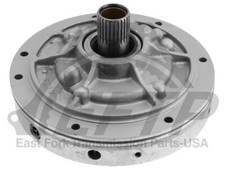
700R4 Pump
When the regulator bore in the existing pump cover is worn beyond what a reamer kit can correct, or the pump has other wear alongside it, a complete pump assembly is the more reliable fix than chasing one bore.
View the 700R4 pump →Worn or cut forward clutch piston seals
If line pressure tests to specification at the pump but the delay is still there, the next place to look is the clutch piston itself. The forward clutch piston and the low/reverse piston each rely on a seal, historically a cast lip seal or molded rubber seal on this platform, to hold apply fluid behind the piston face long enough to build clamping force. A seal that is cut, hardened with age, or simply worn thin from mileage lets some of that apply volume bypass the piston instead of building pressure behind it, so the piston takes longer to travel and clamp even though the pump and regulator are both delivering correct pressure upstream. Sonnax's 700R4/4L60 performance build guide lists reinforced piston and sprag components, including a Smart-Tech clutch kit and a heavy-duty overrun clutch hub, specifically as durability upgrades over the factory parts in this circuit, which reflects how commonly the OE piston seals and sprag wear on units with real mileage on them.
This is harder to diagnose without dropping the pan and pulling the drum, since the symptom overlaps with regulator bore wear from the driver's seat. The practical test is a line pressure check at the pump: if pressure is within spec there but the engagement delay persists, the leak is downstream in the clutch circuit, not in the regulator.
Throttle boost circuit leakage: a secondary contributor
The TV boost valve in the pump body raises line pressure above its base value in proportion to throttle signal, and a worn boost valve bore lets some of that boosted pressure bleed across into the Reverse boost circuit instead of staying isolated. Sonnax's documentation for its drop-in TV boost valve kit covers this directly for GM 200-4R and 4L60 transmissions: the usual complaint it is sold to fix is repeated burned bands and 3-4 clutches from throttle boost oil leakage, but the same worn bore reduces the ceiling on available line pressure overall, which compounds a marginal pressure regulator or a slightly worn piston seal rather than causing a garage-shift delay by itself in a transmission that is otherwise healthy. Treat this as a contributing factor to check once the regulator and clutch circuit are confirmed, not a first suspect on its own.
Before blaming any of the hardware above, rule out a cable that just needs adjusting. ATRA's Gears Magazine republished its own THM700-R4 TV cable adjustment procedure specifically because a cable that is out of position feeds the wrong throttle-position signal into the same boost circuit, which changes line pressure the same way a worn boost valve bore does. The coarse adjustment is done with the engine off: press the release button on the slider housing, push the inner jacket fully back toward the firewall, then floor the pedal to wide-open throttle so the slider self-adjusts, before fine-tuning against observed shift points on a test drive. It costs nothing but ten minutes and should be checked before a pump or boost valve kit goes on the bench.
How to actually test it instead of guessing
The 700R4 predates OBD and, on 1982-86 units, predates the TCC solenoid entirely, so there is no scan tool PID that tells you anything about line pressure or clutch volume. A hydraulic line pressure test at the pressure tap on the driver's side of the case, compared against the factory specification for your exact model year and application, is the single most useful diagnostic step and the one Sonnax's own documentation uses to validate regulator bore wear in the first place. Run it in Park or Neutral at idle, then again at a fast idle, and compare both readings against spec rather than against each other, since a transmission that is low across the board at every RPM points at the regulator or pump, while one that is fine at idle but falls off under load points more at the clutch circuit or the boost valve.
Pair the pressure test with a simple stall test and a look at the fluid on the dipstick. Burnt, dark fluid with a sharp varnish smell on a transmission with a slow garage shift tells you the clutch has already been slipping during that delay for a while, which pushes the diagnosis toward worn piston seals over a simple fluid service.
Putting it in diagnostic order
| Symptom pattern | Most likely cause | How to confirm |
|---|---|---|
| Delay worst on cold start, gone once warm, fluid never serviced | Low fluid, overfill, or cracked filter | Set level to HOT mark with engine warm and running, inspect filter, retest |
| Delay present at all temperatures, line pressure low across idle and fast idle | Worn pressure regulator valve bore | Line pressure test at the tap vs. factory spec; compare to the 50-100 psi low-in-Reverse pattern |
| Delay gets longer as the fluid warms up over a drive | Worn pressure regulator bore or cut clutch piston seal (thinner hot fluid leaks more) | Pressure test hot vs. cold; if pressure holds spec hot, suspect the piston seal instead |
| Line pressure tests to spec at the pump, delay still present | Worn or cut forward/low-reverse clutch piston seal | Pan drop, pull drum, inspect piston seals and sprag |
| Delay plus repeated 3-4 clutch burn-up after a prior rebuild | TV boost valve bore leakage compounding the above | Inspect/replace boost valve and sleeve in the pump body |
Fluid and filter cost nothing but ten minutes and rule out the two causes that mimic every hydraulic fault on this list. The line pressure test is the next ten dollars of shop time and tells you whether you are chasing the pump cover or the clutch drum before you pull anything apart.
FAQ
What causes a 700R4 to pause before engaging Drive or Reverse?
Delayed engagement means the forward or low/reverse clutch piston is taking too long to fill with fluid and build clamping pressure after you move the selector. The four most common causes are low or degraded fluid starving the pump, a worn pressure regulator valve bore in the pump cover letting line pressure leak off before it reaches the clutch, a worn or cut forward clutch piston seal that lets apply fluid bypass instead of building pressure behind the piston, and a worn pump itself that simply cannot produce enough volume. None of these trigger a code, because the 700R4 has no PCM to log one.
Does delayed engagement get worse when the transmission is warm or cold?
Both patterns happen but point at different problems. A delay that is worst on a cold start and clears up once the fluid warms is usually a fluid level, condition, or filter issue, since cold ATF is thicker and slower to prime the pump. A delay that is mild cold but gets noticeably longer as the fluid warms and thins out points at worn bore clearances or a cut piston seal, because thinner fluid leaks past worn metal-to-metal or seal surfaces more easily than cold, thick fluid does.
Can a worn pressure regulator valve cause delayed engagement in a 700R4?
Yes. Sonnax's technical documentation for the GM 4L60 (700R4) and 200-4R pressure regulator valve identifies bore wear in the pump cover as a direct cause of erratic and low line pressure, with symptoms including clutch slippage and measured pressure 50-100 psi under specification in Reverse during dyno testing. Since both the forward clutch and the low/reverse clutch depend on that same regulated line pressure to apply, a worn bore delays how fast either one can build enough pressure to clamp, which shows up in the driveway as a pause before the vehicle moves.
Is delayed engagement dangerous to keep driving on?
It will not strand you immediately, but it is a warning sign, not a quirk to ignore. Whatever is causing the delay, whether low line pressure or a leaking piston seal, is also reducing the clamping force available once the clutch does engage. A unit that is marginal on apply pressure wears its friction material faster every time it slips before grabbing, and a clutch pack that has been slipping on partial engagement for months is a much more expensive repair than catching a worn pressure regulator valve or a bad seal early.
Will changing the transmission fluid fix a 700R4 delayed engagement problem?
It is always the first and cheapest thing to try, and it does fix the problem when the cause is low fluid, old oxidized fluid, or a cracked suction filter pulling air into the pump. GM's own ACDelco service guidance calls for ATF Type III(H) in pre-2005 GM transmissions like the 700R4, not DEXRON VI or DEXRON ULV, and running the wrong fluid or the wrong level can itself produce the symptom. If a correct fluid and filter service does not resolve the delay, the cause is mechanical wear inside the pump or clutch circuit and a fluid change alone will not fix it.
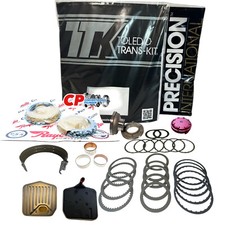
Pumps, pressure regulator valves, TV cables and complete rebuild kits for the 700R4 and 4L60 — shipped fast from the USA.
Shop 700R4 parts →Related 700R4 guides
Sources
- Sonnax — Oversized Pressure Regulator Valve 77917-06, product technical page. Backs the failure mechanism of pressure regulator valve bore wear in the GM 4L60 (700R4) and 200-4R pump cover, the resulting symptom list of erratic/low line pressure and clutch slippage, and the dynamometer-confirmed pattern of pressure running 50-100 psi below spec in Reverse. sonnax.com
- Sonnax — TV Boost Valve Kit 77917-500, product technical page. Backs the throttle boost circuit leakage mechanism in GM 200-4R and 4L60 (700R4) transmissions and its effect on available line pressure and clutch burn-up. sonnax.com
- Sonnax — "700-R4 (4L60) Performance Transmission Build Guide," tech resource article. Backs the forward clutch and sprag wear points on this platform and the reinforced piston/sprag components (Smart-Tech clutch kit, heavy-duty overrun clutch hub) built specifically to address factory piston seal and sprag wear. sonnax.com
- GM / ACDelco — "Use the Right Transmission Fluid," gmserviceinsights.com. Backs the correct DEXRON/ATF Type III(H) fluid specification for pre-2005 GM transmissions like the 700R4, and the warning that a fluid misapplication, including DEXRON ULV, can cause performance issues. gmserviceinsights.com
- ATRA — Gears Magazine, "A Look Back: Adjusting the THM700-R4 Throttle Valve Cable." Backs the coarse TV cable adjustment procedure (release button, inner jacket pushed fully back, wide-open-throttle self-adjustment) and the fine-tuning against observed 1-2 and 2-3 shift points on a test drive. gearsmagazine.com