A 700R4 that refuses to shift into overdrive is not throwing a code, because there is no PCM on this transmission to throw one. Everything that decides when the 3-4 shift happens is mechanical: governor pressure reading vehicle speed, TV cable pressure reading throttle position, and a spring-loaded shift valve that routes fluid to the 4th-gear servo and clutch pack once both signals agree it is time. When overdrive flat out will not engage, no matter the speed or throttle position, the fault lives in one of a short list of mechanical parts, not in a sensor or a solenoid.
Here is the actual order to check them in, with the mechanism behind each one, so you are not pulling a valve body before ruling out a ten-minute fix.


What "no overdrive" actually rules in and out
Before touching anything, separate three different complaints that people lump together as "no overdrive." The transmission can shift into 4th and immediately feel like it slipped or flared, which is a holding problem in the servo or clutch pack, not a shifting problem. It can shift into 4th under light throttle and drop back to 3rd the moment you apply load, which points at insufficient line pressure or boost pressure under the increased demand. Or it can simply never attempt the 3-4 shift at any speed, light or heavy throttle, which means the shift valve itself is not moving. Each of those three patterns narrows the list below considerably, so figure out which one you actually have before you start.
It helps to know exactly what 4th asks of the unit. Sonnax's powerflow breakdown of the 700R4/4L60 shows 4th gear using the 2-4 band and the 3-4 clutches together, with the forward clutch carrying 1st through 3rd. That gives you a clean road test, which Transmission Digest describes for this family: put it in manual 2, get to cruising speed, then move the lever to Overdrive. If it stays in a second-gear ratio where 4th belongs, the forward clutch and 2-4 band are holding and the 3-4 clutch is not. If it makes the shift and holds, the hard parts are fine and the problem is upstream in the TV cable, pressure or shift valve circuit covered below.
Check the TV cable adjustment first
The TV cable is the single most common cause of a 700R4 that will not make the 3-4 shift, and it is also the cheapest thing on this list to check. The cable sets both line pressure and TV pressure based on throttle position, and both of those pressures factor into when the shift valve moves. A cable adjusted too tight holds TV pressure artificially high even at low throttle, which raises the shift point for every upshift, including 3-4, and can push it high enough that it effectively never happens under normal driving.
To check it, with the engine off, depress the metal readjust tab on the cable's slider housing at the throttle body or carburetor bracket and push the slider fully back toward the firewall until it stops, then release the tab. Rotate the throttle linkage by hand, not with the accelerator pedal, to the wide-open-throttle stop. This lets the slider self-adjust to the correct length for your linkage geometry. Transmission Digest's own technical writeup on this exact cable design describes the same coarse-adjust method — push the release button, push the cable's inner jacket back toward the mounting bracket, then run the linkage to full throttle by hand with the engine off to let the cable set itself — before fine-tuning on a test drive. If the cable was holding noticeable tension at idle before you reset it, that tension was artificially advancing every shift point in the transmission, overdrive included, and the Sonnax technical data cited below is direct that the mirror-image failure, low TV/boost pressure, is what burns the 3-4 clutch pack.
700R4 TCI Universal TV Kickdown Cable
If the factory cable housing is stretched, kinked, or the self-adjusting slider has lost its ratchet teeth, replace it rather than fighting a worn cable back into spec.
Shop 700R4 parts →Leaking TV boost valve bore: the cause behind repeated 3-4 clutch failure
If the cable checks out correct and the transmission still will not shift into 4th, or shifts in briefly and burns the clutch pack again shortly after a rebuild, the TV boost valve circuit is the next suspect. Sonnax's technical documentation for its drop-in TV boost valve kit identifies this directly: a common problem in GM 200-4R and 4L60 (700-R4) transmissions is burned bands and 3-4 clutches, and the root cause is throttle boost oil leakage past a worn TV boost valve bore in the pump body. As the bore wears, pressure that should stay isolated to the throttle and Reverse boost circuits leaks across, which both disrupts the pressure signal the shift valve is reading and starves the 4th-gear clutch pack of the holding pressure it needs once it does engage.
Sonnax's fix is a hardened steel drop-in valve and sleeve with O-ring seals that isolate the throttle pressure circuit from the Reverse boost circuit and seal the outside diameter of the sleeve against the pump body, available in multiple bore sizes to match how far the original bore has worn. This is a pump-body-level fix, not a full rebuild, which is why it shows up as a repeated-failure pattern rather than a one-time event: a transmission with this wear will burn a freshly installed 3-4 clutch pack again unless the bore itself gets addressed.
4th-apply servo seal failure: shifts attempt but can't hold
The band and clutch servo on a 700R4 is two separate pistons sharing one bore: an inner piston that applies the band in 2nd gear, and an outer piston, sealed by a Teflon ring, that applies the 3-4 clutch pack for 4th gear. If that outer piston's Teflon seal is cut, missing, or has hardened with age, fluid meant to apply 4th gear leaks past it instead of building apply pressure. The practical result is a transmission that can attempt the 3-4 shift, since the shift valve and governor and TV signals are all fine, but cannot generate enough clamping force at the clutch pack to actually hold the gear, so it either refuses to complete the shift under any real load or shifts in and immediately flares.
This is also the piston most commonly damaged during a sloppy pan drop or a previous rebuild, since the outer seal can be nicked or knocked loose by a tool pushed in at the wrong angle. Pulling the servo cover and inspecting both pistons and seals is a same-day job that does not require dropping the transmission, and it is worth doing before assuming the valve body is at fault.
4L60E/700R4 Corvette Servo Piston Assembly, Cover & Snap Ring
A complete servo assembly replacement resolves a cut or hardened 4th-apply Teflon seal without machining the case, when inspection confirms the servo is the problem.
View the servo assembly →Stuck 3-4 shift valve: the transmission never attempts the shift
If the fluid is clean and fresh, the TV cable is correctly adjusted, and the servo tests good, but the transmission runs cleanly through 1st, 2nd and 3rd and never even attempts a 4th-gear shift at any speed or throttle position, the 3-4 shift valve itself is the remaining suspect. Varnish buildup from old, oxidized fluid is the most common reason a spool valve sticks in its bore, and it affects the 3-4 valve disproportionately on higher-mileage units that have gone long stretches on the same fluid, because that valve sees less constant movement than the 1-2 and 2-3 valves and is more prone to gumming in place.
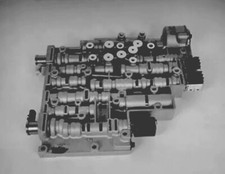
A full valve body swap resolves a stuck or worn 3-4 valve bore without machine work. This is also the point in the diagnostic order where a shift kit earns its place: a recalibration kit like TransGo's SK 700 replaces the separator plate and selected springs and valves to correct shift timing and line pressure response across the board, which addresses both a borderline sticky valve and the pressure-related causes above in one service. It is not a substitute for finding a genuinely cracked or leaking bore, but on a transmission with moderate mileage and no single catastrophic fault, it is a reasonable first move before a full valve body replacement.
700R4 Valve Body
When a stuck 3-4 valve or worn bore is confirmed, a complete valve body swap is faster and more reliable than chasing varnish out of the original casting.
View the valve body →Rule out fluid level and a cracked filter before any of the above
Both overfill and underfill produce delayed or incomplete engagement complaints that have nothing to do with worn hydraulic parts. Underfill starves the pump of the volume it needs to build pressure. Overfill pushes fluid past the vent and causes foaming and cavitation, and aerated fluid is compressible, meaning it cannot deliver the steady apply pressure the 4th-gear servo and clutch pack need to engage and hold. Once the level is confirmed correct, inspect the internal suction filter for cracks, since a cracked filter body or filter neck seal lets the pump pull air on a cold charge in a way that mimics every mechanical fault above.
Set the level correctly before testing anything else: top of the HOT band at 175°F, engine running, vehicle level. Full detail on the procedure and the dipstick mismatch that causes a false reading is in our 700R4 fluid type and capacity guide. Skipping this and going straight to a valve body is the most common way people spend real money on a problem fluid alone would have solved.
Use the right fluid when you top it off. GM's own service guidance lists ATF Type III(H) for 2005-and-earlier GM automatics originally filled with DEXRON, DEXRON II or DEXRON III, which covers every 700R4, and warns that the low-viscosity DEXRON ULV used in late 10-speeds is not a suitable replacement for the older fluids.
Putting it in diagnostic order
| Symptom pattern | Most likely cause | How to confirm |
|---|---|---|
| No 4th at any speed or throttle, other gears normal, fluid never checked | Low fluid, overfill, or cracked filter | Set level to top of HOT band at 175°F, inspect filter, retest first |
| No 4th, or very late/erratic 3-4 shift, cable tension felt at idle | TV cable adjusted too tight | Reset cable via the self-adjust procedure, road test |
| 3-4 clutch keeps burning after rebuild, or shift is inconsistent | Leaking TV boost valve bore | Inspect/replace boost valve and sleeve in pump body |
| Shift is attempted but flares, slips, or won't hold under load | 4th-apply servo seal failure | Pull servo cover, inspect outer piston and Teflon seal |
| Never attempts 3-4 shift at all, everything else checks out | Stuck 3-4 shift valve (varnish) | Valve body inspection or full valve body replacement |
Work this list top to bottom. Fluid and filter cost nothing but ten minutes. The TV cable costs nothing but a few more. Both rule out the two causes that mimic every hydraulic and mechanical fault on this list, which is why they come first, not last.
FAQ
Why won't my 700R4 shift into overdrive at all?
The 700R4 has no PCM and no shift solenoids for 1-2-3-4, so a complete no-overdrive complaint is a mechanical fault, not a code or a sensor. The four most common causes are a TV cable adjusted too tight, a worn TV boost valve bore letting pressure leak past, a cracked or worn Teflon seal on the 4th-apply (outer) servo piston, and a 3-4 shift valve stuck closed by varnish in the valve body. Low fluid or a cracked filter can produce the same symptom by starving line pressure before any of those parts actually fail.
Can a 700R4 get stuck in 3rd gear permanently?
Yes. If the 3-4 shift valve is stuck in its closed position, the transmission will run normally through 1st, 2nd and 3rd and simply never make the 3-4 upshift at any speed or throttle position, because the valve that routes fluid to the overdrive servo and clutch never moves. This is different from a transmission that shifts into 4th and then slips or bangs back to 3rd, which points at the servo or clutch pack holding, not the valve body routing fluid to them in the first place.
How do I check if my 700R4 TV cable is causing the no-overdrive problem?
With the engine off, depress the metal readjust tab on the cable's slider housing and push the slider fully toward the firewall, then release the tab. Rotate the throttle linkage by hand to the wide-open-throttle stop, not with the gas pedal, which lets the slider self-adjust to the correct length. If the cable was holding tension even at idle before this reset, it was too tight, and an overly tight TV cable raises line pressure and shift-point RPM enough that the 3-4 shift may not happen until well past where you expect it, or not at all under load.
Does a 700R4 use an overdrive solenoid or shift solenoid?
No. The 700R4 (later called the mechanical 4L60) shifts 1-2-3-4 purely hydraulically, using governor pressure for vehicle speed and TV cable pressure for throttle load acting on spring-loaded shift valves in the valve body. The only electrical component is the torque converter clutch (TCC) solenoid, which controls lockup inside 4th gear after the mechanical 3-4 shift has already happened, so a bad TCC solenoid affects converter lockup, not whether the transmission shifts into 4th at all.
Will a transmission fluid and filter change fix a 700R4 that won't shift into 4th?
Sometimes, and it is always the first thing to try because it costs the least. Low fluid starves the pump and reduces the pressure available to apply the 4th-gear servo and clutch. Overfill causes foaming and aeration, and aerated fluid is compressible, which can leave the 4th-apply components without enough steady pressure to move or hold. A cracked suction filter produces the same effect by letting the pump pull air on a cold start. If a correct fluid level and a clean filter do not restore overdrive, move on to the TV cable, servo and valve body checks.
Valve bodies, servos, shift kits and complete rebuild kits for the 700R4 and 4L60 — shipped fast from the USA.
Shop 700R4 parts →Related 700R4 guides
Sources
- Sonnax — TV Boost Valve Kit 77917-500, product technical page. Backs the root cause of repeated burned bands and 3-4 clutch failures in GM 200-4R and 4L60 (700-R4) transmissions: throttle boost oil leakage past a worn TV boost valve bore in the pump body, and the drop-in hardened-steel valve/sleeve fix with O-ring isolation between the throttle pressure and Reverse boost circuits. sonnax.com
- Sonnax — Oversized Pressure Regulator Valve 77917-06, product technical page. Backs the failure mechanism of pressure regulator valve bore wear in the GM 4L60 (700-R4) pump cover, the resulting symptom list including low line rise and 3-4 clutch failure, and the detection method of a line pressure test against factory specification. sonnax.com
- Sonnax — Smart-Tech Input Housing Kit 77733-06KA, product technical page. Backs the mechanism behind repeated 3-4 clutch pack burnup on the GM 4L60-series input housing that can follow a failed overdrive engagement attempt: a weak OE backing plate that flexes under apply load and builds heat unevenly across the pack. sonnax.com
- Transmission Digest — "Adjusting Infamous THM700-R4 Throttle Valve Cable" by Paul Townsend. Backs the coarse self-adjust reset procedure for this exact cable design: pressing the release button, pushing the cable's inner jacket back toward the mounting bracket, then running the throttle linkage to full throttle by hand with the engine off to let the cable set its own length before fine-tuning on a test drive. transmissiondigest.com
- Sonnax — "The Evolution of Automatic Transmissions Part 2: Inner Workings of Hydraulic Planetary Transmissions." Backs the 700R4/4L60 powerflow: forward clutch applied in 1st through 3rd, and the 2-4 band plus 3-4 clutches applied together for 4th (overdrive). sonnax.com
- Transmission Digest — "Diagnosing Shifting Issues." Backs the manual-2-to-overdrive road test: a unit that stays in a second-gear ratio where 4th belongs has the forward clutch and 2-4 band holding and the 3-4 clutch not holding. transmissiondigest.com
- GM / ACDelco — "Use the Right Transmission Fluid," GM Service Insights. Backs ATF Type III(H) as the fluid for 2005-and-earlier GM automatics originally specified for DEXRON, DEXRON II or DEXRON III, and the warning that DEXRON ULV is not a suitable replacement. gmserviceinsights.com