The 722.6 5-speed automatic has been in Mercedes-Benz products since the 1996 model year, and the same basic transmission went on to live as the Chrysler/Jeep NAG1 and inside Jaguar and Porsche products as well, which means there are a lot of these units on the road and a very well-documented set of ways they fail. Almost none of those failures are random. The 722.6's problems cluster around three specific weak points: an electronic plate that gets brittle with age, a valve body casting that wears in predictable spots, and a fluid specification that's easy to get wrong at a quick-lube counter. Here's what actually breaks, what it looks like from the driver's seat and on a scan tool, and what the real fix is for each one.

Conductor Plate Failure and Limp Mode
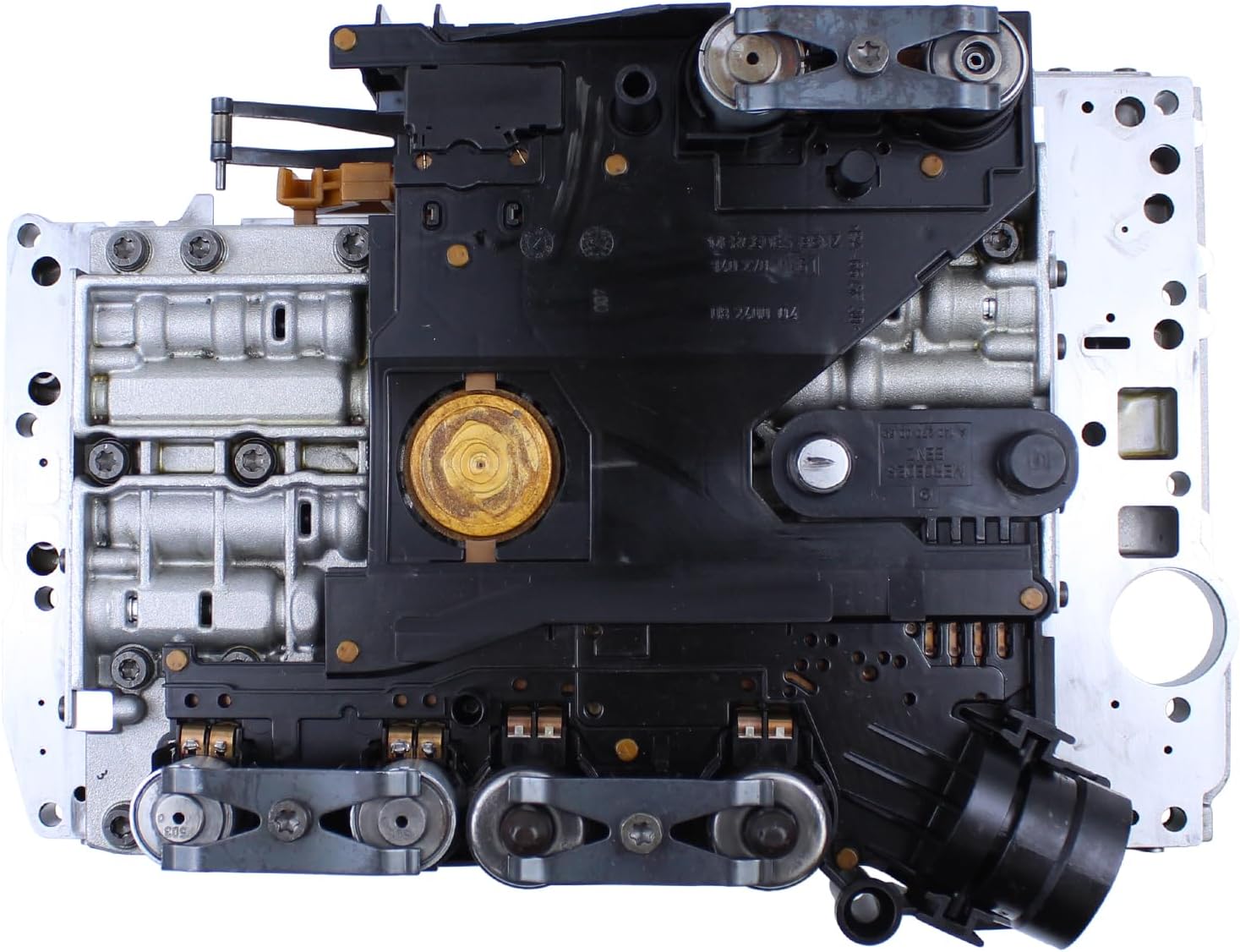
The conductor plate is the electronic plate bolted to the top of the valve body. It carries the N2 and N3 Hall-effect speed sensors, which track the speed of separate rotating members inside the unit, and it routes the signal and ground wiring for all six solenoids (three shift solenoids, the line pressure and shift pressure modulating solenoids, and the lock-up clutch solenoid) through molded-in contacts, per febi bilstein's technical bulletin on the 722.6 conductor plate instead of a bundle of loose wires. That design packs a lot of electronics into a small plastic housing sitting right above hot transmission fluid, and after years of heat cycling the plastic gets brittle. Hairline cracks form in the housing and in the molded sensor leads, which turns a once-reliable signal into an intermittent or dead one.
When the TCM loses a trustworthy reading from a speed sensor or sees a solenoid circuit it can't verify, it doesn't guess. It pulls the transmission into a protective default, which on the 722.6 almost always means locking the car in 2nd gear (sometimes 3rd) and lighting the check-engine or EML light. That's the "limp mode" owners describe after the car suddenly stops shifting on the highway. Scan for codes in the P0715/P0720 range (input/output speed sensor) or anywhere in the P0740-P0770 range (solenoid circuit faults); either points straight at the conductor plate as the first thing to check. febi's bulletin narrows that down further: P0715 is tied to the N2/N3 speed sensors and P0748-P0753 to the solenoid circuits. It also points out that this transmission has no pressure taps and no internal pressure transducers, so any pressure value a scan tool shows is calculated from the PWM duty cycle sent to the modulating solenoids, not measured.
The fix is to replace the conductor plate, and shops doing it right replace the filter and pan gasket in the same job since the pan has to come off anyway to reach the valve body. That sequencing isn't just shop habit: Daimler's own factory procedure removes the filter as part of the pan-drop step itself, not as a separate operation, so there is no extra labor cost to doing both at once. Our 722.6 filter and pan service guide has the exact torque specs and fluid-recovery numbers for that part of the job. On reassembly, febi's procedure torques the solenoid retaining springs, the ten valve body bolts and the pan bolts to 8 Nm, and the 7 mm bolt on the connector guide sleeve to just 2.5 Nm. Replace that guide sleeve with new O-rings in the same job, because a leaking sleeve lets oil and suspended metal into the 13-pin plug. After the plate goes in, clear the TCM adaptation values so it relearns shift points against the new hardware instead of compensating for the old plate's drift.
Fluid Wicking Into the Wiring Harness and Connector Corrosion
A second, related failure mode shows up at the transmission's external connector, where the internal wiring harness exits the case near the pan. That plug, often called the 13-pin or VGS connector depending on the application, is a known spot for the seal to let moisture in or for transmission fluid to wick up the harness from the inside, loading the connector and sometimes reaching all the way to the TCM's own connector. Either direction of contamination produces the same corroded-pin, high-resistance connection, and the resulting signal noise causes the exact same intermittent fault codes and limp-mode behavior as a cracked conductor plate.
This is why diagnosing a 722.6 limp-mode complaint by code alone can send you in circles: a P0715 or a solenoid-circuit code can mean the conductor plate, the harness, or the connector, and sometimes more than one at once on a high-mileage unit. Pull the connector and visually check for fluid intrusion or corroded pins before you commit to a plate replacement. If the harness is wet or the pins are green, clean and reseal the connection (or replace the harness section) in the same job, because a new conductor plate installed over a contaminated connector will throw the same codes again.
Shift Flare on 2-3/4-5 Upshifts and 5-4/3-2 Downshifts
This is a mechanical problem, not an electrical one, and it's easy to mistake for a solenoid or conductor plate issue because it also produces an RPM flare and a hesitant shift. Inside the valve body, the working-pressure regulator valve controls how much line pressure the transmission builds in response to engine load. The bore that valve rides in wears over time, and once it does, the pMod solenoid's signal oil leaks past the boost end of the valve instead of pushing it the way it should, so working pressure fails to rise properly when the engine is under load.
At the same time, the 1-2/4-5, 2-3, and 3-4 overlap sleeves, which route pressure to that same working-pressure circuit, wear on their inside diameter and start leaking at the outside diameter too. The combination shows up as engine RPM flaring up on a 2-3 or 4-5 upshift, and a neutral-feeling flare on a 5-4 or 3-2 downshift, both signs that pressure isn't getting where it needs to go fast enough to keep the clutches engaged cleanly through the shift.
A shop or rebuilder can confirm this with a vacuum test on the working-pressure bore and the overlap sleeves rather than guessing from the symptom alone. Sonnax's 722.6/NAG1 vacuum test guide maps the critical wear areas and the exact test locations on both valve body halves, so you are testing the right port instead of probing at random. The permanent fix is a hardened bushing at the wear point (sized to resist the same wear mechanism going forward) installed during a valve body rebuild, not just a fresh gasket and a hope. If the valve body is already going to be apart for a conductor plate replacement, it's worth checking these bores at the same time, since the symptoms overlap enough that fixing one and not the other leaves the complaint only half-solved.
Lockup Shudder and Low Cooler Flow From the Converter
The 722.6 torque converter has its own well-documented weak spot, and it produces two complaints that don't look related. Ed Lee, writing in Transmission Digest, explains that the converter uses a three-path circuit, and the only thing separating the converter charge and cooler oil from the lockup apply oil is an interference fit between the input shaft and an aluminum sleeve in the converter cover. When the converter is new that fit seals well enough. As it wears, apply oil leaks past it, clamping force drops, and the result is shudder when lockup applies.
The same leak can kill cooler flow. With lockup released, the apply circuit is open to exhaust, so converter oil escapes through it instead of going to the cooler. Lee reports that dyno testing exposed converters with cooler flow as low as zero, against a Sprinter pass/fail window of 2.5 to 3.5 gallons per minute, and that flow was close to normal with lockup applied and fell off when it released. Adding a positive seal to the sleeve restored cooler flow on every converter in that testing. If a 722.6 runs hot or shudders on lockup with a healthy valve body, the converter needs to go to a rebuilder who knows this repair.
On 2012 Chrysler NAG1 (W5A580) vehicles, check software before hardware: Chrysler bulletin 21-033-14 reflashes the TCM for an erroneous P0730 and several drivability complaints, including hanging in gear when hot and loaded and intermittent delayed Reverse-to-Drive engagement.
Using the Wrong ATF
The 722.6 only approves Mercedes-Benz operating fluid specification 236.14, sold under the part number A001 989 68 03 10 and commonly branded as ATF 134 (Fuchs Titan ATF 4134 or Shell ATF134 are both built to that spec). It's a red-dyed fluid. Mercedes' own star bulletin on transmission fluid specification changes is explicit that 236.14 is the only approved oil for the 722.6, and that 236.14, the blue 236.15 used in later 722.9 seven-speeds, and the gold 236.16 used in the 725.0 nine-speed must never be mixed, because dealer-level filling equipment keeps them in separate, dedicated tanks for exactly that reason.
The mistake that actually happens at the counter is reaching for whichever red Mercedes-looking ATF is on the shelf without confirming it carries the 236.14 approval, or assuming "it's red so it's the same as what came out." Running fluid that isn't to spec doesn't throw an obvious code, but it changes friction characteristics and viscosity at operating temperature just enough to produce the same soft, flared shifts described above, which muddies the diagnosis further. When you're chasing a flare complaint, confirm what's actually in the pan before you start pulling the valve body apart.
| Symptom | Likely cause | Fix |
|---|---|---|
| Stuck in 2nd/3rd gear, EML light, P0715/P0720 or P0740-P0770 codes | Cracked conductor plate (speed sensor or solenoid circuit failure) | Replace conductor plate, filter and pan gasket; clear adaptation values |
| Same codes, intermittent, worse after rain or a wash | Fluid wicking up harness or corroded 13-pin/VGS connector | Inspect and clean/reseal connector and harness before replacing the plate |
| RPM flare on 2-3/4-5 upshift; neutral flare on 5-4/3-2 downshift | Worn working-pressure regulator bore and overlap sleeves | Vacuum-test bores; valve body rebuild with hardened bushing |
| Shudder on lockup apply, running hot, low cooler flow | Worn input shaft interference fit in the converter cover (no positive seal) | Converter rebuild with a positive seal added to the cover sleeve; check cooler flow |
| Soft/inconsistent shifts, no stored codes | Wrong or mixed ATF (not MB 236.14 spec) | Drain and refill with 236.14-approved fluid (ATF 134); never mix with 236.15/236.16 |
Frequently Asked Questions
What is the conductor plate on a 722.6 transmission?
It's the plastic-bodied electronic plate mounted on top of the valve body that carries the N2 and N3 Hall-effect speed sensors and routes the signal and ground paths for the shift solenoids. Decades of heat cycling make the plastic housing brittle, which cracks the molded sensor leads and the internal traces, and that's the single most common cause of a 722.6 throwing speed-sensor or solenoid-circuit codes and dropping into limp mode.
Why does a 722.6 go into limp mode and get stuck in one gear?
The TCM pulls the transmission into a protective default, usually locking it in 2nd or 3rd gear, the moment it loses a reliable signal from a speed sensor or sees a solenoid-circuit fault it can't verify. A cracked conductor plate causing intermittent or dead N2/N3 signals is the most common trigger, but corrosion in the 13-pin case connector or fluid that has wicked up the internal wiring harness into the TCM connector produces the same limp-mode response.
What causes flare on a 2-3 or 4-5 upshift in a 722.6?
This is a mechanical line-pressure problem, not electrical. The working-pressure regulator valve bore wears over time and lets pressure-modulation solenoid signal oil leak past the boost end of the valve, so working pressure doesn't rise properly under load. The 1-2/4-5, 2-3, and 3-4 overlap sleeves wear on their inside diameter and leak on the outside at the same time, which compounds the pressure loss and shows up as an RPM flare on the upshift or a neutral flare on a 5-4 or 3-2 downshift.
Can I put any red ATF in a 722.6, or does it have to be a specific spec?
It has to carry the MB 236.14 approval, sold as ATF 134 under Mercedes part number A001 989 68 03 10 (red fluid). Mercedes' own service bulletin on operating fluid specification changes lists 722.6 as a 236.14-only transmission, and specifically warns that 236.14, 236.15, and 236.16 oils must never be mixed because they are chemically different fluids kept in separate filling equipment at the dealer level. A later 722.9 that takes blue 236.15 fluid is not interchangeable fluid for a 722.6, even though both are red-to-blue colored ATFs in the same general family.
Is a 722.6 conductor plate failure a DIY repair?
On most of the cars it's used in, yes, because the valve body sits low in the pan and the plate bolts off once the pan and filter are out, without pulling the transmission. It is not, however, a bolt-in swap with no further checks: Mercedes-Benz and independent repair writeups both recommend replacing the filter and pan gasket at the same time, inspecting the 13-pin case connector and wiring harness for fluid intrusion, and clearing the adaptation values afterward so the TCM relearns shift points with the new plate installed.
722.6 Shift Solenoid Kit, 1994-2005
CoreTransmissionParts carries the solenoid set that mounts to the conductor plate on these early 722.6 units, the part most likely to need replacement alongside the plate itself.
View the solenoid kit →Shop 722.6 parts →
Sources
- Mercedes-Benz USA Star Bulletin S-B-00.40/89d, "Operating Fluid Specification Changes for Automatic Transmission," November 6, 2013, hosted via NHTSA. Backs the 236.14 fluid spec, ATF 134 branding, part number A001 989 68 03 10, and the warning against mixing 236.14/236.15/236.16 oils. static.nhtsa.gov (PDF)
- Transmission Digest, "Mercedes 722.6, Daimler W5, Porsche W5, Jaguar 722.6." Backs the working-pressure regulator valve bore wear, the 1-2/4-5, 2-3 and 3-4 overlap sleeve wear, and the resulting 2-3/4-5 upshift and 5-4/3-2 downshift flare. transmissiondigest.com
- Sonnax Technical Resource 129, "Mercedes 722.6, Daimler W5, Porsche W5, Jaguar 722.6." Corroborates the same valve body wear points and the hardened-bushing fix, plus vacuum-test diagnostic method. sonnax.com
- febi bilstein Technical Bulletin, "Mercedes Benz Conductor Plate" (July 2013). Backs the conductor plate component list (N2/N3 Hall-effect sensors, six solenoids), limp-home mode with EML illumination, the P0715 and P0748-P0753 code assignments, the no-pressure-taps note, the 8 Nm valve body and pan torque, and the 2.5 Nm guide sleeve bolt and sleeve O-ring leak. techtips.ie (PDF)
- Daimler AG — AR27.55-P-0100A, "Flush out automatic transmission and torque converter," Transmission 722.6. Backs that the oil filter is replaced as part of the same oil-pan-removal step in the factory procedure, not as a separate operation. w124performance.com (PDF)
- Transmission Digest — Ed Lee, "The Importance of a Positive Seal: 722.6 Issues" (July 1, 2018). Backs the three-path converter circuit, the input shaft interference-fit leak behind lockup shudder and low or zero cooler flow, the 2.5-3.5 GPM Sprinter cooler-flow window, and the positive-seal repair. transmissiondigest.com
- Sonnax — "Mercedes 722.6/NAG 1 Vacuum Test Guide." Backs the valve body critical wear areas and vacuum test locations used to confirm working-pressure bore and overlap sleeve wear. sonnax.com
- Chrysler Group — Service Bulletin 21-033-14 (October 22, 2014), W5A580 TCM flash. Backs the 2012 NAG1 model coverage, the erroneous P0730, and the hot hang-in-gear and delayed Reverse-to-Drive complaints addressed by software. static.nhtsa.gov (PDF)
Shop conductor plates, valve bodies, solenoids and rebuild kits for the 722.6, shipped fast from the USA.
Shop 722.6 parts →