The 722.6 is a clutch-to-clutch five-speed with no pressure taps, which means a scan tool and a solid understanding of how its three shift solenoids actually work are the only real diagnostic tools you have. Mercedes-Benz, Jaguar, Porsche and the Chrysler/Jeep/Dodge NAG1 versions of this transmission all share the same solenoid layout, and when one of those solenoids or its circuit goes bad, the symptom is almost always a shift that's either missing, harsh, or stuck in the wrong gear. The trouble is that a cracked conductor plate, a leaking case connector, and an actual failed solenoid all produce overlapping symptoms, so replacing a solenoid without confirming it's the actual fault is how people end up throwing parts at a problem that was really a wiring issue.
The Three Shift Solenoids and What Each One Actually Does
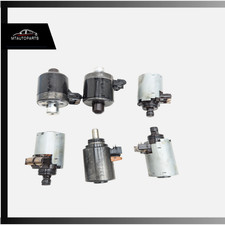
The 722.6 has three shift solenoids, and their names tell you exactly what they do: the 1-2/4-5 solenoid (factory designation Y3/6y3) handles the 1-2 and 4-5 upshifts along with the matching 2-1 and 5-4 downshifts, the 2-3 solenoid (Y3/6y5) handles the 2-3 upshift and 3-2 downshift, and the 3-4 solenoid (Y3/6y4) handles the 3-4 upshift and 4-3 downshift. Each one is fed 50-55 psi of what Mercedes calls "solenoid shift pressure," and each is simply switched on or off by the TCM to trigger its shift; it doesn't modulate anything in between. That's a different job from the transmission's other two solenoids, the modulating pressure-regulating solenoid (Y3/6y1) and the shift-pressure-regulating solenoid (Y3/6y2), which vary continuously between 0 and 125 psi to control how firm or soft a shift feels rather than which gear gets selected.
Each shift solenoid works together with a specific group of hydraulic valves and clutches that transmission technicians call a "shift group." The 1-2/4-5 solenoid's group includes the K1 clutch, B1 brake, and four dedicated valves; the 2-3 solenoid's group includes the K2 and K3 clutches and their own valve set; the 3-4 group includes K3 and the B2 brake. Only three shift groups are needed to produce five forward gears because the K3 clutch is shared between the 2-3 and 3-4 groups, which is also why a worn or slipping K3 clutch can produce a symptom that looks electrical even though the solenoids themselves are fine.
How the Transmission Fails Safe When a Solenoid Circuit Drops Out
This is the detail that actually matters for diagnosis: all three shift solenoids sit in the off state whenever the transmission is already in the gear they control, and they only switch on briefly during the shift itself. Because of that pattern, when the TCM detects a fault it can't resolve, the transmission simply stays in whatever gear it happened to be in at that moment, rather than defaulting to a fixed "limp" gear immediately. It's only after the vehicle is brought to a stop and the ignition is cycled that the unit defaults to 2nd gear. If your customer describes the transmission getting stuck in a gear mid-drive, then landing in 2nd specifically after a restart, that pattern alone points at a shift-solenoid circuit fault rather than a mechanical clutch or band failure, which tends to produce a flare or slip instead of a clean stuck-in-gear condition.
Common real-world symptoms that trace back to a shift solenoid or its circuit: a missing or delayed 1-2, 2-3 or 3-4 shift that correlates with which solenoid is affected; a harsh or banging shift instead of a smooth one, since an intermittent solenoid can cause the TCM's overlap timing to miss its mark; the transmission holding a gear well past its normal shift point under both acceleration and coast-down; and the vehicle defaulting to 2nd gear every time it's restarted even though it was driving normally, or at least holding a different gear, right before the last shutdown.
The NAG1 Case-Connector Failure That Mimics a Bad Solenoid
On 2004-and-up Chrysler, Dodge and Jeep vehicles using this transmission under the NAG1 name, there's a specific failure that produces the exact same intermittent solenoid-circuit codes as an actual bad solenoid, and it isn't the solenoid at all. The adapter sleeve where the internal wiring harness exits the transmission case, at the external connector, uses O-rings that degrade with age and heat, and once they do, transmission fluid works its way into the connector area. That contamination causes the same kind of intermittent, hard-to-reproduce fault codes you'd see from an actual failing solenoid, which is exactly the kind of case where swapping a solenoid kit doesn't fix anything, because the solenoid was never the problem.
The documented fix is to replace the adapter sleeve and connector as a kit, using the updated part number (68021352AA, which includes the connector itself under 5120265AA); that connector is also sold individually by aftermarket suppliers if the sleeve is still good. Before replacing a solenoid on a NAG1-badged unit showing intermittent circuit codes, pull the case connector and look for fluid staining, corrosion, or green buildup on the pins, and verify that each solenoid actually ohm-tests correctly rather than assuming the fault code points straight at the part it's named for. A solenoid-circuit code describes a circuit, not necessarily the solenoid itself, and on this transmission family the connector is a known point of failure in that circuit.
Worn Solenoid O-Rings: A Failure That Won't Show Up on an Ohm Test
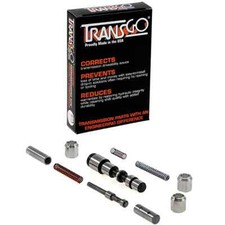
Not every solenoid problem on the 722.6 is electrical. The Viton O-rings that seal each solenoid into its bore in the valve body shrink over years of heat cycling, and once they shrink, fluid bypasses the solenoid at the seal instead of flowing through the solenoid the way it's supposed to. A solenoid in that condition will ohm-test within spec every time, because the coil itself is fine, yet the transmission will still show insufficient pressure rise, a 2-3 flare, torque-converter-clutch slip or shudder, soft shifts overall, or a shudder specifically under hard throttle from a stop. Transmission shift-kit instructions for this unit flag this directly, calling out O-ring replacement on the solenoids as a required step any time the valve body is opened, not an optional extra, and they also note that speed-sensor failures are common enough on these units that replacing the conductor plate is routinely recommended during the same overhaul.
This is why a thorough shift-solenoid job on a 722.6 isn't just "unbolt the old one, bolt on the new one." If you're pulling solenoids for a confirmed electrical fault, inspect and replace the O-rings on the ones you leave in place too, and reset the TCC adaptation values with a scan tool before the road test. Skipping that reset leaves the TCM compensating for the old hardware's wear characteristics against new parts, which can mimic a shudder or flare that has nothing to do with the repair you just did.
Diagnosing Before You Replace Anything
Start with a scan tool and pull every stored and pending code; shift-solenoid circuit faults show up as generic OBD-II codes in the shift-solenoid-circuit family, and it's worth noting which specific gear range is affected, since that tells you which of the three solenoids (1-2/4-5, 2-3 or 3-4) is implicated before you even open the pan. From there, confirm the fault is actually in the solenoid and not somewhere else in the circuit: ohm-test each solenoid at the case connector against the factory resistance spec, inspect the connector itself for fluid intrusion or corrosion (especially on NAG1-badged units), and check for a cracked conductor plate if the symptom includes speed-sensor codes alongside the solenoid fault, since the conductor plate carries both the sensors and the solenoid wiring on one plastic assembly.
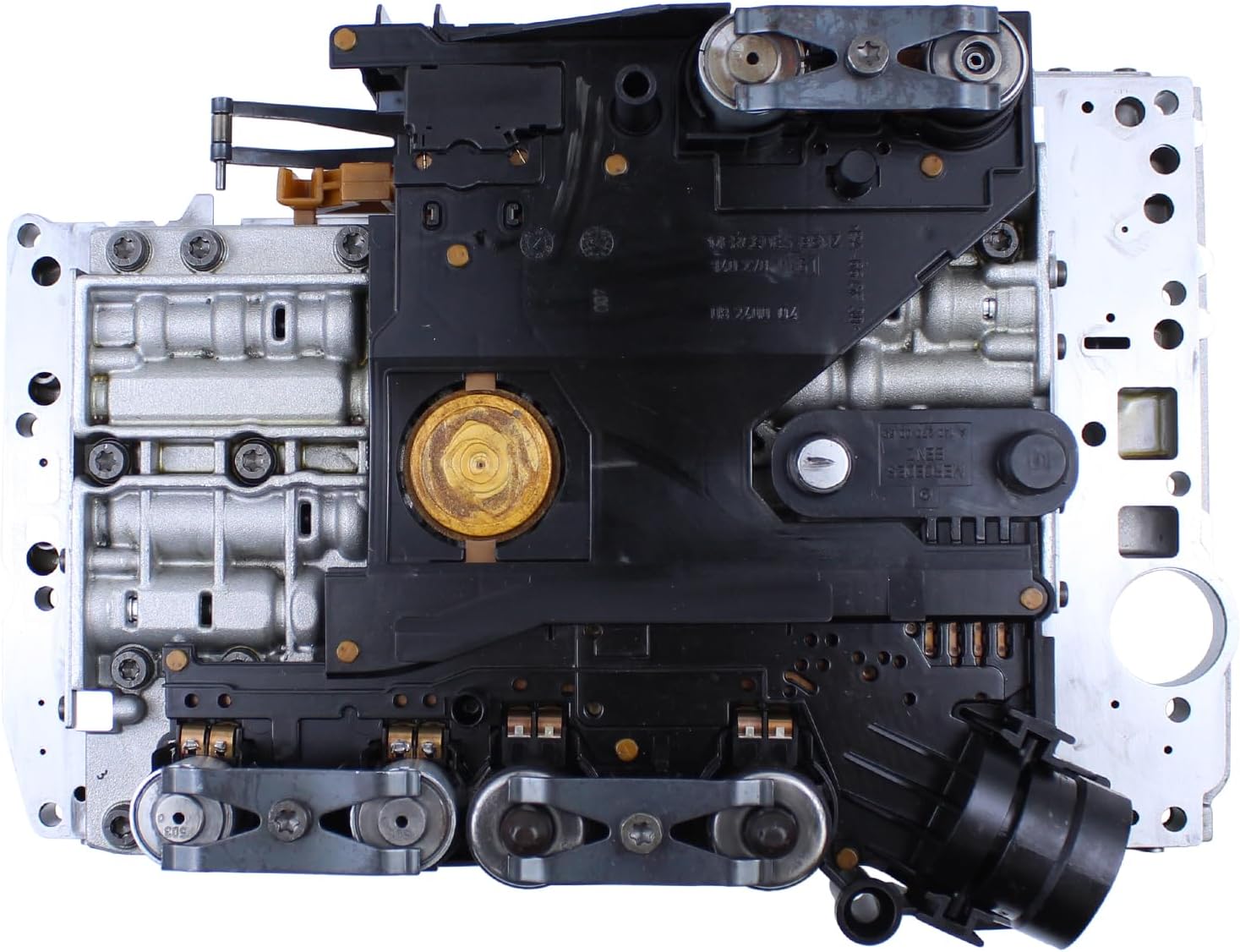
Only after the circuit checks out clean should you treat the solenoid itself as the failed part. If you're already committed to opening the valve body, it's worth deciding up front whether you're doing a targeted solenoid swap or a full valve body replacement; a unit with visible wear at the working-pressure regulator bore or the shift-overlap sleeves (both separate, mechanical failure points covered in our 722.6 common problems guide) is a better candidate for a complete valve body with solenoids already fitted than for a standalone solenoid kit bolted into a tired casting.
Replacing the Solenoids
The solenoids mount to the valve body from underneath, so the job starts the same way as any other 722.6 valve body service: drop the pan, remove the filter, and unbolt the conductor plate and valve body as needed to access the solenoid bores. Replace the O-rings on every solenoid you touch, not just the one you're swapping, reinstall with the filter and pan gasket, refill with the correct MB 236.14-spec fluid, and clear the TCM's adaptation memory with a scan tool before the first test drive so it doesn't carry over compensation values learned against the old hardware. On a NAG1-badged unit where the case-connector area shows any sign of fluid intrusion, replace the adapter sleeve and connector at the same time; doing the solenoid job without addressing a leaking connector is a near-guarantee the same fault code comes back.
| Symptom | Likely cause | Fix |
|---|---|---|
| Missing or harsh 1-2/4-5, 2-3 or 3-4 shift | Failed shift solenoid for that gear range (Y3/6y3, y5 or y4) | Ohm-test, confirm, then replace the solenoid (or full kit) |
| Stuck in current gear while driving, defaults to 2nd after restart | Shift-solenoid circuit fault detected by TCM failsafe logic | Diagnose circuit before replacing; clear adaptation after repair |
| Intermittent solenoid-circuit codes on a 2004+ NAG1 unit | Degraded O-rings on case adapter sleeve letting fluid reach the connector | Replace adapter sleeve/connector kit (68021352AA), not the solenoid |
| 2-3 flare, TCC shudder or soft shifts, solenoids test fine | Shrunk solenoid O-rings letting fluid bypass the solenoid | Replace O-rings on all solenoids during any valve body service |
Frequently Asked Questions
How many shift solenoids does a 722.6 have, and what does each one do?
Three: the 1-2/4-5 solenoid (Y3/6y3) handles the 1-2 and 4-5 upshifts plus their downshifts, the 2-3 solenoid (Y3/6y5) handles the 2-3/3-2 shift, and the 3-4 solenoid (Y3/6y4) handles the 3-4/4-3 shift. Each is fed 50-55 psi of solenoid shift pressure and simply toggles on or off to trigger its shift; there are two additional pressure-control solenoids (modulating and shift-pressure) that shape how firm each shift feels rather than which gear you're in.
What happens when a 722.6 shift solenoid fails while driving?
The transmission stays in whatever gear it was in when the fault was detected, because all three shift solenoids sit in the off state once a gear is selected and only toggle on briefly to make the next shift. If you shut the car off and restart it after a solenoid-circuit fault, the unit defaults to 2nd gear rather than returning to the gear you were in, which is the clearest sign you're dealing with a shift solenoid or its circuit rather than a mechanical clutch failure.
Can a bad connector mimic a failed shift solenoid on a NAG1 or 722.6?
Yes, and it's common enough on 2004-and-up Chrysler, Dodge and Jeep NAG1 applications that it has its own fix. Worn O-rings on the case adapter sleeve let transmission fluid reach the connector pins, which produces the same intermittent solenoid-circuit codes as an actual bad solenoid. The repair is a new adapter sleeve and connector kit, not a solenoid, so ohm-testing each solenoid at the connector before replacing anything is what keeps you from throwing parts at a wiring problem.
Do you need the whole solenoid set or can you replace just one?
You can test and replace a single shift solenoid if it's clearly the only one reading out of spec, but most shops install the full solenoid kit when the valve body is already open, since the solenoids share the same fluid, the same age, and the same heat exposure. If the valve body itself shows wear at the working-pressure regulator bore or the overlap sleeves, a complete valve body with solenoids already fitted is usually the more reliable fix than mixing a new solenoid kit with a worn casting.
Why do the solenoid O-rings need replacing even if the solenoid itself still tests good?
The Viton O-rings that seal the solenoids into the valve body shrink with age and heat cycling, which lets fluid bypass the solenoid instead of routing through it. A solenoid can ohm-test perfectly and still cause a flare, a shudder, or a soft shift if its O-ring has shrunk, which is why transmission shift-kit instructions for the 722.6 call out replacing the O-rings on these solenoids as a standard step during any valve body service, not just when a solenoid is actually being swapped.
722.6 Shift Solenoid Kit, 1994-2005
CoreTransmissionParts carries the shift solenoid set for these early 722.6 units, the exact part this guide covers testing and replacing.
View the solenoid kit →Shop 722.6 parts →
Sources
- Transmission Digest, "The 722.6 Shift Strategy," by Wayne Colonna, February 1, 2005. Backs the three shift solenoid designations (Y3/6y3, Y3/6y5, Y3/6y4), their 50-55 psi solenoid shift pressure, the two pressure-control solenoids (Y3/6y1, Y3/6y2) and their pressure ranges, the shift-group/clutch breakdown, the on/off toggle pattern, and the failsafe-to-current-gear then default-to-2nd-after-restart behavior. transmissiondigest.com
- Transmission Digest, "October 2011 Issue" (Transmission TECH/TALK), "Chrysler/Dodge NAG1: Solenoid circuit faults/case-connector leak." Backs the 2004+ NAG1 adapter-sleeve O-ring failure, the resulting case-connector fluid intrusion and intermittent solenoid-circuit codes, the updated adapter sleeve/connector part number 68021352AA (connector 5120265AA), and the instruction to ohm-test solenoids before replacing them. transmissiondigest.com
- Sonnax Technical Resource 129, "Mercedes 722.6, Daimler W5, Porsche W5, Jaguar 722.6." Corroborates the 722.6/NAG1 identification and the valve-body wear mechanisms that produce solenoid-adjacent symptoms like upshift and downshift flare. sonnax.com
- TransGo Shift Kit Instructions, SK 722.6 (06 Sept 2016 revision). Backs the common speed-sensor failures, the recommendation to replace the conductor plate during overhauls, the note that solenoid O-rings shrink and must be replaced, the instruction to reset TCC adaptation values after repair, and the symptom list (insufficient pressure rise, 2-3 flare, TCC slip/shudder, soft shifts, shudder on hard throttle from a stop). res.cloudinary.com (PDF)
- Transmission Digest, "Mercedes 722.6, Daimler W5, Porsche W5, Jaguar 722.6," by Mio Cundl, June 1, 2009. Backs the NAG1/722.6 cross-reference to Mercedes, Jaguar and Porsche applications and the W5A580/W5A380/W5A330/W5J400 NAG1 variant naming. transmissiondigest.com
Shop shift solenoids, shift kits, valve bodies and conductor plates for the 722.6, shipped fast from the USA.
Shop 722.6 parts →