GM calls the 8L90's pump design "self-priming," and on paper it should be. The pump sits off-axis from the input shaft, driven by a chain rather than mounted directly on the turbine shaft the way older designs were, which is supposed to make priming more reliable at startup. In practice, Sonnax's own technical documentation on the 8L45/8L90 platform describes units arriving with no movement and no line pressure at all — a priming failure the self-priming marketing doesn't fully solve. If you're staring at a freshly installed 8L90 that won't move, or an older one with pressure that doesn't make sense, the pump and the valve body hydraulics around it are the right place to start, but not every symptom points to the same cause.
Three Different Problems That All Look Like "Pump Failure"
The complaint "no pressure" or "won't move" gets blamed on the pump by default, but the 8L90 platform has at least three distinct hydraulic failure modes that produce overlapping symptoms. Sorting out which one you've got before you pull the transmission saves a lot of wasted labor.
1. Priming failure (no movement, no pressure, usually right after install)
This is the condition Sonnax documents directly: a freshly installed or rebuilt 8L90 sits in the vehicle with no movement in any gear and no line pressure on a scan tool, despite GM's self-priming pump design. The fix isn't a part — it's procedure. Sonnax's bench-prime method: set the valve body top-down in a clean drain pan, put the manual valve in Park with the first land flush to the casting, fit a funnel into the pump suction, fill it with ATF, and turn the pump shaft clockwise with a half-inch chuck electric drill until the pump is primed. Do this before the unit goes in the vehicle, not after.
2. Low or erratic line pressure (slipping, flare, harsh shifts, inconsistent complaint)
Sonnax's data points to two root causes here, and they're mechanically different. The first is wear: the pressure regulator bore near the VFS (variable force solenoid) signal port wears over time, letting throttle signal pressure leak past instead of holding the regulator in position, and the shuttle valve sleeve wears from constant oscillation, opening a path that bleeds line pressure off. Both produce the same result — excessive low line pressure — through different leak paths. The second cause is a straight assembly mistake: the inner shuttle boost valve and bushing must be installed facing inboard for boost pressure to work correctly, and Sonnax notes it's occasionally installed facing outboard instead, which produces a low- or no-pressure condition with zero wear involved. If a rebuilt unit has bad pressure right out of the gate, check assembly orientation before you blame worn parts.
3. Runaway high pressure (harsh engagement, then catastrophic failure)
This is the one that costs the most to ignore. Sonnax has measured 8L90 valve bodies producing line pressure above 415 psi, against a normal peak around 315 psi. The cause is a worn pressure regulator valve lineup that leaks enough to prevent the regulator from stroking down to its lower-pressure position, sometimes combined with a factory line-pressure blow-off spring that's calibrated above 400 psi instead of relieving at a safer level. Sonnax's documentation includes a case of catastrophic drum failure traced directly to this condition, along with cracked worm tracks in the valve body casting that it says cannot be repaired once they happen. If a unit has a history of harsh, slamming shifts before it failed outright, this is worth checking even if the pump itself tests fine.
Rule Out the Cheap Explanation First
Before any of the above gets blamed, there's a non-hydraulic cause worth ruling out on units that just had solenoid programming done. Sonnax notes that a no-movement complaint showing up immediately after a fast learn or J2534 programming procedure often isn't hydraulic at all — it clears after the TCM finishes a settling period. Remove the key, shut the doors, leave the vehicle alone for about 15 minutes, then recheck. It costs nothing and it rules out the most common false alarm before you start pulling a transmission that was never actually broken.
Two More Things Techs Miss on Reassembly
Sonnax flags two installation mistakes on the 8L45/8L90 valve body that produce pressure complaints with nothing wrong with the pump or the regulator at all. New OE valve bodies ship with a test plug installed; if it gets removed during service and not reinstalled, it leaves a large leak that dumps line pressure straight away. Separately, some installers leave out the 1-2-7-8-R case seal that sits underneath the valve body seal — it's easy to miss because it's not visible once the valve body is bolted down, but its absence creates an internal leak path that mimics a pump or regulator problem. Check both before condemning hydraulic components.
Fluid: DEXRON HP Only
Whatever the diagnosis, don't let fluid type become a second problem. GM's own service bulletin on the 8L90 exchange program states plainly that the transmission makes use of DEXRON HP transmission fluid only, and that failure to use the proper fluid may result in transmission internal damage. GM's product page for the 8L90 lists a fluid capacity estimate of about 10.3 liters, or roughly 10.9 US quarts, though GM's own TechLink capacity chart shows the actual drain-and-refill figure varies by vehicle application — some platforms call for closer to 7 quarts on a service fill, others more than 12. Confirm the number for the specific vehicle rather than assuming one figure fits every 8L90 application, and if you want the full cross-reference for this and other platforms, see our transmission fluid spec chart.
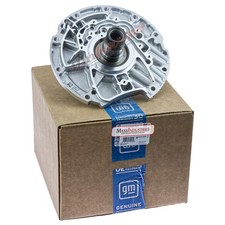
8L90 Pump
When bench-priming doesn't restore pressure, or inspection confirms worn pump gears or a failed priming check valve rather than a hydraulics problem downstream, this is the direct replacement pump for the 8L90's off-axis, chain-driven design.
View the 8L90 pump →Diagnostic Order That Doesn't Waste a Teardown
- If the complaint started right after solenoid programming, remove the key, leave the vehicle 15 minutes, and recheck before doing anything else.
- Pull line pressure on a scan tool. No pressure at all with a freshly installed or rebuilt unit points to a priming failure — bench-prime the pump per Sonnax's procedure before condemning any part.
- Low, soft, or inconsistent pressure with slipping or flare points to the pressure regulator bore and shuttle valve sleeve. On a unit that was just rebuilt, check that the inner shuttle boost valve and bushing are installed facing inboard, not outboard.
- Pressure well above the 315 psi peak, or a history of harsh, slamming engagement before a hard failure, points to a worn pressure regulator valve lineup and a mis-calibrated blow-off spring — inspect for drum and worm-track damage before reassembly.
- Check for the two easy misses: a removed-and-not-reinstalled OE test plug, and a missing 1-2-7-8-R case seal under the valve body seal. Both mimic a pump or regulator fault.
- Confirm DEXRON HP fluid and correct fill level before final judgment — low or wrong fluid produces pressure symptoms that look identical to hardware failure.
FAQ
Is the 8L90 pump really self-priming?
GM markets the off-axis, chain-driven pump design as self-priming, but Sonnax's own technical documentation reports units arriving with no movement and no line pressure — a real-world priming failure that the self-priming marketing doesn't fully prevent. Sonnax's fix is a manual bench prime before the unit ever goes in the vehicle: fill the pump suction with ATF and turn the pump shaft with a drill until it draws fluid.
What causes low or erratic line pressure on an 8L90 that isn't the pump itself?
Sonnax identifies wear at the pressure regulator bore near the VFS signal port, plus wear on the shuttle valve sleeve from constant oscillation, as the most common cause of low line pressure. Both let pressure leak internally instead of building against the clutch packs. A second cause is a straight assembly error — the inner shuttle boost valve and bushing must face inboard, and installing them facing outboard produces low or no pressure with no wear involved at all.
Can high line pressure actually destroy an 8L90?
Yes. Sonnax has documented 8L90 valve bodies producing pressure above 415 psi against a normal peak around 315 psi, caused by a worn pressure regulator valve lineup combined with a line pressure blow-off spring calibrated too high. That kind of runaway pressure has produced catastrophic drum failure and case worm-track cracks that Sonnax says cannot be repaired, which is why it recommends replacing the regulator lineup and blow-off spring on every rebuild rather than reusing them.
What transmission fluid does the 8L90 pump require?
DEXRON HP only. GM's own service bulletin on the 8L90 exchange program states plainly that the transmission uses DEXRON HP transmission fluid only and that using the wrong fluid may cause internal transmission damage. GM's product page lists a fluid capacity estimate of about 10.3 liters (roughly 10.9 quarts), though GM's own TechLink capacity chart shows the drain-and-refill figure varies by application — always confirm the number for the specific vehicle before filling.
Does a new 8L90 solenoid programming event ever look like a pump failure?
Yes, and it's worth ruling out before condemning the pump. Sonnax notes that a no-movement complaint right after a fast learn or J2534 programming procedure often clears on its own: remove the key, shut the doors, leave the vehicle alone for about 15 minutes, and recheck. That's a software settling period, not a hydraulic fault, and it costs nothing to rule out first.
Related 8L90 guides
Sources
- Sonnax Technical Resource, "Troubleshooting GM 8L45, 8L90 No-Move, No-Pressure Conditions." Backs the off-axis chain-driven pump design, the real-world priming failure Sonnax reports on installed units, the step-by-step bench-prime procedure, the pressure regulator assembly-orientation error, and the test-plug and case-seal installation mistakes. sonnax.com
- Sonnax Technical Resource, "Watch Out for High Pressure in GM 8L45, 8L90 Valve Bodies." Backs the 315 psi normal peak pressure, the above-415 psi runaway condition, the worn pressure regulator valve lineup and mis-calibrated blow-off spring as causes, and the catastrophic drum failure and unrepairable worm-track cracking that result. sonnax.com
- Sonnax Pressure Regulator & O-Ringed Shuttle Valve Kit (Part No. 154740-29K) product documentation. Backs the drop-in regulator and shuttle valve fix recommended for the worn-bore and shuttle-sleeve pressure leak conditions. sonnax.com
- General Motors, 8L90 8-Speed Automatic Transmission product page. Backs the DEXRON HP fluid type and the GM-stated capacity estimate of 10.3 liters. poweredsolutions.gm.com
- General Motors Service Bulletin PIP5200B, "PQC Transmission Exchange 8L90 8 Speed Automatic Transmission" (October 2014). Backs the explicit GM statement that the 8L90 uses DEXRON HP transmission fluid only and that the wrong fluid may cause internal damage, plus background on the early-production PQC exchange program for the platform. static.nhtsa.gov (PDF, hosted by NHTSA)